Navigating Wastewater Challenges in Cameroon: The Need for Advanced Treatment
Industrial wastewater in Cameroon often contains high concentrations of organic matter, suspended solids, and chemical residues that exceed the discharge limits set by the Ministry of Environment, Nature Protection and Sustainable Development (MINEPDED). The country’s industrial sector expansion, particularly in hubs like Douala, Yaoundé, and Limbe, has intensified pressure on local water bodies such as the Wouri River and the Gulf of Guinea. Many facilities currently rely on rudimentary settling ponds that fail to remove emulsified oils or fine particulate matter, leading to environmental degradation and potential legal penalties under the 1996 Law on Environmental Management.
The primary water quality issues in Cameroon stem from rapid urbanization and the discharge of untreated industrial effluents into municipal drainage systems. High Biological Oxygen Demand (BOD) and Chemical Oxygen Demand (COD) levels are common in the food processing and brewing sectors. Palm oil refineries and soap manufacturing plants contribute significant amounts of fats, oils, and grease (FOG), which are difficult to treat using gravity-based separation alone. The mining and textile industries introduce heavy metals and synthetic dyes that require specialized clarification processes to ensure safety and compliance.
Efficient wastewater treatment is a prerequisite for sustainable operations in Cameroon. International buyers and local regulators are increasingly demanding transparency regarding environmental impact. Adopting advanced clarification technologies allows these industries to mitigate risks, reduce water consumption through potential reuse, and maintain a positive corporate reputation in a competitive regional market. This shift toward modern solutions is paving the way for broader industrial wastewater solutions in Africa that prioritize high-performance removal of complex pollutants.
What is a DAF System and How Does it Work for Wastewater Clarification?
A Dissolved Air Flotation (DAF) system is a water treatment process that clarifies wastewater by removing suspended matter such as solids, oils, and grease through the introduction of microscopic air bubbles. Unlike traditional sedimentation, which relies on particles being heavier than water to sink, DAF technology utilizes the buoyancy of air to lift contaminants to the surface for mechanical removal. This makes it exceptionally effective for light solids and emulsified substances that would otherwise remain suspended indefinitely.
The fundamental principle of DAF involves dissolving air into water under high pressure, typically between 4 to 6 bar, and then releasing that pressure in a flotation tank. According to Henry’s Law, the solubility of air in water increases with pressure; when the pressure is suddenly dropped to atmospheric levels, the excess air precipitates out of the solution in the form of millions of micro-bubbles (ranging from 30 to 50 microns in diameter). These bubbles attach themselves to the flocculated particles in the wastewater, reducing their overall density and causing them to rise rapidly to the surface.
A standard DAF system consists of several critical components: a saturation tank (where air and water are mixed), a high-pressure recycle pump, an air compressor, the main flotation tank, and a mechanical skimmer. The process flow generally follows these steps:
- Pre-treatment: Raw wastewater is mixed with coagulants and flocculants to aggregate small particles into larger "flocs."
- Air Dissolution: A portion of the clarified effluent is recycled, pressurized, and saturated with air in the saturation tank.
- Flotation: The air-saturated water is injected into the flotation tank, where it meets the incoming wastewater. The micro-bubbles form and lift the flocs to the surface.
- Skimming: A mechanical skimmer removes the floating sludge layer (float) into a separate hopper.
- Discharge: The clarified water is drawn from the bottom of the tank for further treatment or discharge.
The primary function of a DAF system is to achieve high-clarity effluent in a much smaller footprint than traditional clarifiers. By accelerating the separation process, DAF units can handle higher hydraulic loading rates, making them ideal for industrial facilities where space is limited but treatment volume is high.
Unlocking Efficiency: DAF System Performance in Pollutant Removal

DAF systems consistently achieve removal efficiencies of over 95% for Total Suspended Solids (TSS) and over 90% for Fats, Oils, and Grease (FOG) in diverse industrial applications. This high level of performance is critical for meeting the discharge standards of Cameroon’s industrial zones. Beyond solids and grease, DAF technology is highly effective at removing associated organic matter, nutrients, and even certain heavy metals that are bound to the suspended particles.
One of the most significant metrics for Cameroonian industrial managers is the reduction of Chemical Oxygen Demand (COD). While a DAF system primarily targets the particulate (insoluble) fraction of COD, it can achieve a 50% to 80% reduction in total COD depending on the wastewater characteristics. When combined with optimized chemical dosing, the removal of BOD (Biological Oxygen Demand) is similarly enhanced, significantly reducing the load on downstream biological treatment stages. This efficiency is vital for industries like palm oil milling, where the raw effluent is highly concentrated with organic waste.
DAF systems produce a highly concentrated sludge, often containing 2% to 5% dry solids. This is significantly thicker than the sludge produced by conventional sedimentation, which reduces the volume of waste that needs to be handled and dewatered. To manage this concentrated waste effectively, many facilities integrate plate and frame filter presses for sludge dewatering, which further reduces disposal costs and improves environmental outcomes.
| Pollutant Parameter | Typical Removal Efficiency (%) | Impact on Industrial Compliance |
|---|---|---|
| Total Suspended Solids (TSS) | 95% – 99% | Eliminates turbidity; prevents downstream clogging. |
| Fats, Oils, and Grease (FOG) | 90% – 99% | Prevents "fatbergs" in sewers; meets strict oil limits. |
| Chemical Oxygen Demand (COD) | 50% – 80% | Reduces organic load and environmental discharge fees. |
| Biological Oxygen Demand (BOD) | 40% – 70% | Protects aquatic life in local Cameroonian rivers. |
| Phosphorus (Total P) | 70% – 90% | Mitigates eutrophication in stagnant water bodies. |
The adaptability of DAF equipment allows it to be fine-tuned for specific contaminants. By adjusting the air-to-solids ratio and the recycle rate, operators can maintain high performance even when the influent quality fluctuates—a common occurrence in seasonal industries like agriculture and food processing. For more technical details on maintaining these levels, see our optimizing DAF system maintenance guide.
Types of DAF Systems and Their Industrial Applications in Cameroon
Different DAF configurations, such as plate pack (lamella) units and open-tank conventional systems, are designed to balance treatment capacity with the available physical footprint of the industrial site. In Cameroon, where industrial space in cities like Douala can be expensive or constrained, selecting the right design is essential for cost-effective operations. The HydropureWater DAF system is a versatile example of how modern engineering can be applied to these varied needs.
Plate Pack DAF Systems: These units utilize internal lamella plates to increase the effective flotation area within a compact tank. This design is ideal for high-flow applications with relatively low solids loading, such as final clarification or fiber recovery in paper mills. The plates help laminarize the flow, allowing micro-bubbles to attach more efficiently to particles in a shorter distance.
Conventional Open-Tank DAF: These are robust systems designed for high solids loading and heavy-duty industrial waste. They are frequently used in the meat processing and palm oil sectors where the volume of floating sludge is substantial. The open design allows for easier management of thick sludge blankets and is generally more tolerant of varying influent conditions.
| Industry in Cameroon | Primary Contaminants | Recommended DAF Type | Specific Benefit |
|---|---|---|---|
| Palm Oil Refining | Emulsified oils, FOG, TSS | Conventional | High tolerance for heavy grease loads. |
| Breweries & Beverage | Yeast, spent grains, BOD | Plate Pack DAF | Compact footprint; high clarification for reuse. |
| Textiles & Dyeing | Color, fibers, chemicals | Tube / Plate Pack DAF | Efficient removal of fine suspended fibers and dyes. |
| Soap & Detergent | Surfactants, fatty acids | DAF | Effective breaking of chemical emulsions. |
| Mining (Sand/Gravel) | Silt, clay, fine minerals | High-Capacity Conventional | Rapid separation of heavy inorganic suspended solids. |
In the Cameroonian context, the HydropureWater DAF system is often preferred due to its integrated design, which simplifies installation and commissioning. These systems are particularly effective for municipal pre-treatment, where reducing the solids and grease load before biological ponds can extend the life of the entire treatment plant and prevent the failure of aerobic processes.
Selecting the Right DAF System for Your Operations in Cameroon
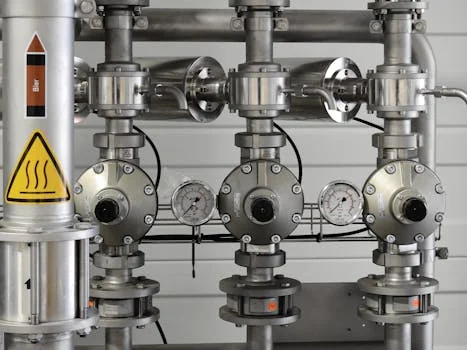
Selecting a DAF system requires an analysis of peak flow rates and the chemical nature of the influent to ensure the equipment can handle maximum loads without bypass. For industrial facility managers in Cameroon, the selection process must also account for local environmental conditions, such as high humidity and potential power fluctuations. A system that is over-engineered may lead to unnecessary energy costs, while an under-powered system will fail to meet MINEPDED discharge standards.
Key factors to consider during the selection process include:
- Influent Characteristics: Conduct a comprehensive water analysis to determine TSS, FOG, and COD concentrations. This data dictates the required air-to-solids ratio and the size of the flotation tank.
- Chemical Integration: Most DAF systems require chemical pretreatment to be effective. Integrating automatic chemical dosing systems ensures that the correct amount of coagulant is added regardless of flow variations, preventing chemical waste and ensuring consistent effluent quality.
- Operational Costs: Evaluate the power consumption of the recycle pump and the air compressor. In regions where electricity costs are high, choosing high-efficiency motors and optimized saturation systems is critical.
- Local Support and Maintenance: Ensure that the supplier provides technical expertise relevant to industrial DAF systems in emerging markets. Availability of spare parts like skimmer blades, nozzles, and pump seals is essential to prevent long-term downtime.
Performing pilot testing or a detailed engineering study before final procurement is highly recommended. This allows for the fine-tuning of the "bubble-to-solids" interaction and helps determine the most effective chemical regime. By choosing a supplier with experience in African industrial landscapes, procurement specialists can ensure they are investing in a system that is both technically robust and operationally viable for the long term in Cameroon.
Frequently Asked Questions About DAF Systems in Cameroon
What are the primary water quality issues in Cameroon that DAF systems can address?
DAF systems are specifically designed to address high levels of suspended solids, fats, oils, and grease (