In Newfoundland, Canada, a package wastewater treatment plant typically serves communities ranging from 300 to 3,000 people. As of 2023, 68% of rural sites in the province rely solely on primary treatment. Modern solutions, such as HydropureWater’s WSZ series (1–80 m³/h), provide fully automated, below-grade A/O systems engineered for cold-weather operation and designed to comply with Newfoundland and Labrador’s environmental standards.
Why Newfoundland Needs Modern Package Wastewater Treatment
As of 2023, 68% of wastewater systems in Newfoundland and Labrador utilize only primary treatment, according to the NL Department of Environment and Climate Change database. This reliance on outdated infrastructure, primarily septic tanks or straight-piped outfalls, presents significant environmental and regulatory challenges for small communities. Many rural municipalities, such as Burgeo (1,176 people) and Burlington (304 people), continue to discharge inadequately treated wastewater directly into saltwater bays. This practice increases environmental risk through nutrient loading, pathogen introduction, and impacts on marine ecosystems, directly contrasting with evolving provincial and federal environmental protection mandates.
The provincial government's commitment to modernizing wastewater infrastructure is evident in projects like the $139 million upgrade to the Riverhead Wastewater Treatment Facility in St. John’s. This substantial investment signals a clear direction towards improved effluent standards across the province. Smaller, remote communities, though operating on different scales, must align with this trajectory to meet future environmental regulations and protect their unique natural environments. The existing primary-only systems will not suffice as regulatory requirements tighten, necessitating a proactive shift towards more advanced treatment solutions.
For Newfoundland’s geographically dispersed and often isolated communities, centralized wastewater treatment plants are frequently impractical due to rugged terrain, vast distances, and high capital costs for collection systems. Instead, decentralized wastewater treatment solutions, specifically compact package wastewater treatment plants, offer a logical and economically viable alternative. These small community sewage systems can be deployed close to population centers, minimizing collection infrastructure and enabling tailored treatment for specific local conditions. Their modular nature also supports adaptability for seasonal populations, a common characteristic of many Newfoundland communities, ensuring efficient resource allocation and environmental compliance.
Key Technical Requirements for NL’s Climate and Communities
Operating temperature range is a critical technical requirement for package wastewater treatment plants in Newfoundland, as systems must reliably support winter conditions down to -20°C. To prevent freezing and ensure continuous biological activity, units must be designed for extreme cold. Options include fully buried units, like the HydropureWater WSZ series, which benefit from geothermal insulation, or robustly insulated above-grade enclosures equipped with supplemental heating. Without adequate winterization, performance degradation and system failures are inevitable, leading to costly repairs and environmental non-compliance.
The capacity of a package wastewater treatment plant must precisely match the population served, accommodating both average and peak flows. For Newfoundland’s small communities, a capacity range of 1–80 m³/h (approximately 24–1920 m³/day) effectively covers the needs of over 90% of municipalities. This range spans communities from Badger (682 people) to Bishop's Falls (3,082 people), allowing for scalable solutions that avoid oversizing or undersizing. An accurate assessment of per capita water usage and potential peak demands (e.g., during tourist seasons) is essential for correct sizing, factoring in a typical design flow of 150-250 L/person/day.
Fully automated operation is essential for municipal package plants in remote Newfoundland locations, where dedicated on-site operators may not be feasible or cost-effective. Systems equipped with Programmable Logic Controllers (PLCs) and remote monitoring capabilities allow for off-site supervision, alarm notifications, and even remote troubleshooting, significantly reducing operational labor costs and improving response times. This automation ensures stable performance and compliance without constant human intervention.
To meet future provincial discharge standards, secondary treatment is becoming a mandatory requirement; primary-only systems will not suffice long-term. Advanced biological processes, such as the Anoxic/Oxic (A/O) process, are necessary to achieve significant reductions in Biochemical Oxygen Demand (BOD) and Total Suspended Solids (TSS). These processes are vital for protecting sensitive receiving environments, particularly freshwater rivers and enclosed saltwater bays. below-grade installation is often preferred for package wastewater treatment plants. This method protects the treatment unit from harsh wind and snow loads, minimizes aesthetic impact by allowing surface landscaping, and provides natural insulation against extreme cold, making it an ideal below-grade treatment unit for the Newfoundland climate.
| Parameter | Requirement/Recommendation | Justification |
|---|---|---|
| Operating Temperature | Reliable function down to -20°C (with insulation/heating) | Prevents freezing of biological processes and piping in NL winters. |
| Capacity Range | 1–80 m³/h (24–1920 m³/day) | Covers 90% of small to medium NL communities (300-3000 people). |
| Automation Level | Fully automated (PLC-controlled with remote monitoring) | Reduces need for on-site operators in remote locations; ensures stable operation. |
| Treatment Level | Secondary treatment (e.g., A/O process) | Meets current and future NL discharge standards for BOD/TSS reduction. |
| Installation Type | Below-grade or insulated/heated above-grade | Protects against harsh weather, minimizes visual impact, provides thermal stability. |
Top Package Plant Technologies for Small Municipalities
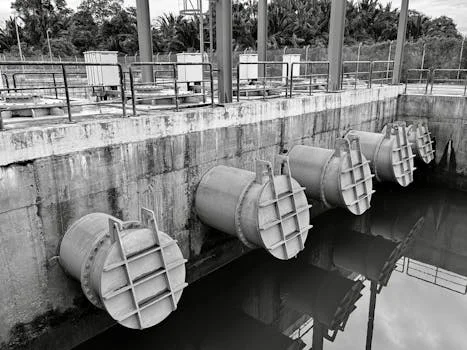
A/O (Anoxic/Oxic) biological contact oxidation is a leading package plant technology, consistently achieving 90–95% BOD and TSS removal, making it ideal for secondary treatment compliance in small municipalities. This process utilizes distinct anoxic and oxic zones to facilitate nitrification and denitrification, effectively removing nitrogen compounds in addition to organic matter. Its robust nature and relatively simple operational requirements make it a suitable choice for communities with limited technical staff, offering a reliable off-grid wastewater solution.
Membrane Bioreactor (MBR) systems represent a more advanced treatment option, capable of producing tertiary-quality effluent with ultrafiltration (<1 μm) levels of purity. This technology is particularly beneficial for discharge into highly sensitive receiving environments where stringent effluent limits are enforced. While MBR integrated wastewater treatment systems offer superior effluent quality, they typically involve higher capital costs and require more intensive maintenance, including membrane cleaning and replacement. Their application in Newfoundland’s small communities is often justified when discharge is to critical habitats or recreational waters.
Dissolved Air Flotation (DAF) systems are highly effective for specific industrial pre-treatment applications, particularly for removing fats, oils, and grease (FOG) or suspended solids. However, DAF systems are less common in general municipal wastewater treatment unless the influent contains significant industrial contributions requiring specific separation processes. For typical domestic sewage, biological treatment methods are usually more appropriate and cost-effective.
Passive systems, such as reed bed and wetland treatment systems, offer an ecological approach to wastewater purification. Examples like the ABYDOZ Reed Bed system used in Bishop's Falls demonstrate their effectiveness. While these systems require minimal energy and operational input, they demand a substantial land footprint, making them unsuitable for space-constrained sites. Their long hydraulic retention times also mean they may not be ideal for highly variable flows or situations requiring rapid treatment.
For final disinfection, chlorine dioxide (ClO₂) is often preferred over ultraviolet (UV) irradiation in variable-flow systems due to its residual protection. Unlike UV, which offers no residual disinfection, ClO₂ provides sustained antimicrobial action throughout the effluent discharge pathway, which is critical for ensuring public health safety in decentralized wastewater treatment scenarios. Modern chlorine dioxide generators are compact and automated, making them suitable for integration into package plants.
Supplier Comparison: Domestic and International Options
Evaluating suppliers for a package wastewater treatment plant in Newfoundland requires assessing technical capability, regulatory compliance, and logistical support for remote deployment. While domestic suppliers like VVater offer mobile and packaged plants, their public specifications often focus on larger municipal contracts, with limited detailed information available for small-capacity units suitable for remote communities. This can make direct technical comparison challenging for procurement officers seeking solutions for populations under 3,000.
HydropureWater’s WSZ series (1–80 m³/h) provides a robust international option, specifically engineered for challenging environments. These fully automated underground package sewage treatment plants are CE and ISO certified, demonstrating adherence to international quality and safety standards. Their modular design facilitates containerized shipping, which is crucial for cost-effective transport to remote Newfoundland ports like Corner Brook or Happy Valley-Goose Bay. HydropureWater provides comprehensive engineering documentation to ensure compliance with Canadian Standards Association (CSA) B128.1 (design and installation of wastewater treatment plants) and Newfoundland and Labrador’s Environmental Protection Act, streamlining the provincial permitting process.
For any package wastewater treatment plant in Newfoundland, compliance with Canadian regulatory frameworks is non-negotiable. This includes adherence to the federal Wastewater Systems Effluent Regulations and provincial environmental guidelines set by the NL Department of Environment and Climate Change. Suppliers must demonstrate a clear understanding of these requirements and provide all necessary certifications and technical specifications. the availability of trailer-mounted options for mobile wastewater units is a critical feature for temporary deployments, such as during upgrades to existing facilities (e.g., the Riverhead expansion project) or for servicing seasonal populations. This flexibility enhances infrastructure resilience and allows for phased development.
| Feature | HydropureWater (WSZ Series) | General Domestic Supplier (e.g., typical North American) |
|---|---|---|
| Capacity Range | 1–80 m³/h (optimized for small communities) | Often broader, but specific small-scale data can be limited |
| Cold Climate Design | Standard (below-grade, insulated, automated heating options for -20°C) | Available, but may be an add-on or specialized model |
| Compliance (CSA/NL) | Full documentation and certification support (CE, ISO, CSA alignment) | CSA certified, provincial regulatory knowledge |
| Shipping/Logistics | Modular, containerized for remote international shipping | Domestic shipping, potentially less experience with remote port logistics |
| Automation Level | High (PLC, remote monitoring capabilities) | Varies, often includes automation but remote access may be proprietary |
| Installation Type | Primarily below-grade for protection and aesthetics | Both above-grade and below-grade options |
Deployment and Maintenance in Remote Locations
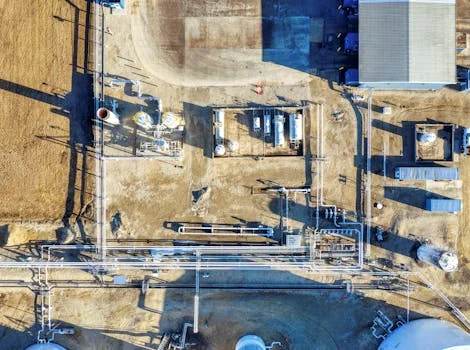
Pre-fabricated package wastewater treatment units significantly reduce on-site construction time by 40–60%, a critical advantage during Newfoundland's short construction seasons. The majority of the assembly and testing occurs in a controlled factory environment, minimizing the need for extensive skilled labor and heavy equipment at the remote site. This efficiency is paramount when dealing with limited access, harsh weather windows, and the high cost of mobilizing resources to isolated communities. Once on-site, these modular wastewater plants can often be installed and commissioned within weeks, rather than months, accelerating the path to compliance and improved public health.
Remote monitoring via PLC (Programmable Logic Controller) is indispensable for managing an off-grid wastewater solution in Newfoundland. This technology allows municipal staff to oversee system performance, identify potential issues, and troubleshoot alarms from a central location, often hundreds of kilometers away. This capability drastically reduces the need for frequent on-site visits by specialized operators, lowering operational costs and increasing system uptime. Data logging and real-time alerts ensure that any deviations from optimal performance are quickly addressed, preventing costly failures or environmental breaches.
Effective winterization is non-negotiable for cold climate sewage treatment. Package plants deployed in Newfoundland must incorporate robust winterization kits, including insulated piping, heat tracing for critical lines, and heated enclosures for pumps and control panels, to prevent downtime below -15°C. For below-grade units, the natural insulation of the earth provides a substantial advantage, but exposed components still require protection. Proper design ensures that biological processes remain stable even during prolonged periods of extreme cold, maintaining effluent quality.
Regular maintenance is crucial for the long-term reliability and efficiency of any package wastewater treatment plant. For remote locations, establishing clear maintenance intervals and a streamlined supply chain for spare parts is vital. Typical maintenance protocols include quarterly inspections of mechanical components and biological processes, annual sludge removal from clarifiers and digesters, and biannual checks and calibration of disinfection systems. Following a structured industrial maintenance protocol for package sewage plants ensures optimal performance and extends the lifespan of the equipment, safeguarding the community's investment.
Frequently Asked Questions
Understanding the fundamental aspects of package wastewater treatment plants is essential for municipal engineers and procurement officers evaluating solutions for small communities in Newfoundland.
What is a package wastewater treatment plant?
A package wastewater treatment plant is a factory-built, modular system that treats sewage using biological, physical, and chemical processes in a compact, transportable unit. These systems are ideal for small or remote communities due to their ease of deployment and minimal footprint, offering a complete small community sewage system.
How much does a small package plant cost in Newfoundland?
While exact figures vary based on technology, capacity, and site-specific requirements, systems designed for 500-person communities typically range from CAD $150,000–$300,000 installed, depending significantly on the complexity of the chosen technology and necessary site preparation.
Can package plants handle cold weather?
Yes, if specifically designed for cold climates. Buried units, such as the HydropureWater WSZ series, with robust insulation, heat tracing for exposed pipes, and automated heating systems for critical components, can effectively prevent freezing and maintain biological activity in conditions down to -20°C.
Are Chinese-made systems compliant in Canada?
Yes, Chinese-made systems can be fully compliant in Canada if they are certified to relevant Canadian Standards Association (CSA) standards (e.g., B128.1 for design) and accompanied by comprehensive engineering documentation. HydropureWater provides third-party validation and full technical specifications to ensure regulatory adherence for its modular wastewater plant solutions.
What capacity do I need for a 1,000-person town?
For a 1,000-person town, assuming an average wastewater generation of 150 L/person/day, the average daily flow would be 150 m³/day (6.25 m³/h). It is crucial to include a 30% peak flow margin for design purposes, which would bring the target capacity to approximately 8–10 m³/h to handle fluctuations effectively.
Related Equipment
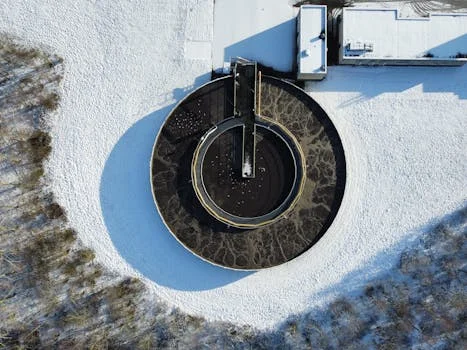
The following HydropureWater products are engineered for the wastewater challenges discussed above:
- fully automated underground package sewage treatment plant — view specifications, capacity range, and technical data
Need a customized solution? Request a free quote with your specific flow rate and pollutant parameters.