A package wastewater treatment plant in Arizona, USA, typically treats 1–2,000 m³/day using pre-engineered systems like MBR or A/O processes. These units meet ADEQ discharge standards with BOD <10 mg/L and TSS <15 mg/L, and can be deployed in 8–12 weeks—critical for fast-growing communities like Marana. For municipal engineers and industrial project managers, these modular systems represent a shift from traditional multi-year civil engineering projects toward rapid, scalable infrastructure that addresses the state’s unique water scarcity and regulatory requirements.
What Is a Package Wastewater Treatment Plant?
Package wastewater treatment plants are factory-built, skid-mounted systems designed for rapid deployment, typically handling 1–80 m³/h (up to 2,000 m³/day). These systems integrate all necessary treatment components—including primary clarification, biological aeration, secondary sedimentation, and disinfection—into a single or series of transportable modules. Unlike conventional site-built plants that require extensive on-site concrete pouring and assembly, package plants are pre-tested in a controlled environment, reducing installation time by 40–60%—critical in fast-growing Arizona communities where infrastructure must keep pace with residential expansion.
The technical distinction of a package plant lies in its modularity and footprint. Most units are designed to fit within standard shipping containers or onto heavy-duty skids, allowing for immediate placement on a simple concrete pad. This design is particularly advantageous for small towns, rural communities, industrial sites, and remote facilities where centralized sewer access is unavailable or cost-prohibitive to extend. Because these systems are prefabricated, they eliminate the variables of site-specific construction delays, ensuring that the biological process is ready for commissioning immediately upon connection to the influent and effluent lines.
For facility planners in Arizona, prefabricated sewage plants offer a predictable performance curve. Since the hydraulic retention times (HRT) and sludge age are calculated based on standardized reactor volumes, engineers can rely on consistent effluent quality regardless of local labor availability during the construction phase. This reliability is vital for projects requiring immediate compliance with local groundwater protection permits.
Top Technologies for Arizona’s Climate and Regulations
MBR systems achieve effluent quality with <1 μm filtration, ideal for reuse in Arizona’s water-scarce regions, with average COD removal rates of 95–98%. In the arid Southwest, where the Arizona Department of Environmental Quality (ADEQ) emphasizes water reclamation, the compact MBR membrane bioreactor system for high-quality effluent has become a standard for projects requiring Class A+ reclaimed water. These systems utilize a physical barrier (the membrane) to replace the secondary clarifier, resulting in a much smaller footprint and significantly higher effluent clarity.
Anoxic/Aerobic (A/O) systems, such as the fully automated underground package sewage treatment plant, are engineered to handle 1–80 m³/h with BOD removal exceeding 90% while requiring minimal operator intervention. These systems are particularly effective for domestic sewage in residential developments. For industrial applications, specifically those in food processing or metalworking, dissolved air flotation (DAF) systems are optimal for removing 90–95% of suspended solids and fats, oils, and grease (FOG) before biological treatment or sewer discharge.
ADEQ standards for surface discharge are stringent, requiring BOD ≤10 mg/L, TSS ≤15 mg/L, and fecal coliform <200 MPN/100mL. Both MBR and advanced A/O systems are capable of meeting these thresholds consistently. The following table provides a technical comparison of the primary technologies utilized in Arizona package plants:
| Technology Type | Avg. BOD Removal | Avg. TSS Removal | Arizona Application | Automation Level |
|---|---|---|---|---|
| MBR (Membrane Bioreactor) | >98% | <2 mg/L | Reclaimed water for irrigation | High (PLC/SCADA) |
| A/O (Anoxic/Aerobic) | 90-95% | <15 mg/L | Small community domestic sewage | Medium to High |
| DAF (Dissolved Air Flotation) | N/A (Pre-treatment) | 90-95% (FOG) | Industrial/Food Processing | Medium |
| SBR (Sequencing Batch Reactor) | 90-95% | <20 mg/L | Variable flow industrial sites | High |
Capacity and Sizing: Matching Flow Rates to Community Needs
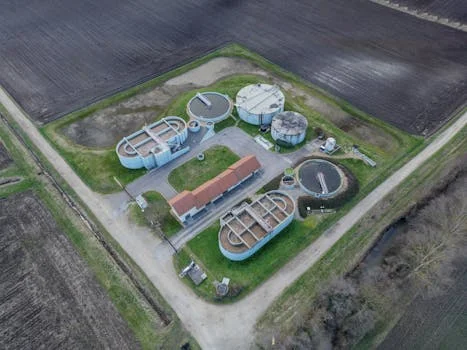
The residential rule of thumb for wastewater generation in Arizona is approximately 150–200 liters per person per day (L/person/day). For a small 500-person community or a high-density residential development, this necessitates a plant with a capacity of approximately 80–100 m³/day. Sizing a small community WWTP requires a careful analysis of peak hourly flow versus average daily flow to ensure the biological process is not "washed out" during high-use periods, such as morning or evening peaks.
The WSZ series of package plants offers a scalable range from 1 m³/h to 80 m³/h (equivalent to 24–1,920 m³/day). For larger developments, these units are often deployed in parallel. This modular approach allows planners to install only the capacity needed for "Phase 1" of a project, adding additional units as occupancy increases. This avoids the common pitfall of over-sizing a plant, which can lead to biological process instability due to low nutrient loading (low F/M ratio).
Industrial facilities must size their systems based on both peak hourly flow and contaminant load (COD/BOD concentration). Because industrial wastewater is often more concentrated than domestic sewage, a 50 m³/day industrial load may require the same reactor volume as a 200 m³/day domestic load. Utilizing modular DAF or MBR systems allows these facilities to expand their treatment capacity as production lines are added, without requiring a complete redesign of the wastewater infrastructure.
ADEQ Compliance and Permitting Timeline in Arizona
ADEQ requires an Onsite Wastewater Treatment Facility (OWTF) permit for any system with a design flow greater than 1,000 gallons per day (3.8 m³/day). For engineers and planners, navigating the ADEQ permitting process is the most critical path in the project timeline. The process typically begins with a Notice of Intent to Discharge (NOI), followed by a rigorous engineering review. A package wastewater treatment plant must be designed to meet the specific discharge limits set forth in Title 18, Chapter 9 of the Arizona Administrative Code.
The permit review process generally takes 60–90 days, provided the engineering plans, site layout, and effluent testing protocols are complete and accurate. Systems discharging to surface water must meet Article 4 standards: BOD ≤10 mg/L, TSS ≤15 mg/L, and pH between 6.0 and 9.0. Because many package systems, such as the WSZ series, can be installed underground or covered with landscaping, they often receive faster local zoning approval and reduced public pushback due to their minimal visual and odor impact.
In addition to the OWTF permit, facilities must ensure compliance with the Aquifer Protection Permit (APP) program if any effluent is being recharged into the ground. MBR systems are highly favored in these scenarios because their superior filtration capabilities reduce the risk of groundwater contamination, potentially simplifying the long-term monitoring requirements mandated by the state. Using a industrial maintenance protocol for package sewage plants ensures that the system stays within permit limits, avoiding the heavy fines associated with ADEQ non-compliance.
Cost Comparison: Arizona Package Plant Price Breakdown
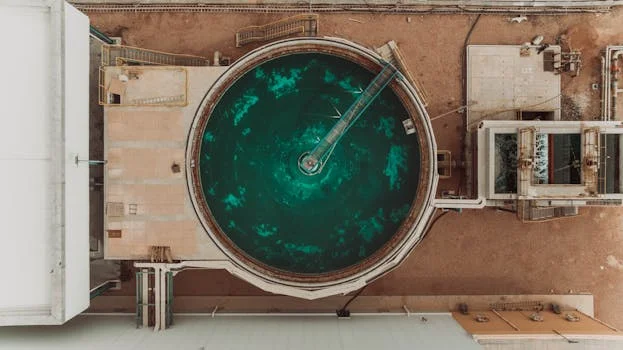
Small package treatment systems with capacities of 1–10 m³/h typically range from $80,000 to $180,000, depending on the level of filtration and automation required. For mid-range municipal needs (10–50 m³/h), costs generally fall between $200,000 and $500,000. Large-scale modular units (50–80 m³/h) can reach $550,000 to $900,000. While these capital expenditures (CAPEX) are significant, they are often 30-50% lower than the cost of constructing a traditional civil-engineered treatment works of the same capacity.
Technology choice significantly impacts both CAPEX and OPEX. MBR systems typically cost 20–30% more than standard A/O systems due to the cost of the membrane modules and more sophisticated aeration requirements. However, MBR units offer a 60% smaller footprint and produce effluent suitable for high-value reuse, which can offset costs in water-scarce Arizona regions. Installation adds an additional 15–25% to the equipment cost, covering site prep, piping, and electrical integration. Remote sites in Northern or Western Arizona may incur higher freight and specialized labor costs.
Operating costs (O&M) for automated A/O systems average $0.15–$0.35/m³, primarily covering electricity for blowers and occasional sludge hauling. MBR systems have higher O&M costs, ranging from $0.40–$0.60/m³, due to the chemical cleaning requirements for membranes and higher blower pressure. Detailed real modular sewage treatment system cost benchmarks by capacity provide further granularity for B2B procurement teams.
| System Capacity (m³/h) | Tech Type | Est. Equipment Cost (USD) | O&M Cost (per m³) |
|---|---|---|---|
| 1 - 10 | A/O (WSZ) | $80,000 - $180,000 | $0.15 - $0.25 |
| 10 - 50 | A/O (WSZ) | $200,000 - $450,000 | $0.20 - $0.30 |
| 10 - 50 | MBR | $260,000 - $580,000 | $0.40 - $0.55 |
| 50 - 80 | A/O or MBR | $550,000 - $900,000 | $0.30 - $0.60 |
Why Arizona Municipalities Choose Pre-Engineered Systems
The Town of Marana, Arizona, serves as a primary case study for the adoption of package systems to manage rapid population growth. When existing municipal lagoons or centralized facilities reach capacity, the 12–24 month timeline for a traditional plant expansion is often too slow to accommodate new housing developments. By deploying pre-engineered package plants, municipalities can add incremental capacity in under 6 months, including permitting and site work. This speed to market is the single most significant driver for modular adoption in the state.
Pre-fabrication reduces on-site labor requirements by 50%. In the arid and often extreme heat of Arizona, minimizing the time workers spend on-site for complex civil and mechanical assembly reduces project risk and safety liabilities. The factory-controlled environment ensures that the welding, electrical wiring, and coating of the underground sewage unit are performed to a higher standard than is often possible in the field.
Environmental and aesthetic considerations also favor package plants. Modern units like the WSZ series are designed for low noise and zero odor, allowing them to be placed in close proximity to residential zones or parks. By utilizing underground configurations, municipalities can preserve valuable green space or parkland above the treatment unit, a major advantage in high-density master-planned communities where every square foot of land is accounted for in the ROI calculation.
Frequently Asked Questions
What is a package wastewater treatment plant?
A package wastewater treatment plant is a factory-built, modular system designed for decentralized treatment. It arrives on-site pre-assembled on skids or in containers, typically serving capacities between 1 and 2,