What Is a Lime Dosing System and How Does It Work?
A lime dosing system automatically prepares and injects lime slurry to adjust pH in wastewater, typically raising it from acidic (pH <6) to neutral (pH 6.5–8.5) for safe discharge or downstream processing. This process is essential for industries ranging from mining and chemical manufacturing to food processing and municipal wastewater treatment, where effluent pH regulation is a core compliance requirement. The primary goal is to prevent corrosion of infrastructure, protect aquatic ecosystems, and optimize subsequent treatment stages like coagulation or biological processes. The operational mechanism begins with the storage of dry lime (either quicklime, CaO, or hydrated lime, Ca(OH)₂). Dry lime is conveyed from a storage hopper to a slaking tank, where it is thoroughly mixed with water to form a lime slurry. For quicklime, this slaking process is exothermic and requires careful temperature control to ensure complete hydration and prevent the formation of unreactive "grits." The slurry concentration is typically maintained within a range of 10–15% by weight to ensure pumpability and reactivity. Continuous agitation within the slaking tank prevents settling and maintains a homogeneous slurry. From the slaking tank, the prepared lime slurry is transferred by metering pumps to the designated treatment point in the wastewater stream. The dosing rate is precisely controlled by a feedback loop, which relies on real-time pH measurements from a sensor in the treated wastewater. If the pH deviates from the setpoint, the PLC control system adjusts the pump speed or duration, ensuring accurate and responsive pH correction. This closed-loop control system minimizes chemical overuse, reduces operational costs, and ensures consistent effluent quality.Key Components of an Industrial Lime Dosing System
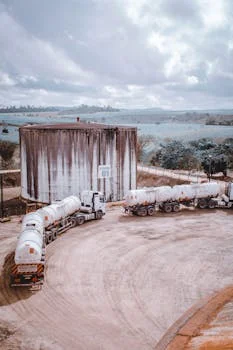
Hopper with Level Sensor: This unit stores the dry lime powder, typically constructed from stainless steel 304 or 316 to resist corrosion and abrasion. Capacities commonly range from 500 kg for smaller plants to 5,000 kg or more for large industrial applications, ensuring sufficient material supply between refills. Integrated level sensors provide real-time inventory monitoring, preventing unexpected material shortages and facilitating automated replenishment.
Screw Feeder or Rotary Valve: Responsible for controlling the precise flow of dry lime from the hopper into the slaking tank. Screw feeders, often equipped with variable frequency drives (VFDs), allow for highly accurate feed rates, typically from 5 kg/h to 100 kg/h, adapting to varying treatment demands. Rotary valves are used for consistent, volumetric feeding, particularly with fine powders.
Slaking and Mixing Tank: Where dry lime is mixed with water to form a slurry. Tanks are commonly sized between 1,000 L and 10,000 L, depending on the required slurry volume and retention time. An integrated agitator, operating at 30–60 rpm, ensures continuous mixing and prevents settling of lime particles. For quicklime (CaO), temperature control mechanisms (e.g., cooling jackets or water injection) are vital to manage the exothermic hydration reaction, preventing localized overheating and ensuring complete slaking without forming inactive calcium carbonate.
Dosing Pumps: These pumps transfer the prepared lime slurry from the slaking tank to the wastewater treatment point. Peristaltic and diaphragm pumps are preferred due to their ability to handle abrasive slurries and provide accurate, pulse-free dosing. Typical flow ranges for industrial applications are 0.5 L/h to 50 L/h, with a turndown ratio up to 10:1, allowing for adaptive dosing across a wide range of process flows and pH deviations. For enhanced control and reliability, HydropureWater's PLC-controlled automatic chemical dosing system integrates these pumps seamlessly.
| Component | Typical Specification Range | Material of Construction |
|---|---|---|
| Dry Lime Hopper | Capacity: 500–5,000 kg | Stainless Steel 304/316 |
| Screw Feeder | Feed Rate: 5–100 kg/h (VFD-controlled) | Stainless Steel 304/316 |
| Slaking/Mixing Tank | Volume: 1,000–10,000 L; Agitator: 30–60 rpm | Stainless Steel 304/316, FRP lining (optional) |
| Dosing Pumps | Flow Rate: 0.5–50 L/h; Turndown: 10:1 | Peristaltic (hose material: EPDM, Hypalon) or Diaphragm (PTFE, EPDM) |
| pH Sensor | Range: 0–14 pH; Accuracy: ±0.02 pH | Industrial-grade polymer body, glass electrode |
Dry vs. Wet Lime Dosing: Performance, Cost, and Safety Comparison
Choosing between dry and wet lime dosing systems involves evaluating trade-offs in performance, capital expenditure, operational costs, and safety protocols. Each system type offers distinct advantages depending on the application's scale, site constraints, and available infrastructure. Dry lime dosing systems utilize powdered quicklime (CaO) or hydrated lime (Ca(OH)₂) which is stored in bulk silos or hoppers and then slaked on-site to produce slurry. These systems offer higher storage density, meaning more active chemical can be stored in a smaller footprint compared to pre-slaked liquid lime. However, handling dry lime powder introduces potential dust explosion risks, requiring compliance with standards like NEC Class II, Division 2, which mandates specific electrical classifications and dust control measures (e.g., dust collectors, enclosed conveying). Dosing accuracy for dry systems typically achieves ±2% with precise calibration and consistent material flow. Wet lime dosing systems, conversely, use pre-slaked lime slurry, usually delivered at a concentration of 15–20% by weight. This eliminates the need for on-site slaking equipment and significantly reduces dust generation, thereby mitigating explosion risks and improving worker safety. The consistent viscosity of pre-slaked slurry often allows for higher dosing accuracy, reaching ±1%, as pump calibration is less affected by variations in material consistency. While wet systems reduce maintenance associated with slaking equipment and dust management, they incur higher transportation costs due to the water content and require larger storage volumes for equivalent amounts of active lime. Maintenance frequency also differs significantly. Dry systems often require weekly hopper cleaning to prevent caking and arching of dry powder, along with regular inspection of screw feeders and slakers. Wet systems typically need monthly pump inspection and calibration, and periodic tank desludging to remove settled solids, but generally have less intensive daily operational oversight. The decision framework often balances the higher capital cost and operational complexity of dry systems against the increased logistics and storage costs of wet systems, while prioritizing site-specific safety and compliance requirements.| Feature | Dry Lime Dosing System | Wet Lime Dosing System (Pre-slaked Slurry) |
|---|---|---|
| Lime Form | Powder (Quicklime CaO or Hydrated Lime Ca(OH)₂) | Liquid Slurry (15–20% Ca(OH)₂ by weight) |
| On-site Slaking | Required (slaker, agitator, temperature control) | Not required |
| Storage Density | High (compact footprint for active chemical) | Lower (more volume for same active chemical due to water) |
| Dosing Accuracy | ±2% (with proper calibration and material consistency) | ±1% (due to consistent slurry viscosity) |
| Dust Risk | High (requires dust extraction, NEC Class II Div 2 compliance) | Minimal to None |
| Safety Profile | Requires careful handling of powder, exothermic slaking | Safer, eliminates dust and exothermic reactions |
| Maintenance Frequency | Weekly hopper cleaning, regular slaker/feeder inspection | Monthly pump inspection/calibration, periodic tank desludging |
| Transportation Cost | Lower (transporting dry powder) | Higher (transporting water with lime) |
| Capital Cost | Higher (includes slaker, dust control, specialized feeders) | Lower (simpler storage and pumping equipment) |
Critical Performance Parameters for System Selection
Dosing Accuracy: The ability of the system to consistently deliver the exact amount of lime required is paramount. Industrial systems must maintain dosing accuracy within ±1–2% of the setpoint under variable flow and load conditions (per EPA Wastewater Technology Fact Sheet on pH Control). Achieving this precision minimizes chemical consumption, reduces operational costs, and prevents over-dosing, which can lead to secondary pH issues or increased sludge volume. HydropureWater systems are designed for a ±1% accuracy under typical operating conditions.
Slurry Concentration Range: The system's capability to handle and maintain a consistent lime slurry concentration is critical for stable dosing and pumpability. An optimal range of 5–20% by weight balances reactivity, stability against settling, and prevents pump cavitation or clogging. Systems that can reliably operate within this range offer flexibility and efficiency, adapting to different lime qualities and process requirements.
Response Time: In dynamic industrial wastewater streams, rapid pH fluctuations are common. An effective lime dosing system should adjust its dosage within 60 seconds of a pH deviation exceeding 0.3 units from the setpoint. This quick response prevents prolonged excursions outside the target pH range, ensuring continuous compliance and protecting downstream processes.
PLC Control and Integration: Modern lime dosing systems require full automation for reliability and ease of operation. This includes PLC (Programmable Logic Controller) control with advanced algorithms for pH feedback, adaptive dosing, and fault detection. Integration capabilities such as MODBUS or Profibus allow seamless communication with existing plant SCADA (Supervisory Control and Data Acquisition) systems, enabling remote monitoring, data logging for audit trails, and predictive maintenance. HydropureWater offers automatic chemical dosing systems with comprehensive PLC control for enhanced reliability.
| Performance Parameter | HydropureWater Specification | Industry Benchmark (Typical) |
|---|---|---|
| Dosing Accuracy (of setpoint) | ±1% | ±1–2% |
| Slurry Concentration Range (by weight) | 5–20% | 8–15% |
| pH Response Time (for >0.3 pH deviation) | < 60 seconds | < 90 seconds |
| PLC Integration | MODBUS/Profibus, SCADA compatible, Alarm Logging | Basic feedback control, limited external integration |
| Process Reliability | > 95% Uptime (excluding planned maintenance) | > 90% Uptime |
Compliance and Environmental Standards for Lime Dosing
Adherence to regulatory frameworks is a non-negotiable aspect of industrial wastewater treatment. A properly designed and operated lime dosing system must ensure compliance with environmental discharge permits and worker safety standards. The United States Environmental Protection Agency (EPA) sets specific pH discharge limits for industrial effluent, typically ranging from 6.0–9.0 pH (40 CFR Part 403). Exceeding these limits can result in significant fines and operational disruptions. Lime dosing systems are engineered to consistently maintain effluent within these parameters, often targeting a narrower range (e.g., 6.5–8.5) to provide a safety margin. Worker safety is also a critical consideration. The Occupational Safety and Health Administration (OSHA) establishes a Permissible Exposure Limit (PEL) for lime dust at 5 mg/m³ (8-hour Time-Weighted Average). Effective lime dosing systems must incorporate dust extraction mechanisms, enclosed feeding systems, and proper ventilation to protect operators from inhalation hazards. This is particularly relevant for dry lime handling and slaking operations. international guidelines, such as the European Union's Best Available Techniques (BAT) Reference Document (BREF) on Wastewater Treatment, mandate closed-loop dosing systems with integrated leak detection for hazardous chemicals. While lime is generally less hazardous than strong acids or bases, ensuring containment and preventing spills is crucial for environmental protection and operational integrity. HydropureWater's systems are designed with these compliance requirements in mind, offering robust solutions for safe and compliant operation.Frequently Asked Questions