There are over 300 municipal sewage treatment plants in Washington state, with 248 publicly owned facilities regulated under the NPDES program. Unlike Blue Plains in Washington, D.C., which treats nearly 1 billion gallons daily, Washington state’s plants typically serve regional and local communities, using primary, secondary, and increasingly advanced tertiary processes to meet EPA and state discharge standards.
Washington State vs. Washington DC: Clearing the Confusion
Blue Plains Advanced Wastewater Treatment Plant is located in Washington, D.C., and is not part of the municipal infrastructure of Washington state. This distinction is frequently lost in search engine results, leading to significant misinformation for engineers and procurement officers researching West Coast infrastructure. While Blue Plains is a singular, massive facility operated by DC Water, Washington state utilizes a decentralized network of regional and local plants managed by various municipalities, counties, and special-purpose districts.
According to DC Water and historical records, Blue Plains treats close to 1 billion gallons of sewage during peak weather events, making it the largest advanced wastewater treatment facility in the world. In contrast, even the largest facilities in Washington state—such as King County’s West Point Treatment Plant—operate at a significantly lower average dry weather flow, typically around 90 to 125 million gallons per day (MGD). The confusion often stems from the shared "Washington" name, but the regulatory frameworks, geographic challenges, and discharge environments differ fundamentally. Washington state facilities discharge primarily into the Puget Sound, the Columbia River, or various inland aquifers, necessitating a diverse range of technological applications tailored to specific ecological sensitivities.
For a municipal engineer in the Pacific Northwest, the focus is rarely on the mega-scale centralized model of the East Coast. Instead, Washington state is characterized by medium-to-large regional hubs and a vast number of smaller, decentralized systems serving rural communities. Understanding this distinction is the first step in accurately assessing the state's capacity and the technological requirements for local infrastructure upgrades.
Municipal Wastewater Infrastructure in Washington State
Washington state operates 248 publicly owned wastewater treatment plants (WWTPs) that are strictly regulated under the National Pollutant Discharge Elimination System (NPDES) program. These facilities are overseen by the Washington State Department of Ecology, which ensures compliance with the federal Clean Water Act and state-specific standards. In total, there are over 300 regulated wastewater facilities when including privately owned and industrial-specific municipal discharge points.
The distribution of these plants reflects the state's unique geography. High-density areas in the Puget Sound region utilize large regional facilities. A prime example is the Edmonds WWTP, which opened in 1957. Originally designed as a primary treatment plant, it has undergone multiple expansions to serve the cities of Edmonds, Mountlake Terrace, and portions of Shoreline and Olympic View. Today, it processes millions of gallons daily using advanced secondary treatment and solids handling, including incineration—a rarity in modern plants but a legacy of its urban footprint constraints.
Beyond the metropolitan hubs, the state’s infrastructure relies on smaller systems. Many of these are "package" or modular installations in rural Eastern Washington or coastal communities where the population density does not justify the massive capital expenditure of a traditional concrete-basin plant. These smaller facilities are increasingly under pressure to upgrade as the Department of Ecology tightens limits on nutrients like phosphorus and nitrogen to prevent eutrophication in state waterways. The data shows that while the top 10% of plants handle the majority of the state's total flow volume, the remaining 90% represent the most significant opportunity for technological modernization and modular implementation.
Common Treatment Technologies in Washington’s Sewage Plants
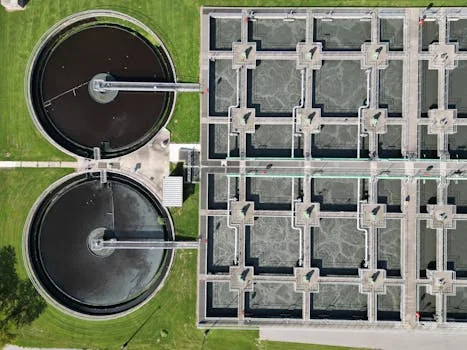
Secondary biological treatment is the minimum federal standard for municipal wastewater in Washington, though a growing percentage of plants have integrated advanced tertiary filtration to meet Puget Sound nutrient limits. The technology stack at a typical municipal sewage treatment plant in washington usa varies based on the age of the facility and the sensitivity of the receiving water body.
Primary treatment remains the foundational step in older facilities like Edmonds, utilizing physical screening and gravity-based sedimentation to remove settleable solids and floatable grease. However, most modern permits require rigorous secondary treatment. The activated sludge process is the most common, where aerobic bacteria digest organic matter (BOD). In more constrained environments or those with high-strength influent, trickling filters or rotating biological contactors (RBCs) are utilized.
Tertiary treatment is where the most significant technological shifts are occurring. To combat rising ammonia and phosphorus levels, plants are adopting membrane technologies and advanced oxidation. The use of an dissolved air flotation (DAF) machine is becoming a standard for plants dealing with high levels of fats, oils, and grease (FOG) or for thickening waste activated sludge (WAS) before dewatering. For communities seeking water reuse or high-clarity effluent, an MBR vs conventional treatment systems comparison reveals that membrane bioreactors are becoming the preferred choice for footprint-constrained upgrades.
| Treatment Level | Primary Technology | Target Contaminants | Washington State Application |
|---|---|---|---|
| Primary | Clarifiers, Bar Screens | TSS (50-70%), BOD (25-40%) | Standard initial step in all 248 POTWs. |
| Secondary | Activated Sludge, SBR | BOD (>85%), TSS (>85%) | Regulatory baseline for NPDES compliance. |
| Tertiary | Sand Filters, UV, MBR | Nutrients (N/P), Pathogens | Required for Puget Sound & sensitive rivers. |
| Solids Handling | DAF, Belt Press, Incineration | Sludge Volume Reduction | Critical for Edmonds and urban regional hubs. |
Modular and Packaged Systems for Municipal Use
Prefabricated modular wastewater systems are engineered to handle flow rates between 1 and 80 m³/h, making them a high-efficiency alternative for decentralized municipal clusters and rural expansion projects. In Washington state, where geographic isolation and environmental regulations often clash, these systems provide a "plug-and-play" solution that bypasses the 24-36 month construction timelines associated with traditional poured-in-place concrete facilities.
A compact underground package sewage treatment plant is particularly effective for small municipalities or new housing developments. These systems use the WSZ series configuration, which integrates anaerobic, anoxic, and oxic (A2/O) zones into a single carbon steel or FRP vessel. This allows for significant nitrogen and phosphorus removal within a footprint that is 40-50% smaller than a conventional oxidation ditch. Because the units are buried, they offer excellent thermal insulation—a critical factor for biological activity during cold Eastern Washington winters—and eliminate aesthetic or odor concerns for nearby residents.
For more stringent requirements, an integrated MBR membrane bioreactor system provides effluent quality that often exceeds state "Class A" reclaimed water standards. By replacing the secondary clarifier with a membrane module (typically 0.03 to 0.1 μm pore size), the system ensures that virtually no suspended solids or pathogens pass into the final discharge. This technology is ideal for Washington municipalities facing "zero-discharge" mandates or those looking to use treated effluent for irrigation or industrial cooling. HydropureWater’s MBR systems are specifically designed to meet EPA and Washington Department of Ecology standards for BOD (<5 mg/L) and TSS (<2 mg/L), providing a reliable path to NPDES permit compliance.
| System Type | Capacity Range | Key Advantage | Best Use Case in WA |
|---|---|---|---|
| WSZ Underground | 10 - 2,000 m³/day | Low OPEX, zero surface footprint | Rural towns, highway rest areas. |
| Integrated MBR | 50 - 5,000 m³/day | Superior effluent, reuse ready | Sensitive watersheds, water scarcity zones. |
| Containerized DAF | 5 - 150 m³/h | Rapid FOG and solids removal | Municipal-industrial co-treatment. |
Compliance, Costs, and ROI for Municipal Upgrades
The Washington Department of Ecology enforces strict effluent limits for nitrogen and phosphorus in the Puget Sound basin, necessitating capital upgrades that can range from $2 million to over $100 million depending on plant capacity. For procurement officers, the Total Cost of Ownership (TCO) is a more critical metric than initial CAPEX. While traditional concrete infrastructure has a 50-year lifespan, the high cost of site preparation and labor in Washington state often makes prefabricated systems more financially viable.
Data from recent regional projects suggests that utilizing a prefabricated wastewater plant maintenance guide and modular equipment can reduce initial capital expenditure by 20% to 30%. These savings are primarily realized through reduced on-site civil engineering and shorter installation windows. The ROI for upgrading to high-efficiency aeration and membrane systems is often realized within 3 to 7 years through reduced energy consumption and lower chemical dosing requirements.
Compliance is the ultimate driver of ROI. With NPDES violations carrying heavy fines and the potential for "moratoriums" on new building permits, investing in a robust sludge dewatering system or an MBR upgrade ensures long-term operational security. Advanced systems reduce the volume of sludge hauled to landfills—a major cost for Washington municipalities—and ensure that effluent consistently meets the state’s evolving water quality standards.
Frequently Asked Questions
How many municipal wastewater treatment plants are in Washington state?
Washington state has over 300 regulated wastewater treatment facilities. Of these, 248 are publicly owned treatment works (POTWs) that operate under the National Pollutant Discharge Elimination System (NPDES) permit program.
What is the largest sewage treatment plant in Washington state?
The West Point Treatment Plant in Seattle is the largest, with an average dry weather capacity of approximately 125 MGD. It is important to note that Blue Plains is in Washington, D.C., and is not a Washington state facility.
Do Washington state WWTPs use MBR technology?
Yes, MBR technology is increasingly common in Washington, particularly in areas with strict nutrient limits or where reclaimed water is needed for irrigation, such as in the City of Snoqualmie.
Are packaged treatment plants compliant with state regulations?
Yes, packaged and modular systems are compliant if they are engineered to meet the specific effluent limits set by the Washington Department of Ecology and the EPA under the plant's NPDES permit.
Can modular systems handle industrial wastewater?
Modular systems are highly effective for industrial-municipal co-treatment, especially when paired with DAF units for pre-treatment of high-solids or high-FOG influent common in food processing regions of the state.