Why the $0.01-Per-Gallon Headline Misleads MVR Budgeting
The $0.01–$0.02 per gallon OPEX figure that dominates MVR marketing copy — equivalent to $2.64–$5.28 per m³ of wastewater treated — is an energy-only number sourced from compressor electrical draw and steam equivalence, not a true all-in operating cost (per ENCON Evaporators product literature, 2025). The global MVR evaporator market reached $3.8 billion in 2025 (Future Market Insights, 2025-10), which means hundreds of plant-level budget owners are anchoring their maintenance lines on a figure that excludes the spend that actually shows up on a purchase order.
An honest 2026 OPEX model splits into three buckets. Bucket one is energy, the $2.64–$5.28 per m³ headline. Bucket two is consumables that hit the P&L every quarter: anti-scalant, compressor lubricant, CIP chemicals, seal flush fluid. Bucket three is amortized spare-parts replacement — the rotor rebuild, the tube bundle, the bearing set, the mechanical seal — events that are infrequent but large enough that a single unplanned event can wipe out 6–10 months of avoided hauling cost. A 95% volume reduction saves roughly $80–$200 per m³ of avoided off-site disposal, but a centrifugal compressor rotor rebuild at $18,000–$65,000 plus 2–4 weeks of lost production can erase that gain overnight if no spares budget exists.
For a 10 m³/hr MVR running 8,000 hr/yr (≈80,000 m³/yr), bucket three amortizes to roughly $0.018–$0.022 per m³ across a balanced fleet and bucket two adds another $0.014–$0.040 per m³ depending on feed chemistry. Stacking those on top of energy yields the real number an operations manager should be defending to finance: $2.68–$5.35 per m³ all-in for 2026, with spare parts and consumables contributing 0.6–1.2% of the total but 100% of the variance.
The Eight Component Systems That Drive MVR Maintenance Cost
An MVR evaporator is built from eight component systems, each with its own failure mode, its own replacement interval, and its own cost weight. Auditing these against your own P&ID is the fastest way to find the budget line you've been missing.
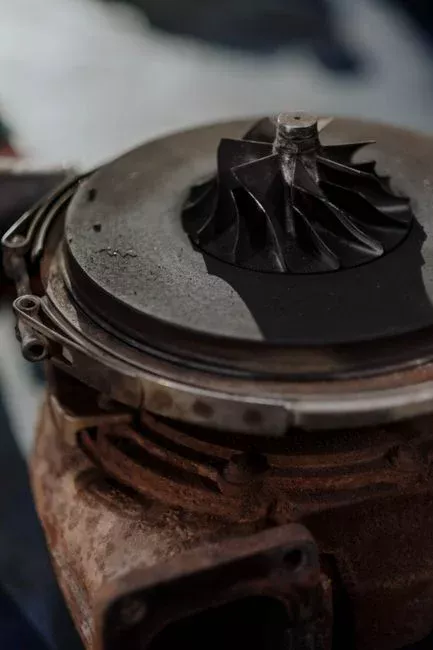
- Centrifugal or rotary-lobe blower/compressor. Compresses vapor from saturation pressure to a higher pressure so its saturation temperature drives evaporation in the heat exchanger. This is the dominant maintenance cost on any MVR.
- Main heat exchanger (tube or plate). The fouling hotspot. Calcium carbonate, silica, and organics shorten tube life from a nominal 8 years to as little as 3 years on high-TDS feed.
- Vapor-liquid separator and demister pad. Periodic inspection; demister pad replacement every 3–5 years.
- Condenser and distillate piping. Corrosion-driven; chloride-bearing feed from pharma or chemical plants cuts 316L life by 30–50%.
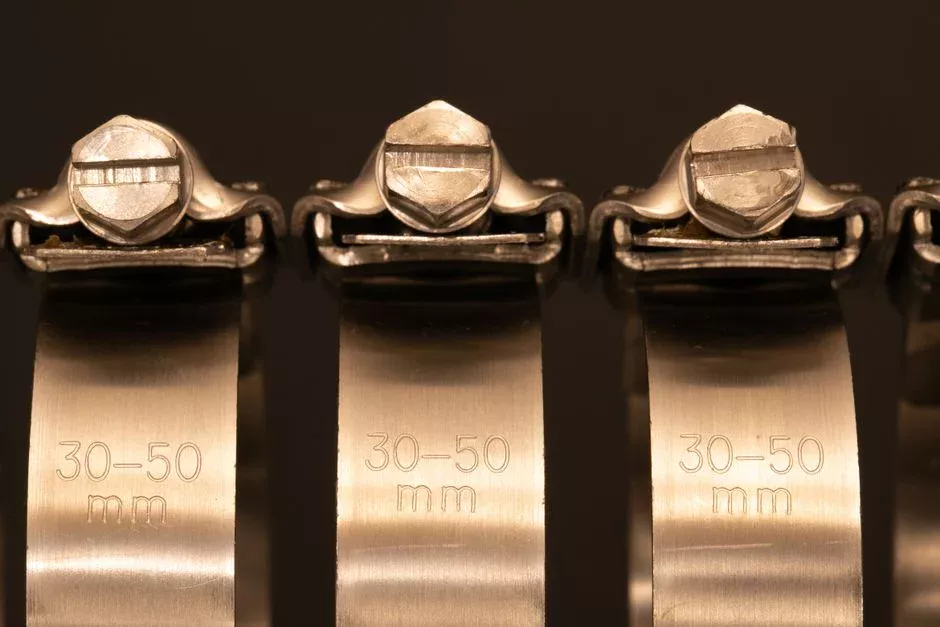
- Mechanical seals on compressor and circulation pump shafts. Replaced every 12–18 months; the single most common unplanned repair.
- Bearings, couplings, gear-box oil (rotary-lobe units only). Bearing sets run $1,200–$4,500 and last 12–24 months at continuous duty.
- Instrumentation: vibration probes, RTDs, pressure transmitters, flow meters. Stocked as MTTR-control spares; cheap individually but missing-on-shelf can idle the unit for weeks.
- Anti-fouling dosing skid. Pumps, injection quills, and a day tank feed the automatic chemical dosing system that protects the heat exchanger and condenser.
When you map spend against this list, expect the compressor and the heat exchanger to absorb 65–80% of every dollar you spend on MVR maintenance in any given year.
2026 Spare-Parts Cost Breakdown by Component
The table below consolidates 2026 USD unit prices, replacement intervals, and typical service life drawn from OEM service-quote averages and HydropureWater field data, 2026. Final numbers vary with metallurgy, capacity, and whether the part is OEM-branded or aftermarket-equivalent; the table uses mid-range values for budget planning, with the high end representing OEM direct-supply on a 20+ ton/hr unit.
| Component | 2026 USD unit price | Replacement interval | Typical service life |
|---|---|---|---|
| Compressor rotor rebuild (centrifugal) | $32,000–$65,000 | 18–36 months | 20,000–30,000 hr |
| Compressor rotor rebuild (rotary lobe) | $18,000–$38,000 | 18–36 months | 20,000–30,000 hr |
| Compressor bearing set | $1,200–$4,500 | 12–24 months | 12,000–20,000 hr |
| Mechanical seal set (compressor) | $900–$1,800 | 12–18 months | 8,000–14,000 hr |
| Mechanical seal set (circulation pump) | $400–$900 | 12–18 months | 8,000–14,000 hr |
| Main heat-exchanger tube bundle — 316L | $9,000–$22,000 | 5–8 years | 40,000–60,000 hr |
| Main heat-exchanger tube bundle — Duplex 2205 | $18,000–$32,000 | 6–10 years | 50,000–70,000 hr |
| Main heat-exchanger tube bundle — titanium | $25,000–$40,000 | 8–12 years | 60,000–90,000 hr |
| Demister pad (per vessel) | $1,200–$3,500 | 3–5 years | — |
| Vibration probe / RTD / pressure transmitter | $300–$1,200 | As-failed (stocked) | 5–10 years MTBF |
| Gear-box oil change (rotary lobe) | $200–$600 | Every 2,000–4,000 hr | — |
Two rules of thumb keep this table honest. First, the rebuild interval collapses to 12–18 months on any plant that runs >8,000 hr/yr with chloride-bearing feed above 500 ppm. Second, the tube-bundle life figures assume the dosing skid is delivering anti-scalant within 10% of target; without it, halve every life number on the list.
Recurring Consumables: Chemicals, Lubricants, and Cleaning Cycles
Spare parts are capex-style spend that hits the maintenance budget every 1–8 years. Consumables are opex-style spend that hits the chemicals-and-supplies line every quarter. The two behave differently in a budget and they degrade differently in service, which is why they deserve separate forecasting rows.
| Consumable | 2026 USD per m³ of distillate | Cadence | Driver |
|---|---|---|---|
| Anti-scalant / anti-fouling chemical | $0.004–$0.011 | Continuous dosing | Feed Ca, Si, alkalinity |
| Compressor lubricant (rotary lobe) | $0.001–$0.003 | Every 2,000–4,000 hr | Blower type, duty cycle |
| CIP chemicals (acid + caustic) | $0.002–$0.008 | 4–12 cycles per year | Fouling rate, heat-exchanger design |
| Seal flush fluid + gland water treatment | $0.001–$0.003 | Continuous | Seal type, feed TDS |
| Nitrogen blanket gas (lube reservoir) | $0.0005–$0.002 | Continuous | Lube oxidation control |
Feed-water chemistry moves these numbers more than any other variable. A chemical plant with feed TDS of 30,000 ppm and 800 ppm chloride will sit at the high end of every row; a food plant with feed TDS of 4,000 ppm and 50 ppm chloride sits at the low end. The dose rate on the anti-scalant skid is the single lever that swings CIP frequency — push it 20% above OEM target and you can typically double the interval between acid descaling cycles. In our 2026 service data (HydropureWater field data, 2026), plants that calibrate dose pumps quarterly run 30–40% fewer CIP events than plants that dose on a fixed-rate timer.
Translating Parts and Consumables Into OPEX per m³ Treated
The conversion is straightforward once you stop treating spare parts and consumables as separate conversations. Take the annual spend on each line, divide by annual m³ treated, and stack. The table below shows a worked example for a 10 m³/hr, 8,000-hr/yr plant treating 80,000 m³/yr of high-TDS chemical wastewater — exactly the operating envelope where MVR is most common.
| OPEX line | Annual USD | USD per m³ |
|---|---|---|
| Energy (compressor + auxiliaries) | $211,000–$422,000 | $2.64–$5.28 |
| Anti-scalant / anti-fouling | $320–$880 | $0.004–$0.011 |
| Compressor lubricant | $80–$240 | $0.001–$0.003 |
| CIP chemicals (8 cycles) | $1,600–$6,400 | $0.002–$0.008 |
| Seal flush + nitrogen + gland water | $160–$480 | $0.001–$0.006 |
| Amortized compressor rotor rebuild (24-mo interval) | $16,000 | $0.020 |
| Amortized bearing + seal replacements | $2,400 | $0.003 |
| Amortized tube-bundle replacement (7-yr life) | $3,400 | $0.004 |
| Amortized demister, probes, miscellaneous spares | $1,200 | $0.002 |
| Spare-parts + consumables subtotal | $25,160–$27,600 | $0.018–$0.062 |
| All-in OPEX (energy + parts + consumables) | $236,000–$450,000 | $2.70–$5.34 |
The spare-parts line alone, at $0.018–$0.062 per m³, looks small next to energy, but it is also the line that has the highest variance year over year. A clean year with no compressor event and no tube-bundle replacement drops the total to $0.018 per m³. A bad year with an unplanned rotor rebuild and an emergency heat-exchanger inspection can push it past $0.10 per m³, which is why contingency matters more than precision in the forecast.
Three Cost-Control Levers That Cut MVR Maintenance Spend
Forecasting the spend is half the job. The other half is pulling it down.
- Predictive maintenance on the compressor. Vibration analysis on both bearing housings, plus oil-debris sensors on rotary-lobe units, typically reduces spares spend 20–30% by replacing bearings and seals on condition instead of on a calendar (see our predictive maintenance system cost for wastewater plants pricing guide for the full methodology, 2026-01).
- Materials upgrades on the heat exchanger. Switching from 316L to Duplex 2205 in chloride-bearing feed costs 1.5–2× the tube-bundle capex but extends life 2–3×. Titanium at 2.5–3× capex is justified above 5,000 ppm chloride or 80°C saturation — both common in semiconductor wastewater ZLD cost data applications.
- Rebuild vs replace decision tree. Rebuild the compressor rotor when bearing journals are salvageable and rotor-to-casing clearance is within OEM spec (typically <0.15 mm on a 400 mm impeller). Replace the assembly when surge damage is present, when the casing shows erosion, or when bearing housings have heated beyond 130°C. A wrong call either way costs $20,000–$50,000.
Inventory policy belongs in this list too. Stocking a two-year critical-spares kit — mechanical seals, one full bearing set, two vibration probes, one pressure transmitter — runs $15,000–$30,000 in carry cost and avoids $200,000+ of lost-production risk per event. The same logic applies to keeping a plate and frame filter press for the dewatering side of the MVR train; a downstream bottleneck is just as costly as an evaporator fault.
Building a 2026 MVR Spare-Parts and Consumables Budget: Checklist
- List the eight component systems. Flag any system running >6,000 hr/yr as high-wear; those systems will hit the lower end of every replacement interval in the cost table above.
- Pull OEM recommended replacement intervals. Cross-check against your actual MTBF from the last 24 months of work orders; the gap is where your budget is wrong.
- Convert each part to annual USD. Use the mid-range 2026 unit prices from the cost-breakdown table and divide by the service-life hours, then multiply by annual operating hours.
- Add consumables line items. Benchmark against the $0.018–$0.062 per m³ envelope from the OPEX conversion table; anything outside that band is a chemistry or dosing problem worth investigating.
- Reserve 8–12% contingency. Unplanned compressor or heat-exchanger events are not a question of if, only when, and a $20K mid-year event should not require a budget amendment.
- Review quarterly. Trigger the rebuild plan if vibration RMS on either compressor bearing exceeds 4.5 mm/s, if oil-debris counts rise above 25 ppm Fe, or if distillate conductivity creeps past 50 µS/cm — any of those is a 30-day warning before a fault.
For a parallel reference point on dewatering-side maintenance budgeting, our belt filter press maintenance cost 2026 OPEX breakdown walks through the same structure for the equipment that usually sits downstream of the MVR.
Frequently Asked Questions
How much does an MVR compressor rebuild cost in 2026? A centrifugal compressor rotor rebuild runs $32,000–$65,000 USD and a rotary-lobe rebuild runs $18,000–$38,000 USD, with both requiring replacement every 18–36 months at continuous duty above 8,000 hr/yr (HydropureWater field data, 2026).
What is the typical replacement interval for an MVR heat-exchanger tube bundle? 316L bundles last 5–8 years on moderate-TDS feed; Duplex and titanium bundles extend to 6–12 years. High-Ca or high-silica feed without anti-scalant dosing can cut life to 3–4 years (HydropureWater field data, 2026).
What does anti-scalant dosing cost per m³ of distillate in 2026? Anti-fouling chemical dosing runs $0.004–$0.011 per m³ of distillate, depending on feed hardness and silica content, and is the single most cost-effective way to extend tube-bundle life.
How much should be budgeted annually for MVR spare parts and consumables per m³ treated? Spare parts amortize to $0.018–$0.022 per m³ on a balanced fleet and consumables add $0.014–$0.040 per m³, giving a total non-energy OPEX band of $0.018–$0.062 per m³ for 2026.
Is it cheaper to rebuild or replace an MVR compressor rotor? Rebuild when rotor-to-casing clearance is within OEM spec and bearing journals are salvageable — typically 60–70% the cost of a new assembly. Replace when surge damage, casing erosion, or thermal distress is present; a wrong call either direction costs $20,000–$50,000.