Why Automatic Sampling Replaces Manual Grab Sampling in 2026
A single grab sample pulled at 9 a.m. on a Tuesday cannot represent a discharge that varies by 300% between 10 p.m. and 4 a.m. — and that statistical gap is the most common root cause of NPDES and GB 18918-2002 permit violations in food, chemical, and metal-finishing operations. Intermittent slug loads from cleaning cycles, CIP rinses, and batch dumps land almost entirely outside day-shift hours, so a manual sampling program literally cannot see the event it is required to detect. Flow-paced composite sampling is the accepted default under ISO 5667-10:2020 (water quality — sampling guidance) and EPA 40 CFR 122.41 (NPDES monitoring requirements) because it accumulates 50–200 aliquots into one refrigerated bottle over a 24-hour window proportional to measured flow.
A "representative sample" in this context means a flow-paced composite: the sampler accepts a 4–20 mA signal from a magmeter and pulls a 10–1,000 mL aliquot per pulse, compositing into a single 2–10 L bottle that the laboratory then sub-samples for BOD, COD, TSS, metals, or nutrients. Manual sampling labor costs 2–3 hours per event at $25–$45/hr, or roughly $1,800–$3,200 per year per monitoring point — a figure that repays automatic sampler CAPEX within 12–18 months for most single-point industrial installations (HydropureWater field data, 2026). The remaining question is no longer whether to automate but which technology and which vendor tier match the discharge permit.
The Five Sampler Technologies Compared: Portable, Refrigerated, Composite, Online, and Grab
Sampler selection is a process-fit decision, not a brand decision. The five technologies below cover roughly 95% of industrial and municipal applications; matching the wrong one to a flow regime is the leading cause of audit findings on chain-of-custody documentation.
| Technology | Typical Flow Range | Sample Volume Accuracy | Power | Enclosure (min.) | Price Range (CAPEX) | Best-Fit Application |
|---|---|---|---|---|---|---|
| Portable | Intermittent / spot | ±5% per aliquot | 12 V DC / battery | NEMA 4X / IP67 | $1,800–$4,500 | Manhole installation, temporary monitoring, construction dewatering |
| Refrigerated composite | Continuous / flow-paced | ±5% per aliquot | 110–240 V AC | NEMA 4X / IP67 | $8,000–$18,000+ | BOD, COD, microbiological — any parameter with 24–48 h hold-time sensitivity |
| Composite (non-refrigerated) | Continuous / flow-paced | ±5–10% per aliquot | 110–240 V AC or solar | IP65 | $3,000–$7,000 | pH-stable, non-biodegradable analytes (metals, TSS, hardness) |
| Online / event-triggered | Continuous with threshold logic | ±5% per aliquot | 110–240 V AC | NEMA 4X | $10,000–$20,000+ | pH excursion capture, storm-spill events, integrated with AI process control suppliers for wastewater |
| Grab (manual) | Spot | Single shot | None | None | $50–$300 (bottle only) | Oil & grease, VOCs, residual Cl₂ — never the sole compliance method |
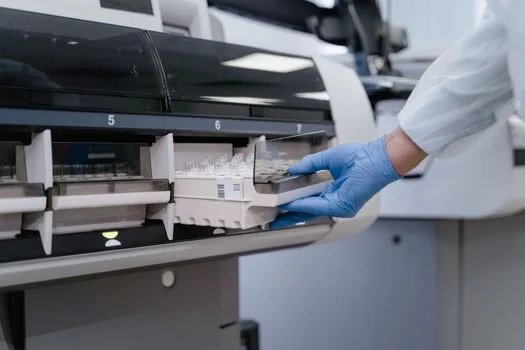
Portable units such as the ISCO 6712 class weigh 15–25 kg, fit a 20-inch (50.8 cm) manhole, and carry NEMA 4X/IP67 ratings that allow direct submersible deployment. Refrigerated composite samplers hold 4 °C ± 2 °C across a 24–48 hour composite window, which is mandatory for BOD₅, CBOD, fecal coliform, and most COD applications where bacterial activity would otherwise consume the analyte mid-hold. Online auto-samplers accept 4–20 mA flow signals and Modbus TCP triggers, allowing them to fire only on threshold events (pH drop, conductivity spike, flow surge) and feed event data into SCADA for real-time compliance dashboards. Grab sampling is not obsolete — it is still the correct method for volatiles, oil & grease, and residual chlorine — but EPA 40 CFR 122.41 and ISO 5667-10 both treat grab-only programs as insufficient for flow-variable discharges.
Key Specifications to Demand from Any Automatic Sampler Supplier
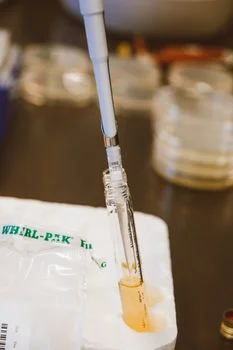
Most apples-to-oranges quote problems at the RFQ stage come from buyers who fail to pin the same eight specifications across all bidders. The checklist below is the minimum that belongs on every request for quotation.
- Sample volume accuracy: ±5% per aliquot, programmable from 10 mL to 1,000 mL across the full range — confirmed on ISCO 6712-class datasheets with vacuum-formed ABS shells and plug-in 700 Series Modules.
- Pump type: peristaltic pumps (self-priming, no vacuum loss, gentler on sample integrity) suit clean wastewater; vacuum pumps deliver higher lift (up to 8–9 m) and faster cycle times for high-solids or high-head manhole applications.
- Enclosure rating: NEMA 4X (corrosion-resistant) minimum for any outdoor installation; IP67 for submersible manhole deployment in accordance with IEC 60529.
- Communication interfaces: 4–20 mA analog input for flow pacing, RS-485/Modbus RTU for PLC integration, SDI-12 for environmental data loggers, and optional cellular/GSM for unmanned remote sites.
- Sample bottle configuration: 1 × 10 L composite, 24 × 1 L discrete, or 28 × 500 mL — the choice maps directly to permit language (24-hour composite vs 1-hour discrete vs stormwater multi-bottle).
A vendor that cannot confirm each item on this list with a datasheet page reference should be deprioritized regardless of price.
Vendor Tiers: Chinese OEM, European Premium, and American Mid-Tier Compared
Buyers consistently over-focus on CAPEX and under-focus on lead time, documentation, and service coverage. The three tiers below represent the realistic 2026 market for industrial flow-paced refrigerated samplers.
| Tier | CAPEX Range | Annual OPEX | Lead Time | Certifications | Service Network | 5-Year TCO Example |
|---|---|---|---|---|---|---|
| Chinese OEM (Qingdao, Wuxi, Zhengzhou cluster) | $1,800–$4,500 | $700–$1,000 | 4–8 weeks | CE; ISO 9001 factory | Remote / email; spare stocking required | $3,500 + 5 × $900 = $8,000 |
| European premium (DE / FR / IT brands) | $12,000–$18,000+ | $1,200–$2,200 | 12–16 weeks | CE, ATEX, ISO 17025 calibration | EU-wide field service | $15,000 + 5 × $1,800 = $24,000 |
| American mid-tier (ISCO/Teledyne, Hach, American Sigma) | $8,000–$14,000 | $1,200–$1,600 | 4–10 weeks | EPA pre-validated methods, UL, CE | Strong North American service network | $14,000 + 5 × $1,400 = $21,000 |
The TCO framing matters because the headline price gap narrows sharply once you add 5 years of tubing replacement, calibration, and service-contract OPEX. A $3,200 Chinese OEM unit with $900/yr OPEX ($8,000 over 5 years) is genuinely cheaper than a $14,000 American unit with $1,400/yr OPEX ($21,000 over 5 years) — but only when the application tolerates a shorter 5–7 year service life, English documentation is sufficient, and no local certified service is required for the discharge permit. The Made-in-China sourcing record (2023-10-31) confirms three active CS12-class suppliers in the Qingdao/Wuxi/Zhengzhou cluster, and a follow-on Vietnamese RFQ from 2025-06-12 for 10 units shows the tier is scaling into export channels. Lowest CAPEX correlates with longer delivery, limited documentation language coverage, and no factory-issued calibration certificate — flag this in any regulated NPDES or EU UWWTD application.
Compliance Standards and Integration: How Samplers Tie into SCADA and Permits
Four standards govern the bulk of automatic sampler procurement in 2026: EPA 40 CFR 122.41 (US NPDES), ISO 5667-10:2020 (international water quality — sampling), HJ 91.1-2019 (China wastewater monitoring technical specification), and EU UWWTD 91/271/EEC (urban waste water treatment directive). Buyers in regulated industries should not accept a vendor quotation that does not reference at least one of these by clause number.
SCADA integration follows a defined pathway: a magmeter outputs 4–20 mA proportional to flow, the sampler controller reads the signal and fires the peristaltic pump to pull an aliquot, and the sample event is timestamped and logged to a PLC over RS-485/Modbus or Ethernet/IP. Event logs export as CSV for direct LIMS upload, and pairing the sampler with an online BOD analyzer supplier dashboard closes the loop between the field device and the compliance report. Chain-of-custody features — tamper-evident bottles, password-protected programming, and event logs with operator ID — are required whenever a sample may be used in enforcement action. Quantify the OPEX line items explicitly: peristaltic pump tubing every 12 months ($80–$150), annual flow-signal verification ($200–$400), and full factory recalibration every 2–3 years ($600–$1,200).
5-Criteria Decision Framework for Choosing an Automatic Sampler Supplier
Hand the procurement team this rubric. Each criterion is scored 1–5; sum the five scores and weight the application-fit criterion at 2× for regulated discharges.
- Application fit (×2 weight): confirm the vendor supplies a sampler rated for the specific sample matrix — hot effluent (>60 °C), high-COD (>5,000 mg/L), oily, or low-flow (<2 L/min). Use the 5-question pre-screen: (a) max sample temperature, (b) solids loading, (c) lift height to sampler, (d) indoor vs manhole, (e) continuous vs event-triggered.
- Compliance coverage: vendor must document conformance to EPA 40 CFR 122.41 and ISO 5667-10:2020 in writing; request the certificate of conformance during RFQ, not after award.
- Integration: confirm Modbus TCP or 4–20 mA output, SCADA driver availability, and a documented PLC tag-list example. Ask specifically: RS-485 or Ethernet — and which SCADA platforms (Ignition, FactoryTalk, WinCC) have validated drivers?
- Service network: for sites without local support, a Chinese OEM tier may require stocking 2 spare units; for EU and US sites, American and European vendors typically offer next-day field service. Map service coverage to the site list before scoring.
- TCO over 5 years: CAPEX + 5 × annual OPEX. Worked example: $3,500 + 5 × $900 = $8,000 (Chinese OEM) vs $14,000 + 5 × $1,400 = $21,000 (American mid-tier). When a automatic chemical dosing system is on the same RFQ, the same TCO arithmetic applies to the dosing skid.
Frequently Asked Questions
What is the average price of an automatic sampler in 2026? Portable composite units from Chinese OEMs run $1,800–$4,500 CAPEX; American mid-tier refrigerated units run $8,000–$14,000; European premium units reach $12,000–$18,000+. Add $400–$2,200 per year OPEX for tubing, calibration, and service (HydropureWater field data, 2026).
Which standard mandates flow-paced composite sampling? EPA 40 CFR 122.41 and ISO 5667-10:2020 both treat flow-paced 24-hour composite sampling as the default for NPDES and equivalent discharge permits; grab-only programs are not accepted for flow-variable discharges.
What enclosure rating is required for manhole installation? NEMA 4X / IP67 is the minimum for outdoor or submersible manhole deployment per the ISCO 6712 datasheet; IP65 is acceptable for indoor cabinet installations only.
How does an automatic sampler integrate with SCADA? The sampler accepts 4–20 mA from a magmeter for flow pacing, logs each sample event with a timestamp, and exports the log to a PLC over RS-485/Modbus or Modbus TCP, where the data routes to SCADA and ultimately to the lab LIMS as CSV.
How often does peristaltic pump tubing need replacement? Replace tubing every 12 months or after 500,000 pump cycles, whichever comes first; budget $80–$150 per replacement as an OPEX line item against the sampler 5-year TCO.
Related Equipment
- MBR membrane bioreactor system — specifications, capacity range, and technical data