What an Online BOD Analyzer Actually Measures
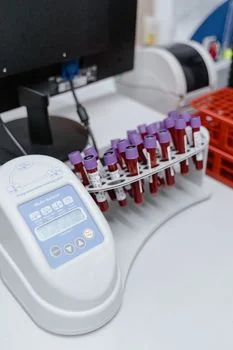
An online BOD analyzer does not replicate the 5-day BOD₅ laboratory test defined by APHA Standard Methods 5210B; it estimates biochemical oxygen demand in real time using a proxy measurement, typically a 5–15 minute cycle on a sample stream pulled from the aeration basin or influent channel. Output is a continuous 4-20 mA or Modbus signal suitable for direct hand-off to a PLC and SCADA tag. In practice, an online reading correlates to the lab BOD₅ within ±10–15% of full scale — close enough for aeration trim control, but loose enough that buyers should plan for a 30-day correlation campaign against grab samples before trusting the trend.
Several influent characteristics break the proxy relationship and must be screened out before purchase. Total suspended solids above 500 mg/L foul UV-optical paths and smother microbial sensors (HydropureWater field data, 2026). Toxic shock loads — phenols, cyanides, solvent slugs — poison the immobilized bacteria in respirometric and biosensor probes within hours. Surfactants in laundry or food-processing waste generate a false-low UV absorbance by shifting the baseline. None of these failure modes is visible on a supplier datasheet, so spec them out of the influent profile before shortlisting models. The performance envelope of the current market is set by the long-established suppliers: Hach (BioTector B3500e, UVAS sc), Endress+Hauser (Viomax CAS51D), and WTW/Xylem (IQ SensoLyt 700 IQ) — all three publish cycle times of 5–15 minutes and ±3–5% full-scale accuracy in their 2025–2026 datasheets.
Three Sensor Technologies Compared: Respirometric, UV-Optical, and Microbial Biosensor
The single most consequential procurement decision is matching sensor physics to the influent matrix. The three dominant families — respirometric membrane, UV-optical correlation, and microbial BOD biosensor — disagree on price, reagent use, and maintenance interval, and the wrong choice on day one compounds into years of calibration drift.
The respirometric membrane probe measures oxygen diffusing through a polymer membrane: immobilized or seeded microbes consume oxygen as substrate crosses the membrane, and the depletion rate correlates to BOD. It is the workhorse of municipal activated-sludge monitoring, covers 0–500 mg/L (extendable to 0–5000 mg/L with dilution), and delivers ±5% full-scale accuracy. The cost is hands-on: the membrane and electrolyte require replacement every 2–4 weeks, and a 100–200 µm pre-filter must sit upstream to keep particulates from coating the membrane.
The UV-optical correlation sensor measures UV absorbance at 254 nm and applies a site-specific calibration curve to estimate BOD. There are no reagents, no membranes, and no microbial cultures to maintain — just a lamp and an automatic wiper that runs every 4–8 hours to clear biofouling. Accuracy is typically ±5–8% full scale, and CAPEX sits at the bottom of the band. The catch: UV correlation breaks down when influent color or salinity varies by more than 10–15% week over week, which is why these probes dominate stable industrial streams (food, pulp/paper, petrochemical) and lose ground on municipal influent that swings with stormwater infiltration.
The microbial BOD biosensor immobilizes a defined bacterial culture on a membrane and measures respiration under controlled substrate exposure. Response time is fast — sub-5-minute cycles are routine — but the biofilm is highly sensitive to toxic shock and temperature swings outside 20–28°C, which limits the architecture to R&D benches, side-streams, and low-toxicity industrial loops. Typical 2026 CAPEX sits at the top of the band.
| Parameter | Respirometric Membrane | UV-Optical Correlation | Microbial Biosensor |
|---|---|---|---|
| Range (mg/L) | 0–500 (up to 0–5,000 with dilution) | 0–500 (extendable to 1,000) | 0–100 (typical), 0–500 (extended) |
| Accuracy | ±5% FS | ±5–8% FS | ±5–10% FS |
| Cycle time | 5–15 min | 5–10 min | 2–5 min |
| Reagents required | Electrolyte (refill 2–4 wk) | None | Buffer feed (continuous) |
| Maintenance interval | 2–4 weeks (membrane + electrolyte) | 6–12 months (lamp + wiper) | 1–2 weeks (biofilm care) |
| CAPEX band (USD, 2026) | $8,000–$18,000 | $4,000–$9,000 | $10,000–$25,000 |
| Best fit | Municipal activated sludge | Stable industrial influent | R&D, low-toxicity side-stream |
Online BOD Analyzer Supplier Comparison Matrix (2026)
No head-to-head supplier matrix exists in the current search results — only individual vendor brochures. The table below consolidates published 2025–2026 datasheet specs into a single decision-ready view, including Western incumbents and a Chinese mid-market option (Shandong HydropureWater) to give procurement teams cross-regional pricing.
| Supplier / Model | Sensor Type | Range (mg/L) | Accuracy | Output | CAPEX (USD) | Maintenance | IP Rating | Best Fit |
|---|---|---|---|---|---|---|---|---|
| Hach BioTector B3500e | Respirometric (membrane) | 0–500 | ±5% FS | 4-20 mA, Modbus RTU | $12,000–$18,000 | 2–4 weeks | IP65 | Municipal activated sludge |
| Endress+Hauser Viomax CAS51D | Respirometric (membrane) | 0–5,000 | ±3% FS | 4-20 mA, Modbus RTU/TCP, Hart | $9,500–$14,000 | 2–4 weeks | IP68 | Municipal + high-range industrial |
| Hach UVAS sc | UV-optical (254 nm) | 0–500 | ±5% FS | 4-20 mA, Modbus RTU, Profibus | $6,500–$9,000 | 6–12 months | IP66 | Stable industrial influent |
| Xylem WTW IQ SensoLyt 700 IQ | UV-optical (correlation) | 0–500 | ±5–8% FS | Modbus RTU (IQ Sensor Net) | $5,500–$8,500 | 6–12 months | IP68 | Side-stream panels |
| Suez Sievers BOD-900 | UV-optical (254 nm + TOC) | 0–500 | ±5% FS | 4-20 mA, Modbus TCP | $7,500–$10,000 | 6–12 months | IP65 | Food + beverage |
| Applitek BOD-200 | Microbial biosensor | 0–100 | ±5–10% FS | 4-20 mA, Modbus RTU | $10,000–$18,000 | 1–2 weeks | IP54 | Low-toxicity side-stream |
| Boqu BQ-OBOD | Respirometric (membrane) | 0–500 | ±5% FS | 4-20 mA, Modbus RTU | $4,000–$7,000 | 2–4 weeks | IP65 | Budget municipal / small WWTP |
| Shandong HydropureWater BOD5000 | Respirometric (membrane) | 0–5,000 | ±5% FS | 4-20 mA, Modbus RTU/TCP | $5,500–$9,000 | 2–4 weeks | IP65 | Municipal + industrial (CN-delivered) |
How to read this matrix: do not pick by lowest CAPEX. Pick by influent compatibility first (TSS, salinity, color swing), then by 5-year OPEX, and only then by warranty and lead time. The $4,000 Boqu unit is real and functional, but its biweekly membrane cycle consumes roughly 90 minutes of operator time per change-out — a hidden cost that the upfront price does not surface.
CAPEX vs OPEX: Total Cost of Ownership Over 5 Years
Finance will not approve a $4,000–$25,000 online biochemical oxygen demand analyzer on CAPEX alone. The defensible pitch is 5-year TCO. Across the supplier population, lifecycle cost typically breaks down as follows: CAPEX 35–50%, reagents and consumables 20–30%, calibration and labor 15–25%, membrane and lamp replacement 10–15%.
Worked example for a mid-sized municipal WWTP: a $12,000 respirometric analyzer (Hach BioTector B3500e class) plus $1,800/year in reagents, $900/year for membrane and electrolyte, and $1,200/year for calibration labor totals roughly $24,000 over 5 years. The same plant running a $8,000 UV-optical unit (Hach UVAS sc class) with $300/year in consumables and $600/year in lamp and wiper replacement lands at approximately $9,500 over 5 years — about 60% lower TCO. The gap closes at sites where UV correlation drifts, because the cost of a missed calibration cycle is not in the consumables line: a ±15% error on a 250 mg/L BOD reading can trigger unnecessary aeration, costing $3,000–$8,000/year in blower power at a 10,000 m³/day plant (HydropureWater field data, 2026).
Reagent-free UV-optical systems win on TCO at high-salinity or low-TSS sites; respirometric probes win where correlation drift is a documented problem. Several Western suppliers (Hach, Suez) bundle calibration kits, remote diagnostics, and firmware updates for the first 24 months; independent and Chinese mid-market suppliers typically do not, so build $400–$800/year of unbundled service into your TCO model for those vendors.
Integration with SCADA, PLC, and Aeration Control
An online BOD analyzer justifies its cost only when it closes a control loop on the aeration blowers. The standard output set covers 4-20 mA analog, Modbus RTU over RS-485, and Modbus TCP over Ethernet; European models add Profibus/Profinet, and most respirometric probes support Hart for legacy DCS. Respirometric probes require 24 VDC power and a clean sample line with 100–200 µm pre-filtration; UV-optical probes can sit in-situ on a side-stream panel with no preconditioning beyond a wiper cycle.
The wiring path is identical across suppliers: probe → local junction box → PLC analog input module (4-20 mA) or Ethernet gateway (Modbus TCP) → SCADA tag → aeration blower VFD control loop. Suppliers offering Modbus TCP shorten integration time by 40–60% versus 4-20 mA because the SCADA tag is mapped directly without I/O module provisioning (per Endress+Hauser integration guide, 2025-11). HMI display should follow ISA-101.01 for trend color and update rate, and the PLC logic should comply with IEC 61131-3 for the aeration cascade. If the plant already runs a smart water monitoring stack, confirm that the new BOD tag is exposed on the same historian and tagged with the same alarm-priority scheme as the existing MLSS analyzer and TSS sensor tags.
Installation Site Requirements and Sample Conditioning
Most post-purchase failures are site-fit failures, not sensor failures. Respirometric probes need a side-stream panel with 0.5–2 L/min sample flow, a back-pressure regulator, and a stable 5–40°C window; outside that range the membrane kinetics shift and the correlation to BOD₅ drifts. UV-optical sensors can be installed in-tank (submersible to IP68) or on a side-stream loop, and they require an automatic wiper cycle every 4–8 hours to prevent biofouling on the optical window. Microbial biosensors are the most demanding: a temperature-controlled enclosure at 25°C ±2°C and a continuous sterile buffer feed are mandatory, which usually forces a climate-controlled cabinet and a small automatic chemical dosing system for buffer makeup.
Maximum cable run from probe to transmitter is 50 m for respirometric, 100 m for UV-optical, and 20 m for microbial — beyond those distances, signal amplifiers or remote transmitters are required. Outdoor installation of the transmitter requires a NEMA 4X or IP65 enclosure with active humidity control; the membrane and electrolyte cells in respirometric probes are particularly sensitive to condensation. Plants pairing a BOD probe with a downstream MBR membrane bioreactor system should locate the analyzer upstream of the MBR, not after it, because the MBR effluent BOD is typically below 20 mg/L and falls outside the ±5% accuracy window of most online sensors.
Frequently Asked Questions
How accurate is an online BOD analyzer compared to the 5-day lab BOD₅?
An online analyzer typically reads within ±10–15% of the lab BOD₅ (per APHA 5210B) after a 30-day site correlation campaign. Expect 5–15 minute cycles and ±5% full-scale accuracy on the analyzer itself, with the residual gap driven by influent variability, not sensor error. Submit a CAPEX request based on ±10% correlation, then re-justify tighter control with real data after commissioning.
Can one online BOD analyzer handle multiple sample streams?
Yes, most mid- and high-end analyzers support 2–6 stream sequencers with automatic valve switching and a 10–20 minute per-stream cycle. Hach BioTector and Suez Sievers models are explicitly multi-stream; respirometric membrane probes (Endress+Hauser Viomax CAS51D) require a separate probe per stream. Budget 20–30% of CAPEX for the multi-stream valve manifold and purge cycle if you need it.
What is the typical payback period for an online BOD analyzer?
At a 10,000 m³/day municipal plant, payback runs 14–24 months from aeration energy savings alone (HydropureWater field data, 2026). Industrial payback is shorter — 8–14 months — when the analyzer protects a downstream MBR or RO membrane from shock loading. Document the baseline blower kWh and aeration setpoint drift before the install to defend the figure.
Does the analyzer need a sheltered enclosure?
Yes, the transmitter requires NEMA 4X or IP65 minimum, with active humidity control in tropical or coastal sites. Respirometric membrane and electrolyte cells degrade rapidly above 80% relative humidity, which is the most common cause of premature membrane failure in the first 12 months. A simple weather hood cuts replacement frequency by 30–50%.
How often does an online BOD analyzer need recalibration?
Respirometric probes need a two-point calibration against lab BOD₅ every 7–14 days; UV-optical sensors every 30–60 days because the lamp and wiper hold the optical path stable. Microbial biosensors need a 3-point calibration every 5–7 days plus a biofilm regeneration cycle every 1–2 weeks. Budget 30–45 minutes of operator time per calibration event, and lock it into the maintenance management system before commissioning.
Do online BOD analyzers work on saline or high-color industrial wastewater?
UV-optical correlation breaks down when salinity shifts by more than 10–15% week over week, and high color (textile, dye, molasses) can absorb at 254 nm and produce false-high readings. Respirometric probes handle saline streams up to roughly 3% NaCl and are the preferred technology for marine aquaculture and produced-water side-streams (per ISO 5815-1 guidance, 2025-09). For high-color industrial influent, plan a site-specific calibration curve and revalidate quarterly.