Why Winery Wastewater Is Hard to Treat
Winery wastewater is a high-strength industrial wastewater stream whose organic load swings by an order of magnitude within a single processing season. Raw BOD typically ranges from 2,000 to 12,000 mg/L across the year, with crush-pad water spiking above 50,000 mg/L during vintage (per Zoecklein / Virginia Tech Enology extension data, 2025). A municipal sewage plant tuned to 250 mg/L BOD cannot absorb that pulse without equalization, and a single-stage aerobic tank sized for average load will wash out within days of crush.
The BOD₅/COD ratio sits at 0.5–0.7 because sugars, ethanol, and organic acids are readily biodegradable. That ratio drops in late vintage once polyphenols, tartrate salts, and lignin fragments from skins and seeds enter the stream — those fractions suppress methanogens and slow the kinetics downstream. pH swings are equally severe: must runs at pH 3.0–4.5, while CIP caustic cleaning pushes effluent to pH 10–12 in the same shift. Bentonite fining adds 200–800 mg/L sulfate, and the influent is nitrogen-starved, with COD:N often above 250:1, so biological stages need external urea or ammonia dosing to maintain treatment efficiency. Hydraulically, wineries generate 0.5–10 m³ of wastewater per tonne of grape processed, and the ratio between vintage and off-season flow can vary 10×, which is why equalization volume is the first design decision, not the last.
Typical Influent Characteristics by Unit Operation
The table below summarizes typical BOD, COD, and pH ranges by source stream inside a winery. Use the 90th-percentile values for equalization sizing and the seasonal peaks for biological-stage design. A composite planning basis of 5,000 mg/L BOD and 8,000 mg/L COD is a defensible starting point for most mid-size operations; large cooperatives processing wet pomace on-site should design to 8,000–12,000 mg/L BOD.
| Source stream | Flow share (%) | BOD (mg/L) | COD (mg/L) | pH |
|---|---|---|---|---|
| Crush pad (with pomace) | 3–5 | 40,000–55,000 | 60,000–90,000 | 3.0–4.5 |
| Fermentation / pressing | 20–25 | 4,000–6,000 | 7,000–10,000 | 3.5–4.5 |
| Barrel wash / soak | 15–20 | 1,500–3,000 | 2,500–5,000 | 5.0–7.0 |
| Bottling line | 15–25 | 200–500 | 400–800 | 6.5–8.0 |
| CIP cleaning | 10–15 | 800–2,000 | 1,500–3,000 | 10.0–12.0 |
| Laboratory / office | 5–10 | 150–400 | 250–600 | 6.5–7.5 |
Bottling and laboratory waste are dilute (BOD below 500 mg/L) but carry surfactants and sanitizers that foam in aeration tanks; route them through the equalization basin rather than blending them straight into the biological stage (HydropureWater field data, 2026).
The Standard Process Train for COD and BOD Removal
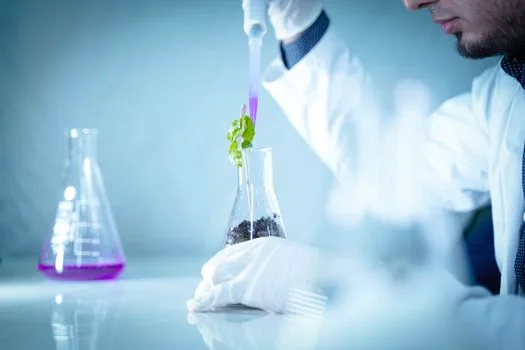
A staged train is the only defensible approach for winery wastewater. Each unit operation shaves a specific fraction of COD, BOD, or suspended solids, and the order matters — equalization must precede biology, and anaerobic must precede aerobic, otherwise aeration power alone will consume the OPEX budget. A typical 2026 train runs as follows.
- Screening and flow equalization. Rotary bar screens at 3–6 mm aperture protect downstream pumps; a rotary mechanical bar screen is the standard headworks choice. The equalization basin holds 24–48 hours of flow to dampen the 10× diurnal swings and to blend acidic must streams with alkaline CIP waste before pH correction.
- pH correction and nutrient balancing. NaOH or Ca(OH)₂ lifts pH to 6.8–7.2 for biological activity. Urea or aqueous ammonia is dosed to bring C:N:P to roughly 250:5:1 because raw winery wastewater is severely nitrogen-limited; without supplementation, anaerobic reactors lose buffering capacity and aerobic stages nitrify poorly.
- Primary separation (DAF). A dissolved air flotation unit removes pulp, lees, and colloidal organics ahead of biology, achieving 60–80% TSS reduction and cutting 20–30% of the COD load sent to the biological stage. DAF also strips a fraction of the surface-active compounds that cause foaming downstream.
- High-rate anaerobic digestion. A UASB or CSTR reactor at an organic loading rate of 5–10 kg COD/m³·d delivers 75–90% COD removal and produces 0.30–0.45 m³ of methane per kg COD removed — a meaningful OPEX offset when a CHP unit burns the biogas.
- Aerobic polishing (SBR or MBR). A sequencing batch reactor or, more commonly at larger sites, a membrane bioreactor pushes residual COD below 100 mg/L with TSS below 5 mg/L. An MBR polishing system typically occupies 60% of the footprint of a conventional activated-sludge tank at the same load. For sites that prefer modular retrofitting, a PVDF flat sheet membrane module can be dropped into an existing aeration basin.
- Tertiary and disinfection. Constructed wetlands, RO, or UV polish effluent for vineyard irrigation or process-water reuse. A chlorine dioxide disinfection generator provides final microbial control where surface-water discharge is the only outlet, with the advantage of working across a wide pH range.
| Stage | Typical removal | Key design spec |
|---|---|---|
| Bar screening + EQ | 5–10% TSS, pH smoothing | 3–6 mm aperture, 24–48 h HRT |
| DAF | 60–80% TSS, 20–30% COD | 25–35% recycle, 4–6 g/L air-to-solids |
| UASB / CSTR | 75–90% COD, 80–95% BOD | 5–10 kg COD/m³·d, 35 ± 2 °C, HRT 24–48 h |
| SBR / MBR | 90–95% residual COD, TSS < 5 mg/L | MLSS 8,000–12,000 mg/L, SRT 20–30 d |
| Tertiary / ClO₂ | Fecal coliform < 200 CFU/100 mL | 2–5 mg/L ClO₂ contact, 30 min |
Comparing Treatment Options by Winery Size and Load
The right train depends on flow, influent strength, and the local discharge limit. Small estates can run passive systems with very low OPEX, while large cooperatives need a high-rate anaerobic front-end to keep aeration power within budget. The table below is a screening tool — match your annual crush and your target effluent, then size the unit operations from the data in the previous sections.
| Process option | Footprint (m² per m³/d) | CAPEX band (USD per m³/d) | COD removal (%) | OPEX band (USD per m³) | Best-fit winery scale |
|---|---|---|---|---|---|
| Septic + subsurface wetland | 40–80 | 150–400 | 80–95 | 0.05–0.15 | < 5,000 hL/year estate |
| Packaged SBR | 5–10 | 600–1,200 | 90–95 | 0.25–0.45 | 5,000–30,000 hL/year |
| MBR (membrane bioreactor) | 3–6 | 900–1,800 | 95–98 | 0.35–0.60 | 5,000–50,000 hL/year |
| UASB + MBR with CHP | 2–4 | 1,200–2,500 | 96–99 | 0.20–0.40 (net) | > 50,000 hL/year |
| Constructed wetland (stand-alone) | 60–120 | 100–300 | 70–90 | 0.03–0.10 | < 3,000 hL/year |
For small estates, a packaged underground integrated sewage treatment unit followed by a subsurface flow constructed wetland delivers 80–95% COD removal at very low OPEX; long-term field data at 0.3 m bed depth confirms stable nitrate and BOD reduction across multi-year campaigns (per Water, Air, & Soil Pollution, 2025). Mid-size operations typically specify a packaged SBR or MBR for automated, skid-mounted operation. Large cooperatives and contract bottlers should specify a UASB front-end at an anaerobic OLR of 5–10 kg COD/m³·d with biogas CHP — the seasonal OPEX risk of running a fully aerobic train through a 4-week vintage peak is the single largest cost driver in winery wastewater OPEX, and the anaerobic front-end buffers it.
2026 Discharge and Reuse Limits: What the Effluent Must Hit
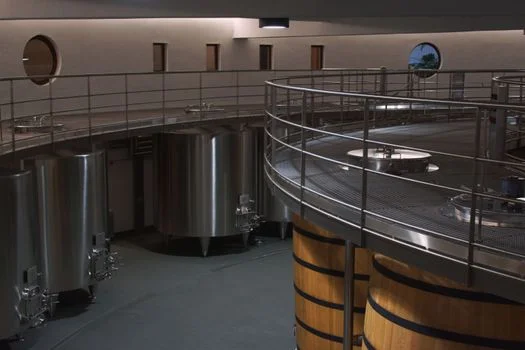
Design to the strictest limit you anticipate in the next 10 years, not today's local number — Spanish and Australian water authorities have tightened reuse thresholds twice in the last 24 months, and any new plant will outlive the current permit cycle. The table below collates the binding 2026 benchmarks for the four jurisdictions most likely to apply to a winery EPC project.
| Jurisdiction | COD (mg/L) | BOD (mg/L) | TSS (mg/L) | pH |
|---|---|---|---|---|
| EU UWWT Directive 91/271/EEC (> 2,000 PE) | 125 | 25 | 35 (60 if > 10,000 PE) | 6.5–9.0 |
| US EPA winery guidelines (40 CFR Part 405) | — (BOD basis only) | Monthly avg 231, daily max 356 | Monthly avg 39, daily max 78 | 6.0–9.0 |
| China GB/T 19923-2024 (reuse, vineyard irrigation) | 50 (Class A reuse) | 10 | — | 6.5–8.5 |
| Australia NWQMS (irrigation reuse, several state agencies) | < 100 (tightening) | < 20 | < 30 | 6.5–8.5 |
EU COD of 125 mg/L and BOD of 25 mg/L remain the binding benchmarks for discharges above 2,000 population equivalents, and the tightening trend in Spain and Australia now requires sub-100 mg/L COD for any reuse irrigation scheme (per regional water authority guidance, 2025-Q4). US EPA regulates winery effluent under 40 CFR Part 405 on a BOD basis, with a monthly average of 231 mg/L and a daily maximum of 356 mg/L for the fruit and vegetable processing subcategory, but wineries exporting to EU or Asian buyers often design to those tighter limits anyway.
Frequently Asked Questions
How high can winery wastewater BOD actually go during vintage? Crush-pad water with pomace carry-over routinely hits 40,000–55,000 mg/L BOD for short pulses, and combined fermentation/pressing streams sit at 4,000–6,000 mg/L. Equalization is non-negotiable — without it, a 50,000 mg/L slug will kill biomass in a conventional activated-sludge tank within hours.
Is anaerobic treatment alone enough to meet discharge limits? No. A UASB or CSTR reliably delivers 75–90% COD removal, which leaves 500–1,500 mg/L COD in the effluent — far above the EU's 125 mg/L or the US EPA's 231 mg/L BOD-based limit. Aerobic polishing is required to push residual COD into the compliance range.
How much land does a constructed wetland need for a small winery? A subsurface horizontal-flow wetland needs roughly 40–80 m² per m³/d of treated flow. A 1,000 hL/year estate generating 5–8 m³/d typically needs a 300–500 m² wetland cell, which is workable on most estate footprints.
Can winery wastewater be reused for vineyard irrigation safely? Yes, after MBR or wetland polishing plus disinfection to meet the local reuse standard. The main risks are sodium and sulfate loading from bentonite fining; a blended irrigation schedule with fresh water keeps the soil SAR within agronomic limits.
What is the typical payback for an MBR upgrade at a mid-size winery? Field deployments report 3–5 year payback when biogas CHP offsets aeration power and the reuse credit replaces purchased process water (HydropureWater field data, 2026).