What an Online COD Analyzer Actually Does — and Why "Supplier" Means Three Different Things in 2026
An online COD analyzer supplier in 2026 typically offers three sensor technologies: UV 254 nm direct photometry (reagent-free, $3,500–$8,000), TOC-to-COD correlation ($7,000–$14,000), and sealed-tube colorimetric dichromate ($5,000–$12,000). Leading global suppliers include Hach, Endress+Hauser, Xylem/WTW, Mettler Toledo, and STIP-Scisoft; Chinese OEM/ODM suppliers such as HKY, KNTEC, Aqua Diagnostic, and Shandong HydropureWater offer 30–50% lower CAPEX with comparable 4-20 mA and Modbus integration.
Strip the marketing away and an online COD analyzer is a continuous, in-pipe (in-situ) or bypass-loop instrument that reports a COD-equivalent concentration every 1–15 minutes over 4-20 mA, Modbus RTU, or PROFIBUS to a SCADA/PLC layer. The lab gold standard every on-line technology is benchmarked against is APHA 5220-D, the closed-reflux dichromate method — and no on-line sensor can honestly claim "true" COD without a site-specific correlation factor, because each technology infers COD from a surrogate measurement (UV absorbance, total carbon, or sealed-tube color development).
The reference design that still anchors the dichromate on-line category is the Phoenix 1010 (STIP Siepmann & Teutscher GmbH, Siemensstraße 2, D-64823 Groß-Umstadt, edition December 1995). A 30-year-old manual is currently the most relevant industrial signal on Google for this keyword — and Phoenix-derived units remain in service at EU and Chinese sites in 2026. On the Chinese export side, the HKY Technology "Online Water Analyzer" category (HK-368 inductive conductivity/concentration series) dominates the same use case, with identical 4-20 mA integration and a CE-certified enclosure. The next section compares the three sensor principles that the keyword "online COD analyzer supplier" actually hides.
Three Sensor Technologies Compared: UV 254 nm vs TOC-Correlation vs Dichromate Colorimetric
UV 254 nm analyzers measure organic absorbance at 254 nm and apply a site-specific correlation to COD. They are reagent-free, respond in 1–3 seconds, and tolerate continuous side-stream service on aeration tanks — but the correlation collapses when chloride exceeds 1,500 mg/L or when the organics are non-aromatic (sugars, alcohols, volatile fatty acids common in food and fermenter effluent). TOC-correlated analyzers use high-temperature catalytic combustion (680–800 °C) or persulfate oxidation to measure total carbon, then multiply TOC × 2.67 (typical) to estimate COD; they are the preferred technology for landfill leachate, dairy, and petrochemical effluents where non-aromatic organics dominate. Dichromate colorimetric analyzers are a miniaturized, sealed-tube version of APHA 5220-D with on-board reagent dosing and photometric detection; they are the only on-line technology legally accepted for direct regulatory reporting under most EU and Chinese GB discharge permits, but they consume 1.5–2.5 L of reagent per month per analyzer. The governing standards are ISO 15705 (small-scale sealed-tube COD), DIN 38404-3 (UV absorption for water analysis), and HJ 377-2019 (China on-line COD technical specification).
| Parameter | UV 254 nm (e.g., UVAS plus sc, spectro::lyser) | TOC-correlated (e.g., BioTector B7000, Thornton 2000) | Dichromate colorimetric (e.g., CA80COD, Phoenix 1010 class) |
|---|---|---|---|
| Measurement principle | UV absorbance at 254 nm → COD via site correlation | Combustion or persulfate TOC → COD via factor 2.0–2.9 | Sealed-tube dichromate oxidation, photometric detection |
| Typical range (mg/L COD) | 0–500 (sub-range to 5,000 with dilution) | 0–10,000 (auto-range) | 0–1,500 (extendable to 10,000) |
| Cycle time / response | 1–3 s continuous | 3–15 min per cycle | 10–30 min per cycle |
| Reagent consumption | None | 0.2–0.5 L acid/persulfate per month | 1.5–2.5 L dichromate reagent per month |
| Chloride tolerance | Poor above 1,500 mg/L | Good (independent of UV) | Good with HgSO₄ masking |
| MTBF (manufacturer-published, 2026) | 60,000–80,000 h | 50,000–70,000 h | 40,000–60,000 h |
| Regulatory acceptance | Indirect / surrogate (EU, US, CN) | Indirect / surrogate (EU, US, CN) | Direct COD (EU, China GB permit) |
| Best-fit wastewater | Municipal, dairy MBR permeate, food | Petrochemical, landfill leachate, refinery | Industrial discharge under direct COD permit |
The 2026 Online COD Analyzer Supplier Shortlist: Global Premium, European Specialty, and Chinese OEM/ODM
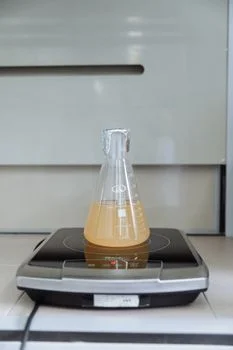
Once the sensor principle is fixed, the supplier shortlist becomes a tiered exercise. Tier 1 — Global premium: Hach (UVAS plus sc, BioTector B7000), Endress+Hauser (CA80COD), Xylem/WTW (spectro::lyser), Mettler Toledo (Thornton 2000 series). Typical 2026 CAPEX $7,000–$22,000; OPEX runs 5–8% of CAPEX per year; standard 2-year warranty extendable to 5. Tier 2 — European specialist: STIP-Scisoft (Germany, successor to the Phoenix 1010 platform), RealTech (Canada/UK UV 254 nm), s::can (Austria, multi-parameter UV/VIS). Typical CAPEX $5,500–$18,000; strong in municipal and landfill-leachate projects. Tier 3 — Chinese OEM/ODM and exporter: HKY Technology, KNTEC, Aqua Diagnostic, Shandong HydropureWater, Lianhua Technology, and BCHP. Typical 2026 CAPEX $1,500–$6,000; 4-20 mA and Modbus RTU are standard, PROFIBUS optional, 1-year warranty with paid extension.
To verify a Chinese supplier before issuing a PO, ask for ISO 9001, CE, and a domestic GB 11914-89 / HJ 377-2019 reference installation; confirm reagent cartridge availability in the buyer's region; and check that the controller carries an IP65 / NEMA 4X enclosure rating for outdoor aeration-tank mounting. For buyers in Mexico, Indonesia, Vietnam, the Middle East, and Africa, Chinese OEM COD analyzers are the most-shipped variant in 2026, with CE-certified models available for EU re-export.
| Tier | Representative brands | 2026 CAPEX (USD) | OPEX (% CAPEX/yr) | Warranty | Typical integration |
|---|---|---|---|---|---|
| Tier 1 — Global premium | Hach, Endress+Hauser, Xylem/WTW, Mettler Toledo | $7,000–$22,000 | 5–8% | 2 yr (extendable to 5) | 4-20 mA, Modbus RTU/TCP, HART, PROFIBUS, EtherNet/IP |
| Tier 2 — European specialist | STIP-Scisoft, RealTech, s::can | $5,500–$18,000 | 6–9% | 2 yr | 4-20 mA, Modbus RTU/TCP, optional PROFIBUS |
| Tier 3 — Chinese OEM/ODM | HKY, KNTEC, Aqua Diagnostic, Shandong HydropureWater, Lianhua, BCHP | $1,500–$6,000 | 3–5% | 1 yr (paid extension) | 4-20 mA, Modbus RTU, PROFIBUS optional |
2026 Pricing Reality: CAPEX, OPEX, and the Reagent-Free vs Reagent-Consuming TCO Curve
CAPEX bands for a single analyzer with controller, 4-20 mA output, and basic auto-clean (no enclosure upgrade): UV 254 nm $3,500–$8,000 (Hach UVAS plus sc class); TOC-correlated $7,000–$14,000 (Hach BioTector class); dichromate colorimetric $5,000–$12,000 (Endress+Hauser CA80COD class); Chinese OEM equivalent 30–50% below these ranges. OPEX per analyzer per year: reagent $400–$900 for dichromate colorimetric; UV lamp replacement every 18–24 months $250–$600; calibration and cleaning solution $120–$300; electricity negligible; labor 4–8 hours per year. MTBF runs 60,000–80,000 hours for UV 254 nm units, 40,000–60,000 hours for dichromate colorimetric, and 50,000–70,000 hours for TOC-correlated (manufacturer-published values, 2026).
Two defensible decision rules follow. For plants above 2,000 m³/day with discharge limits ≤ 50 mg/L COD and chloride above 1,500 mg/L, TOC-correlated or dichromate is more defensible despite the higher CAPEX, because the UV 254 nm correlation will fail periodically and trigger permit excursions. For plants with chloride below 1,000 mg/L and tight reagent-handling restrictions (food, pharma), UV 254 nm has the lowest 5-year TCO even at higher CAPEX, because reagent logistics and HgSO₄ waste handling disappear from the cost stack.
Integration with SCADA, PLC, and Aeration Control: What Buyers Forget Until Commissioning
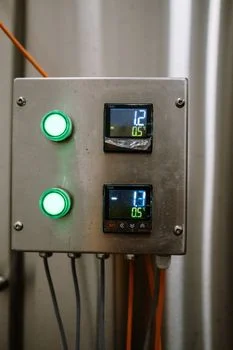
Confirm outputs before purchase: 4-20 mA isolated loop is universal, Modbus RTU is now standard on 2026 models, and PROFIBUS, HART, and EtherNet/IP vary by tier. Confirm sample-conditioning requirements — UV 254 nm needs 50–100 µm screen filtration and 0.5–2 L/min bypass flow control; dichromate colorimetric analyzers with on-board peristaltic pumps usually need 4 mm ID tubing and a flooded suction. Specify an auto-clean interval of 4–8 hours for aeration-tank side-stream service to prevent biological fouling of the optical window. The COD analyzer almost always feeds a PLC that drives aeration DO control — a 4-20 mA drop in the analyzer must be mapped to a 0.1 mg/L DO trim. For the controller-side budget, see the PLC control cost 2026 guide, and for the parallel BOD loop on biological plants, see the online BOD analyzer supplier guide.
Three Quick Selection Snapshots: Dairy, Petrochemical, and Landfill Leachate
Dairy MBR (influent COD 2,500–6,000 mg/L, chloride < 800 mg/L): a UV 254 nm analyzer on the MBR permeate gives the most reliable correlation to BOD and protects the reuse-water membrane; pick Hach UVAS plus sc or a Chinese equivalent, and pair it with an MBR membrane bioreactor treatment train. Petrochemical influent (COD 300–1,500 mg/L, chloride 3,000–15,000 mg/L): UV 254 nm correlation collapses; a TOC-correlated analyzer (Hach BioTector, Mettler Thornton) is the only defensible choice, often paired with a DAF pre-treatment unit for oil and TSS removal ahead of the analyzer. Landfill leachate (COD 8,000–25,000 mg/L, highly variable ammonia and color): dichromate colorimetric remains the legally recognized direct COD measurement in most EU permits, and STIP-Scisoft / Phoenix 1010 class equipment is still preferred, with reagent pH and chloride masking specified per APHA 5220-D. For the broader process train, see the dairy wastewater treatment process guide.
Frequently Asked Questions
What is the typical price range for an online COD analyzer in 2026? UV 254 nm units run $3,500–$8,000, dichromate colorimetric $5,000–$12,000, and TOC-correlated $7,000–$14,000 from global premium brands; Chinese OEM equivalents sit 30–50% lower. Add 4-20 mA, Modbus RTU, IP65 enclosure, and auto-clean to the spec; reagent costs $400–$900 per year for dichromate units (HydropureWater field data, 2026).
Which brand is best for an industrial wastewater plant? For municipal, dairy, and food plants with chloride below 1,000 mg/L, Hach UVAS plus sc or a Tier 1 European alternative (s::can spectro::lyser) is the safe answer. For petrochemical and landfill-leachate with high chloride or non-aromatic organics, Hach BioTector B7000 or Mettler Thornton 2000 (TOC-correlated) or Endress+Hauser CA80COD (dichromate) is defensible. For projects under tight CAPEX, HKY, KNTEC, and Shandong HydropureWater deliver 4-20 mA and Modbus RTU at 30–50% lower cost, benchmarked to APHA 5220-D and ISO 15705.
How accurate is an online COD analyzer on real wastewater? UV 254 nm and TOC-correlated analyzers report COD-equivalent with ±5–10% of lab APHA 5220-D when the site correlation factor is freshly calibrated against 10+ composite samples; dichromate colorimetric on-line units report ±3–7% because they perform the actual closed-reflux chemistry. Chloride above 1,500 mg/L degrades UV 254 nm accuracy by 20–40% if not compensated. For CAPEX vs OPEX trade-offs across the full instrument family, see the online BOD analyzer 2026 cost guide, which covers the parallel BOD control loop.
Related Equipment
- PLC-controlled chemical dosing skid — specifications, capacity range, and technical data