Why Copper Foil Wastewater Is an Asset, Not Just a Cost
One U.S. foil manufacturer was sending roughly $2 million per year of dissolved copper hydroxide sludge to a secured landfill before they installed a recovery system (ElectraMet case study, 2022). That single line item reframes the entire budget conversation: copper foil rinse water is not a waste-treatment problem, it is a metal-recovery project with a compliance tail. At 2026 LME prices hovering around $9,000–$10,500/ton, the metal leaving a 50 m³/h plant at 800 mg/L Cu is worth approximately $2,800–$3,300 per day, or roughly $1.0–$1.2 million per year at 90% recovery. That revenue stream has to be modeled alongside any CAPEX number an engineer puts in front of plant leadership.
Foil-making produces three chemically distinct wastewater streams, and the treatment train has to be sized to all of them. The first is the electrolytic raw-foil rinse, which carries high dissolved copper (200–2,500 mg/L Cu²⁺), low organics, and elevated sulfate from the plating bath — this stream is the obvious recovery target. The second is the surface-treatment rinse, which combines copper with anti-tarnish chemistry (chromate-free or silane-based passivations, benzotriazole derivatives) and complicates downstream recovery because the organics poison ion-exchange resin and foul RO membranes. The third is the cleaning wastewater, loaded with surfactants and oils from periodic equipment washdowns, which behaves more like a metal-finishing wastewater than a plating rinse. Plants that size one train to handle all three typically either over-pay on chemicals or fail discharge limits; plants that segregate the streams at source unlock recovery credit from Stream 1 while managing Stream 2 and 3 with targeted polishing.
Influent Characteristics and Discharge Limits by Jurisdiction
Before any process train can be selected, the design basis has to be locked down. Untreated foil wastewater typically arrives at pH 1–4 (from the acidic sulfate bath rinse), with total copper in the 200–2,500 mg/L range, sulfate at 1,500–6,000 mg/L, suspended solids of 50–400 mg/L, and COD of 100–600 mg/L. The surface-treatment branch can shift the COD higher and introduce silica or phosphate from anti-tarnish formulations, so a plant-specific characterization is non-negotiable.
Discharge limits vary sharply by jurisdiction and they drive the entire polishing-stage decision. In China, GB 30485 (copper and copper-alloy processing pollutant standard) caps total copper at 0.5 mg/L for water discharged to surface water. The EU Industrial Emissions Directive (2010/75/EU) and its BAT-AEL for non-ferrous metals typically sets copper in the 0.1–0.5 mg/L band depending on receiving water. In the U.S., EPA's metal-finishing rule (40 CFR 433) allows a 2.07 mg/L daily maximum and 1.3 mg/L monthly average for copper, which is more permissive than either China or the EU. Copper-bearing hydroxide sludge generated above certain leachable thresholds is classified as hazardous waste in most jurisdictions, which adds $200–$500/ton hauling and manifests fees onto the OPEX line.
| Parameter | Typical Influent Range | China GB 30485 | EU BAT-AEL (non-ferrous) | U.S. EPA 40 CFR 433 |
|---|---|---|---|---|
| pH | 1–4 | 6–9 | 6–9 | 6–9 |
| Total Cu (mg/L) | 200–2,500 | ≤0.5 | 0.1–0.5 | 2.07 daily max / 1.3 monthly avg |
| Sulfate (mg/L) | 1,500–6,000 | site-specific | site-specific | site-specific |
| TSS (mg/L) | 50–400 | ≤30 (surface water) | ≤30 typical | ≤31 monthly avg |
| COD (mg/L) | 100–600 | ≤100 typical | site-specific | site-specific |
Process Train Options: DAF+Precipitation, Electrowinning+RO, and ZLD Crystallizers
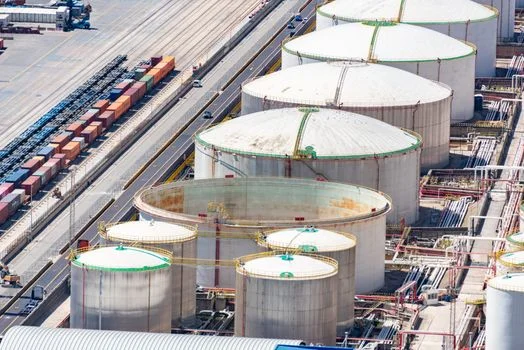
Three trains dominate the 2026 foil-wastewater market, and the right choice depends on whether the goal is compliance only, compliance plus recovery, or zero liquid discharge. A typical front-end DAF system for copper-bearing wastewater pretreatment removes oils, surfactants, and suspended solids, and serves all three trains.
Train A — DAF + chemical precipitation + sand filter. After DAF removes oils and TSS, the train raises pH to 9–10 with NaOH to precipitate copper as Cu(OH)₂, then filters through a multimedia or sand filter. Effluent copper lands at 0.5–2 mg/L, which meets U.S. EPA 40 CFR 433 but fails China GB 30485 and tighter EU limits without a polish stage. Recovery is effectively 0% — the copper leaves as a wet hydroxide sludge at 3–5% solids, which is exactly the cost sink that drives plants to consider Train B.
Train B — Ion exchange or electrowinning + RO polishing. Electrowinning reduces Cu²⁺ directly to metallic copper cathode at 99.9% purity, which is sellable back to a smelter or back into the foil-making bath. An ion-exchange polish or industrial RO for water reuse in foil plants then drops effluent copper below 0.1 mg/L and produces 70–85% permeate for rinse-water reuse. The downsides are membrane fouling from high sulfate (requires antiscalant and periodic CIP), and a CAPEX step-up for the rectifier, cathode handling, and RO skids.
Train C — Evaporative / Heat Pump Crystallizer ZLD. Heat-pump crystallizers (HPCs) operate under vacuum to lower boiling point, concentrate copper salts until they crystallize as CuSO₄, and condense the vapor as reusable distillate. Modern units run at 250–280 kWh per ton of treated water, which is materially better than a multi-effect evaporator at 600+ kWh/ton. Recovery climbs to 95–99%, and the plant achieves zero liquid discharge. The penalty is the highest CAPEX of the three options and ongoing energy OPEX in the $3.50–$6.00/m³ range without the copper credit.
The hybrid Train B+C — DAF front-end, electrowinning for Cu²⁺ recovery, RO for water reuse, and a brine crystallizer handling the RO concentrate — is the default recommendation for plants above 30 m³/h in 2026 because it captures metal value, water value, and regulatory flexibility in one design.
| Parameter | Train A: DAF + Precipitation | Train B: Electrowinning + RO | Train C: HPC ZLD | Hybrid B+C |
|---|---|---|---|---|
| Effluent Cu (mg/L) | 0.5–2.0 | <0.1 | <0.05 | <0.05 |
| Water Recovery | 0% | 70–85% | 95–99% | 95–99% |
| Cu Recovery | 0% (sludge) | 85–95% | 95–99% | 95–99% |
| CAPEX (50 m³/h, 2026) | $1.5M–$2.0M | $3.5M–$4.5M | $6.0M–$8.0M | $5.0M–$7.0M |
| OPEX (per m³, no credit) | $0.85–$1.20 | $1.20–$2.00 | $3.50–$6.00 | $1.80–$2.40 |
| Meets China GB 30485 | Marginal | Yes | Yes | Yes |
2026 CAPEX Benchmarks by Plant Size and Process Train
For a 2026 capex budget meeting, the defensible equipment-plus-installation-plus-commissioning range (excluding buildings and site civil work) for a 20–80 m³/h foil plant breaks down as follows. Train A spans $1.2M–$2.5M across all three plant sizes. Train B runs $3.0M–$5.5M, scaling with flow and copper load. Train C and the hybrid B+C land at $5.0M–$8.0M, with the upper end driven by crystallizer capacity and RO membrane area. The hybrid option typically undercuts a pure Train C install by $0.5M–$1.0M because the brine volume sent to the crystallizer is much smaller once electrowinning strips the bulk copper first.
Three design parameters move these numbers more than any others. The first is influent copper concentration: above 2,000 mg/L, the electrowinning rectifier and cathode handling area have to double, which adds roughly 15–25% to Train B CAPEX. The second is sulfate load above 4,000 mg/L, which forces RO antiscalant dosing, a CIP skid, and possibly a sulfate-selective pretreatment that adds $200K–$400K. The third is the discharge target: pushing the effluent Cu to ≤0.1 mg/L for a China or EU site means adding an ion-exchange polish stage and instrumentation that the U.S.-bound design can skip. Amortized over a 10–15 year life, the hybrid Train B+C frequently wins on net present value for plants above 30 m³/h because the copper credit and water reuse together recover the CAPEX premium inside 3–5 years.
| Plant Size | Train A (DAF+PPT) | Train B (EW+RO) | Train C (HPC ZLD) | Hybrid B+C |
|---|---|---|---|---|
| 20 m³/h (small foil line) | $1.2M–$1.6M | $3.0M–$3.8M | $5.0M–$6.0M | $4.5M–$5.5M |
| 50 m³/h (mid-size) | $1.5M–$2.0M | $3.5M–$4.5M | $6.0M–$7.2M | $5.0M–$6.5M |
| 80 m³/h (large PCB-foil) | $1.8M–$2.5M | $4.2M–$5.5M | $7.0M–$8.0M | $6.0M–$7.5M |
OPEX Breakdown and Where the Cost Actually Lives
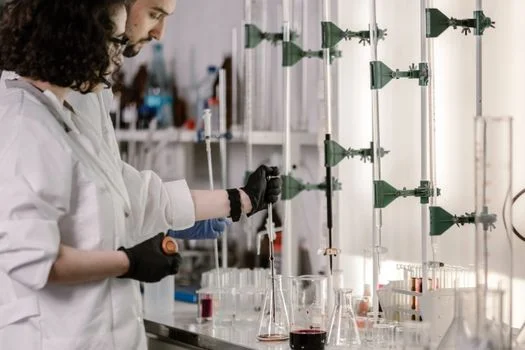
CAPEX is what gets a project approved; OPEX is what gets a plant manager promoted or fired. The 2026 OPEX stack for foil wastewater runs as follows. Chemical reagents dominate at 40–55% of total OPEX (NaOH for pH adjustment, sulfide or DTC precipitants where needed, antiscalants for RO, and periodic CIP chemicals), energy sits at 20–30% (rectifier for electrowinning, RO high-pressure pumps, crystallizer compressor), sludge hauling runs 10–20%, labor 5–10%, and membrane and filter media replacement 5–10%. Unit OPEX lands at $0.85–$2.40 per m³ treated for Trains A and B; Train C runs $3.50–$6.00/m³ before any credit. Plants that adopt PLC-controlled chemical dosing for pH and precipitant control typically cut reagent OPEX 10–15% by eliminating overdosing, and that single intervention often pays for the dosing skid inside 18 months.
The copper credit is the line that flips the whole economics. Worked example for a 50 m³/h Train B plant at 800 mg/L influent Cu and 90% recovery: copper recovered is 0.050 m³/s × 800 g/m³ × 0.90 × 86,400 s/day = ~864 kg Cu/day. At an LME price of $9,500/ton, that is roughly $3.0M/year in recovered metal. Against an OPEX of approximately $1.3M/year for the same plant, the train runs net positive before any water-reuse credit. Plants that have historically treated hydroxide sludge with a filter press for copper-bearing sludge dewatering can typically cut sludge-hauling OPEX by 70–90% by switching to electrowinning, which produces no chemical sludge at all. The same lever shows up across metal-finishing lines; comparable filter press cost benchmarks for metal-finishing sludge confirm that disposal cost is the OPEX line most exposed to recovery-train substitution.
| OPEX Line Item | Share of Total | Train A ($/m³) | Train B ($/m³) | Train C ($/m³) |
|---|---|---|---|---|
| Chemical reagents | 40–55% | 0.40–0.65 | 0.55–0.90 | 0.70–1.20 |
| Energy | 20–30% | 0.20–0.30 | 0.30–0.55 | 1.50–3.50 |
| Sludge hauling | 10–20% | 0.15–0.25 | 0.02–0.05 | 0.02–0.05 |
| Labor | 5–10% | 0.05–0.10 | 0.05–0.12 | 0.10–0.20 |
| Membrane / media | 5–10% | 0.05–0.10 | 0.10–0.20 | 0.20–0.40 |
| Total (no Cu credit) | 100% | 0.85–1.40 | 1.02–1.82 | 3.50–6.00 |
Decision Framework: Which Train Fits Your Plant
The selection logic compresses to four rules that any engineer can apply in a meeting without a spreadsheet open. If the plant is below 20 m³/h and the discharge limit is ≥1 mg/L Cu (typically a U.S. site under 40 CFR 433), Train A is the right call — it has the lowest CAPEX and the OPEX is acceptable. If the plant is 20–80 m³/h and either water scarcity or a strict effluent limit (China GB 30485 or EU BAT-AEL) applies, Train B is the default. If sewer discharge is restricted or the incoming water cost exceeds $1.50/m³, Train C or a hybrid B+C earns back the CAPEX premium through water reuse alone. If LME copper is above $9,000/ton and the plant is above 30 m³/h, the Train B economics dominate regardless of jurisdiction, because the copper credit alone covers more than 100% of annual OPEX.
For context, the electrolytic copper foil equipment market was valued at roughly $1.2 billion in 2024, signaling sustained downstream investment in copper foil capacity. Plants that lock in long-term OPEX decisions tied to recovery and water reuse will outcompete plants that optimize for short-term CAPEX minimization. For adjacent processes that face similar recovery-versus-disposal tradeoffs, the principles translate — the sludge disposal cost optimization levers framework applies directly, and the battery cell manufacturing wastewater treatment guide covers a closely related copper-bearing stream.
| Plant Profile | Recommended Train | Rationale |
|---|---|---|
| <20 m³/h, U.S. discharge (≥1 mg/L Cu) | Train A (DAF + precipitation) | Lowest CAPEX, OPEX acceptable |
| 20–80 m³/h, China or EU discharge | Train B (electrowinning + RO) | Recovery credit + compliance |
| 20–80 m³/h, water cost >$1.50/m³ or no sewer | Hybrid B+C | Water reuse + recovery + ZLD |
| >30 m³/h, LME Cu >$9,000/ton | Train B regardless of jurisdiction | Cu credit alone exceeds OPEX |
Frequently Asked Questions
How much does copper foil wastewater treatment cost per m³ in 2026? Unit OPEX lands at $0.85–$2.40/m³ for Train A and Train B plants, and $3.50–$6.00/m³ for a Train C HPC ZLD before any copper or water-reuse credit. The cost stack is dominated by chemicals (40–55%) and energy (20–30%), with sludge hauling adding 10–20% in Train A.
What is the best process for copper recovery from foil rinse water? Electrowinning is the primary recovery step, with ion-exchange or RO polishing downstream. The combination produces a 99.9% pure copper cathode that can be sold back to a smelter or returned to the plating bath, and an effluent below 0.1 mg/L Cu.
Is ZLD required for copper foil plants? ZLD is only mandatory in water-stressed jurisdictions or where sewer discharge is banned. In most U.S. and many Chinese inland sites, a hybrid Train B (electrowinning + RO) is the more economic compliance solution because the copper credit offsets the OPEX.
How much copper can a foil wastewater plant recover per year? A 50 m³/h plant at 800 mg/L influent Cu with 95% recovery produces approximately 290 tons of copper per year. At $9,500/ton LME, that is roughly $2.75M/year in recoverable metal value.
What discharge limits apply to copper in foil wastewater? China GB 30485 sets total copper at 0.5 mg/L. EU BAT-AEL for non-ferrous metals typically requires 0.1–0.5 mg/L. U.S. EPA 40 CFR 433 allows 2.07 mg/L daily maximum and 1.3 mg/L monthly average — a markedly more permissive threshold that changes the process-train economics.