Why Ultrafiltration Is the Default 2026 Choice for Mexican Industrial Plants
Mexico's NOM-001-SEMARNAT-2021 sets discharge ceilings of <30 mg/L TSS, <150 mg/L COD, and <15 mg/L oils & greases for most industrial outfalls — limits that conventional sand filtration (typical effluent TSS 5–15 mg/L) and dissolved air flotation (typical TSS 20–40 mg/L) frequently fail to meet without polishing stages. Ultrafiltration at 0.01–0.1 μm pore size delivers TSS <1 mg/L, >4 log reduction of bacteria, and >3 log reduction of most viruses in a single barrier, collapsing what used to be a three-stage coagulation–clarification–polishing train into one pressurized skid. CONAGUA and PROFEPA audit protocols tightened in 2024–2025, with new digital discharge reporting and unannounced site inspections pushing non-compliant plants toward membrane retrofits. The capital trade-off is straightforward: a properly sized UF skid costs more than a sand filter, but it eliminates the clarifier, most polymer dosing, and the tertiary polish — and it produces a reusable stream that offsets freshwater tariffs. For a deeper compliance breakdown of Mexican discharge categories and the Mexico City enforcement record, the industrial wastewater treatment in Mexico City 2026 compliance guide maps the regulatory floor that any UF quote must clear.
What Counts as an Ultrafiltration System Supplier in Mexico
An ultrafiltration system supplier in Mexico falls into one of three categories, and the differences matter more than buyers expect. Original Equipment Manufacturers (OEMs) design and produce the membrane modules and the pressure-vessel skids in-house — examples include Smith & Loveless (US), Toray, Veolia, Suez, Hydranautics, and regional players such as HydropureWater and Puresep. Authorized Distributors resell foreign OEM brands with local stocking and technical support but do not manufacture; they earn margin on spares and on integration services. EPC Integrators procure modules from one or more OEMs and assemble the balance of plant — tanks, pumps, valves, instrumentation, and control panels — under a single project contract; Mexican firms such as DEK, Biosystems, and Proagua operate at this level. The practical consequence: an OEM quote covers membrane performance and warranty directly, a distributor quote depends on the OEM's back-office responsiveness, and an integrator quote is only as strong as the weakest subcomponent on the bill of materials. Verify the type before you compare prices.
| Supplier Type | What They Make vs Buy | Typical Lead Time to Mexico | Warranty Origin | Best-Fit Buyer |
|---|---|---|---|---|
| OEM (international) | Membranes + skids in-house | 10–16 weeks | OEM direct, 3 yr prorated | Multi-site rollouts, strict spec compliance |
| OEM (regional, e.g. HydropureWater) | Membranes + skids in-house | 8–14 weeks | OEM direct, 3 yr prorated | Cost-sensitive industrial projects, fast delivery |
| Authorized Distributor | Resells OEM modules, may assemble skids | 4–8 weeks (if stocked) | Pass-through, 12–18 mo | Spare parts, small retrofits, emergency replacement |
| EPC Integrator (local) | Procures modules, builds BOP | 14–24 weeks total | Integrator, 12 mo typical | Turnkey installations, mixed-technology scope |
HydropureWater ships skid-mounted UF systems from its manufacturing base to Mexican industrial clients on a typical 8–14 week lead time, with Spanish-language documentation and spare-parts kits staged through Monterrey or CDMX. Local service coverage, Spanish documentation, and stocked consumables are the decisive practical differentiators once the equipment is on the ground — not the brochure claims.
Membrane Material Comparison: PVDF vs PES vs PAN for Mexican Water Conditions

The three membrane polymers you will see in Mexican RFQ responses behave very differently in the field, and the choice is driven by influent chemistry more than by brand preference. PVDF (polyvinylidene fluoride) is the workhorse for industrial streams — high chlorine tolerance, broad pH window, and continuous operation up to 40°C suits maquiladora rinse waters, food processing washwater, and high-TDS influents where frequent CIP with NaOCl is required. PES (polyethersulfone) delivers a tighter cut-off and the widest pH range, which is why it appears in pharmaceutical and electronics projects where trace colloids must be removed. PAN (polyacrylonitrile) is the budget option — adequate for low-fouling municipal applications but limited in oxidative cleaning, so lifetime cost in industrial service usually works against it.
| Membrane Material | Pore Size | Typical Flux (L/m²·h) | pH Tolerance | Chlorine Tolerance | Service Life | Best-Fit Application |
|---|---|---|---|---|---|---|
| PVDF (e.g. DF series PVDF flat sheet membrane module) | 0.1 μm | 40–80 (32–135 m³/day per DF skid) | 2–11 | 5,000+ ppm·h cumulative | 5–7 years | Oily wastewater, food processing, maquiladora rinse, high-TDS industrial |
| PES | 0.01–0.05 μm | 30–60 | 1–13 | ~1,000 ppm·h | 3–5 years | Pharmaceutical, electronics, tight colloidal cut-off |
| PAN | 0.01–0.1 μm | 25–50 | 2–10 | Low (NaOCl discouraged) | 2–4 years | Low-fouling municipal, budget projects, drinking water polish |
PVDF dominates 2026 Mexican industrial UF procurement because the combination of 40°C thermal tolerance and 5,000+ ppm·h chlorine tolerance lets operators run aggressive CIP sequences (typically 200–500 ppm NaOCl, 30–60 min soak) without membrane damage — a non-negotiable in food, beverage, and metal-finishing service where biofilm control drives the cleaning frequency. PES enters the spec only when tighter cut-off is mandatory, and PAN is essentially absent from new industrial builds in 2026 (HydropureWater field data, 2026).
Seven-Criterion Decision Framework for Choosing a UF Supplier
Use the following scorecard to evaluate incoming quotes; reject any supplier that cannot document at least six of the seven items.
- Membrane certification. NSF/ANSI 61 for drinking-water reuse, FDA 21 CFR compliance for food and pharma contact, ISO 9001 manufacturing audit. Request the certificate numbers and the issuing body.
- Documented flux and TMP performance curves at 25°C. Nominal pore size alone is marketing; demand clean-water flux (LMH) and design TMP (bar) at the operating temperature, recovery, and feed TSS you actually have.
- Backwash and CIP system design. Automated pneumatic or electric actuated valves, CEB (chemically enhanced backwash) frequency 1–3 per day, full CIP weekly. Confirm the supplier has a documented CIP sequence with specific chemistry, temperature, and duration.
- Skid integration level. Pre-piped, pre-wired, factory-tested on a single skid reduces site installation to 2–4 weeks; field-assembled systems typically take 8–12 weeks on a Mexican site and carry higher commissioning risk.
- Membrane warranty terms in writing. OEMs typically offer a 3-year prorated membrane warranty covering manufacturing defects and flux decline above a defined threshold; integrators usually pass through only 12 months — read the exclusions.
- Local service network. Verify a 48-hour on-site response commitment in writing for Monterrey, CDMX, Guadalajara, and Querétaro. Confirm that critical spares (CIP chemicals, valve rebuild kits, one spare module) are stocked locally.
- Reference installations of comparable capacity (50+ m³/day) operating in Mexico for at least 2 years. Call the references. Any supplier that cannot name three active Mexican sites is a red flag.
CAPEX and OPEX Benchmarks for Ultrafiltration Systems in Mexico (2026)
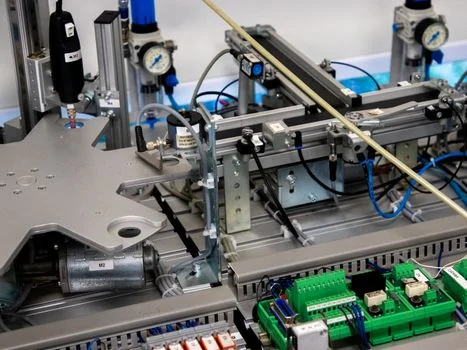
For board approvals and vendor negotiations, the defensible 2026 range for skid-mounted industrial UF in Mexico is MXN 28,000–95,000 per m³/day of installed capacity, with mid-range around MXN 55,000/m³/day for a 100 m³/day plant. MBR-integrated UF commands a 15–25% CAPEX premium over standalone UF but eliminates secondary clarifiers and tertiary sand filters — and the integrated MBR membrane bioreactor system footprint is roughly 60% smaller than a conventional activated-sludge train at the same loading. OPEX runs MXN 2.5–6.0 per m³ treated, dominated by three line items.
| Cost Component | Unit | 2026 Benchmark (MXN) | Notes |
|---|---|---|---|
| CAPEX — skid-mounted UF | per m³/day installed | 28,000–95,000 | Mid-range ~55,000 for 100 m³/day |
| CAPEX — MBR-integrated UF | per m³/day installed | 32,000–110,000 | +15–25% premium, no clarifier or sand filter |
| OPEX — energy | per m³ treated | 1.0–3.0 | 0.05–0.15 kWh/m³ at MXN 1.8–2.2/kWh CFE industrial tariff |
| OPEX — membrane replacement (allocated) | per m³ treated | 0.8–1.5 | PVDF replacement at year 5–7, annualized |
| OPEX — CIP chemicals | per m³ treated | 0.3–0.6 | NaOCl, citric acid, NaOH consumption |
| OPEX — labor & maintenance | per m³ treated | 0.4–0.9 | 1 operator per 3–4 skids, parts allowance |
| Hidden — import duty (HTS 8421.39) | % of CIF value | 5–10% | Membrane modules under correct HTS classification |
| Hidden — PROFEPA commissioning witnessing | fixed per project | 25,000–80,000 | Third-party lab + regulatory fee |
Most UF effluent becomes feed for an industrial RO system when the project targets water reuse rather than discharge, and the broader Mexican water reuse market is expanding at 10.6% CAGR toward $29.61B by 2030 (per the water reuse forecast to 2030), which directly underpins the OPEX case for membrane-based recovery. Inland freight from port to site, customs brokerage, and PROFEPA commissioning witnessing are the three line items most first-time buyers underestimate; build them into the CAPEX envelope before issuing the PO.
How to Run a Zero-Risk UF Supplier RFQ in Three Steps
- Issue a one-page technical data sheet. Include influent characterization (BOD₅, COD, TSS, FOG, pH, temperature, peak and average flow), target effluent quality (cite NOM-001-SEMARNAT-2021 limits explicitly), required recovery rate (90–95% is the industrial norm), available footprint, and utility constraints. Do not accept a quote against a generic spec sheet.
- Require each bidder to submit a standardized proposal package. Membrane type and chemistry, guaranteed flux (L/m²·h) at design TMP, total membrane area (m²), number of modules, skid dimensions and weight, CIP sequence (chemistry, concentration, duration, frequency), and warranty terms. Comparing like-for-like is impossible without a fixed response format.
- Shortlist three bidders for a 60-minute technical interview. Cover CIP chemistry, spare parts lead time into Mexico, and reference contacts. Reject any supplier that cannot name three active Mexican installations of comparable capacity — a reference list is the single best predictor of post-commissioning support quality.
Frequently Asked Questions
What NOM-001-SEMARNAT-2021 discharge limits can a UF system meet? A properly sized PVDF UF system delivers TSS <1 mg/L, COD typically 50–100 mg/L (well under the 150 mg/L ceiling), and oils & greases <5 mg/L (under the 15 mg/L ceiling), so the UF effluent clears NOM-001-SEMARNAT-2021 limits for most industrial categories without polishing (HydropureWater field data, 2026).
What is the difference between MBR and standalone UF? MBR integrates UF with an activated-sludge bioreactor, eliminating the secondary clarifier and tertiary sand filter, with a 15–25% CAPEX premium and roughly 60% smaller footprint; standalone UF treats an existing clarifier overflow and is the lower-cost option for retrofits (see the integrated MBR membrane bioreactor system for typical scope).
What lead time should I expect for a skid-mounted UF system in Mexico in 2026? Regional OEMs ship in 8–14 weeks; international OEMs in 10–16 weeks; local integrators running 14–24 weeks total because module procurement runs concurrently with BOP fabrication.
Can UF effluent be reused as RO feed? Yes — UF reduces SDI to <3 and turbidity to <0.1 NTU, which sits comfortably within the feed requirements of an industrial RO system; this is the standard two-stage reuse train for Mexican plants targeting >90% water recovery.
What is the typical CAPEX per m³/day for industrial UF in Mexico in 2026? MXN 28,000–95,000 per m³/day for skid-mounted systems, with mid-range around MXN 55,000/m³/day for a 100 m³/day plant; MBR-integrated UF adds 15–25%.