What a Dammam Wastewater Treatment Plant Manufacturer Must Deliver in 2026
Any wastewater treatment plant manufacturer in Dammam competing in the Eastern Province market must engineer to three boundary conditions simultaneously: PME/RCJ-treated wastewater discharge limits of BOD ≤25 mg/L, TSS ≤30 mg/L, COD ≤150 mg/L, and fecal coliform ≤200 CFU/100 mL for irrigation reuse; Eastern Province summer ambient temperatures of 45-50°C that push biological reactor mixed liquor 20-35% above the 25-30°C mesophilic design envelope; and Saudi conformity paperwork that arrives at the port before the container does.
Typical Dammam industrial influents run COD 500-3,000 mg/L from refineries, food processing, plastics, and petrochemical support facilities, with TDS commonly 1,000-8,000 mg/L in brine-bearing streams. Vendors quoting biological skids sized at standard 25°C reference conditions without a temperature derate or a cooling loop will under-design aeration tank volume by 15-25% and miss the BOD limit by Q3 of year one. Baseline credentials that should be non-negotiable on any technical datasheet: ISO 9001:2015 (the 2015 revision, not the 2008 version still showing up on some Indian vendor pages), ISO 14001 for environmental management, ISO 45001 for occupational health, and SASO IECEE conformity for every imported electrical skid. For discharge parameter context beyond BOD/COD, the Saudi Arabia fluoride discharge compliance guide documents the RCJ framework that runs parallel to PME in Eastern Province jurisdictions.
Matching the Process Train to Your Influent: MBR vs SBR vs DAF
Process train selection is the single most expensive decision in any WWTP RFQ, and the right answer is dictated by influent COD, TDS, oil & grease loading, and whether the effluent target is reuse or surface discharge. The MBR package wastewater treatment system covers the 10-2,000 m³/day range typical of Dammam industrial parks, and pairs naturally with DF series flat-sheet MBR membrane modules rated at 0.1 μm nominal pore size with per-cassette throughput of 32-135 m³/day depending on cassette count. A pre-treatment DAF system (4-300 m³/h, 13 standard models) is the right front-end for refinery and food-processing wastewaters carrying FOG above 150 mg/L or suspended solids above 500 mg/L, because DAF removes 60-90% of these fractions before they reach the biological stage and protects downstream membrane life.
Decision logic: choose MBR when reuse for RO feed, cooling tower makeup, or irrigation is the project goal — the 0.1 μm filtrate eliminates the TSS load that fouls RO membranes. Choose SBR when flow stays below 500 m³/day, TDS stays below 2,000 mg/L, and capital cost is the primary constraint. Choose DAF as a pre-treatment stage regardless of the biological choice whenever influent oil & grease exceeds 100 mg/L. For Aramco-adjacent brine streams with TDS above 5,000 mg/L, add an industrial RO polishing system post-MBR with single-pass recovery of 75-95% to hit reuse conductivity targets.
| Parameter | MBR | SBR | DAF (pre-treatment) |
|---|---|---|---|
| Flow range (m³/day) | 10-2,000 | 10-500 | 96-7,200 (4-300 m³/h) |
| Influent COD (mg/L) | 500-15,000 | 500-5,000 | Target removal of TSS/FOG |
| TDS tolerance (mg/L) | Up to 15,000 with RO | Best below 2,000 | Not TDS-driven |
| Effluent TSS (mg/L) | ≤1 (0.1 μm filtrate) | ≤30 | Reduces TSS 60-90% upstream |
| Best fit | Reuse / RO feed | Low-cost discharge | Refinery, food, FOG streams |
Comparing Vendors: China, India, Local, and EPC System Integrators
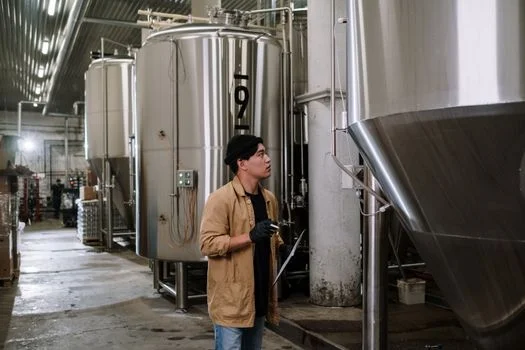
Most RFQ inboxes for Dammam projects fill with 30-50 supplier responses within 72 hours, and roughly 70% are unvetted Alibaba-style listings. A practical shortlist reduces that to 2-3 vendors by mapping each candidate to a tier and scoring against five criteria drawn from observable signals on Made-in-China scraped supplier data — Diamond Member status, Audited Supplier tag, certification set, and project reference list.
Tier-1 covers established Saudi or GCC system integrators with in-Kingdom service crews: highest unit cost (typically 25-40% above Tier-2), fastest response, lowest compliance risk. Tier-2 covers ISO-certified Chinese OEM exporters with documented Saudi project references: mid cost, 6-10 week factory-to-port lead time, 5-8 working days Dammam customs clearance. Tier-3 covers Indian and smaller Chinese manufacturers; reject unless ISO 9001:2015 is current, the supplier can quote DDP Dammam with full SASO documentation, and a third-party inspection report (SGS, BV, TÜV) is offered. For biological-heavy Dammam bids, the MBR package wastewater treatment system documentation should be cross-checked against the vendor's actual delivered reference list, not the marketing PDF.
| Criterion (weight) | Tier-1 Local SI | Tier-2 China OEM | Tier-3 India/Small CN |
|---|---|---|---|
| Certifications (25%) | ISO 9001:2015 + SASO | ISO 9001:2015 + SASO IECEE | Often ISO 9001:2008 only |
| Saudi references (25%) | 10+ projects, ARAMCO-adjacent | 3-10 projects, verifiable | 0-2, unverified |
| RFQ response time (15%) | 24-48 h | 48-96 h | 72-168 h |
| In-Kingdom service (20%) | Local crew, 4-8 h mobilization | Fly-in engineer, 5-10 days | Remote only |
| DDP pricing transparency (15%) | Line-item, bonded | Line-item, DDP Dammam | EXW only, hidden adders |
CAPEX, OPEX, and Landed Cost: What the Spreadsheet Should Show
Anchor package WWTP CAPEX to current Made-in-China scraped data: 50-100 m³/day buried integrated units at US$5,600-7,700 FOB Shandong, scaling to US$45,000-120,000 for 500-1,000 m³/day MBR systems depending on effluent target and automation scope. The Dammam landed-cost adder runs 15-22% above China EXW, decomposed as sea freight (~6-9% of equipment value on 20-ft/40-ft FCL from Shanghai or Qingdao to Dammam), Saudi customs duty (5% on most WWTP skids classified under HS code 8421), SASO conformity fee, port handling at Dammam (~US$350-650 per container), and inland transport to Eastern Province sites (US$400-900 per container Dhahran, Al-Khobar, Jubail).
OPEX at 1,000 m³/day MBR scale typically runs 0.08-0.15 USD/m³, dominated by membrane replacement every 5-7 years, energy at 0.3-0.6 kWh/m³, and chemical dosing for CIP and pH control. The DF series flat-sheet MBR membrane module economics favor flat-sheet geometry: 10-20× lower energy than external cross-flow per scraped product specs, cutting OPEX by ~12-18% versus hollow-fiber MBR at the same flux. A defensible RFQ budget line for a 500 m³/day MBR + DAF + RO polishing train runs US$180,000-260,000 DDP Dammam with 14-18 week delivery.
| Cost line | 50-100 m³/day package | 500 m³/day MBR | 1,000 m³/day MBR + RO |
|---|---|---|---|
| FOB China equipment | US$5,600-7,700 | US$45,000-75,000 | US$95,000-120,000 |
| Sea freight (6-9%) | US$400-700 | US$2,700-6,750 | US$5,700-10,800 |
| Saudi customs (5%, HS 8421) | US$280-385 | US$2,250-3,750 | US$4,750-6,000 |
| SASO + port + inland | US$900-1,200 | US$1,800-2,800 | US$2,400-3,600 |
| Total DDP Dammam | US$7,200-9,985 | US$51,750-88,300 | US$107,850-140,400 |
| OPEX (USD/m³) | 0.10-0.18 | 0.08-0.15 | 0.12-0.20 (RO energy adder) |
Logistics, Customs, and SASO Compliance for Equipment into Dammam
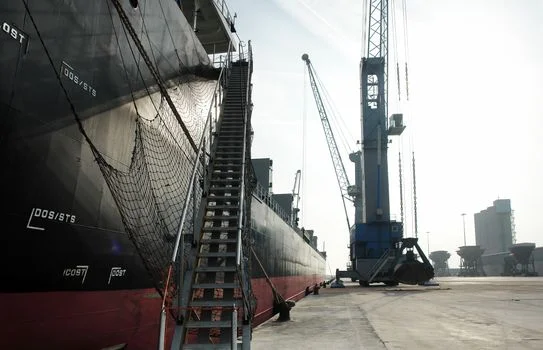
The most common cross-border failure mode in Dammam-bound WWTP shipments is equipment arriving at King Abdulaziz Port without the correct conformity paperwork, then sitting in customs for 3-6 weeks while demurrage accrues at roughly US$120-180 per day per container. The required import document set is: SASO IECEE Certificate for all electrical components, Certificate of Conformity (CoC) from a SASO-approved body, commercial invoice, packing list, bill of lading, and HS code 8421 classification for filtering or purifying machinery.
Realistic Dammam port timeline: 5-8 working days for customs clearance once the document set is clean, 2-3 days inland transport to industrial sites in Dhahran, Al-Khobar, or Jubail. Two operational notes specific to the Eastern Province: specify stainless steel 316L rather than 304 for any wetted metal in coastal Dammam because salt-air corrosion cuts 304 service life by 30-40%, and require control cabinets rated IP65 minimum to handle the dust loading from adjacent petrochemical operations. A pre-shipment third-party inspection (SGS, BV, or TÜV) is the single cheapest insurance against Saudi Customs rejection, which 2026 Saudi import compliance notes flag as the recurring cause of WWTP project delay.
Frequently Asked Questions
What PME discharge limits apply to a Dammam industrial WWTP in 2026?
PME/RCJ-treated wastewater limits for industrial discharges in the Eastern Province are BOD ≤25 mg/L, TSS ≤30 mg/L, COD ≤150 mg/L, and fecal coliform ≤200 CFU/100 mL for irrigation reuse, confirmed in 2026 Saudi compliance guides.
What certifications must a Chinese WWTP manufacturer hold to ship to Dammam?
ISO 9001:2015, ISO 14001, ISO 45001, and SASO IECEE conformity certificates for every electrical skid, with a Certificate of Conformity issued by a SASO-approved body before shipment.
How much extra should buyers budget above China EXW pricing for DDP Dammam delivery?
Plan a 15-22% landed-cost adder covering sea freight (6-9%), 5% Saudi customs duty under HS code 8421, SASO conformity fees, Dammam port handling, and inland transport to Eastern Province sites.
MBR vs DAF — which comes first in a refinery wastewater treatment train?
DAF comes first whenever influent oil & grease exceeds 100 mg/L or TSS exceeds 500 mg/L, removing 60-90% of these fractions upstream to protect the MBR membrane and extend its 5-7 year replacement cycle.
How long does Dammam customs clearance take for a WWTP skid shipment?
With a complete SASO IECEE + CoC document set, expect 5-8 working days for customs clearance plus 2-3 days for inland transport to Dhahran, Al-Khobar, or Jubail industrial sites.
Related Equipment
- DAF system — specifications, capacity range, and technical data