Why Copenhagen’s Wastewater Treatment Costs Are Unique: Regulatory, Economic, and Site-Specific Drivers
Denmark maintains a 95.7% biological treatment rate for wastewater, a figure significantly higher than the European Union average of 88%, which fundamentally shifts the baseline for capital expenditure (CAPEX) in Copenhagen. This high standard, driven by the EU Urban Waste Water Treatment Directive and Danish national mandates, effectively removes conventional primary treatment as a standalone option for industrial facilities. To meet Copenhagen’s stringent effluent requirements, particularly for Total Phosphorus (TP <0.3 mg/L) and Chemical Oxygen Demand (COD <50 mg/L), plants must integrate advanced secondary or tertiary stages, such as Membrane Bioreactors (MBR) or sophisticated chemical precipitation units.
Operational expenditure (OPEX) in Copenhagen is dominated by a combination of high energy costs and aggressive discharge fees. Electricity prices for industrial consumers average DKK 0.30/kWh, which creates a sharp financial divide between technology choices. While MBR systems for Copenhagen’s effluent COD <50 mg/L and TP <0.3 mg/L standards offer superior water quality and a smaller footprint, their energy intensity (0.8 kWh/m³) is double that of conventional activated sludge (0.4 kWh/m³). However, the Danish discharge fee of DKK 11.5/m³ acts as a powerful counterweight. For a mid-sized facility processing 2,000 m³/day, non-compliance or lower-tier treatment resulting in high discharge loads can lead to annual fees exceeding DKK 8.4 million. In contrast, high-efficiency systems that allow for water reuse or meet the strictest "clean water" tiers can mitigate these costs entirely.
Copenhagen’s commitment to a circular economy provides unique OPEX offsets through biogas production and sludge valorization. The Amager Bakke facility’s DKK 150 million anaerobic digestion upgrade serves as a local benchmark, demonstrating how high-strength industrial organic waste can be converted into a revenue stream, with biogas fetching approximately DKK 0.80/kWh. treated sludge that meets agricultural standards can be sold or distributed for approximately DKK 150/ton, transforming a waste liability into a secondary resource. Site constraints also play a critical role; with industrial land in areas near the harbor or Nordhavn costing upwards of DKK 15,000/m², the spatial efficiency of a system often outweighs its initial CAPEX. This is evidenced by the Lynetten WWTP expansion, which required a DKK 180 million investment to manage an additional 300,000 PE (Population Equivalent) within a strictly limited geographic footprint.
Copenhagen Wastewater Treatment Plant Cost Breakdown: CAPEX and OPEX by Technology and Plant Size
Capital investment for a wastewater treatment plant in Copenhagen in 2026 is tiered by capacity and technological complexity, with a 2,000 m³/day MBR system typically requiring between DKK 25 million and DKK 40 million. These figures include not only the core equipment but also the high costs of local permitting (DKK 500,000 to DKK 2 million) and specialized Danish engineering labor, which averages DKK 450/hour. For smaller industrial applications, such as a 500 m³/day food processing unit, CAPEX starts at DKK 8 million, while large-scale municipal-grade facilities like the 2025 Lynetten expansion reach benchmarks of DKK 180 million to DKK 250 million depending on the level of nutrient removal required.
OPEX calculations must account for Copenhagen’s specific utility rates and the 95.7% biological treatment mandate. A 2,000 m³/day MBR plant incurs annual chemical costs of approximately DKK 1.2 million for membrane cleaning and pH adjustment, alongside maintenance reserves typically set at 3% of CAPEX. When compared to Denmark-wide wastewater treatment cost benchmarks and ROI frameworks, Copenhagen facilities show a 15% higher OPEX due to localized land taxes and stricter municipal monitoring requirements. The following table provides a granular breakdown of these costs across three common plant sizes and technology configurations.
| Plant Capacity (m³/day) | Technology Type | Estimated CAPEX (DKK) | Annual OPEX (DKK/year) | Energy Use (kWh/m³) |
|---|---|---|---|---|
| 500 | MBR (Integrated) | 8M – 12M | 1.2M – 1.8M | 0.85 |
| 500 | DAF + Activated Sludge | 6M – 9M | 0.9M – 1.4M | 0.45 |
| 2,000 | MBR (Advanced) | 25M – 40M | 4.5M – 6.0M | 0.80 |
| 2,000 | Anaerobic Digestion + MBR | 35M – 55M | 3.2M – 4.8M* | -0.20 (Net Producer) |
| 10,000 | CAS + Tertiary Filter | 100M – 150M | 18M – 25M | 0.55 |
| 10,000 | MBR (Municipal Grade) | 130M – 190M | 22M – 30M | 0.75 |
*Note: OPEX for Anaerobic Digestion accounts for biogas revenue offsets based on Copenhagen energy prices.
Technology-specific premiums in the Copenhagen market are driven by the need for low-footprint solutions. MBR systems command a 20–30% CAPEX premium over conventional activated sludge (CAS) but save significant costs in land acquisition (DKK 15,000/m²). For high-strength industrial wastewater, such as that found in the brewing or dairy sectors, DAF pretreatment for Copenhagen’s high-strength industrial wastewater (FOG, TSS removal) is essential to protect downstream biological stages, adding approximately DKK 1.5 million to the CAPEX for a 2,000 m³/day facility but reducing biological load by up to 90%.
MBR vs. Conventional Activated Sludge vs. Anaerobic Digestion: Cost, Performance, and Compliance Trade-offs for Copenhagen
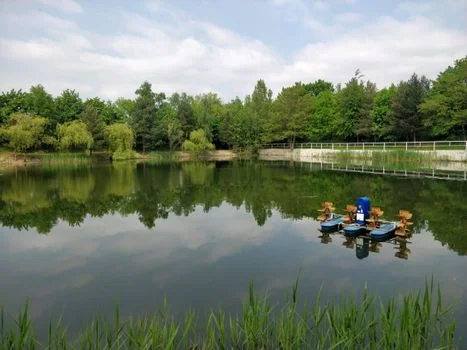
MBR technology provides the most reliable pathway to meeting Copenhagen’s 2026 effluent targets of COD <50 mg/L and TP <0.3 mg/L, effectively eliminating the risk of DKK 11.5/m³ discharge penalties. While Conventional Activated Sludge (CAS) remains a viable lower-CAPEX alternative, it often fails to meet these stringent limits without the addition of a tertiary filtration stage. In Copenhagen’s industrial zones, where space is at a premium, the 60% reduction in footprint offered by MBR compared to CAS can save a 10,000 m³/day facility over DKK 30 million in land costs alone. This makes MBR the preferred choice for urban industrial sites, despite its higher energy consumption of 0.8 kWh/m³.
Anaerobic digestion (AD) coupled with MBR represents the high-end of the technical spectrum, specifically designed for high-strength organic wastewater. While the CAPEX is 15–20% higher than a standard MBR system due to the need for heated digesters and gas handling equipment, the ROI is accelerated by Copenhagen’s biogas incentives. An AD system can act as a net energy producer, yielding 0.2 kWh/m³ of surplus energy, which at DKK 0.80/kWh, provides a substantial OPEX offset. For facilities looking at how European cities with similar regulations structure their wastewater treatment costs, the Copenhagen model emphasizes maximizing resource recovery to justify higher initial investments.
| Feature | MBR | Conventional Activated Sludge (CAS) | Anaerobic Digestion + MBR |
|---|---|---|---|
| Effluent COD (mg/L) | <30 – 50 | 80 – 125 | <30 |
| Footprint Requirement | Very Low (1.0x) | High (2.5x) | Medium (1.5x) |
| Energy Cost (2k m³/day) | DKK 1.75M / year | DKK 875K / year | Net Revenue (DKK 400K) |
| Compliance Risk | Zero (Exceeds standards) | Moderate (Requires tertiary) | Zero (Exceeds standards) |
| Sludge Production | Low | High | Very Low (Stabilized) |
The choice between these technologies often hinges on the specific industrial sector. Food processing plants in Copenhagen, dealing with high FOG (Fats, Oils, and Grease) and protein loads, benefit from cost-effective pretreatment strategies for high-FOG industrial wastewater, such as DAF, before entering a biological MBR stage. This hybrid approach ensures that the high-CAPEX MBR membranes are protected from fouling, extending their lifespan and reducing the long-term OPEX associated with membrane replacement.
How to Reduce Wastewater Treatment Costs in Copenhagen: Energy Efficiency, Circular Economy, and Compliance Strategies
Optimizing energy efficiency is the most direct method for reducing OPEX in Copenhagen’s high-cost utility environment. Implementing variable-frequency drives (VFDs) on aeration blowers can reduce energy consumption by 20–25% compared to fixed-speed systems. For a 10,000 m³/day plant, this single technical adjustment can save over DKK 400,000 annually. integrating automated chemical dosing for Copenhagen’s variable industrial wastewater streams ensures that coagulants and polymers are only used when necessary, preventing the "over-dosing" common in manual systems that can inflate chemical budgets by 15%.
Circular economy strategies offer the most significant long-term savings by turning waste into revenue. Beyond biogas, Copenhagen’s municipal framework supports sludge reuse for agriculture, provided it meets heavy metal and pathogen limits. By investing in sludge dewatering and stabilization equipment, an industrial facility can save DKK 150/ton in disposal fees and potentially qualify for municipal subsidies. For a 2,000 m³/day facility, an anaerobic digestion system can generate DKK 1.2 million per year in combined energy savings and biogas revenue, significantly shortening the payback period for the initial investment.
Compliance strategies should focus on "source-point" reduction to lower the required CAPEX of the central treatment plant. By utilizing DAF for primary solids removal, a facility can reduce the TSS (Total Suspended Solids) load by 90% before it reaches the biological stage. This allows for a smaller, less expensive MBR or CAS system. Modular design is another effective strategy; starting with a DAF and CAS system (DKK 5 million initial CAPEX) and adding MBR modules as capacity or regulatory requirements grow allows a facility to spread its capital burden over several years while remaining in constant compliance with Copenhagen’s discharge standards.
Copenhagen Wastewater Treatment Plant Cost Calculator: ROI Framework for Industrial Buyers
Evaluating the ROI for a wastewater treatment plant in Copenhagen requires a comprehensive look at avoided costs, direct revenue, and CAPEX. The primary driver for ROI in this market is the avoidance of the DKK 11.5/m³ discharge fee. For an industrial buyer, the "savings" are calculated by comparing the cost of treated water discharge (often near zero for high-quality MBR effluent) against the cost of discharging untreated or partially treated water into the municipal sewer. In many cases, the high discharge fees mean that an advanced treatment system will pay for itself in less than four years.
An example calculation for a 2,000 m³/day MBR system illustrates this: with a CAPEX of DKK 25 million and an annual OPEX of DKK 900,000 (excluding energy), the total annual cost of ownership is balanced against DKK 8.4 million in annual discharge fee savings. This results in a payback period of approximately 3.2 years. Sensitivity analysis shows that even if energy costs rise from DKK 0.30/kWh to DKK 0.35/kWh, the payback period only extends by four months, highlighting the dominance of discharge fees in the financial model. Copenhagen also offers specific incentives, such as DKK 500,000 grants for energy-efficient upgrades and DKK 200/ton subsidies for certified sludge reuse, which further improve the investment profile.
| Investment Metric | MBR System (2k m³/day) | DAF + CAS (2k m³/day) | AD + MBR (2k m³/day) |
|---|---|---|---|
| Initial CAPEX | DKK 25.0M | DKK 18.0M | DKK 38.0M |
| Annual OPEX (Net) | DKK 4.5M | DKK 3.2M | DKK 2.8M |
| Annual Discharge Savings | DKK 8.4M | DKK 6.5M | DKK 8.4M |
| Annual Biogas Revenue | N/A | N/A | DKK 1.1M |
| Payback Period | 3.2 Years | 5.4 Years | 2.8 Years |
Frequently Asked Questions
What is the average cost of a wastewater treatment plant for a Copenhagen industrial facility? In 2026, a 2,000 m³/day facility typically requires a CAPEX of DKK 25M to DKK 40M, depending on technology. OPEX averages DKK 11.5/m³, heavily influenced by Copenhagen’s high energy costs and strict discharge standards.
How do Copenhagen’s discharge fees impact the ROI of a new plant? Discharge fees of DKK 11.5/m³ are a primary driver for ROI, often allowing advanced systems like MBR to achieve payback in under 3.5 years by eliminating municipal penalties. For a 2,000 m³/day plant, this equates to over DKK 8M in annual savings.
Is MBR technology worth the higher CAPEX compared to Conventional Activated Sludge in Copenhagen? Yes, because MBR’s 60% smaller footprint saves significant costs in Copenhagen’s expensive industrial land market (DKK 15,000/m²). Additionally, MBR consistently meets the COD <50 mg/L limit, avoiding discharge fees that CAS might incur without tertiary treatment.
Can biogas production significantly offset the OPEX of a wastewater plant in Denmark? Absolutely; anaerobic digestion can turn a plant into a net energy producer, with biogas revenue of DKK 0.80/kWh offsetting OPEX by 30–40%. This is particularly effective for high-strength organic waste in the food and beverage sectors.
What are the compliance requirements for wastewater discharge in Copenhagen in 2026? Facilities must align with Denmark’s 95.7% biological treatment mandate, typically requiring effluent targets of COD <50 mg/L and Total Phosphorus <0.3 mg/L. Failure to meet these results in significant per-cubic-meter fines and potential regulatory shutdowns.