In 2026, industrial wastewater treatment plant costs in Argentina range from USD 500,000 for small-scale DAF systems (4–30 m³/h) to USD 15 million for large MBR plants (200–1,000 m³/h). CAPEX is driven by technology choice (MBR: 30–50% higher than conventional), while OPEX varies from $0.20/m³ (activated sludge) to $1.50/m³ (MBR with high membrane replacement costs). Compliance with Argentine Law 25.688 adds 10–20% to CAPEX for monitoring and reporting systems.
Why Wastewater Treatment Costs Are Rising for Argentine Industries in 2026
Argentine industrial wastewater discharge fines increased 40% in 2024 under Law 25.688, with penalties now reaching up to $50,000 USD per month for persistent non-compliance (Argentine Ministry of Environment, 2024).
This regulatory shift has transformed wastewater treatment from a secondary utility concern into a critical financial risk management priority. For procurement managers, the rising cost of inaction often exceeds the amortized cost of high-efficiency treatment systems.
Water scarcity, particularly in the arid regions of Patagonia and the industrial hubs of Córdoba, is driving a surge in demand for advanced reuse systems. Local water tariffs for industrial users have seen annual increases of 15–25% between 2023 and 2026 (AYSA data), making the internal recycling of process water a fiscal necessity rather than just a sustainability goal.
ESG reporting mandates for Argentine-listed companies like YPF and Arcor now require audited wastewater treatment KPIs, which has led to a 12–18% increase in CAPEX allocations to ensure systems meet international transparency standards.
The financial impact of modernizing treatment infrastructure is best illustrated by a recent project in San Martín, Buenos Aires. A mid-sized textile mill facing $200,000 USD per year in environmental fines and high municipal discharge fees upgraded to an MBR system for high-effluent-quality wastewater treatment. By 2025, the facility not only eliminated its fine exposure but also reduced its fresh water intake by 45%, illustrating how modern Latin American wastewater treatment cost benchmarks favor high-tech solutions over traditional, lower-CAPEX methods that fail to meet modern discharge limits.
CAPEX Breakdown: How Technology Choice Impacts Wastewater Treatment Plant Costs in Argentina
The choice of technology significantly influences CAPEX.Technology selection is the primary determinant of upfront investment, with industrial-scale systems in Argentina requiring specific budgeting for logistics and local civil engineering. Unlike municipal projects that benefit from economies of scale, industrial plants must be sized for high-strength organic loads or specific chemical contaminants, which significantly inflates the cost per cubic meter treated.
| Technology Type | CAPEX per m³/day (USD) | Primary Cost Driver | Typical Industrial Application |
|---|---|---|---|
| Conventional Activated Sludge | $1,500 – $2,500 | Civil works & land area | General manufacturing, municipal-style waste |
| MBR (Membrane Bioreactor) | $2,500 – $4,000 | Membrane modules & automation | Pharmaceuticals, hospitals, reuse projects |
| DAF (Dissolved Air Flotation) | $1,200 – $2,000 | Mechanical components | Food processing, meat packing, oil & gas |
| RO (Reverse Osmosis) for Reuse | $3,000 – $5,000 | High-pressure pumps & membranes | Mining, beverage production, boiler feed |
In the Argentine market, civil works—including excavation, reinforced concrete tanks, and site preparation—typically account for 30–40% of total CAPEX. This is largely due to skilled labor costs, which range from $25–40 per hour for specialized industrial construction, significantly higher than regional averages. The reliance on imported core components, such as high-performance membranes, introduces an 18% Argentine import tariff (2026 customs data), adding 10–15% to the final price compared to locally sourced alternatives.
To mitigate these costs, many engineers are shifting toward modular or "package" plants. For example, DAF systems for high-FOG industrial wastewater that are pre-assembled and skid-mounted can reduce onsite civil work costs by up to 30%. While modular plants like the WSZ series offer significant savings, they are generally optimized for flows below 80 m³/h; larger facilities usually require custom-built concrete infrastructure to manage hydraulic surges.
OPEX Drivers: Chemical Costs, Energy, and Maintenance for Argentine Plants
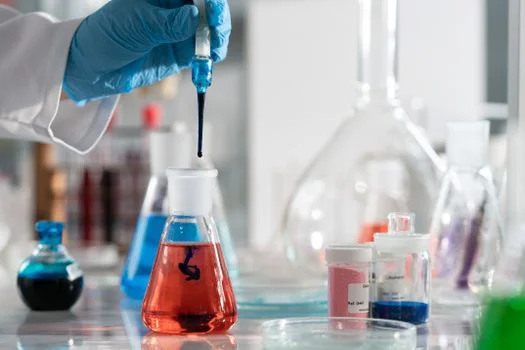
Operating expenditures (OPEX) in Argentina are heavily influenced by fluctuating energy tariffs and the logistical costs of chemical procurement. While CAPEX is a one-time hurdle, the long-term viability of a wastewater plant depends on managing the cost per cubic meter of treated effluent.
| Technology Type | OPEX per m³ (USD) | Energy Intensity (kWh/m³) | Maintenance Profile |
|---|---|---|---|
| Conventional Activated Sludge | $0.20 – $0.40 | 0.3 – 0.6 | Low – Mechanical repairs |
| MBR (Membrane Bioreactor) | $0.80 – $1.50 | 1.0 – 2.5 | High – Membrane cleaning/replacement |
| DAF (Dissolved Air Flotation) | $0.30 – $0.50 | 0.2 – 0.5 | Medium – Chemical dosing & sludge |
| RO (Reverse Osmosis) | $0.50 – $1.20 | 1.5 – 4.0 | High – Precision monitoring |
Energy costs remain a dominant factor, with 2026 industrial tariffs in Argentina ranging from $0.12 to $0.18 per kWh. This makes aeration-intensive technologies, such as MBR, approximately 25–35% more expensive to operate in Argentina than in regions with lower industrial energy rates. Consequently, plant engineers often prioritize automated chemical dosing for precise wastewater treatment to optimize the flocculation process and reduce the load on energy-heavy secondary treatment stages.
Chemical costs also present a regional challenge. Polyelectrolyte flocculants and coagulants often cost $3–5 per kg in Argentina, compared to $2–3 per kg in neighboring Brazil, primarily due to import logistics and local distribution markups. To offset these costs, many factories are implementing compact underground plants for small factories that utilize highly automated control systems. These systems can reduce labor OPEX by 60–80% by minimizing the need for full-time onsite operators, whose average annual salaries currently sit near $15,000 USD for qualified technicians.
Compliance Costs: Meeting Argentine and Provincial Wastewater Standards
Meeting wastewater standards requires significant investment.Compliance with Argentine Law 25.688 requires industrial discharges to meet strict parameters: Chemical Oxygen Demand (COD) below 250 mg/L, Biological Oxygen Demand (BOD) below 50 mg/L, and Total Suspended Solids (TSS) below 80 mg/L. Failing to meet these national standards can lead to immediate plant closures or heavy daily fines.
However, the regulatory landscape in Argentina is bifurcated, with provincial standards often exceeding national requirements. In Buenos Aires, Law 13,564 mandates rigorous testing for heavy metals, such as Chromium (Cr < 0.5 mg/L), which necessitates the installation of advanced monitoring equipment. This can add between $50,000 and $100,000 USD to the initial CAPEX for real-time telemetry and laboratory-grade sensors. Industries such as mining and pharmaceuticals must budget an additional 10–20% in CAPEX for tertiary treatments, including food industry wastewater treatment cost models and disinfection units, to meet sector-specific limits like cyanide concentrations below 0.1 mg/L.
A recent case study from a food processing plant in Rosario highlights the cost of compliance. The facility invested $120,000 USD in a high-efficiency DAF system and a chlorine dioxide generator for disinfection to meet provincial TSS and microbiological limits. While the upfront cost was significant, the investment prevented the factory from being shut down during a 2025 environmental audit, proving that compliance costs are an essential insurance policy for operational continuity.
Technology Comparison: MBR vs DAF vs Conventional Activated Sludge for Argentine Industries
Choosing the right technology requires a balance between effluent quality, available footprint, and long-term financial commitment. For Argentine industrial buyers, the decision often hinges on whether the goal is simple discharge compliance or high-value water reuse.
| Feature | MBR | DAF | Conventional Activated Sludge |
|---|---|---|---|
| Effluent Quality (COD) | < 50 mg/L | Reduces FOG/TSS by 90% | 100 – 250 mg/L |
| Footprint (m²/m³/day) | 0.5 – 1.0 | 1.0 – 2.0 | 2.0 – 4.0 |
| CAPEX (USD/m³/day) | $2,500 – $4,000 | $1,200 – $2,000 | $1,500 – $2,500 |
| OPEX (USD/m³) | $0.80 – $1.50 | $0.30 – $0.50 | $0.20 – $0.40 |
| Best For | Pharma, Reuse, Small sites | Food, Paper, High Oil | Large sites, Low budget |
The MBR systems for high-effluent-quality wastewater treatment are the gold standard for facilities with limited space or those aiming for zero liquid discharge (ZLD). With a footprint as small as 0.5 m² per cubic meter treated daily, they are ideal for urban factories in Buenos Aires where land costs are prohibitive. Conversely, DAF systems for high-FOG industrial wastewater remain the most cost-effective solution for the "pampa" region's massive food processing and rendering industry, where primary removal of fats and oils is the highest priority.
Conventional activated sludge systems, while having the lowest OPEX, are increasingly rare in new industrial builds due to their massive footprint and inability to consistently meet the tightening nitrogen and phosphorus limits appearing in 2026 provincial regulations. They remain viable only for large-scale municipal-style waste streams where land is abundant and effluent requirements are basic.
ROI Calculator: How to Justify Wastewater Treatment Plant Costs in Argentina
The return on investment can be significant.To justify the significant