What Is a Package Wastewater Treatment Plant?
A package wastewater treatment plant is a factory-assembled, skid-mounted or containerized system designed for rapid deployment in decentralized locations. These compact wastewater systems use pre-engineered biological processes like anoxic/aerobic (A/O) or membrane bioreactor (MBR) to treat sewage to secondary or tertiary levels. These processes are highly efficient, breaking down organic matter and removing nutrients through controlled microbial activity, ensuring high-quality effluent. They are the primary solution for remote British Columbia communities, mining camps, and seasonal resorts where challenging terrain or distance makes gravity sewer lines and centralized plants impractical.
Modular construction is a key advantage. Units arrive on-site with pre-wired controls, pre-piped reactors, and standardized footprints, dramatically reducing installation time and complexity. This factory-controlled assembly also ensures consistent quality and performance, minimizing on-site construction risks and accelerating project timelines. Their transportability by truck, rail, or barge makes them ideal for BC's diverse and often inaccessible geography. This approach to decentralized wastewater system deployment ensures consistent treatment performance where it is needed most.
Why British Columbia Needs Modular Wastewater Solutions
British Columbia's unique combination of geography, population distribution, and stringent environmental regulations creates a critical demand for modular sewage treatment. Over 120 remote First Nations communities in BC lack consistent access to centralized treatment infrastructure, according to Indigenous Services Canada (2023). The province's extensive coastal inlets, pristine lakes, and rugged mountainous terrain make piped sewer networks economically unfeasible, increasing reliance on localized, robust package plants that can withstand harsh climatic conditions and remote operational demands.
This need is not limited to remote areas. Urban infrastructure is also under pressure, exemplified by Metro Vancouver’s multi-billion dollar North Shore Wastewater Treatment Plant upgrade. BC’s Environmental Management Act enforces strict effluent limits for surface discharge, typically requiring <30 mg/L BOD, <30 mg/L TSS, and <100 fecal coliforms/100mL. The ecological sensitivity of BC's aquatic environments, particularly salmon-bearing streams, further mandates advanced treatment levels to protect biodiversity and public health. These regulatory benchmarks make advanced, reliable small wastewater plant technologies essential for compliance across all project scales.
Top Treatment Technologies for BC Package Plants
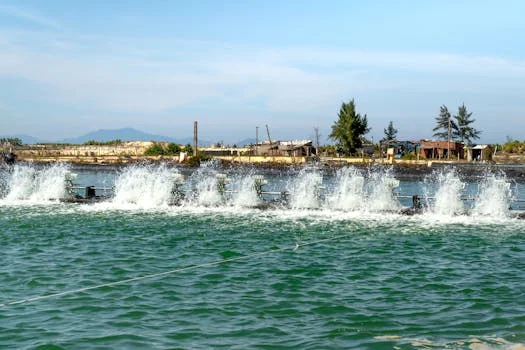
Selecting the right technology is the most critical step in specifying a package plant for a BC site. The choice hinges on flow rate, available footprint, and the required effluent quality for the specific discharge environment.
A/O (Anoxic/Aerobic) Biological Treatment: This process achieves 85–90% BOD removal and is ideal for flows from 1–80 m³/h. It involves distinct anoxic zones for denitrification (nitrogen removal) and aerobic zones for organic matter oxidation, making it a robust, cost-effective secondary treatment technology, used in compact underground package wastewater treatment systems designed for low-visibility installations like parks or small subdivisions.
MBR (Membrane Bioreactor) Systems: MBR technology delivers superior effluent quality, often below <10 mg/L BOD and <5 mg/L TSS, suitable for direct reuse or sensitive receiving environments. Its key advantage is a footprint up to 60% smaller than conventional plants, along with significantly reduced sludge production and superior pathogen removal, making a high-efficiency MBR package plant for reuse-quality effluent ideal for high-density resorts, hospitals, or sites near salmon habitats.
DAF (Dissolved Air Flotation) Systems: Primarily used for industrial pre-treatment, DAF excels at removing suspended solids and fats, oils, and grease (FOG), achieving 92–97% TSS removal at flows from 4–300 m³/h. It can also be applied for municipal wastewater clarification where high concentrations of FOG are present.
For disinfection, chlorine dioxide (ClO₂) is often preferred over sodium hypochlorite for meeting BC's fecal coliform limits because it generates fewer disinfection byproducts (DBPs) and provides a more reliable pathogen kill in cold water temperatures common in the region, effectively targeting Giardia and Cryptosporidium.
| Technology | Best For | Typical Effluent Quality | Key Consideration |
|---|---|---|---|
| A/O Process | Remote communities, small subdivisions | <30 mg/L BOD, <30 mg/L TSS | Most cost-effective for secondary treatment |
| MBR System | Water reuse, sensitive ecosystems, space-constrained sites | <10 mg/L BOD, <5 mg/L TSS | Higher capital cost, lowest footprint |
| DAF System | Industrial pre-treatment, high-strength waste | TSS removal >95% | Chemical addition often required |
Technical Comparison of Available Systems in BC
The SBR (Sequencing Batch Reactor) system operates in a batch mode, performing equalization, aeration, and clarification in a single tank, offering flexibility for variable flows. This data-driven comparison enables municipal engineers and procurement officers to evaluate systems based on core performance metrics. The table below aggregates typical specifications for technologies available from suppliers serving the British Columbia market.
As the wastewater treatment landscape continues to evolve, understanding the technical specifications of available systems is crucial for informed decision-making.
| Parameter | A/O System | MBR System | SBR System |
|---|---|---|---|
| Flow Range (m³/day) | 20 - 2,000 | 10 - 2,000 | 50 - 1,000 |
| Footprint (m² for 100 m³/day) | ~18 | ~12 | ~20 |
| BOD Removal (%) | 85 - 90% | >95% | 85 - 95% |
| TSS Removal (%) | 85 - 90% | >99% | 85 - 95% |
| Energy Use (kWh/m³) | 0.5 - 1.0 | 0.8 - 1.5 | 0.6 - 1.2 |
| Effluent Filtration | Secondary Clarifier | Microfiltration (≤0.1 µm) | Secondary Clarifier |
When reviewing these specifications, it's also important to consider the operational complexity, maintenance frequency, and specific energy demands, as these factors significantly impact long-term costs and sustainability for remote BC sites. Real-world deployments confirm these specs. For instance, a packaged wastewater plant in a remote coastal region of BC, handling between 1,200 and 2,400 m³/day, successfully meets strict marine discharge criteria using advanced processes, demonstrating the scalability of these systems.
Installation, Cost, and Lead Time in British Columbia
Understanding procurement logistics is vital for project planning. For standard models, typical lead times range from 8–14 weeks from order to shipment. Installation costs are highly variable, ranging from CAD $150,000 for a small-capacity unit to over $500,000 for larger systems or those requiring complex site preparation like extensive rock blasting, difficult access roads, significant excavation, or specialized crane access in remote areas.
International manufacturers like HydropureWater ship units via ocean container to ports like Vancouver or Prince Rupert, with final transport to site via flatbed truck. A significant cost-saving benefit is extensive factory pre-testing and commissioning, which minimizes on-site labor and ensures the containerized treatment unit is operational shortly after arrival. PLC-controlled automation further reduces long-term operational staffing costs and can optimize chemical usage, leading to additional savings over the plant's lifespan. All systems must be designed to meet BC and federal wastewater discharge compliance standards.
How to Choose the Right System for Your Site
Use this structured decision framework to align your site's constraints with the optimal technology.
Step 1: Determine Hydraulic and Organic Load. Calculate average and peak flow rates (in m³/day) and characterize the wastewater strength (BOD, TSS). Use a per capita design flow of 200-300 L/day, and importantly, factor in potential future population growth or development plans to ensure scalability.
Step 2: Define Discharge Requirements. Identify the final effluent destination. Marine outfalls, surface water, land irrigation, and sewer discharge all have different regulatory standards that will dictate the level of treatment needed.
Step 3: Evaluate Site Constraints. Assess the available space for footprint and setbacks. Determine if a buried, at-grade, or above-ground installation is possible. Evaluate site access for delivery and construction equipment, considering road conditions, bridge weight limits, and seasonal accessibility.
Step 4: Select the Technology. Choose A/O for cost-effective secondary treatment where space allows. Select MBR for the highest effluent quality, smallest footprint, or water reuse applications. For a detailed comparison of compact sewage treatment units for small communities, review manufacturer specifications.
For sites adjacent to sensitive salmon habitats, prioritize MBR paired with ClO₂ disinfection for the lowest ecological impact. For truly mobile deployments like temporary construction camps, recommend trailer-mounted A/O systems with full automatic controls, emphasizing ease of relocation and minimal site disturbance. Consider also the required operator skill level and ongoing maintenance commitments for the chosen technology.
Frequently Asked Questions

What is the lifespan of a package wastewater treatment plant in BC?
With proper routine maintenance, including a preventative maintenance schedule, and timely replacement of wear components like membranes or air diffusers, the typical lifespan of the core structure and tanks is 20–25 years.
Can these systems operate in sub-zero temperatures?
Yes. Package plants can be specified with insulated enclosures, heat tracing for pipes, and heated equipment rooms, allowing reliable operation in temperatures as low as -30°C, which is critical for BC's interior and northern regions.
Do package plants meet BC’s discharge regulations?
Yes. When properly sized, installed, and maintained, with continuous monitoring systems in place, both A/O and MBR systems are designed to meet or exceed the effluent standards set by BC's Environmental Management Act.
How much space does a 50 m³/day plant require?
An A/O system requires approximately 6m (L) x 3m (W). A more compact MBR system for the same flow requires approximately 4m (L) x 3m (W).
Are there local suppliers in British Columbia?
Yes. There are local suppliers like BI Pure Water in Surrey (V4N 3M9), as well as national and international manufacturers like HydropureWater that provide delivery, installation support, and service throughout the province.