Hospital Wastewater Treatment in Saudi Arabia: 2026 Compliance, Costs & Zero-Risk Equipment Selection Guide
Saudi Arabia’s Ministry of Environment, Water and Agriculture (MEWA) mandates tertiary treatment for all hospital wastewater, with fines up to SAR 500,000 for facilities exceeding discharge limits (e.g., BOD > 30 mg/L, COD > 150 mg/L). A 2023 MEWA audit revealed 60% of Medina hospitals failed microbial standards, driven by pharmaceutical residues (paracetamol up to 500 μg/L) and antimicrobial resistance genes (ARGs). This guide compares MBR, DAF, and electrocoagulation systems for Saudi hospitals, detailing 2026 compliance requirements, CAPEX (SAR 1.5M–8M), and zero-risk equipment selection criteria.
Why Saudi Hospitals Must Treat Wastewater Differently Than Municipal Sewage
Saudi Arabia’s strategic reliance on desalination for 80% of its water supply underpins the urgent need for advanced wastewater treatment and reuse, a cornerstone of Saudi Vision 2030 wastewater reuse. Hospital wastewater presents a unique and complex challenge distinct from municipal sewage. Unlike domestic effluent, which primarily contains organic matter and nutrients, hospital wastewater is a potent cocktail of pharmaceuticals, antimicrobial resistance genes (ARGs), and a diverse range of pathogens. Research indicates hospital effluent can contain pharmaceutical concentrations ranging from 50 to 500 μg/L, significantly higher than the less than 10 μg/L typically found in domestic sewage. A critical 2023 MEWA audit highlighted this disparity, revealing that 60% of hospitals in the Medina region failed to meet microbial discharge standards. This failure was attributed to the presence of specific pathogens such as Aeromonas and Klebsiella, detected in 40% of sampled effluents. The global health threat of antimicrobial resistance is exacerbated by untreated hospital wastewater, with the WHO reporting up to 56 ARG families present in tertiary care hospital effluents. In Saudi Arabia, where water scarcity is a persistent concern, discharging untreated hospital wastewater risks contaminating precious groundwater reserves and undermining crucial aquifer recharge projects essential for long-term water security.
MEWA Wastewater Standards 2026: Effluent Limits, Reuse Classifications, and Compliance Checklist
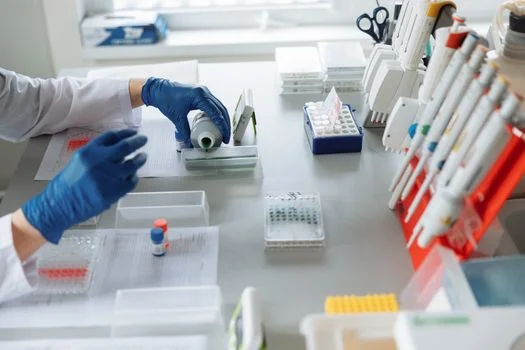
MEWA mandates tertiary treatment for all wastewater in Saudi Arabia, irrespective of its source or volume, as outlined in the "Standards of Wastewater Reuse/Disposal in KSA." For hospital wastewater, achieving specific reuse classifications—ranging from Class A for unrestricted agriculture to Class D for aquifer recharge—requires stringent adherence to effluent limits. Hospitals typically aim for Class A or B to maximize water reuse potential. The 2026 effluent limits for hospital wastewater reuse in agriculture are particularly demanding: BOD must be below 10 mg/L, COD below 50 mg/L, TSS below 10 mg/L, and fecal coliforms below 2.2 MPN/100mL. Navigating the MEWA hospital effluent standards and licensing process is paramount to avoid significant financial penalties, with fines up to SR 10,000 for operating unlicensed private treatment plants and up to SAR 500,000 for exceeding discharge limits. Adherence to these standards is directly linked to achieving Saudi Vision 2030 wastewater reuse targets, which aim for 30% of treated wastewater to be reused by 2030.
| Reuse Classification | BOD (mg/L) | COD (mg/L) | TSS (mg/L) | Fecal Coliform (MPN/100mL) | Typical Applications |
|---|---|---|---|---|---|
| Class A | < 10 | < 50 | < 10 | < 2.2 | Unrestricted agriculture, public parks, groundwater recharge |
| Class B | < 20 | < 100 | < 20 | < 230 | Restricted agriculture (food crops requiring processing), industrial cooling |
| Class C | < 40 | < 150 | < 30 | < 2,300 | Industrial processes, irrigation of non-food crops |
| Class D | < 60 | < 200 | < 40 | < 23,000 | Aquifer recharge, non-potable uses where further treatment is possible |
To ensure compliance and secure necessary permits for tertiary treatment for hospitals, follow this essential MEWA compliance checklist:
- Obtain MEWA License: Secure a license for your private wastewater treatment plant. Operating without one can result in a SR 10,000 fine.
- Install Online Monitoring: Implement continuous online monitoring systems for key parameters: pH, Total Suspended Solids (TSS), and Chemical Oxygen Demand (COD).
- Submit Regular Lab Reports: Provide quarterly laboratory reports detailing microbial analysis, pharmaceutical residues, and heavy metal concentrations to MEWA.
- Align with Vision 2030: Integrate your treatment strategy to contribute to Saudi Vision 2030's water reuse targets, aiming for at least 30% reuse of treated wastewater by 2030.
Hospital Wastewater Contaminant Profile: What’s in Saudi Effluent and How to Remove It
Understanding the specific contaminant profile of Saudi hospital wastewater is crucial for selecting the most effective treatment technologies. Research conducted in Saudi Arabia has identified elevated levels of pharmaceuticals in hospital wastewater treatment plant (HWWTP) influents, with paracetamol detected at up to 12 μg/L, caffeine at 75 μg/L, and ciprofloxacin at concentrations ranging from 5–20 μg/L. These levels are significantly higher than those found in municipal wastewater. Pathogens like Aeromonas, Klebsiella, and Enterococcus are commonly found, as indicated by the MEWA 2023 audit of Medina hospitals. The prevalence of antimicrobial resistance genes (ARGs) is a major concern; while global studies report up to 56 ARG families in hospital effluent, conventional treatment processes in Saudi Arabia typically achieve only 30–50% removal of these genes, contributing to the global AMR crisis. Heavy metals, such as mercury (0.5–2 μg/L) and lead (10–50 μg/L), often originate from diagnostic laboratories and dental clinics, posing a significant challenge as MEWA's limit for mercury in Class A reuse is a stringent 0.001 mg/L. While Saudi Arabia's high ambient temperatures (40–50°C) can sometimes aid in the degradation of certain organic compounds, they also present challenges for biological processes and can impact membrane performance. Effective removal requires advanced treatment capable of addressing these complex matrices.
MBR vs DAF vs Electrocoagulation: Head-to-Head Comparison for Saudi Hospitals
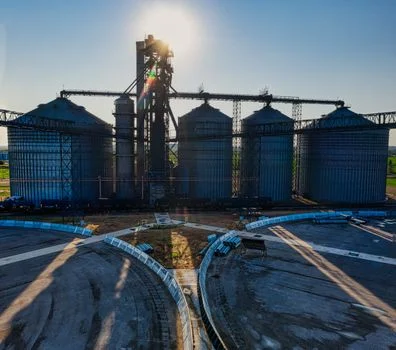
Selecting the optimal treatment technology for hospital wastewater in Saudi Arabia hinges on a clear understanding of each system's performance, footprint, and operational costs, especially considering local environmental factors. Membrane Bioreactor (MBR) systems offer superior effluent quality, achieving 99.9% pathogen removal and producing water with COD below 50 mg/L, making them ideal for MBR systems for hospital wastewater treatment in Saudi Arabia targeting Class A/B reuse. Their compact footprint, approximately 60% smaller than conventional systems, is advantageous in space-constrained hospital settings. However, MBR systems come with a higher CAPEX, ranging from SAR 2.5M to 8M, and OPEX of SAR 1.20–1.80/m³, primarily due to membrane replacement every 5–7 years. Dissolved Air Flotation (DAF) systems, with a CAPEX of SAR 1.5M–5M and OPEX of SAR 0.60–1.00/m³, excel in removing suspended solids (92–97% TSS removal) and are highly effective as a pre-treatment step for effluents with high turbidity (200–1,000 mg/L). While DAF requires chemical dosing, its lower operational cost makes it attractive for specific applications. Electrocoagulation (EC) presents a strong option for removing heavy metals and a broad spectrum of pharmaceuticals, with removal efficiencies of 95–99% for compounds like ciprofloxacin and mercury. EC systems have a CAPEX of SAR 2M–6M and OPEX of SAR 0.80–1.20/m³. They require precise pH adjustment (6.5–8.5) and are well-suited for treating effluent from dental clinics or radiology departments. High ambient temperatures in Saudi Arabia can reduce MBR membrane fouling but may increase chemical consumption for DAF. For achieving stringent MEWA hospital effluent standards for water reuse, MBR often emerges as the preferred technology, while DAF serves as an efficient pre-treatment, and EC offers targeted removal of challenging contaminants.
| Technology | Performance Highlights | Footprint | CAPEX (SAR) | OPEX (SAR/m³) | Key Considerations for Saudi Arabia |
|---|---|---|---|---|---|
| MBR | 99.9% pathogen removal, COD < 50 mg/L | 60% smaller than conventional | 2.5M – 8M | 1.20 – 1.80 | Ideal for Class A/B reuse; high temperature can reduce fouling but increase energy use for aeration. |
| DAF | 92–97% TSS removal; ideal for high turbidity | Moderate | 1.5M – 5M | 0.60 – 1.00 | Effective pre-treatment; higher chemical costs due to ambient temperatures. |
| Electrocoagulation | 95–99% heavy metal & pharmaceutical removal | 30% smaller than MBR | 2M – 6M | 0.80 – 1.20 | Effective for specific contaminants; requires precise pH control; potential for higher energy consumption. |
CAPEX and OPEX Breakdown: How Much Does Hospital Wastewater Treatment Cost in Saudi Arabia?
The capital expenditure (CAPEX) for hospital wastewater treatment systems in Saudi Arabia typically ranges from SAR 1.5 million to SAR 8 million, with the final cost heavily dependent on the chosen technology and the facility's daily treatment capacity, which can range from 50 to 500 m³/day. Operational expenditure (OPEX) varies significantly, with MBR systems at the higher end (SAR 1.20–1.80/m³), DAF systems in the mid-range (SAR 0.60–1.00/m³), and electrocoagulation systems falling between (SAR 0.80–1.20/m³). These OPEX figures encompass energy consumption, chemical procurement, labor costs, and routine maintenance. Saudi-specific cost factors include energy prices, which average SAR 0.20–0.30/kWh and can influence the energy-intensive nature of certain technologies. Chemical costs, particularly for coagulants and flocculants used in DAF, can be up to 20% higher due to import tariffs. Skilled labor for operation and maintenance is another significant component, with monthly costs for qualified operators ranging from SAR 5,000 to SAR 8,000, contributing 15–20% to overall OPEX. Implementing advanced treatment for water reuse offers a compelling return on investment (ROI). For instance, reusing treated water classified as Class A can save hospitals between SAR 5–10/m³ compared to the high cost of desalinated water (SAR 15–25/m³). Consequently, MBR systems, despite their higher initial CAPEX, can achieve a payback period of 3–7 years through substantial water savings and compliance with MEWA hospital effluent standards.
| Cost Component | MBR (SAR/m³) | DAF (SAR/m³) | Electrocoagulation (SAR/m³) | Notes |
|---|---|---|---|---|
| Energy | 0.40 – 0.60 | 0.20 – 0.30 | 0.30 – 0.40 | Saudi energy costs: SAR 0.20–0.30/kWh |
| Chemicals | 0.20 – 0.30 | 0.30 – 0.40 | 0.10 – 0.20 | DAF chemicals can be 20% higher due to import costs. |
| Labor & Maintenance | 0.60 – 0.80 | 0.10 – 0.30 | 0.40 – 0.60 | Operator costs: SAR 5,000–8,000/month. |
| Total OPEX | 1.20 – 1.80 | 0.60 – 1.00 | 0.80 – 1.20 |
Step-by-Step Guide to MEWA Compliance and Licensing for Hospital Wastewater Treatment
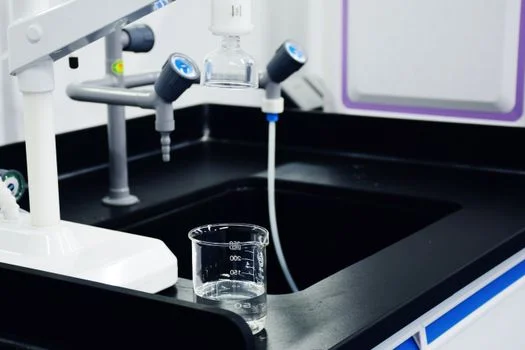
Navigating the wastewater treatment plant licensing Saudi Arabia process for hospital facilities requires a systematic approach to ensure full compliance with MEWA regulations and avoid costly penalties. The journey begins with a comprehensive wastewater characterization study, which should be conducted by MEWA-approved laboratories at an estimated cost of SAR 10,000–20,000. This study is critical for identifying key contaminants such as pharmaceuticals, pathogens, and heavy metals, thereby informing the selection of appropriate treatment technologies and ensuring the system is designed to meet the specific requirements of the target reuse classification (Class A, B, C, or D). Following technology selection, detailed engineering drawings must be submitted to MEWA for approval, a process that incurs a SR 5,000 fee. Crucially, hospitals must obtain a construction license for their private treatment plant; proceeding without this license can lead to a SR 10,000 fine. For facilities with a capacity exceeding 500 m³/day, an Environmental Impact Assessment (EIA) is also a mandatory submission. Once the system is constructed, online monitoring for pH, TSS, and COD must be installed to enable real-time data submission to MEWA's portal. The final step involves commissioning the system and submitting quarterly laboratory reports that cover microbial analysis, pharmaceutical residues, and heavy metal concentrations. MEWA conducts unannounced inspections to verify compliance, and failure to meet standards can result in fines of up to SAR 500,000, underscoring the importance of meticulous planning and execution throughout the licensing and operational phases.
Frequently Asked Questions
What are the MEWA effluent limits for hospital wastewater in Saudi Arabia?
MEWA mandates strict tertiary treatment for hospital wastewater. For Class A reuse (unrestricted agriculture), key limits include BOD < 10 mg/L, COD < 50 mg/L, TSS < 10 mg/L, and fecal coliforms < 2.2 MPN/100mL. These are part of the MEWA hospital effluent standards.
How much does an MBR system cost for a 200-bed hospital in Riyadh?
For a 200-bed hospital, an MBR system's CAPEX can range from SAR 2.5 million to SAR 8 million, depending on specific design requirements, flow rates, and the level of automation. OPEX typically falls between SAR 1.20–1.80/m³.
Can DAF systems remove pharmaceuticals from hospital wastewater?
DAF systems are primarily designed for TSS and turbidity removal. While they can remove some suspended pharmaceutical particles, they are not effective for dissolved pharmaceuticals. For comprehensive pharmaceutical removal in wastewater, DAF is best used as a pre-treatment step, followed by technologies like MBR or advanced oxidation processes.
What are the penalties for non-compliance with MEWA wastewater standards?
Penalties for non-compliance with MEWA wastewater standards can be severe. Operating an unlicensed private treatment plant can incur fines of SR 10,000. Exceeding discharge limits, particularly for parameters like BOD and COD, can lead to fines up to SAR 500,000. Repeated violations may also result in operational shutdowns.
How do I obtain a license for a private hospital wastewater treatment plant in Saudi Arabia?
Obtaining a license involves several steps: conducting a wastewater characterization study, selecting and designing a treatment system to meet MEWA standards, submitting engineering drawings for approval, obtaining a construction license (avoiding SR 10,000 fines), installing online monitoring, and submitting regular laboratory reports. This process is detailed in the wastewater treatment plant licensing Saudi Arabia guidelines.
Related Equipment
- DAF pre-treatment for high-turbidity hospital wastewater — view specifications, capacity range, and technical data
- on-site ClO₂ generators for hospital effluent disinfection — view specifications, capacity range, and technical data
Need a customized solution? Request a free quote with your specific flow rate and pollutant parameters.