Evaporation crystallization removes nickel from industrial wastewater with 95–99% yield, producing battery-grade nickel sulfate (NiSO₄·6H₂O) at >99.5% purity. Seed-mediated methods (e.g., evaporation at 85°C with heterogeneous precipitation) outperform conventional techniques by reducing impurity carryover—critical for lithium-ion battery cathode production. CapEx for industrial systems ranges from $500K to $5M, depending on throughput (1–50 m³/h) and automation level, with OPEX dominated by energy costs (0.1–0.3 kWh/kg Ni recovered).
Why Nickel Removal Demands Evaporation Crystallization: A 2026 Compliance and Cost Reality Check
Industrial facilities globally face stringent nickel discharge limits, with the U.S. EPA mandating 2.38 mg/L for metal finishing operations under 40 CFR Part 433, while the EU Battery Directive 2023/1542 requires less than 0.002% nickel in recycling waste streams. Non-compliance can lead to severe financial repercussions; battery recycling plants, for instance, are projected to incur $50–$200 per ton in penalties by 2026 due to escalating EPA enforcement (2026 EPA enforcement data). This regulatory pressure, coupled with the economic incentive of recovering a valuable resource, positions evaporation crystallization as a critical solution.
Evaporation crystallization achieves a nickel recovery rate of 95–99%, significantly outperforming conventional chemical precipitation methods which typically yield only 70–85% (per industry benchmarks). This higher recovery directly translates to reduced waste disposal costs and increased revenue from recovered nickel sulfate. For high-concentration nickel streams, the economic benefits are substantial. A notable case involves a lithium-ion battery recycler in South Korea, which successfully reduced nickel discharge from an initial 1,200 mg/L to below 1 mg/L using a seed-mediated crystallization process (per a recent study of battery recycling wastewater treatment). This demonstrates the method's capability to meet ultra-low discharge limits while simultaneously producing a high-value product. The ability to recover battery-grade nickel sulfate mitigates raw material costs for battery manufacturers and contributes to a circular economy in battery recycling.
Evaporation Crystallization for Nickel: Process Mechanisms and Equipment Specifications
Evaporation crystallization for nickel removal operates on the principle of supersaturation, driving the formation and growth of nickel sulfate crystals from a concentrated solution. The process typically involves an operating temperature of 85°C, where water is evaporated, increasing the concentration of nickel sulfate until it crystallizes (per recent studies on nickel sulfate crystallization). Seed-mediated crystallization, a superior variant, utilizes heterogeneous precipitation, where existing nickel sulfate hexahydrate (NiSO₄·6H₂O) seed crystals provide nucleation sites, promoting controlled growth and reducing the formation of fine, impure crystals characteristic of homogeneous nucleation in conventional seed-free evaporation.
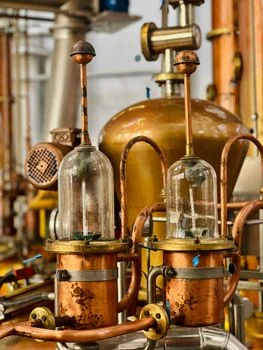
Key equipment in an industrial nickel crystallization system includes forced-circulation evaporators, which are ideal for handling high-solids streams due to their high heat transfer coefficients and ability to prevent scaling. Systems like those offered by Veolia HPD® are designed for robust operation in demanding industrial environments. The concentrated liquor from the evaporator then proceeds to a crystallization tank, where crystal growth occurs over a typical retention time of 2–4 hours (HydropureWater field data, 2025). Seed material selection is critical for achieving battery-grade purity; nickel sulfate hexahydrate with a particle size range of 50–200 μm is commonly used to initiate crystallization and guide crystal morphology. After crystallization, a centrifuge separates the nickel sulfate crystals from the mother liquor, followed by a dryer to remove residual moisture, producing a high-purity crystalline product.
The process flow for high-yield nickel extraction typically involves:
- Feed Tank (Pre-treatment): Initial wastewater collection and preliminary impurity removal.
- Evaporator (Concentration): Wastewater is heated to 85°C, and water is evaporated to increase nickel concentration. Typical residence time in the evaporator circuit is short, focusing on rapid heat transfer.
- Crystallizer (Crystal Growth): The supersaturated solution enters the crystallizer, where seed crystals are introduced, and nickel sulfate hexahydrate grows. Retention time is typically 2–4 hours.
- Slurry Pump: Circulates the crystal slurry from the crystallizer.
- Centrifuge (Solid-Liquid Separation): Separates the nickel sulfate crystals from the mother liquor.
- Dryer (Product Finishing): Removes residual moisture from the separated crystals to achieve final product specifications.
Energy requirements for this process are a significant operational parameter, typically ranging from 0.1–0.3 kWh per kilogram of nickel recovered (per Veolia 2020 data), primarily driven by the evaporation step.
| Component | Specification/Parameter | Purpose |
|---|---|---|
| Evaporator Type | Forced-Circulation (e.g., Veolia HPD®) | High heat transfer, handles high solids, prevents scaling |
| Operating Temperature | 85°C | Optimizes solubility difference for crystallization |
| Crystallizer Retention Time | 2–4 hours | Allows for sufficient crystal growth and morphology control |
| Seed Material | Nickel Sulfate Hexahydrate (NiSO₄·6H₂O) | Promotes heterogeneous precipitation, ensures purity |
| Seed Particle Size | 50–200 μm | Optimizes nucleation and growth rates |
| Energy Consumption | 0.1–0.3 kWh/kg Ni recovered | Primary operational cost driver for evaporation |
Impurity Control in Nickel Crystallization: Strategies to Meet Battery-Grade Purity

Achieving battery-grade nickel sulfate purity, typically >99.9%, necessitates rigorous control of impurities throughout the crystallization process. Common impurities found in nickel sulfate streams include cobalt (0.1–0.5%), iron (0.05–0.2%), and magnesium (0.01–0.1%) (per recent studies on impurity impact in nickel sulfate crystallization). These contaminants, even in trace amounts, can negatively impact the performance and lifespan of lithium-ion battery cathodes, requiring precise removal strategies.
A critical strategy for impurity control involves precise pH adjustment. Maintaining the optimal pH range of 2.5–3.5 facilitates the precipitation of iron and magnesium as their respective hydroxides, which can then be physically separated before the primary nickel crystallization step (per industry best practices for metal finishing wastewater treatment). This pH window ensures that nickel remains in solution while common metallic impurities are selectively removed. the seed-mediated crystallization method significantly contributes to impurity reduction; studies indicate it can reduce cobalt carryover by up to 70% compared to conventional evaporation techniques, due to controlled crystal growth and reduced co-precipitation.
Effective pre-treatment steps are indispensable for managing bulk impurities before the nickel sulfate crystallization. Techniques such as ion exchange or chemical precipitation are often employed to remove significant concentrations of competing metal ions or organic compounds that could interfere with crystallization or reduce product purity. For example, PLC-controlled chemical dosing for pH adjustment and anti-scalant injection in nickel crystallization systems can ensure precise chemical addition for impurity precipitation. After primary crystallization, if ultra-high purity (>99.9%) nickel sulfate is required for specialized applications like advanced cathode production, additional post-treatment steps such as recrystallization or solvent extraction may be implemented to further refine the product. For facilities considering alternative or complementary methods for nickel removal, especially for lower concentrations, resin adsorption as an alternative for low-concentration nickel streams offers a viable solution for pre-treatment or polishing.
CapEx and OPEX Breakdown: Cost Models for Industrial Nickel Crystallization Systems
The capital expenditure (CapEx) for industrial nickel crystallization systems varies significantly based on throughput and automation level, ranging from $500,000 for a 1 m³/h system to $5 million for a 50 m³/h system (per Veolia 2020 data). This CapEx typically encompasses the core components: the evaporator unit, crystallization tank, centrifuge for solid-liquid separation, dryer, and the associated automation and control systems. Ancillary equipment such as feed pumps, heat exchangers, and material handling systems also contribute to the overall capital investment.
Operating expenditure (OPEX) for nickel sulfate crystallization is primarily driven by energy consumption, which accounts for approximately 60% of the total operating costs. Labor constitutes about 20%, maintenance 15%, and chemicals (e.g., pH adjustment agents, anti-scalants, cleaning agents) around 5%. The energy cost for recovering nickel typically falls between $0.10–$0.30 per kilogram of nickel recovered, assuming an industrial electricity rate of $0.08/kWh. This range highlights the importance of energy efficiency measures, such as mechanical vapor recompression (MVR) or multi-effect evaporators, to reduce steam consumption.
Maintenance costs, representing 15% of OPEX, are influenced by the system's design and operational practices. Annual downtime for routine maintenance, including cleaning and inspection, typically spans 2–4 weeks. Critical spares that should be budgeted for include heat exchanger tubes, pump seals, and instrument calibration components. The return on investment (ROI) for industrial nickel crystallization systems, particularly in battery recycling plants, is generally realized within 18–36 months, driven by the value of recovered nickel, which is projected to be $20–$30/kg in 2026, alongside reduced wastewater disposal costs and compliance avoidance penalties.
| Category | Parameter | Typical Range/Breakdown | Notes |
|---|---|---|---|
| Capital Expenditure (CapEx) | System Size (Throughput) | 1 m³/h to 50 m³/h | Larger systems scale non-linearly |
| Total CapEx | $500,000 (1 m³/h) to $5,000,000 (50 m³/h) | Includes core equipment, automation, installation | |
| Key Components | Evaporator, Crystallizer, Centrifuge, Dryer, Control Systems | Automation level impacts cost significantly | |
| ROI Timeline | 18–36 months | For battery recycling, considering Ni recovery value ($20–$30/kg) | |
| Operating Expenditure (OPEX) | Energy Costs | 60% of total OPEX | 0.1–0.3 kWh/kg Ni recovered (at $0.08/kWh) |
| Labor Costs | 20% of total OPEX | Operator monitoring, maintenance personnel | |
| Maintenance Costs | 15% of total OPEX | Annual downtime 2–4 weeks; spares (heat exchanger tubes, pump seals) | |
| Chemical Costs | 5% of total OPEX | pH adjusters, anti-scalants, cleaning agents |
Evaporation Crystallization vs. Alternatives: A Decision Matrix for Nickel Removal
Selecting the optimal nickel removal method for industrial wastewater depends on several factors, including influent nickel concentration, desired effluent purity, flow rate, and overall cost efficiency. Evaporation crystallization excels in high-concentration scenarios, typically where nickel levels exceed 5,000 mg/L, offering superior recovery and product purity. In contrast, resin adsorption is generally more cost-effective for treating lower nickel concentrations, typically below 1,000 mg/L, making it suitable for polishing or less concentrated streams. Chemical precipitation, while having a lower initial CapEx, often incurs higher ongoing OPEX due to significant sludge disposal costs and lower recovery rates.
Membrane filtration, such as reverse osmosis, provides excellent separation but is limited by fouling issues when treating high-solids or highly concentrated nickel streams, often requiring extensive pre-treatment. For instance, RO systems for pre-treatment of high-solids wastewater before nickel crystallization can be effective, but direct application to raw concentrated streams is challenging. The decision matrix below compares these prominent technologies:
| Method | Typical Ni Concentration | Yield (%) | CapEx (Relative) | OPEX (Relative) | Purity (Product) | Scalability | Key Limitation |
|---|---|---|---|---|---|---|---|
| Evaporation Crystallization | >5,000 mg/L | 95–99 | High | Moderate (Energy-intensive) | >99.5% (battery-grade) | High | High energy consumption |
| Resin Adsorption | <1,000 mg/L | 85–95 | Moderate | Moderate (Regenerant chemicals) | >99% (solution) | Moderate | Limited capacity for high concentrations |
| Chemical Precipitation | 100–5,000 mg/L | 70–85 | Low | High (Sludge disposal) | N/A (sludge) | High | Significant sludge generation, lower yield |
| Membrane Filtration (RO) | 100–5,000 mg/L (with pre-treatment) | 90–98 | High | Moderate (Membrane replacement, energy) | Excellent (Permeate) | Moderate | Fouling, requires extensive pre-treatment |
A decision tree for selecting the optimal method based on nickel concentration, flow rate, and purity requirements would typically follow this logic: If Ni concentration is >5,000 mg/L and high-purity recovery is critical, evaporation crystallization is the preferred choice. If Ni concentration is <1,000 mg/L and metal recovery is desired, resin adsorption is a strong candidate. For intermediate concentrations or when only discharge compliance is the goal (without recovery), chemical precipitation might be considered, acknowledging its sludge burden. Membrane filtration serves best as a polishing step or for specific water reuse scenarios after significant pre-treatment.
Troubleshooting Guide: Common Issues in Nickel Crystallization and How to Fix Them
Operational challenges in industrial nickel crystallization systems can lead to reduced efficiency, lower product purity, and increased downtime. Addressing these issues systematically is crucial for maintaining consistent performance.
- Scaling in Evaporator Tubes: Scaling, primarily caused by the precipitation of sparingly soluble salts like calcium (Ca) and magnesium (Mg) at high temperatures, manifests as reduced heat transfer efficiency and increased energy consumption. Symptoms include higher steam consumption for a given evaporation rate and decreased evaporator capacity. To mitigate scaling, implement pre-treatment steps to remove Ca/Mg, such as softening or ion exchange. Regular acid cleaning (e.g., with dilute sulfuric acid) and continuous anti-scalant dosing can also effectively prevent scale buildup.
- Impurity Carryover: Impurity carryover into the final nickel sulfate product often results from poor seed material quality, incorrect pH control, or excessive supersaturation. Symptoms include off-color crystals, lower product assay, and increased downstream refining costs. Solutions involve ensuring consistent quality and appropriate particle size of seed material, maintaining precise pH control (2.5–3.5) in pre-treatment and crystallization stages, and optimizing the supersaturation ratio to promote controlled crystal growth.
- Low Yield: A low nickel sulfate yield typically indicates insufficient crystallization. Common causes include short retention time in the crystallizer, inadequate seed loading, or significant temperature fluctuations. To address this, increase the crystallizer retention time to allow for complete crystal growth, optimize seed material loading to provide ample nucleation sites, and stabilize the feed rate and temperature to the crystallizer to maintain consistent supersaturation conditions.
- Crystallizer Fouling: Fouling in the crystallizer, distinct from evaporator scaling, often occurs due to high suspended solids in the feed, agglomeration of fine crystals, or the precipitation of amorphous solids. Symptoms include reduced mixing efficiency, blockages, and inconsistent crystal size distribution. Implement robust pre-filtration to remove suspended solids, optimize agitator speed to prevent settling and agglomeration, and perform periodic mechanical cleaning or boil-outs.
- Energy Inefficiency: Higher-than-expected energy consumption is often a symptom of poor system insulation, steam leaks, or inefficient heat recovery. Conduct regular thermal audits to identify and rectify insulation deficiencies or steam leaks. Implement or optimize heat recovery systems, such as flashing hot condensate or preheating feed with exiting vapor, to maximize energy utilization.
Frequently Asked Questions

What nickel concentrations are best suited for evaporation crystallization?
Evaporation crystallization is most effective for high-concentration nickel streams, typically exceeding 5,000 mg/L. This method efficiently recovers valuable nickel from highly concentrated industrial wastewaters, making it ideal for battery recycling or metal finishing effluents.
How does seed-mediated crystallization improve nickel purity?
Seed-mediated crystallization introduces pre-formed nickel sulfate crystals, which act as preferential sites for crystal growth. This controlled growth minimizes homogeneous nucleation of impurities and reduces co-precipitation, leading to a higher purity product, often >99.5% battery-grade nickel sulfate.
What are the primary operational costs for an industrial nickel crystallization system?
The dominant operational cost for industrial nickel crystallization systems is energy consumption, accounting for approximately 60% of OPEX, primarily due to the evaporation process. Labor, maintenance, and chemical costs make up the remaining significant portions.
Can evaporation crystallization achieve zero liquid discharge (ZLD)?
Yes, evaporation crystallization is a key technology for achieving Zero Liquid Discharge (ZLD) in industrial wastewater treatment. By recovering nickel and other valuable salts, the remaining water can be purified and reused, minimizing wastewater discharge.
What pre-treatment steps are essential for nickel crystallization wastewater?
Essential pre-treatment steps include pH adjustment to precipitate impurities like iron and magnesium, and filtration to remove suspended solids. Ion exchange may also be used to remove other competing metal ions before the crystallization process begins, ensuring higher nickel purity.