In 2026, UK industrial wastewater treatment plant costs run from £15,000 for small DAF systems (4–30 m³/h) to £70M+ for municipal MBR plants (10,000+ m³/day). Technology choice sets CAPEX; energy and chemicals set OPEX; EA consent limits add 15–30%.
Wastewater Treatment Plant Cost UK 2026: Industrial Budget Ranges and Main Cost Drivers
UK industrial buyers should budget £15,000–£150,000 CAPEX for a 4–30 m³/h package plant, £150,000–£5M at 30–500 m³/h, and £5M–£50M above 500 m³/day. MBR carries £2,500–£4,000/m³/day CAPEX against £800–£1,500/m³/day for DAF. Energy at 0.8–1.5 kWh/m³ for MBR typically dominates operating cost.
UK Environment Agency (EA) 2025 discharge limits for industrial operators require COD below 125 mg/L and TSS below 35 mg/L in many consents, mandating tertiary treatment that increases CAPEX by 15–30%. These regulatory updates protect UK watercourses, but they weigh heavily on facilities that still run aging infrastructure. Energy in the UK, projected at £0.25–£0.35/kWh for 2026, now makes up 30–50% of total OPEX. Because each discharge consent carries its own numeric limits, the tertiary premium varies by catchment and receiving waterway.
Technology selection is therefore not only about the purchase price. An MBR system consuming 1.2 kWh/m³ can cost twice as much to operate each year as a DAF system consuming 0.5 kWh/m³ at equivalent flow. Most plants we size for food and general manufacturing sites sit closer to the DAF energy profile, so the audited energy line matters more than the headline CAPEX figure. For wider context, industrial buyers can compare these UK figures against global WWTP cost benchmarks for industrial buyers.
The Retrofit Penalty: Why Late Compliance Costs 2.5x
Non-compliance carries financial risk well beyond fines. According to EA enforcement data, a UK food processor avoided approximately £250,000 per year in environmental penalties by investing in a £1.2M high-efficiency DAF system for FOG and TSS removal with automated pH adjustment. The system achieved 95% TSS removal and brought the facility into immediate compliance. Without such investment, the compliance cost multiplier usually applies: retrofitting a non-compliant plant typically costs 2.5 times the initial CAPEX once site constraints, emergency engineering fees, and integration into incompatible layouts are counted.
The Compliance Cost Multiplier Formula: Retrofit Cost = 2.5 × Initial CAPEX
Budgeting for 2026 requires a shift toward Total Cost of Ownership (TCO) models. Procurement managers must account for the 15–30% tertiary treatment premium required to meet ammonia (<5 mg/L) and phosphorus (<1 mg/L) limits. Leaving those stages out of the initial design often triggers the 2.5x retrofit penalty when the EA issues an enforcement notice. Build duration is a separate question — our companion article on how much does a waste water treatment works take to build uk# covers England construction timelines in detail.
Industrial Wastewater Treatment Plant CAPEX OPEX UK Benchmarks by Plant Scale
Industrial wastewater treatment plant CAPEX in the UK climbs from £15,000–£150,000 at 4–30 m³/h to £50M–£70M+ above 10,000 m³/day, while OPEX falls from £0.20–£0.40/m³ to £0.08–£0.20/m³ as scale grows. Economies of scale, sludge handling contracts, and energy procurement explain most of that spread. The bands below are the ones we quote against in UK industrial tenders.
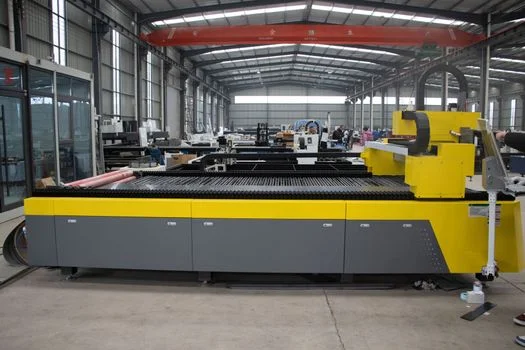
Small industrial plants processing 4–30 m³/h typically need £15,000 to £150,000 of CAPEX, with OPEX ranging from £0.20 to £0.40 per cubic meter. These systems serve metalworking, small-scale food production, or specialized chemical blending, and they prioritize a low footprint and simple operation. At this scale, Dissolved Air Flotation (DAF) or simplified electrocoagulation units are standard, because the complexity of biological systems like MBR often exceeds the technical resources of smaller facilities.
Medium-scale industrial plants (30–500 m³/h) face a much wider CAPEX range of £150,000 to £5M. The variance reflects how sensitively each technology tracks wastewater composition. A pharmaceutical plant requiring an MBR system for near-reuse-quality effluent sits at the higher end of the bracket, while a textile facility using electrocoagulation for dye removal may find a mid-range solution. Large municipal or regional industrial hubs (500–10,000 m³/day) see CAPEX rise to £5M–£50M, though economies of scale push OPEX down to £0.10–£0.25/m³.
| Plant Scale | Flow Rate (m³/h) | CAPEX Range (£) | OPEX (£/m³) | Typical Technology |
|---|---|---|---|---|
| Small Industrial | 4–30 | £15K–£150K | £0.20–£0.40 | DAF, Electrocoagulation |
| Medium Industrial | 30–500 | £150K–£5M | £0.15–£0.30 | MBR, Advanced DAF, SBR |
| Large Industrial/Mun. | 500–10,000 m³/day | £5M–£50M | £0.10–£0.25 | MBR + RO, Anaerobic Digestion |
| Mega-Scale | >10,000 m³/day | £50M–£70M+ | £0.08–£0.20 | Integrated MBR + Tertiary |
Mega-scale plants exceeding 10,000 m³/day involve civil engineering costs that often exceed £70M. These facilities frequently integrate anaerobic digestion to offset energy costs, potentially reducing net OPEX to the £0.08/m³ end of the spectrum. For industrial buyers, the goal is to find the sweet spot where the selected technology meets compliance while minimizing the long-term chemical and energy expenditures that dominate TCO over a 20-year asset life. When reading these bands, quote both flow and load to your vendor: two plants at the same m³/h can sit far apart in CAPEX once COD and FOG loads differ.
MBR Wastewater Treatment Plant Cost UK: Membrane Bioreactor Economics
MBR wastewater treatment plant cost in the UK currently runs £2,500–£4,000 per m³/day of capacity, the highest of the mainstream technologies, because membrane filtration produces near-reuse-quality effluent with TSS consistently below 10 mg/L. The systems are energy-intensive at 0.8–1.5 kWh/m³, yet they remain the preferred choice where space is limited, since they need 60% less footprint than conventional activated sludge. Buyers must also budget for hidden costs, such as membrane replacement every 5–8 years at £500–£1,000 per m² of membrane area (HydropureWater field data, 2025).
Independent engineering references reinforce both sides of that trade-off. According to the Wikipedia reference on membrane bioreactors, modern side-stream configurations achieve "sustainable operation at energy usage as low as 0.3 kWh/m3 of product". The same source notes submerged systems can run at energy demand "up to 2 orders of magnitude lower" than side-stream designs. That gap explains why submerged MBR dominates UK retrofit projects where blower capacity is already limited.
Membrane lifecycle planning carries the same evidence. The Wikipedia reference records a typical membrane specification of "chemical and mechanical resistance for five years of operation", which supports the 5–8 year replacement budget most UK operators carry in their TCO models. Sites with high FOG or scaling risk should plan closer to the five-year end of that range and reserve clean-in-place chemical spend accordingly.
DAF System Cost for UK Industrial Wastewater: FOG Removal Economics
DAF system cost for UK industrial wastewater sits at £800–£1,500 per m³/day of CAPEX, the most economical route to compliance for high-FOG industries such as dairy and meat processing. Energy requirements are low, so the primary cost driver becomes sludge disposal. UK sludge disposal costs have risen to £80–£150/ton, which makes the sludge thickening efficiency of the DAF a critical factor in the ROI calculation. For plants requiring still higher purity, an RO system for ultra-pure water reuse can be integrated, though it adds £3,000–£5,000/m³/day in CAPEX plus significant OPEX for membrane fouling management.
Technology Comparison: MBR vs DAF vs Electrocoagulation vs RO
The comparison below prices the four mainstream technologies head-to-head for UK industrial service: MBR at £2,500–£4,000/m³/day, DAF at £800–£1,500/m³/day, electrocoagulation at £1,200–£2,500/m³/day, and RO at £3,000–£5,000/m³/day. Footprint, effluent quality, and best-use-case columns matter as much as the CAPEX column whenever space or reuse targets constrain the design. We advise reading the table against your own influent analysis rather than headline price alone.
| Technology | CAPEX (£/m³/day) | OPEX (£/m³) | Footprint (m²/m³/day) | Effluent Quality | Best Use Case |
|---|---|---|---|---|---|
| MBR | £2,500–£4,000 | £0.25–£0.40 | 0.1–0.2 | Very High (TSS <5) | Water Reuse, Pharmaceuticals |
| DAF | £800–£1,500 | £0.10–£0.20 | 0.3–0.5 | High (FOG/TSS removal) | Food Processing, Oil/Gas |
| Electrocoagulation | £1,200–£2,500 | £0.15–£0.30 | 0.2–0.4 | Medium (Heavy Metals) | Textiles, Plating |
| RO | £3,000–£5,000 | £0.30–£0.50 | 0.15–0.3 | Ultra-High (Desalinated) | Semiconductors, Boiler Feed |
Electrocoagulation (EC) offers a unique middle ground, particularly alongside alternative technologies for heavy metal removal. EC keeps CAPEX moderate at £1,200–£2,500/m³/day, and the absence of chemical coagulants reduces OPEX and simplifies sludge handling. Electrode replacement through sacrificial anodes must still be factored into the annual budget, typically representing 15–20% of annual OPEX. When comparing technologies, use the decision matrix later in this guide to balance these variables against the site's specific influent profile.
UK Environment Agency Compliance Wastewater Treatment Cost Impacts
UK Environment Agency compliance wastewater treatment cost impacts add 15–30% to CAPEX when permits demand tertiary stages for ammonia (<5 mg/L) and phosphorus (<1 mg/L). The EA Guidance Note 2025 establishes these strict industrial discharge limits, which require advanced biological or chemical treatment stages. Meeting them often calls for sand filtration or UV disinfection, yet the investment can pay for itself through reduced chemical dependency. An on-site ClO₂ generator for tertiary disinfection can cut OPEX by 20–40% against traditional bulk chlorine dosing, thanks to higher efficacy and lower residual handling costs.
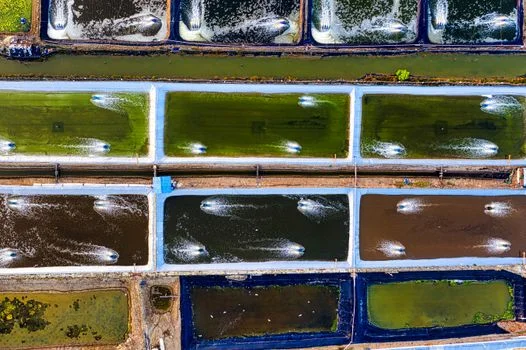
A recent UK textile plant case illustrates the compliance cost curve. The facility moved off a standard DAF design toward electrocoagulation to meet new phosphorus limits without the massive chemical costs of ferric chloride dosing. The switch cut total CAPEX by 22% by eliminating large chemical storage tanks and dosing pumps, while keeping effluent well below the EA's 1 mg/L phosphorus threshold (HydropureWater 2025 project data). Advanced technologies can therefore carry a higher unit cost but a lower total system complexity.
Stricter ammonia limits (<1 mg/L) in sensitive catchments are pushing many UK industrial sites toward integrated MBR + RO configurations. That setup can double the initial CAPEX, but it effectively removes the risk of EA fines, which can reach £250,000 per incident for serious breaches. Targeting zero-liquid discharge or high-quality reuse lets facilities decouple production growth from environmental impact, turning a compliance cost into a competitive advantage.
ROI Calculator: Justifying a UK Wastewater Treatment Plant Investment
Payback for a UK industrial treatment plant follows one formula: (Annual Savings + Avoided Fines) / (CAPEX + Annual OPEX) = Payback Period (years). In the UK, the primary ROI drivers are no longer just avoided costs but active resource recovery. With industrial water rates ranging from £1.50 to £2.50/m³ in many UK regions, a plant treating 1,000 m³/day for reuse can generate over £500,000 in annual water procurement savings alone.
Energy efficiency measures compound the case. Variable-frequency drives (VFDs) on blowers and pumps can cut energy use by 30–40% compared with fixed-speed systems (HydropureWater 2025 project data). Combined with the avoidance of EA penalties — which have scaled with inflation and now average £250k/year for persistent non-compliance — the payback period for a modern industrial WWTP often falls between 2.5 and 4 years. That range makes the investment attractive to CFOs and facility directors who previously viewed wastewater as a sunk cost.
| ROI Driver | Annual Savings Potential (£) | Calculation Example |
|---|---|---|
| Avoided EA Fines | £50,000 – £250,000 | Based on historical non-compliance risk |
| Water Reuse | £150,000 – £750,000 | 1,000 m³/day × £2.00/m³ reuse value |
| Energy Efficiency | £20,000 – £60,000 | 30% reduction via VFDs on 100kW load |
| Sludge Reduction | £15,000 – £45,000 | 20% reduction in volume via advanced DAF |
Procurement teams should run these numbers in a standardized ROI spreadsheet. The tool should accept local UK water rates, current trade effluent charges (Mogden Formula), and projected energy costs. Quantifying those variables lets engineers present a data-driven business case for higher-CAPEX, lower-OPEX technologies like MBR over cheaper, less efficient alternatives. Run at least one sensitivity case with energy at the top of the £0.35/kWh projection before the board signs the budget.
Seven Cost Drivers to Lock Down Before You Sign
- Influent load: COD, TSS, and FOG concentrations decide whether primary treatment alone can reach consent.
- Energy tariff: at £0.25–£0.35/kWh projected for 2026, aeration energy at 0.8–1.5 kWh/m³ for MBR becomes the largest single OPEX line.
- Consent stringency: ammonia below 5 mg/L or phosphorus below 1 mg/L triggers tertiary stages worth 15–30% of extra CAPEX.
- Sludge route: disposal at £80–£150/ton rewards strong thickening performance, where DAF leads.
- Footprint: MBR's 60% footprint saving matters most where UK land premiums bite.
- Membrane lifecycle: replacement every 5–8 years at £500–£1,000/m² belongs in the 20-year TCO model.
- Water value: reuse at £1.50–£2.50/m³ can return £150,000–£750,000 per year at 1,000 m³/day.
Compliance-Ready Selection Framework for UK Facilities
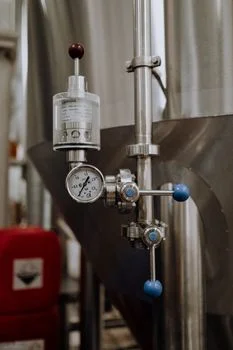
A compliance-ready technology selection begins with a five-point characterization of influent wastewater parameters — COD, TSS, and FOG above all. A High FOG rating, typically above 100 mg/L, points immediately toward a high-efficiency DAF system for FOG and TSS removal as the primary treatment stage. Conversely, when the goal is high-quality effluent for cooling tower makeup, the reliability of an MBR system for near-reuse-quality effluent outweighs the higher initial investment.
The second step evaluates footprint and expansion potential. UK facilities often operate in constrained industrial estates where land is at a premium. MBR systems cost more, but they provide the highest treatment density, allowing future capacity increases without additional land acquisition. Finally, verify Compliance Fit against the local discharge permit: where the permit carries strict phosphorus or heavy metal limits, the matrix below identifies technologies that inherently meet those standards without expensive secondary retrofits.
| Wastewater Type | Recommended Tech | CAPEX (£/m³/day) | OPEX (£/m³) | Compliance Fit (EA 2025) |
|---|---|---|---|---|
| Food Processing (High FOG) | DAF + Aerobic | £1,200–£1,800 | £0.12–£0.18 | Yes (with tertiary) |
| Metalworking/Plating | Electrocoagulation | £1,500–£2,500 | £0.15–£0.25 | Yes (Heavy Metals) |
| Pharmaceuticals/Chemical | MBR + Ozone/UV | £3,500–£5,000 | £0.35–£0.50 | Yes (Micropollutants) |
| General Manufacturing | SBR or DAF | £800–£1,500 | £0.10–£0.20 | Yes (Basic Limits) |
The same discipline applies beyond the UK. Engineers can cross-check their shortlist against food processing WWTP design and cost benchmarks from other strictly regulated markets before committing capital.
Following this structured framework helps facility directors avoid technology regret — a system that meets today's needs but fails tomorrow's regulations or production increases. The objective is a system with the lowest TCO while keeping the plant continuously available and compliant with UK law. Where the framework narrows the field to two options, a short pilot on real effluent settles membrane versus chemical routes faster than any desk study.
Who this guide serves: industrial site engineers budgeting a first treatment plant, EPC contractors pricing UK projects, and procurement leads comparing MBR, DAF, electrocoagulation, and RO quotes. Sites already holding EA permits with ammonia or phosphorus limits will find the tertiary treatment and ROI sections most relevant. For wastewater treatment plant cost in the UK, industrial buyers in 2026 should request a site-specific budget through our industrial wastewater treatment quotation page. Attaching flow data, influent characterization, and permit limits keeps the returned proposal inside the CAPEX bands above.
Frequently Asked Questions
What does wastewater treatment plant cost uk 2026 industrial cover in this guide?
Here it covers UK CAPEX and OPEX for industrial treatment plants in 2026: £15,000–£150,000 at 4–30 m³/h, £150,000–£5M at 30–500 m³/h, and £5M–£50M above 500 m³/day. It also prices MBR against DAF and tracks the 15–30% EA tertiary premium. Municipal mega-projects above 10,000 m³/day and domestic systems sit outside the main scope.
What is the average cost of a small industrial wastewater treatment plant in the UK?
In 2026, a small industrial system handling 4–30 m³/h typically costs £15,000 to £150,000 in CAPEX. The exact price depends on the technology: a basic DAF unit is significantly cheaper than a specialized electrocoagulation system for heavy metal removal. OPEX at this scale runs £0.20–£0.40 per cubic meter, mostly energy and sludge disposal.
How do UK Environment Agency limits affect the cost of a new WWTP?
Strict EA limits for COD (<125 mg/L) and phosphorus (<1 mg/L) typically add 15–30% to CAPEX for tertiary treatment stages like sand filtration or UV. Failing to include those stages invites retrofits costing 2.5x the original investment, so the premium is usually the cheaper path. Sensitive-catchment permits with ammonia below 1 mg/L push sites further toward MBR plus RO configurations.
Is MBR or DAF more cost-effective for UK food processing plants?
DAF is generally more cost-effective for primary FOG removal, with lower CAPEX (£800–£1,500/m³/day) and lower energy use. If the plant requires high-quality water for reuse or has very limited space, the higher MBR investment is often justified by the ROI from water savings. Many UK food sites run DAF ahead of a compact biological stage to hold down both cost lines.
What are the typical OPEX costs for industrial wastewater treatment in the UK?
OPEX generally ranges from £0.10 to £0.50 per cubic meter. Energy accounts for 30–50% of that cost, followed by chemical dosing and sludge disposal. Systems like MBR carry higher energy OPEX, while DAF systems carry higher sludge-related OPEX, so the influent profile decides which line item dominates the annual budget.
Can I achieve ROI on a wastewater treatment plant investment in under 3 years?
Yes, particularly if the system enables water reuse or avoids significant EA fines. With UK water rates rising, a facility reusing 1,000 m³/day can see a payback in 2.5 to 4 years through reduced procurement costs and eliminated non-compliance penalties. Adding VFDs to blowers and pumps shortens payback further by cutting energy use 30–40%.
How does the Mogden Formula affect wastewater treatment costs?
The Mogden Formula sets the trade effluent charge a UK water company levies per cubic meter, combining reception, biological treatment, and solids disposal costs with your effluent's COD and suspended solids. Cutting COD and TSS on site directly lowers that charge, so pre-treatment often pays for itself before any reuse project. Enter your current Mogden charge as the baseline cost in the ROI spreadsheet.