Why Astana’s Wastewater Treatment Costs Are Unique in 2026
Wastewater treatment plant costs in Astana range from ₸50M for a 10 m³/h pre-engineered MBR system to ₸1.2B for a 250,000 m³/day municipal plant with tertiary treatment. Capital expenditures (CAPEX) are driven by technology choice (e.g., DAF for oil-gas vs. MBR for hospitals), cold-climate engineering (insulation, heat tracing), and EAEU compliance (Russian-language documentation, local certification). Operating costs (OPEX) average ₸1,200–₸3,500 per m³/day annually, with energy (30–40% of OPEX) and sludge disposal (20–30%) as the largest variables. Astana’s industrial sectors—oil-gas, mining, and healthcare—require tailored solutions to meet sector-specific discharge limits, such as the 5 mg/L oil limit for produced water.
Astana’s industrial sectors generate approximately 9,520 m³/day of high-strength effluent, representing roughly 7% of the city’s total wastewater load, yet requiring significantly more complex treatment than municipal sewage. Following the Taldykol sewage pond elimination project, regulatory oversight has shifted focus toward the protection of the Yesil River, making on-site industrial pretreatment mandatory for many facilities. Engineering for the local climate is a primary cost driver; winter temperatures plummeting to -30°C necessitate a 15–25% increase in CAPEX compared to temperate regions.
Compliance costs in Kazakhstan are anchored to EAEU standards and Ministry Decree No. 350 (2023), which stipulates that all equipment must carry local certification and include comprehensive Russian-language technical documentation. The expansion of Astana’s municipal WWTP from 136,000 to 254,000 m³/day has introduced stricter surcharges for industrial users who discharge untreated high-COD loads into the public grid. This regulatory environment makes pre-engineered WSZ series for Astana’s cold climate an increasingly attractive option for localized, compliant treatment.
CAPEX Breakdown: How Technology and Capacity Drive Costs in Astana
Capital expenditure for wastewater treatment in Astana is determined by the intersection of influent complexity, required discharge purity, and the specific engineering required for extreme thermal fluctuations. A conventional activated sludge system may offer the lowest initial price point but often fails to meet the stringent EAEU wastewater compliance in Kazakhstan for heavy metals or hydrocarbons. In contrast, advanced technologies like Membrane Bioreactors (MBR) or Dissolved Air Flotation (DAF) provide the process stability needed for industrial applications but come with higher initial equipment costs.
| Technology | Capacity (m³/h) | Typical CAPEX Range (₸ Million) | Primary Application |
|---|---|---|---|
| Pre-engineered MBR (Skid-mounted) | 5 – 20 | ₸50M – ₸160M | Hospitals, Clinics, Small Resorts |
| Dissolved Air Flotation (DAF) | 10 – 100 | ₸70M – ₸350M | Oil-Gas, Food Processing, Mining |
| Integrated WSZ (Underground) | 10 – 50 | ₸60M – ₸220M | Residential Complexes, Industrial Parks |
| Custom Concrete-Pour WWTP | 200+ | ₸800M – ₸1.2B+ | Large Municipal, Major Mining Hubs |
One of the most significant CAPEX variables is the choice between pre-engineered and custom-built systems. Utilizing MBR systems for healthcare and municipal reuse in Astana can reduce installation CAPEX by 20–30% because these units are factory-tested and skid-mounted, minimizing the need for expensive on-site civil works in frozen ground. Cold-climate adjustments add a mandatory layer of cost: high-grade insulation (₸5M–₸20M) and automated heat tracing systems (₸3M–₸15M) are essential to prevent ice formation in clarifiers and pipe bursts. For the oil and gas sector, DAF systems for oil-gas wastewater in Astana often require additional explosion-proof electrical components and specialized coatings, further increasing the CAPEX by 20–40% relative to standard municipal configurations.
OPEX in Astana: Energy, Sludge, and Compliance Costs You Can’t Ignore
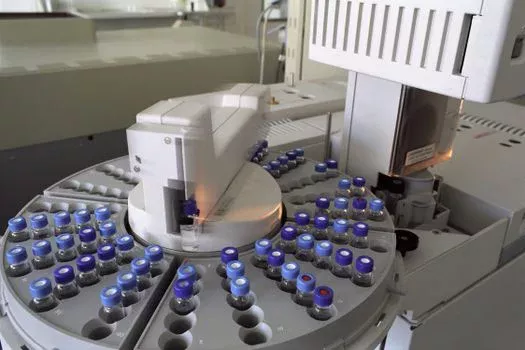
Energy consumption typically accounts for 30–40% of the total OPEX, driven by the aeration requirements of biological processes and the supplemental heating needed to keep sensitive equipment within operational temperature ranges during the five-month winter season. (HydropureWater field data, 2025).
| OPEX Category | Percentage of Total | Estimated Cost (₸ per m³/day) | Key Variables |
|---|---|---|---|
| Energy Consumption | 35% | ₸420 – ₸1,225 | MBR vs. CAS, Heating Needs |
| Sludge Disposal | 25% | ₸300 – ₸875 | Landfill fees, Hazardous rating |
| Chemical Reagents | 20% | ₸240 – ₸700 | Coagulants (DAF), CIP (MBR) |
| Labor & Maintenance | 15% | ₸180 – ₸525 | Automation level, Local wages |
| Compliance & Testing | 5% | ₸60 – ₸175 | EAEU reporting frequency |
Energy efficiency varies significantly by technology. MBR systems consume between 0.8 and 1.2 kWh/m³, whereas conventional activated sludge systems operate at 0.4 to 0.6 kWh/m³. However, the superior effluent quality of MBR often offsets these costs by eliminating the need for separate tertiary filtration. Sludge disposal in Astana is a major logistical expense, with landfill costs ranging from ₸15,000 to ₸25,000 per ton. To mitigate this, many industrial operators integrate a plate-and-frame filter press to achieve high cake dryness, reducing the total volume of waste transported. automatic chemical dosing systems are critical for DAF units to optimize the use of coagulants and flocculants, which can cost between ₸500 and ₸1,500 per m³ depending on the influent oil-gas concentration.
Pre-Engineered vs. Custom-Built: Which System Saves You More in Astana?
Selecting the structural approach for a wastewater plant in Astana—pre-engineered skids versus custom concrete structures—impacts not just the budget, but the facility's ability to withstand the -30°C winter environment.Pre-engineered systems, such as the WSZ series, are typically manufactured in controlled environments, ensuring that insulation and heat-tracing components are integrated seamlessly into the chassis. This modular approach is particularly effective for oil-gas and mining sites where flow rates may fluctuate as production scales.
| Criteria | Pre-Engineered (Skid/Container) | Custom-Built (Concrete) |
|---|---|---|
| Initial CAPEX | 20–30% Lower | Baseline High |
| Installation Time | 3–5 Months (40% faster) | 12–18 Months |
| Cold-Climate Resilience | Factory-insulated; easy to house | Requires deep excavation/heating |
| EAEU Compliance | Pre-certified components | Requires site-specific certification |
| Scalability | High (Add modules) | Low (Fixed capacity) |
For municipal engineers, custom-built concrete plants remain the standard for large-scale operations (>200 m³/h) due to their long-term structural durability and lower OPEX at high volumes. However, for industrial procurement managers, the 40% faster deployment of pre-engineered units is often the deciding factor. These systems arrive on-site ready for connection, bypassing the delays associated with pouring concrete in Astana’s short construction window. Pre-engineered solutions are often pre-certified for EAEU standards, which simplifies the permitting process with the Ministry of Ecology. Pre-engineered WSZ series for Astana’s cold climate provide a "plug-and-play" alternative that minimizes the risks of on-site engineering errors during the harsh winter months.
Sector-Specific Cost Drivers: Oil-Gas, Mining, and Healthcare in Astana
In the oil and gas sector, the presence of emulsified oils and hydrocarbons requires a combination of DAF systems for oil-gas wastewater in Astana followed by biological polishing. This multi-stage approach results in a CAPEX of ₸600M–₸1B for a 100 m³/h facility. The OPEX in this sector is 30–50% higher than the municipal average due to the high consumption of chemical polymers and the necessity of handling hazardous oily sludge.
The mining industry faces unique challenges with heavy metal removal. Systems incorporating chemical precipitation and ion exchange can add 25–40% to the initial CAPEX. Because mining sludge is often classified as hazardous under Kazakhstan’s environmental laws, disposal costs can be 2–3 times higher than those for organic waste.
In the healthcare sector, the focus shifts to pathogen and pharmaceutical removal. Astana’s hospitals are increasingly adopting the compact medical wastewater system for Astana’s hospitals and clinics, which utilizes MBR technology to achieve 99%+ pathogen kill rates. While the CAPEX for a 20 m³/h MBR system ranges from ₸80M to ₸150M, the ability to remove recalcitrant drugs like carbamazepine is essential for meeting Yesil River discharge standards.
How to Select the Right Wastewater Treatment System for Astana’s Climate and Regulations
A decision framework that prioritizes thermal stability and regulatory compliance over the lowest initial bid is required to select a system for Astana. A matrix assists engineers in matching flow characteristics and contaminant profiles with the most cost-effective technology.
| Flow Rate (m³/h) | Primary Contaminants | Budget Range (₸) | Recommended System |
|---|---|---|---|
| 5 – 30 | Pathogens, Organics | ₸50M – ₸180M | MBR (Skid-mounted) |
| 10 – 100 | Free & Emulsified Oils | ₸70M – ₸400M | DAF + Biological (Integrated
Get a Free Quote — Tell Us About Your Project
Contact Us
|