Package Wastewater Treatment Plant in Scotland UK: Specs, Costs & Compliance 2025
A package wastewater treatment plant in Scotland UK typically serves 5–2000 population equivalent (PE), with effluent meeting SEPA standards for surface discharge. Systems like the WSZ series handle 1–80 m³/h using A/O biological treatment, achieving >90% BOD and TSS reduction. Installed costs range £8,000–£120,000 depending on size and site conditions. Civil contractors, facility planners, and rural developers evaluating wastewater solutions for new builds or retrofits in Scotland require clear guidance on technical specifications, regulatory compliance, and realistic cost benchmarks to justify their decisions to stakeholders. This guide provides a comprehensive framework for selecting a compliant and cost-effective package plant.What Is a Package Wastewater Treatment Plant in the UK?
A package wastewater treatment plant is a pre-fabricated, compact system designed for on-site sewage treatment, typically serving 5–2000 PE. These self-contained units actively treat domestic and commercial wastewater, producing an effluent quality suitable for discharge into the environment, unlike passive septic tanks. While septic tanks primarily separate solids and partially treat wastewater, package plants employ advanced biological processes, such as aerobic and anoxic stages, to significantly reduce pollutants. Common types of package plants include submerged aerated filter (SAF) systems, sequencing batch reactor (SBR) systems, and membrane bioreactor (MBR) systems, each offering distinct advantages in terms of footprint, effluent quality, and operational flexibility. In Scotland, the Scottish Environment Protection Agency (SEPA) rigorously regulates the discharge of treated wastewater under the Water Environment (Controlled Activities) Regulations 2011 (CAR), ensuring environmental protection.SEPA Regulations and Discharge Requirements in Scotland

How to Size a Package Treatment Plant for Your Site
Accurately sizing a package treatment plant is crucial for effective treatment and regulatory compliance, directly depending on the anticipated wastewater volume and peak flow. For residential applications, SEPA guidance typically uses an average of 150 litres per person per day (L/person/day). Therefore, a 10-person home would require a plant with at least 1.5 m³/day capacity (10 persons × 150 L/person/day). Commercial establishments have varying factors: hotels may use 200 L/guest/day, restaurants 1,000 L/seat/week, and care homes 250 L/resident/day. Beyond average daily flow, a peak flow factor of 1.5–2x the average daily flow must be applied for small to medium systems to account for intermittent high usage, preventing system overload. Site conditions also dictate sizing; a percolation test result of less than 100 min/mm is necessary for a drainage field; otherwise, a package treatment plant with surface discharge is mandated. For example, a 50-PE rural lodge with poor percolation would need a plant rated for at least 7.5 m³/day (50 PE × 150 L/PE/day × 1.0 average factor, then considering a 1.5 peak factor for system resilience, though the PE rating itself often incorporates some peak factor, so 50 PE is the base, leading to 7.5 m³/day average flow, with the plant needing to handle peaks beyond that) to reliably meet discharge standards.Top Package Wastewater Treatment Systems Available in Scotland
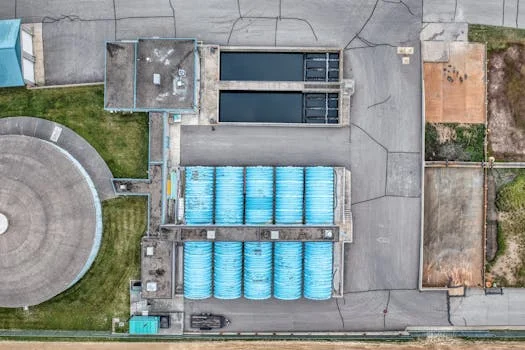
Below is a comparison of common package treatment plant types:
| System Type | Technology | PE Range | Typical Effluent Quality (BOD/TSS) | Typical Flow Rate | Installation | Estimated Installed Cost (50 PE) |
|---|---|---|---|---|---|---|
| Tricel Novo | Submerged Aerated Filter (SAF) | 5–300 PE | <20/<30 mg/L (90%+ removal) | 1.5–12 m³/day | Buried | £25,000–£35,000 |
| Premier Tech Solido | Sequencing Batch Reactor (SBR) | 10–2000 PE | <20/<30 mg/L | Variable | Buried | £28,000–£38,000 |
| HydropureWater WSZ Series | Anaerobic-Anoxic-Oxic (A/O) | ~5-1000 PE (1–80 m³/h) | <20/<30 mg/L (90%+ removal) | 1–80 m³/h | Underground/Above-ground | £27,000–£37,000 |
| Membrane Bioreactor (MBR) | Membrane Filtration + Biological | 20–5000+ PE | <5/<1 mg/L (near reuse quality) | Variable | Underground/Above-ground | £35,000–£50,000 |
Cost of Installing a Package Plant in Scotland
The total installed cost of a package wastewater treatment plant in Scotland varies significantly based on its capacity, technology, and specific site conditions. For a smaller 5–10 PE system, the installed cost typically ranges from £8,000–£15,000, which generally includes the unit itself, excavation, pipework, electrical connections, and VAT. A larger 50 PE system, suitable for a small commercial development or cluster of homes, can cost between £25,000–£40,000, often inclusive of a drainage field or soakaway if site conditions allow. For extensive 200+ PE commercial systems, the investment can escalate to £60,000–£120,000, with MBR technology adding a premium of 25–30% due to its superior effluent quality and more complex components. Delivery to Central Scotland typically takes 3–5 days, according to industry data, though remote Highlands locations may add 1–2 weeks to the delivery timeline. Beyond the initial capital expenditure, annual maintenance costs, covering inspections, sludge removal, and minor parts replacement, generally fall between £500–£1,200, representing a crucial lifecycle cost factor.How to Choose the Right System for Your Project

- Step 1: Conduct a percolation test—The results of this test are fundamental, as they determine whether ground infiltration via a drainage field is feasible (percolation rate <100 min/mm) or if a package plant with surface discharge is required.
- Step 2: Calculate daily flow and peak load—Accurately estimate the total daily wastewater volume and potential peak flows using occupancy rates and specific usage factors for residential, commercial, or industrial applications. This calculation directly informs the required PE rating of the plant.
- Step 3: Select technology based on site and discharge requirements—For standard sites with general discharge limits, robust SAF systems or efficient A/O processes (like the WSZ series) are often suitable. SBR systems are ideal for sites with variable flows or intermittent usage, while MBR systems are necessary for sensitive environments requiring near-reuse-quality effluent or where space is highly constrained.
- Step 4: Verify supplier compliance—Ensure that the chosen supplier and their products comply with recognized industry standards, such as those set by British Water’s Flow Testing Scheme, which validates the performance claims of package plants.
- Step 5: Include lifecycle costs in ROI analysis—Beyond the initial capital expenditure, factor in ongoing operational costs, including energy consumption, regular maintenance, and sludge removal, to evaluate the true return on investment over the system's lifespan. Further insights into system selection can be found in our comprehensive guide to compact sewage treatment unit manufacturer specs, costs, and technology for 2025.
Frequently Asked Questions
What is a package treatment plant in the UK? A package treatment plant in the UK is a factory-built, compact sewage treatment system designed for on-site use, treating wastewater to discharge standards suitable for the environment.
What happens to sewage in Scotland? In Scotland, sewage is primarily treated either via a septic tank combined with a drainage field (which is SEPA's preferred option) or, if ground conditions are unsuitable, by a package treatment plant followed by surface discharge into a watercourse.
Can I install a package plant without SEPA approval? No—surface discharge from a package plant requires either a Controlled Activity Regulations (CAR) licence from SEPA or compliance with specific General Binding Rules, necessitating official approval or notification.
How long do package plants last? With proper installation, annual servicing, and regular operation, most package wastewater treatment plants have a design life of 20–25 years.
Do package plants work in cold climates? Yes—many modern package plants, particularly underground models like the WSZ series, are designed to maintain performance effectively even in cold climates, with some models operating reliably down to -15°C.
Related Equipment
- underground package sewage treatment plant with 1–80 m³/h capacity — view specifications, capacity range, and technical data
- MBR system delivering near-reuse-quality effluent for sensitive discharges — view specifications, capacity range, and technical data
Need a customized solution? Request a free quote with your specific flow rate and pollutant parameters.