What Is a Package Wastewater Treatment Plant?
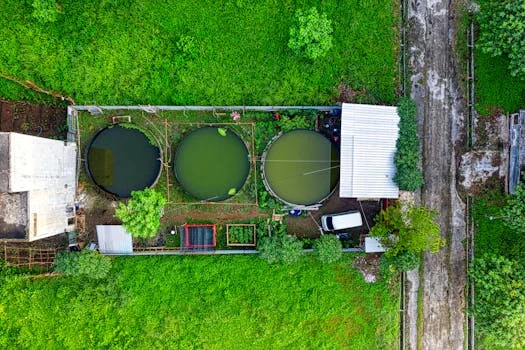
A package wastewater treatment plant is a pre-engineered, prefabricated wastewater system designed for decentralized sewage treatment. Engineered for small to medium flow rates, typically between 1 and 80 cubic meters per hour (m³/h), these compact treatment plants are the standard solution for small towns, rural communities, industrial sites, and commercial facilities that lack access to large municipal sewer lines. Unlike the massive 35 million-gallon-per-day facility in Springfield, a package plant is factory-assembled into a single skid-mounted or buried unit, shipped complete, and installed with minimal civil works and site disruption.
These modular sewage plants utilize biological processes to treat wastewater to compliance standards. Common technologies, as categorized by suppliers like EPEC, include Anoxic/Oxic (A/O), Membrane Bioreactors (MBR), Sequencing Batch Reactors (SBR), and Moving Bed Biofilm Reactors (MBBR). Their primary advantage is delivering a complete, low-maintenance, and EPA-compliant treatment solution in a fraction of the space and time required for a traditional concrete plant build.
Key Technologies in Missouri Package Plants
Selecting the right biological process is the most critical technical decision, as it determines treatment efficiency, operational resilience, and compliance capability. For Missouri’s varied climates and discharge requirements, three technologies dominate.
A/O (Anoxic/Oxic) Process: This two-stage biological process first breaks down organic matter in an oxygen-depleted (anoxic) zone before further treatment in an aerated (oxic) zone. Systems like HydropureWater’s fully automated underground package wastewater treatment plant (WSZ Series) use this method to achieve reliable 90-95% removal of BOD and TSS in a single, buried unit. It is a robust, energy-efficient workhorse for standard secondary treatment.
MBR (Membrane Bioreactor) Process: An MBR package unit combines conventional activated sludge with ultrafiltration or microfiltration membranes (0.1–0.4 μm pore size). This physical barrier replaces the secondary clarifier, producing exceptionally high-quality effluent with turbidity less than 1 NTU and over 98% pathogen removal. This makes it ideal for direct discharge into sensitive watersheds or for water reuse applications. HydropureWater’s high-efficiency MBR package plant for reuse-quality effluent is designed for this purpose.
MBBR (Moving Bed Biofilm Reactor) Process: This technology uses thousands of small, free-floating plastic media that provide a surface for biofilm growth. The constant motion ensures contact with wastewater, offering 85-92% COD removal. Its key advantages are a compact footprint and high resilience to sudden fluctuations in organic load, common in small communities or seasonal resorts.
Other processes like Oxidation Ditches and SBRs are also available. The following table provides a head-to-head comparison of these core technologies.
| Technology | Key Mechanism | BOD/TSS Removal | Best For |
|---|---|---|---|
| A/O Process | Biological contact oxidation & sedimentation | 90-95% | Standard secondary treatment, low OPEX |
| MBR System | Activated sludge + membrane filtration | >98% | Reuse, strict discharge limits, small footprint |
| MBBR System | Biofilm growth on plastic media | 85-92% | Load fluctuations, easy expansion |
| SBR | Fill-and-draw activated sludge in batches | 90-95% | Intermittent flow, simple operation |
Technical Specifications Comparison
Beyond process type, engineers must compare hard specifications: capacity, footprint, sludge yield, and automation. This data-driven evaluation ensures the selected system meets both performance and practical site constraints.
For underground installations, the WSZ Series A/O plant offers capacities from 1 to 80 m³/h. It is designed as a fully automated, buried unit requiring no full-time operator, with quarterly maintenance being sufficient. For above-ground applications requiring the highest effluent quality, MBR systems like the DF Series handle 10–2,000 m³/day and occupy a footprint up to 60% smaller than conventional plants, utilizing PVDF membranes with a 0.1 μm pore size and full PLC control.
Operational parameters are equally critical for lifecycle costing. A/O systems typically generate 0.3–0.5 kg of suspended solids (SS) per kg of BOD removed. MBR systems, operating with a much longer sludge retention time (SRT), generate less waste sludge: 0.2–0.3 kg SS/kg BOD. Energy consumption reflects the intensity of the process: A/O systems are more efficient at 0.6–1.0 kWh/m³, while MBR systems, due to air scouring requirements for membranes, consume 1.2–1.8 kWh/m³.
| Parameter | A/O Package Plant (e.g., WSZ) | MBR Package Plant |
|---|---|---|
| Typical Capacity Range | 1 - 80 m³/h | 10 - 2,000 m³/day |
| Footprint | Moderate (buried) | 60% smaller than conventional |
| Sludge Production | 0.3–0.5 kg SS/kg BOD | 0.2–0.3 kg SS/kg BOD |
| Energy Consumption | 0.6 - 1.0 kWh/m³ | 1.2 - 1.8 kWh/m³ |
| Automation Level | Fully automated, remote monitoring capable | Full PLC control, remote monitoring standard |
Cost of Package Plants in Missouri
Budgeting for a package wastewater treatment plant requires a clear understanding of both capital (CAPEX) and operational (OPEX) expenditures. Costs are highly dependent on technology, capacity, and site-specific conditions common in Missouri.
For a standard 50 m³/h system, an A/O technology package plant typically has a CAPEX range of $180,000–$250,000 (FOB Missouri). The equivalent capacity MBR system, due to the cost of membranes and more intensive aeration systems, ranges from $320,000–$450,000. Installation is a separate and variable cost, typically adding $30,000–$70,000 to the project. This covers site preparation, excavation (if buried), electrical tie-ins, and final commissioning. Permitting fees with the Missouri DNR are an additional critical line item.
Annual OPEX is where the operational differences between technologies become apparent. An A/O system has lower power consumption and no expensive consumables, leading to an estimated annual OPEX of ~$12,000 for power and routine maintenance. An MBR system has higher power costs and requires periodic membrane replacement—a significant cost every 5–7 years ranging from $15,000–$25,000—bringing its estimated annual OPEX to ~$22,000 when amortized.
| Cost Factor | A/O Package Plant (50 m³/h) | MBR Package Plant (50 m³/h) |
|---|---|---|
| CAPEX (Equipment) | $180,000 - $250,000 | $320,000 - $450,000 |
| Installation | $30,000 - $70,000 (site-dependent) | |
| Annual OPEX | ~$12,000 | ~$22,000 (incl. membrane replacement) |
Compliance and Environmental Standards
Any wastewater treatment solution must be designed to meet or exceed state and federal discharge regulations. In Missouri, the Department of Natural Resources (DNR) enforces permits that typically require secondary treatment standards: effluent with ≤30 mg/L BOD, ≤30 mg/L TSS, and ≤120 mg/L ammonia, alongside 99.9% pathogen reduction for certain discharges.
Both A/O and MBR processes are capable of meeting these Missouri DNR and federal EPA Clean Water Act NPDES permit requirements when properly designed and operated. System selection often hinges on the specific receiving body; a sensitive stream may necessitate the superior effluent of an MBR, while a standard discharge may be well-served by a robust A/O system. Engineers must also plan for Missouri's climate. Buried A/O units are inherently protected from freezing and can maintain biological activity at temperatures as low as 4°C. Above-ground MBR units require careful insulation and sometimes heated enclosures for reliable cold-weather operation. A full understanding of these rules is essential; our complete 2025 guide to EPA discharge standards provides further detail.
How to Choose the Right Supplier
The supplier you select is as important as the technology itself. Beyond initial price, evaluate vendors on their proven experience, local support capability, and commitment to compliance.
First, verify the supplier’s direct experience with Missouri DNR permitting processes and their understanding of local climate challenges. Ask for specific project references or case studies within Missouri, particularly in areas with similar geology and climate to yours, such as Branson, Springfield, or Perryville. Second, scrutinize their manufacturing and testing protocols. Reputable suppliers conduct full factory acceptance testing (FAT) before shipment to ensure the plant operates as designed. Finally, insist on modern control systems. The package plant should include a programmable logic controller (PLC) with remote monitoring capabilities, allowing for off-site diagnostics and proactive maintenance, which is crucial for rural sites with limited on-site staff.
Frequently Asked Questions
What is the difference between a sewage treatment plant and a wastewater treatment plant?
The terms are semantically interchangeable in modern usage. Both refer to a system designed to treat contaminated water from residential, commercial, or industrial sources, encompassing both blackwater (toilet waste) and greywater (sinks, showers).
Can package plants handle industrial wastewater?
Yes, but often with pretreatment. Industrial streams may contain fats, oils, grease (FOG), or high levels of suspended solids that can disrupt biological processes. Pretreatment systems, such as a dissolved air flotation (DAF) unit, can be integrated to remove these contaminants prior to the biological package plant.
How long does installation take?
Once the equipment is delivered to your Missouri site, mechanical installation typically takes 4-8 weeks. The total project timeline is highly dependent on site preparation (grading, excavation) and the duration of the Missouri DNR permitting process.
Are underground systems more expensive?
The initial capital cost for a buried system is often higher due to excavation and burial. However, this cost can be offset by saved landscaping costs, superior freeze protection, and a reduced visual footprint, which minimizes long-term community objections and risks.
Do I need an operator?
Modern, fully automated systems like the WSZ Series are designed to operate without a dedicated, full-time operator. They require only periodic (e.g., quarterly) maintenance checks by a technician, making them ideal for small communities with limited staffing resources.