Romania municipal sewage treatment capacity remains incomplete against Directive 91/271/EEC secondary-treatment and sensitive-area rules. Plants must meet BOD5 < 25 mg/L, COD < 125 mg/L, and TSS < 35 mg/L under standard secondary treatment. CAPEX typically runs €200K for small package units (10 m³/h) to €2M for large turnkey trains (500 m³/h). Earlier briefings cited roughly 40% of urban areas still lacking secondary treatment and potential penalties above €200M per year. In November 2024 the European Commission referred Romania to the Court of Justice for gaps across 150–155 large agglomerations that were due to be compliant by 31 December 2015.
Why Romania municipal sewage treatment plants miss EU targets
Romania municipal sewage treatment plants miss EU targets because many large agglomerations still lack compliant sewers, secondary treatment, or sensitive-area nutrient removal. The European Commission (14 November 2024) reports 150 agglomerations failing collecting systems, 154 failing appropriate treatment, and 155 failing more stringent treatment. Directive 91/271/EEC applies until (EU) 2024/3019 replaces it on 1 August 2027.
Earlier guidance used a national gap near 40% of urban areas without secondary treatment and warned of annual penalties exceeding €200M after 2027. The 2024 Commission referral confirms that gap is still material and already before the Court of Justice. The Romanian Water Association (ARA) reported in 2024 that about 65% of national WWTPs are over 30 years old. Legacy trains often show pump cavitation that erodes impellers and cuts hydraulic efficiency. Clarifier short-circuiting also bypasses biological contact time and pushes effluent above BOD5 and COD limits.
Modernization is no longer optional for municipal procurement teams. The shift from aging civil works to high-performance aeration and nutrient removal is now a funding and enforcement issue. The Alba Iulia WWTP modernization remains a useful benchmark. Anaerobic digestion paired with a cogeneration biogas plant cut external energy costs by 40%. Similar upgrades are needed where sensitive-area designations require advanced nitrogen and phosphorus removal under Directive 91/271/EEC.
| Parameter | EU Directive 91/271/EEC Limit | Sensitive Area Limit (P/N Removal) | Common Failure Mode |
|---|---|---|---|
| BOD5 | < 25 mg/L | < 25 mg/L | Insufficient aeration/DO levels |
| COD | < 125 mg/L | < 125 mg/L | Short-circuiting in secondary clarifiers |
| TSS | < 35 mg/L | < 35 mg/L | Poor sludge settleability |
| Total Phosphorus | - | < 1.0 mg/L (100k+ PE) | Lack of chemical precipitation |
| Total Nitrogen | - | < 10 mg/L (100k+ PE) | Inadequate anoxic zone retention |
Annex I of Directive 91/271/EEC also sets intermediate sensitive-area values for 10,000–100,000 PE plants. Those classes use total phosphorus 2 mg/L and total nitrogen 15 mg/L as annual means when they apply. City engineers must look past basic secondary treatment where receiving waters are designated sensitive. Implementing phosphorus removal strategies for EU-compliant WWTPs becomes necessary as more Romanian water bodies enter that list. Audit-ready equipment should log discharge parameters automatically for EU and national inspectors.
MBR vs Conventional vs Hybrid Systems for Romanian Municipal WWTPs
Membrane Bioreactor (MBR), conventional activated sludge (CAS), and hybrid A/O plus DAF trains are the three options most Romanian municipalities compare. Land, OPEX, and 2027 nutrient rules usually decide the shortlist. Technology choice tracks land availability, effluent class, and operator skill more than brochure claims. Most plants we size for towns under 20,000 PE run at the lower end of the published energy band if inlet FOG and peak wet-weather flows are controlled first.
MBR combines biological degradation with membrane filtration and removes the secondary clarifier. Footprint is typically about 60% smaller than CAS. Stable operation often yields COD ≤50 mg/L and TSS < 5 mg/L. Procurement teams must still budget higher CAPEX of €600K to €900K for a 100 m³/h facility. Membrane replacement averages about €20K–€50K per year (HydropureWater field data, 2025). For compact sites, MBR systems for compact municipal WWTPs in Romania remain the most reliable path to TSS control during peak flows.
CAS stays the default for larger cities where land is available. CAPEX for 100 m³/h often sits at €300K–€500K. Clarifiers still need roughly 30–50 m² per 100 m³/h of design flow. Sludge yield of 0.8–1.2 kg TSS per kg BOD removed raises disposal OPEX as landfill fees climb. Where towns need a middle path, hybrid WWTP systems for emerging markets are frequently adapted to Romanian winters using A/O biology plus flotation polishing.
Hybrid lines use DAF systems for hybrid municipal WWTPs in Romania to strip FOG and cut TSS to < 10 mg/L before final discharge. That layout can trim sludge disposal cost by up to 30% versus CAS when solids capture is consistent. Small agglomerations that cannot wait for multi-year civil works often add a modular package train. An Underground Package Sewage Treatment Plant (WSZ Series) can serve as that secondary stage while the main plant is rebuilt.
| Technology | Energy (kWh/m³) | Footprint Requirement | Effluent Quality (TSS) | Sludge Production |
|---|---|---|---|---|
| MBR | 0.8 – 1.2 | Minimal (Integrated) | < 2 mg/L | Low (High SRT) |
| Conventional (CAS) | 0.4 – 0.6 | High (Large Clarifiers) | 15 – 25 mg/L | High |
| Hybrid (A/O + DAF) | 0.5 – 0.8 | Moderate | < 10 mg/L | Moderate |
2026 Cost Breakdown for Romanian Municipal WWTPs: CAPEX, OPEX & Payback Periods
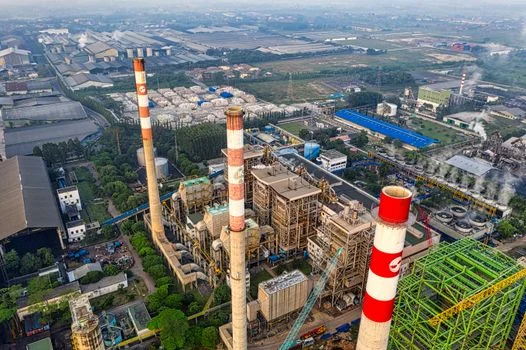
Municipal WWTP budgets in Romania split sharply by capacity band and technology class. There is no single national unit price. A small package plant (10 m³/h) for a village or industrial park usually costs €200K–€300K. Mid-sized municipal plants (100 m³/h) run €450K–€700K. Large turnkey systems (500 m³/h) reach about €1.5M–€2M. Those figures cover equipment, installation, and first commissioning. Site preparation and deep civil works are often extra.
OPEX is where many Romanian municipalities lose control after handover. Energy often takes about 40% of the operating budget, chemicals about 20%, and sludge disposal about 15%. Landfill disposal currently costs about €50–€150 per ton in Romania. Directive 86/278/EEC still supports agricultural reuse at about €20–€50 per ton when metals and pathogens stay inside limits. Reaching 25–30% dry cake solids with sludge dewatering solutions for Romanian municipal WWTPs is usually the first lever before reuse contracts are signed.
| Plant Capacity (m³/h) | Estimated CAPEX (€) | Estimated OPEX (€/m³) | Avg. Payback (Years) |
|---|---|---|---|
| 10 m³/h | 200,000 – 300,000 | 0.25 – 0.35 | 4 – 6 |
| 50 m³/h | 350,000 – 500,000 | 0.20 – 0.30 | 5 – 8 |
| 100 m³/h | 450,000 – 700,000 | 0.15 – 0.25 | 7 – 10 |
| 500 m³/h | 1,500,000 – 2,000,000 | 0.12 – 0.20 | 10 – 12 |
EU funding eligibility often drives ROI more than tariff revenue alone. Cohesion Fund and related programmes can cover 50% to 85% of CAPEX when the EIA and feasibility study prove long-term operability. Avoided infringement exposure also changes the math. Many MBR or hybrid upgrades then recover investment within 3 to 5 years on a risk-adjusted basis for towns already named in Commission files.
Supplier Selection Checklist for Romanian Municipal WWTPs
Supplier selection for Romanian municipal WWTPs fails most often when the lowest bid lacks local operating references and winter-performance data. Vague compliance language, missing similar-PE references, and empty long-term OPEX models are the usual red flags. Ask what COD removal the bidder guarantees under Romanian winter temperatures. A credible reply typically sits at 90–95% removal when aeration, SRT, and solids separation are matched to the coldest month, not the annual average.
Turnkey contractors fit large civil packages. Modular package plants fit towns around 5,000 PE that need 3–6 month deployment instead of 2+ years of conventional build. Plants such as the Nehiou WWTP use SCADA remote alarms on operator phones. Contracts should require at least 90% local spare-parts availability and certified operator training. Villages that need a buried footprint with short civil works can use the same package specification. An Underground Package Sewage Treatment Plant (WSZ Series) can serve as interim capacity or as the permanent secondary stage when PE growth is slow.
Protect the municipality with liquidated damages for delay and a retention bond held through a 12-month proving period. The plant must hold BOD5 < 25 mg/L and COD < 125 mg/L across summer peaks and winter lows before final acceptance. That clause forces the manufacturer to share seasonal operating risk.
Selection checklist: demand verified COD/BOD performance under Romanian winter temperatures and references at similar PE and climate. Require a full OPEX model for energy, chemicals, spare parts, and sludge, plus SCADA logging ready for inspector audits. Lock a ≥90% local spare-parts plan, a 12-month retention bond tied to BOD5 and COD limits, and a clear path from modular interim capacity to final nutrient removal.
Who this is for: municipal engineers, EPC contractors, and procurement managers sizing or retrofitting WWTPs that still lack compliant secondary or sensitive-area treatment. Who should look elsewhere: industrial effluent projects that need industry-specific pretreatment rather than urban UWWTD trains. Next step: send inlet data, PE, and discharge class through our request a municipal WWTP quote form so sizing and nutrient-removal options can be checked before tender documents lock the process.
Frequently Asked Questions
What EU action has Romania faced for Directive 91/271/EEC gaps?
The European Commission referred Romania to the Court of Justice on 14 November 2024 for failing urban wastewater collection and treatment duties. Commission figures cite 150 large agglomerations without compliant collecting systems. Another 154 lack appropriate treatment of collected wastewater, and 155 lack more stringent treatment for sensitive areas. Those agglomerations should have been compliant by 31 December 2015 under the Accession Treaty timetable.
How much does a 100 m³/h municipal WWTP cost in Romania?
CAPEX for a 100 m³/h municipal plant typically falls between €450K and €700K for equipment, installation, and commissioning. Heavy site civil works are usually excluded from that band. OPEX often lands near €0.15–€0.25 per m³ when energy, chemicals, and sludge are all counted. MBR packages at the same flow can rise to about €600K–€900K because membranes and higher specific energy are included.
Which effluent limits apply under Directive 91/271/EEC?
Secondary treatment requires BOD5 below 25 mg/L, COD below 125 mg/L, and TSS below 35 mg/L for standard discharges. Sensitive-area plants above 100,000 PE must also meet total phosphorus below 1.0 mg/L and total nitrogen below 10 mg/L as annual means. For 10,000–100,000 PE sensitive-area plants, the directive sets phosphorus at 2 mg/L and nitrogen at 15 mg/L.
When will Directive 91/271/EEC be replaced?
Directive 91/271/EEC remains in force until 1 August 2027, when Directive (EU) 2024/3019 takes over as the new Urban Wastewater Treatment Directive. Municipal designs started in 2026 should already check current Annex I limits. They should also screen the tighter collection, monitoring, and micropollutant pathways in the 2024 recast so civil works are not obsolete within one funding cycle.
Is MBR or hybrid better for small Romanian towns?
MBR fits sites with little land and strict TSS limits. It often delivers TSS below 2–5 mg/L at about 0.8–1.2 kWh/m³ with higher membrane OPEX. Hybrid A/O plus DAF suits moderate footprints and FOG-heavy inlets, typically holding TSS below 10 mg/L at about 0.5–0.8 kWh/m³. Most plants we size for towns under 20,000 PE start with hybrid or package CAS unless the site boundary forces MBR.