Khobar industrial wastewater treatment specs and costs in 2026 center on tertiary limits of TN ≤10 mg/L and TP ≤1 mg/L, CapEx bands of SAR 5M–120M, and industrial volumes growing near 18% per year.
Why Khobar Wastewater Treatment Needs Differ in 2026
Khobar wastewater treatment design in 2026 works against petrochemical COD of 5,000–50,000 mg/L, food-plant BOD of 800–1,800 mg/L, and tertiary limits of COD ≤125 mg/L, TN ≤10 mg/L, and TP ≤1 mg/L. Volume growth near 18% per year pushes DAF-MBR-RO hybrids wherever reuse or ZLD applies. Standalone MBR still fits food plants discharging to sewer.
Khobar petrochemical COD runs 5,000–50,000 mg/L with oil/grease up to 1,200 mg/L, while food-plant BOD often hits 800–1,800 mg/L under tertiary targets of TN ≤10 mg/L and TP ≤1 mg/L. Volume growth near 18% per year from 2020–2025 pushes hybrid DAF-MBR-RO when reuse or ZLD is required; many food plants still size standalone MBR for discharge COD ≤50 mg/L.
Eastern Province industry still drives a large share of Saudi petrochemical effluent. Refinery streams often show oil/grease at 800–1,200 mg/L with COD around 5,000–15,000 mg/L, while synthesis plants push COD toward 15,000–50,000 mg/L. Those two profiles need different pretreatment depth before biology or membranes. The same pattern shows up when buyers compare broader industrial wastewater treatment programs outside the Gulf: local oil load, not generic COD alone, sets the first unit process.
Food processors in Dammam 2nd Industrial City add about 12,000 m³/day of high-BOD wastewater, with COD 1,500–3,000 mg/L and TSS 800–2,000 mg/L. FOG at 200–600 mg/L and pH swings from 4–10 make equalization and neutralization non-negotiable before biology. Most plants we size for this corridor run equalization at the lower end of 6–12 h HRT when FOG is sticky. Without that buffer, DAF chemical dose swings and MBR flux collapse during night clean-in-place dumps from packaging halls.
Coverage targets for the Eastern Province continue to push tertiary polishing. CapEx for new industrial plants rises about 12–18% versus 2020 baselines when TN ≤10 mg/L and TP ≤1 mg/L must be held as permit conditions, mainly from anoxic/aerobic volume and chemical phosphorus trim. Industrial wastewater volume in the city grew about 18% per year between 2020 and 2025. Operators who still run primary oil separators plus conventional activated sludge without nutrient stages are the ones failing TN/TP audits first. Retrofit anoxic zones help, but oily feed still needs DAF before any membrane stage.
Seasonal temperature swings also matter for Khobar wastewater treatment design. Summer feed at 40–50°C cuts oxygen transfer and raises membrane fouling rates on oily petrochemical trains. Winter nights near 20°C slow nitrification, so anoxic/aerobic HRT must be checked at both ends of the year, not only at the average design temperature.
| Year | Estimated Industrial Wastewater Volume (m³/day) | Annual Growth Rate |
|---|---|---|
| 2020 (Baseline) | 50,000 | - |
| 2021 | 59,000 | 18% |
| 2022 | 69,620 | 18% |
| 2023 | 82,152 | 18% |
| 2024 | 96,940 | 18% |
| 2025 | 114,380 | 18% |
| 2026 (Projection) | 135,070 | 18% |
Khobar Industrial Wastewater Treatment Specs and Costs in 2026
Engineering specs for Khobar start from measured influent, because petrochemical and food profiles differ by an order of magnitude in COD and FOG. Petrochemical wastewater in Khobar typically carries COD from 5,000–50,000 mg/L, so pretreatment and advanced biology are baseline, not optional. Crude oil refining wastewater often sits at oil/grease 300–1,200 mg/L and COD 5,000–15,000 mg/L. Organic chemical synthesis streams can reach COD up to 50,000 mg/L, with TSS 200–1,500 mg/L, pH 6–9, and temperature 30–50°C. Those temperatures cut oxygen transfer, and most aeration designs we review for Jubail–Khobar trains derate alpha at the hot end of that band. Sulfide and phenolic spikes also show up on some SABIC-adjacent feeds and need dedicated oxidation or carbon polish before membrane stages.
Food processing wastewater from Dammam 2nd Industrial City is more biodegradable but still FOG-heavy. Typical influent spans COD 1,500–3,000 mg/L, BOD 800–1,800 mg/L, TSS 800–2,000 mg/L, and FOG 200–600 mg/L. pH can swing from 4–10 across slaughterhouse, dairy, and beverage lines. Equalization plus pH trim before biology is the cheapest insurance against filament and FOG upsets. Plants that skip FOG removal before MBR usually burn CIP chemicals within the first year of operation.
| Parameter | Petrochemical Wastewater (e.g., Aramco Refinery) | Petrochemical Wastewater (e.g., SABIC Chemical Plant) | Food Processing Wastewater (Dammam 2nd Industrial City) | NWC 2026 Effluent Limit (Tertiary) |
|---|---|---|---|---|
| COD (mg/L) | 5,000–15,000 | 15,000–50,000 | 1,500–3,000 | ≤125 |
| BOD (mg/L) | 2,000–6,000 | 5,000–20,000 | 800–1,800 | ≤25 |
| TSS (mg/L) | 200–800 | 500–1,500 | 800–2,000 | ≤30 |
| Oil/Grease (mg/L) | 300–1,200 | 50–300 | 200–600 (FOG) | ≤5 |
| TN (mg/L) | 50–200 | 100–300 | 30–100 | ≤10 |
| TP (mg/L) | 5–20 | 10–50 | 5–15 | ≤1 |
| pH | 6–9 | 6–9 | 4–10 | 6–9 |
| Temperature (°C) | 30–50 | 30–50 | 20–35 | Ambient |
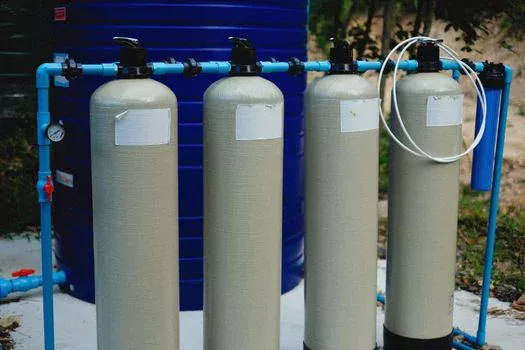
Design teams sizing for tertiary discharge in Khobar still work to COD ≤125 mg/L, BOD ≤25 mg/L, TSS ≤30 mg/L, TN ≤10 mg/L, TP ≤1 mg/L, and oil/grease ≤5 mg/L. Those figures remain the planning envelope used across Khobar industrial zones, including Dammam 2nd Industrial City. For agricultural reuse quality, earlier plant guidance often kept BOD near ≤25 mg/L. Unrestricted irrigation criteria cited in Eastern Province field work set BOD at 10 mg/L and turbidity at 5 NTU (Benaafi et al., 2024, citing Saudi reuse standards). Keep both numbers on the drawing: discharge BOD ≤25 mg/L for sewer or industrial outfall planning, and BOD 10 mg/L when the off-take is unrestricted irrigation reuse.
For oily petrochemical feed, DAF systems for Khobar’s petrochemical wastewater (92–97% oil/grease removal) remain the usual first barrier before biology and membranes. Skipping DAF on oily feed is the fastest way to foul an MBR cassette. When the goal tightens toward ZLD, the permeate specs in the reuse section below take over.
Industrial Wastewater Reuse Saudi Arabia 2026 Design Targets
Industrial wastewater reuse in Saudi Arabia shapes 2026 design targets as much as discharge limits do. According to a 2024 KFUPM field study citing MEWA data, Saudi Arabia produced 1.93 billion m³ of treated wastewater in 2022 and reused 422 million m³ (22%) for irrigation. The National Water Strategy still aims for 70% municipal reuse by 2030. Public water-sector reporting counts 33 wastewater treatment plants with 748 million m³ per year of capacity and 15 more under construction (Wikipedia). Through the Treated Sewage Effluent Initiative (TSEI) of the National Water Company, treated wastewater is sold to major water customers, which is why many industrial RFQs in Khobar now ask for boiler or cooling makeup quality, not only sewer discharge.
Reuse-grade design numbers follow from the off-take. ZLD or boiler-grade reuse targets tighten to permeate conductivity ≤50 μS/cm, turbidity ≤0.5 NTU, and SDI ≤3. RO is what hits those numbers after solid pretreatment, and antiscalant selection must reflect local TDS and hardness, not a generic European dose table. Design teams should write the reuse grade into the RFQ before vendor selection, because permeate spec drives both membrane area and energy draw.
Petrochemical Wastewater Treatment Khobar DAF MBR RO
Petrochemical wastewater treatment in Khobar converges on DAF + MBR + RO trains whenever oil/grease sits above a few hundred mg/L or reuse is on the brief. Well-tuned DAF packages remove 92–97% oil/grease and 70–85% TSS, which protects downstream membranes. DAF units handle emulsified oil and hydrophobic solids common in refinery and petrochemical effluent. That cut in organic and solids load lowers coagulant use and can reduce MBR fouling by up to 40% on oily feeds (HydropureWater field data, 2025). Recycle saturation pressure and float-skimming reliability matter more than tank volume on these oily Gulf feeds.
Food plants more often select MBR systems for food processing wastewater (effluent COD ≤50 mg/L) as a compact biological core. Flat-sheet DF-series membranes remove organics and support TN ≤10 mg/L when anoxic and aerobic zones are integrated for nitrification–denitrification. Versus conventional activated sludge, MBR footprints shrink by about 60%, which matters on constrained industrial plots. Effluent BOD, TSS, and nutrient quality from a correctly loaded MBR already aligns with tertiary discharge targets, so many food sites stop there unless reuse needs RO.
When ZLD or high-purity reuse is mandatory, RO systems for ZLD/reuse (95% water recovery, conductivity ≤50 μS/cm) finish the train. Industrial RO can hold permeate conductivity below 50 μS/cm and turbidity below 0.5 NTU. Khobar makeup water and industrial brine make RO membranes sensitive to solids, organics, and scaling, so DAF followed by MBR is the practical pretreatment path. Skipping that stack shortens membrane life and spikes cleaning chemical spend.
Hybrid DAF-MBR-RO packages cover the hardest Khobar industrial wastewaters aiming for ZLD. CapEx for those hybrids typically spans SAR 25M–120M, yet integrated pretreatment can cut OPEX 15–25% versus poorly pretreated standalone RO through fewer cleans and longer membrane life. Similar selection logic appears in industrial wastewater treatment methods used for high-COD manufacturing sites, even when local discharge codes differ. For the most demanding reuse briefs, hybrid DAF-RO-MBR arrangements for zero liquid discharge (ZLD) keep concentrate management on the critical path from day one.
| Technology | Typical CapEx (SAR Million) | Typical OPEX (% of CapEx/year) | Key Advantages | Key Limitations |
|---|---|---|---|---|
| DAF (Pretreatment) | 2–10 | 5–8% | High oil/grease & TSS removal, MBR protection | Requires chemical addition, sludge disposal |
| MBR (Biological) | 5–50 | 8–12% | High effluent quality (BOD, TSS, TN/TP), small footprint | Membrane fouling, energy for aeration |
| RO (Tertiary/Reuse) | 10–70 | 15–25% | Achieves ZLD/high-purity reuse, very low TDS | High CapEx/OPEX, sensitive to fouling, concentrate disposal |
| Hybrid DAF-MBR-RO | 25–120 | 10–18% | Comprehensive treatment, high reuse, optimized OPEX | Higher initial CapEx, system complexity |
Cost Models for Khobar Plants: CapEx, OPEX, and PPP Financing
Capital cost for industrial plants in Khobar usually starts at SAR 5M–50M for standalone MBR trains treating 100–1,000 m³/day. Hybrid DAF-MBR-RO systems sized for 500–5,000 m³/day more often land between SAR 15M–120M. Influent strength, tertiary versus ZLD targets, and petrochemical versus food duty swing those bands more than brand selection does. Buyers comparing Gulf projects with the Christchurch industrial wastewater engineering guide should normalize for oil load and reuse grade before reading CapEx per m³/day. A clean food effluent at 1,000 m³/day is not priced like a 1,000 m³/day oily petrochemical train.
| System Type | Capacity Range (m³/day) | Estimated CapEx (SAR Million) |
|---|---|---|
| Standalone MBR | 100–500 | 5–20 |
| Standalone MBR | 500–1,000 | 20–50 |
| Hybrid DAF-MBR-RO | 500–2,000 | 15–60 |
| Hybrid DAF-MBR-RO | 2,000–5,000 | 60–120 |
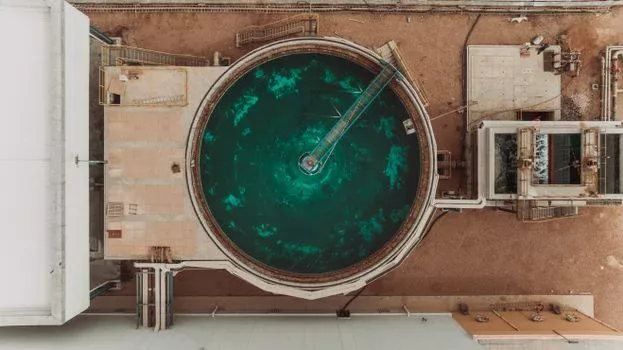
Operating cost splits are consistent across recent Khobar bids we see: energy about 40% of OPEX (MBR aeration plus RO high-pressure pumps), membrane replacement about 30%, chemicals about 20%, and labor about 10%. MBR membranes typically last 5–7 years; RO membranes last 3–5 years under Gulf feed conditions. PPP structures under NWC long-term O&M programs can move day-to-day staffing off the industrial owner’s books when municipal or shared assets are involved. Energy tariffs and spare-membrane lead times are the two OPEX surprises that most often break year-1 budgets.
Under those PPP models, private operators may fund about 20–30% of initial CapEx against long-term (for example 20-year) O&M contracts. That structure fits Khobar’s roughly 18% annual volume growth because operators earn more when trains stay efficient as load rises. It also creates a financing path for zero liquid discharge Saudi Arabia projects that would otherwise stall on upfront RO and evaporator CapEx. Procurement teams watching European nutrient rules can skim the EU Urban Wastewater Treatment Directive: Compliance, Deadlines & Tech guide for parallel TN/TP thinking, then map those lessons onto NWC tertiary envelopes rather than copying EU numbers.
Return on ZLD investment is mostly water purchase avoided. A petrochemical site treating 5,000 m³/day at 95% reuse can save about SAR 1.2M–3M per year at fresh-water prices of SAR 0.7–1.75 per m³. Payback on the incremental ZLD stack is commonly 3–5 years when energy and membrane replacements stay inside the OPEX bands in Table 3. If concentrate hauling is costly, the evaporator step needs a fresh business case before award. Khobar wastewater treatment projects that ignore concentrate logistics usually miss the real OPEX line.
| Metric | Value |
|---|---|
| Wastewater Volume Treated (m³/day) | 5,000 |
| Water Reuse Rate | 95% |
| Water Saved Annually (m³/year) | 1,733,750 (5,000 m³/day * 0.95 * 365 days) |
| Average Cost of Fresh Water (SAR/m³) | SAR 0.7 - SAR 1.75 |
| Annual Water Savings (SAR) | 1,213,625 - 3,034,062.5 |
| Estimated Payback Period (Years) | 3–5 |
Equipment Selection Framework for Khobar Industrial Facilities
Equipment selection for Khobar starts with measured influent, not brochure flux. Use recent composite samples for COD, TSS, oil/grease, nutrients, and pH before locking a process train. Grab samples alone understate FOG and COD peaks that set DAF and MBR size. Most plants we commission for Eastern Province duty discover their design COD after the first summer peak, not from the tender sheet.
Step 1: Characterize influent wastewater
- Decision rule: If influent COD >5,000 mg/L (typical petrochemical) or oil/grease >300 mg/L, specify DAF pretreatment before biology or membranes.
- Decision rule: If influent BOD >800 mg/L (common in food processing), size a robust biological stage with FOG control upstream.
Step 2: Match effluent limits to technology
- Decision rule: If TN ≤10 mg/L and TP ≤1 mg/L are mandatory, use MBR with anoxic/aerobic zones or a hybrid DAF-MBR layout.
- Decision rule: If reuse needs permeate conductivity ≤50 μS/cm and turbidity ≤0.5 NTU, add RO as the tertiary stage.
Step 3: Check financing and site constraints
- Decision rule: For flows above 1,000 m³/day and CapEx above SAR 20M, evaluate PPP / long-term O&M models that shift CapEx and staffing risk.
- Decision rule: For smaller plants with available CapEx, buy proven low-OPEX packages and keep spare membranes on site.
Step 4: Select Khobar-proven equipment
- DAF: DAF-class units in the 4–300 m³/h band with 92–97% oil/grease removal and stainless construction for corrosive atmospheres.
- MBR: Flat-sheet DF-series bioreactors with documented nutrient removal for tertiary TN/TP targets and compact footprint.
Selection checklist (field use)
- Confirm oil/grease and COD on 24-hour composites, not grab samples alone.
- State discharge versus reuse grade in the RFQ (tertiary limits vs ≤50 μS/cm permeate).
- Budget membrane replacement years 3–7 inside OPEX, not as a surprise CapEx.
- Require sludge and RO concentrate disposal routes before award.
- Verify vendor references on oily Gulf petrochemical or FOG-heavy food duty.
- Include summer temperature derates (30–50°C petrochemical) in aeration and membrane warranties.
- Align PPP / LTOM terms with the 18% volume-growth case, not the year-1 flow only.
Who this is for / Who should look elsewhere / Next step
This guide is for plant engineers, EPC process leads, and procurement managers. It targets teams sizing Khobar or Eastern Province trains for petrochemical, food, or mixed industrial effluent. Look elsewhere if you only need municipal secondary clarification without nutrient or reuse targets. To size a Khobar train against your COD, oil/grease, and reuse grade, request a process quote with flow, influent lab data, and discharge or reuse limits.
Frequently Asked Questions
What are the key NWC 2026 discharge limits for industrial facilities in Khobar?
NWC tertiary planning limits used for Khobar industrial projects include TN ≤10 mg/L, TP ≤1 mg/L, COD ≤125 mg/L, BOD ≤25 mg/L, TSS ≤30 mg/L, and oil/grease ≤5 mg/L. Those values drive nutrient removal volume and chemical trim. For unrestricted irrigation reuse, Saudi criteria cited in Eastern Province studies set BOD at 10 mg/L, which is tighter than the ≤25 mg/L discharge planning figure.
How do hybrid DAF-MBR-RO systems help petrochemical plants in Khobar?
Hybrid DAF-MBR-RO trains treat high oil and high COD petrochemical wastewater and can reach 95%+ water reuse for boiler feed or cooling makeup. DAF cuts oil/grease 92–97% before membranes. That pretreatment lowers fouling and can cut CapEx intensity 20–30% versus underspecified RO-only layouts by extending membrane life and reducing cleaning chemical demand (HydropureWater field data, 2025).
What role does PPP financing play in CapEx for Khobar wastewater plants?
PPP models under NWC long-term O&M programs let private operators cover about 20–30% of initial CapEx in exchange for multi-year operating contracts, often around 20 years. Owners transfer staffing and performance risk while operators gain incentive to keep trains efficient as Khobar volumes grow near 18% per year. The model fits hybrid and ZLD projects whose upfront CapEx would otherwise block board approval.
What water reuse targets apply to ZLD systems in Khobar industry?
ZLD and high-grade reuse trains for Khobar petrochemical sites typically target permeate conductivity ≤50 μS/cm, turbidity ≤0.5 NTU, and SDI ≤3. Those numbers support boiler feed, cooling towers, and sensitive process water. Meeting them requires RO after DAF and MBR pretreatment; concentrate disposal must be designed with the same rigor as the permeate specification.
When should a food plant choose standalone MBR instead of full hybrid RO?
Food plants in Dammam 2nd Industrial City that see COD 1,500–3,000 mg/L without boiler-grade reuse often stop at MBR when effluent COD ≤50 mg/L and tertiary TN/TP limits are met. Add RO only when conductivity ≤50 μS/cm or ZLD is required. Most mid-size food sites we commission keep CapEx inside the SAR 5M–50M standalone MBR band unless corporate water reuse mandates force the hybrid stack.