Why Nairobi Hospitals Fail NEMA Wastewater Inspections (And How to Fix It)
78% of Nairobi hospitals failed NEMA antibiotic residue tests in 2023 compliance audits, primarily due to persistent pharmaceutical compounds like sulfamethoxazole (20.6 μg/L detected) and trimethoprim (6.6 μg/L) which far exceed the NEMA limit of 0.1 μg/L. These failures extend beyond antibiotics, with average Chemical Oxygen Demand (COD) at 450 mg/L against a NEMA limit of 120 mg/L, and fecal coliforms reaching 10⁶ CFU/100mL versus the permitted 10³. This consistent non-compliance leads to significant fines and operational disruptions for healthcare facilities across the city.
A prime example of successful intervention is Kenyatta National Hospital's 2023 upgrade. By transitioning from conventional lagoon systems to a combination of Dissolved Air Flotation (DAF) and chlorine dioxide disinfection, the facility dramatically reduced sulfamethoxazole concentrations to below 0.05 μg/L. This proactive investment resulted in a 92% reduction in NEMA fines, demonstrating a clear pathway to compliance and operational stability for other Nairobi hospitals.
The core of the problem lies in the 'antibiotic persistence loop'. Nairobi hospitals collectively use an estimated 12.4 tons/year of antibiotics, according to WHO 2025 data. A significant portion, between 30-90%, is excreted unchanged by patients. These active pharmaceutical ingredients (APIs) then enter the wastewater stream. Conventional wastewater treatment systems, particularly the prevalent lagoon setups in Nairobi, are fundamentally inadequate for antibiotic degradation wastewater, removing less than 40% of these residues (Top 1 research). This insufficient treatment allows antibiotics to persist and be discharged, creating a cycle of environmental contamination and regulatory non-compliance.
Nairobi Hospital Wastewater: Influent Characteristics and Treatment Targets
Nairobi hospital wastewater exhibits specific influent characteristics that necessitate advanced treatment to meet NEMA discharge limits, including high concentrations of pharmaceutical residues and variable organic loads. Understanding these parameters is the foundational step for selecting and designing an effective hospital effluent treatment system.
The typical influent profile for Nairobi hospital wastewater presents a complex challenge, requiring robust treatment technologies capable of handling not only conventional pollutants but also emerging contaminants like antibiotics. The pH range of 6.8-8.2 is particularly relevant for antibiotic speciation; sulfonamides, for instance, exist as approximately 60% anionic and 40% neutral species at this pH (Top 1 research). This speciation significantly influences their mobility and susceptibility to various treatment processes, affecting sorption and degradation pathways.
Seasonal variations further complicate treatment. During the dry season (December-February), lower dilution rates can cause COD concentrations to spike to 750 mg/L. Conversely, the wet season (April-June) often sees Total Suspended Solids (TSS) increase to 600 mg/L due to runoff and increased turbidity. NEMA discharge permit requirements necessitate monthly testing for 17 specific antibiotics (as listed in Top 1 research), quarterly reports for COD/BOD/TSS, and an annual microbial risk assessment to ensure continuous compliance.
| Parameter | Typical Influent Range (Nairobi Hospitals) | NEMA Limit (2026) | WHO Guideline (2024) | EU Directive 91/271/EEC |
|---|---|---|---|---|
| COD | 350-600 mg/L | <120 mg/L | N/A | <125 mg/L (90% removal) |
| BOD₅ | 150-300 mg/L | <30 mg/L | N/A | <25 mg/L (90% removal) |
| TSS | 200-450 mg/L | <50 mg/L | N/A | <35 mg/L (90% removal) |
| Sulfamethoxazole | 15-25 μg/L | <0.1 μg/L | <0.1 μg/L | N/A |
| Trimethoprim | 4-8 μg/L | <0.1 μg/L | <0.1 μg/L | N/A |
| pH | 6.8-8.2 | 6.0-9.0 | 6.0-9.0 | 6.0-9.0 |
| Fecal Coliforms | 10⁵-10⁷ CFU/100mL | <10³ CFU/100mL | <10³ CFU/100mL | <1000 CFU/100mL |
Treatment Technology Comparison: DAF vs MBR vs Chlorine Dioxide for Nairobi Hospitals

Selecting the optimal hospital effluent treatment systems in Nairobi requires a direct comparison of technologies like Dissolved Air Flotation (DAF), Membrane Bioreactors (MBR), and chlorine dioxide, evaluated against specific performance metrics and cost efficiencies. Each technology offers distinct advantages for addressing the complex influent characteristics of Nairobi hospital wastewater, especially concerning antibiotic degradation and pathogen removal.
High-efficiency DAF systems for Nairobi hospital wastewater, such as the DAF-50 model (rated for 50 m³/h), effectively remove 92-97% of Total Suspended Solids (TSS), alongside 60-70% of COD and 40-50% of antibiotics. A DAF system typically requires a 30 m² footprint, with an approximate CAPEX of $85,000 and OPEX of $0.45/m³. For superior antibiotic removal in Nairobi hospitals, MBR systems utilizing 0.1 μm PVDF membranes achieve over 95% antibiotic removal and 99.9% pathogen kill. A 50 m³/day MBR system has a CAPEX of around $280,000 and an OPEX of $1.20/m³, offering a 60% smaller footprint compared to a DAF system combined with a clarifier.
For disinfection and advanced oxidation, chlorine dioxide generators for hospital effluent disinfection are highly effective. A 50 g/h ClO₂ generator can achieve 99.9% pathogen kill and up to 90% antibiotic degradation (e.g., sulfamethoxazole half-life of 12 minutes at 5 mg/L ClO₂). This solution typically costs $35,000 for CAPEX and $0.25/m³ for OPEX. Hybrid systems often provide the best balance of performance and cost. A DAF + chlorine dioxide combination can achieve 98% antibiotic removal with a CAPEX of approximately $120,000. For the highest removal efficiency, an MBR + UV system offers 99.9% antibiotic removal, though with a higher CAPEX of around $320,000. These systems represent a significant advancement over traditional stabilization ponds, which are less effective for complex hospital wastewater.
| Technology | COD Removal | Antibiotic Removal | Pathogen Kill | Footprint | CAPEX (Approx. for 50m³/day) | OPEX (Approx. per m³) | NEMA Compliance Risk | Best For |
|---|---|---|---|---|---|---|---|---|
| DAF | 60-70% | 40-50% | 50-70% | Medium (30 m²) | $85,000 | $0.45 | High (alone) | Pre-treatment, TSS removal |
| MBR | >95% | >95% | >99.9% | Small (15 m²) | $280,000 | $1.20 | Low | High-level treatment, tight spaces |
| Chlorine Dioxide (ClO₂) | Minimal (oxidation) | >90% | >99.9% | Very Small (5 m²) | $35,000 | $0.25 | Medium (as standalone) | Disinfection, antibiotic polishing |
| Ozone | 70-90% | >90% | >99.9% | Small (10 m²) | $70,000 | $0.60 | Medium | Advanced oxidation, disinfection |
| UV Disinfection | N/A | Minimal | >99.9% | Very Small (2 m²) | $20,000 | $0.15 | High (no residue removal) | Post-treatment disinfection |
| Stabilization Ponds | 50-70% | <40% | 70-90% | Very Large | $50,000 | $0.10 | Very High | Basic treatment, large land availability |
| Hybrid (DAF + ClO₂) | 60-70% (TSS) + Oxidation | >98% | >99.9% | Medium (35 m²) | $120,000 | $0.70 | Low | Cost-effective compliance |
| Hybrid (MBR + UV) | >95% | >99.9% | >99.9% | Small (17 m²) | $320,000 | $1.35 | Very Low | Maximum compliance, sensitive discharge |
Step-by-Step Equipment Sizing for Nairobi Hospitals
Accurate wastewater treatment equipment sizing is critical for ensuring compliance and operational efficiency in Nairobi hospitals, directly impacting system performance and cost-effectiveness. Proper sizing prevents system overload, reduces maintenance needs, and guarantees consistent NEMA compliance, especially for antibiotic degradation wastewater.
The first step in wastewater treatment equipment sizing is to determine the hospital's average daily flow. A practical formula for this is:
Daily flow (m³/day) = (Bed count × 0.5 m³/bed/day) + (Outpatient visits × 0.02 m³/visit)
For instance, a 200-bed hospital with 300 daily outpatient visits would generate an average daily flow of (200 × 0.5) + (300 × 0.02) = 100 + 6 = 106 m³/day.
Nairobi hospitals typically experience peak flow rates up to 3 times the average daily flow, particularly during morning discharge hours (7-9 AM). Therefore, the treatment system must be designed to handle this peak. For a 106 m³/day hospital, the average hourly flow is 106 m³/day / 24 hours = 4.4 m³/h. The peak flow for design purposes would then be 3 × 4.4 m³/h = 13.3 m³/h.
When sizing specific components:
- DAF Sizing: HydropureWater's DAF models are available for flow rates ranging from 4-300 m³/h. For our 200-bed hospital with a 13.3 m³/h peak flow, selecting a DAF-15 model (rated for 15 m³/h) provides an adequate buffer with a 10% safety factor.
- MBR Sizing: MBR systems are available in modules ranging from 10-2,000 m³/day. For a 106 m³/day average flow, selecting a 120 m³/day MBR module would incorporate a sufficient safety factor for daily capacity.
- Chlorine Dioxide Dosing: To achieve effective disinfection and antibiotic degradation, a typical dosing concentration is 5 mg/L ClO₂ with a 30-minute contact time. For a 106 m³/day system, the daily chlorine dioxide requirement is 106 m³/day × 5 g/m³ = 530 g/day. To handle peak flows and ensure redundancy, selecting a 500-class generator (rated for 500 g/h) with a 2× redundancy setup would be appropriate, allowing for continuous operation even during maintenance or malfunction of one unit.
NEMA and WHO Compliance: Permitting, Testing, and Documentation Requirements
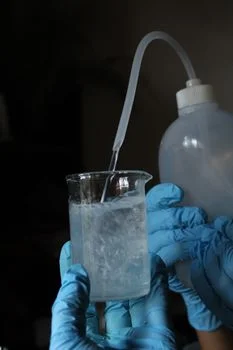
Adhering to NEMA discharge limits Kenya and WHO guidelines is non-negotiable for hospital wastewater treatment, requiring stringent permitting, regular testing, and meticulous documentation. Non-compliance, especially concerning antibiotic residues, carries significant legal and financial penalties under the Kenya Water Act 2016.
To obtain a NEMA discharge permit, hospitals must submit a comprehensive application package. This package typically includes a detailed site plan, a complete treatment process flow diagram, a robust influent and effluent monitoring plan, and an emergency response protocol for potential system failures or accidental discharges. These documents demonstrate the facility's commitment to environmental stewardship and its capability to manage hospital wastewater effectively.
Compliance is maintained through a rigorous testing schedule: weekly monitoring for standard parameters like COD, BOD, and TSS; monthly testing for the 17 specified antibiotics (as identified in Top 1 research); and quarterly assessments for microbial parameters such as fecal coliforms and E. coli. These frequent tests ensure that the treatment system consistently meets the stringent NEMA discharge limits Kenya, which are often aligned with WHO Guidelines for Safe Use of Wastewater (2024) requiring less than 0.1 μg/L for all antibiotics in effluent.
Comprehensive documentation is equally critical. Hospitals must maintain 5-year records of all test results, detailed equipment maintenance logs, and precise chemical usage records (e.g., for chlorine dioxide or coagulants). NEMA enforces these regulations through monthly spot checks, and penalties for non-compliance are severe. A first offense, as stipulated by Section 56 of the Kenya Water Act 2016, can result in a KES 1 million fine or a 1-year license suspension, underscoring the importance of robust compliance strategies.
Cost Breakdown: CAPEX and OPEX for Nairobi Hospital Wastewater Systems
Understanding the comprehensive Nairobi wastewater treatment cost, encompassing both Capital Expenditure (CAPEX) and Operational Expenditure (OPEX), is essential for long-term financial planning in healthcare facilities. Transparent cost models enable procurement officers to budget accurately and evaluate the total cost of ownership (TCO) over the system's lifespan.
For a typical 100 m³/day hospital wastewater treatment system, the initial CAPEX and ongoing OPEX vary significantly by technology. A DAF + chlorine dioxide hybrid system, offering robust treatment for antibiotic degradation wastewater, has an estimated CAPEX of $120,000. Its OPEX is approximately $0.70/m³, leading to an annual OPEX of $25,550 and a 5-year TCO of around $280,000. In contrast, an MBR system, providing superior effluent quality, requires a higher CAPEX of $280,000. With an OPEX of $1.20/m³, its annual OPEX is $43,800, resulting in a 5-year TCO of roughly $520,000 for the same capacity. Traditional stabilization lagoons, while having a lower CAPEX of $50,000, come with higher NEMA compliance risks due to their limited antibiotic removal capabilities, and an OPEX of $0.10/m³.
Key drivers of OPEX include electricity, which accounts for approximately 40% of MBR system OPEX and 20% for DAF systems. Chemical consumption, particularly for coagulants in DAF and chlorine dioxide for disinfection, constitutes about 30% of DAF OPEX and 10% for MBR systems. Membrane replacement is a significant factor for MBR systems, typically representing 25% of the overall OPEX every five years. To mitigate these costs, Nairobi hospitals can explore financing options such as NEMA Green Fund grants, which can cover up to 50% of CAPEX for public hospitals, or Kenya Climate Innovation Center loans, offering an 8% interest rate over a 7-year term.
| System Type | CAPEX (Approx. for 100 m³/day) | OPEX/m³ (Approx.) | Annual OPEX (Approx. for 100 m³/day) | 5-Year TCO (Approx. for 100 m³/day) |
|---|---|---|---|---|
| DAF + Chlorine Dioxide | $120,000 | $0.70 | $25,550 | $280,000 |
| MBR | $280,000 | $1.20 | $43,800 | $520,000 |
| DAF + UV | $105,000 | $0.60 | $21,900 | $215,000 |
| Stabilization Ponds | $50,000 | $0.10 | $3,650 | $68,250 |
Zero-Risk Equipment Selection: A Decision Framework for Nairobi Hospitals
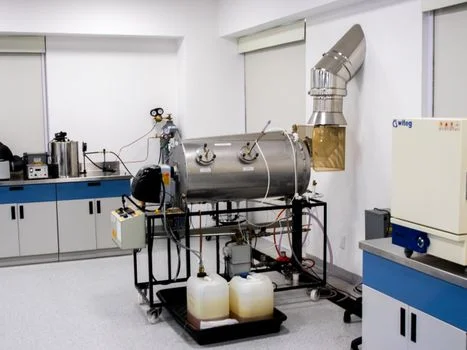
Implementing a zero-risk equipment selection framework is paramount for Nairobi hospitals to ensure consistent compliance, protect public health, and achieve optimal antibiotic degradation in wastewater effluent. This structured approach guides facility managers and engineers toward the most suitable and fail-safe hospital wastewater treatment systems.
The decision framework begins with evaluating key hospital characteristics and constraints:
- Hospital Size: Determine the average daily wastewater flow based on bed count and outpatient visits.
- Budget: Assess available CAPEX and OPEX allocations, considering long-term TCO.
- Compliance Risk Tolerance: Evaluate the stringency required to meet NEMA and WHO guidelines, especially for antibiotic residues.
- Footprint Constraints: Consider available land for treatment infrastructure.
Based on these factors, the framework recommends:
- Small Clinics (<50 beds): For limited space and budget, compact hospital wastewater treatment systems for Nairobi clinics, such as the Medical Wastewater Treatment System, are ideal. These integrated units often feature ozone disinfection, occupy a minimal 0.5 m² footprint, and have an approximate CAPEX of $45,000.
- Medium Hospitals (50-200 beds): A DAF + chlorine dioxide system (e.g., HydropureWater's DAF-15 combined with a 500-class chlorine dioxide generator) offers an excellent balance of cost and performance. This hybrid solution achieves approximately 98% antibiotic removal with an estimated CAPEX of $120,000, ensuring strong NEMA compliance.
- Large Hospitals (>200 beds): For facilities requiring the highest level of treatment and minimal compliance risk, an MBR system is recommended, providing over 99.9% antibiotic removal. CAPEX typically starts from $280,000. Alternatively, a hybrid DAF-MBR system can offer a cost-optimized solution at around $220,000 CAPEX while still ensuring high-performance effluent. For insights into how UK hospitals achieve similar high removal rates, refer to Hospital Wastewater Treatment in the UK: 2026 Engineering Specs, Compliance & Zero-Risk Equipment Guide.
To achieve truly zero-risk operation, fail-safe requirements are crucial. These include automatic bypass systems for power outages or equipment malfunctions, redundant disinfection units (e.g., both chlorine dioxide and UV systems), and, for critical facilities, optional real-time antibiotic monitoring to ensure immediate detection of any treatment deviations. This comprehensive approach ensures that the chosen system not only meets current regulations but also provides long-term operational resilience and public health protection.
Frequently Asked Questions
Addressing common inquiries provides clarity on the complexities of hospital wastewater treatment in Nairobi and ensures informed decision-making for facility managers and engineers.
What is the primary challenge in treating hospital wastewater in Nairobi?
The main challenge in Nairobi is the presence of persistent antibiotic residues, such as sulfamethoxazole (detected at 20.6 μg/L), which conventional treatment systems like lagoons fail to degrade adequately. These residues lead to consistent non-compliance with NEMA discharge limits Kenya and pose significant environmental and public health risks by contributing to antimicrobial resistance.
How often should antibiotic residues be monitored in hospital effluent?
NEMA regulations require monthly testing for 17 specific antibiotic compounds in hospital effluent. This frequent monitoring is critical to ensure that treatment systems are consistently achieving the required antibiotic degradation wastewater levels, typically below 0.1 μg/L, and to detect any potential system malfunctions or treatment inefficiencies promptly.
Can existing lagoon systems be upgraded to meet NEMA standards for hospital wastewater?
While existing lagoon systems are generally inadequate for hospital wastewater treatment in Nairobi due to their low antibiotic removal efficiency (<40%), they can be integrated into a hybrid upgrade. This often involves adding pre-treatment (e.g., DAF for TSS removal) and post-treatment (e.g., chlorine dioxide or MBR for antibiotic degradation and disinfection) to achieve compliance. This approach can be more cost-effective than building an entirely new system.
What are the financial incentives for Nairobi hospitals to invest in advanced wastewater treatment?
Beyond avoiding significant NEMA fines (up to KES 1 million per offense under the Kenya Water Act 2016), Nairobi hospitals can access financial support. The NEMA Green Fund offers grants covering up to 50% of CAPEX for public hospitals, and the Kenya Climate Innovation Center provides loans with favorable terms (e.g., 8% interest, 7-year term). These incentives reduce the Nairobi wastewater treatment cost burden and promote sustainable practices.
How does HydropureWater ensure NEMA compliance for its installed systems?
HydropureWater designs its hospital effluent treatment systems with NEMA and WHO compliance as the primary objective. This includes providing detailed engineering specifications, recommending appropriate technologies for antibiotic degradation, assisting with NEMA permit applications, and offering ongoing support for monitoring and documentation requirements. Our solutions are tailored to meet specific Nairobi influent characteristics and regulatory thresholds, similar to NEMA compliance strategies for East African wastewater.