Why Amman’s Wastewater Treatment Costs Are Rising in 2026
Jordan’s per capita water availability has dropped to approximately 145 m³/year, a figure nearly 85% below the international water poverty line of 1,000 m³/year. In Amman, this scarcity is no longer just an environmental concern; it is a direct driver of industrial overhead. For factory managers and municipal planners, the cost of inaction has surpassed the cost of investment. As of 2026, the Jordan Water Strategy 2025 has fully transitioned from a policy framework into a strict enforcement regime, requiring industrial facilities to treat and reuse a minimum of 70% of their wastewater. Failure to meet these targets results in non-compliance penalties reaching up to $50,000 per year under Jordanian Environmental Law No. 52/2006.
The cost complexity in Amman is further exacerbated by the unique characteristics of local influent. Wastewater in the Amman-Zarqa basin typically exhibits high Total Dissolved Solids (TDS) levels, ranging from 1,200 to 1,800 mg/L, alongside significant seasonal flow fluctuations of 20% to 30%. These parameters necessitate more robust chemical dosing and advanced filtration stages compared to standard international designs. For example, a 2023 audit of 15 industrial plants in the Sahab Industrial Estate revealed that 60% were operating with outdated conventional systems. These legacy plants incurred operating expenses (OPEX) 40% higher than modern alternatives like Membrane Bioreactors (MBR) or Dissolved Air Flotation (DAF), primarily due to inefficient aeration and excessive chemical consumption required to manage high-TDS spikes.
Rising municipal water tariffs, currently priced at $1.50/m³ for industrial users, have shifted the financial narrative. When a textile factory in Amman was recently fined for exceeding discharge limits into the public sewer, the combination of the fine and the lost opportunity for water reuse created a deficit that could have funded 15% of a new treatment plant’s CAPEX in a single year. This environment makes 2026 a critical pivot point for WWTP investment, where technology selection must be balanced against Amman’s specific utility rates and regulatory mandates.
CAPEX Breakdown: How Much Does a Wastewater Treatment Plant Cost in Amman?
Total project CAPEX for Amman-based wastewater plants is calculated using a base cost per cubic meter adjusted for high total dissolved solids (TDS) and seismic reinforcement requirements. For industrial buyers in 2026, the budget must account for Jordan’s Seismic Zone 2B compliance, which adds 10–20% to civil engineering costs compared to non-seismic regions. The general formula for estimating CAPEX in the Amman market is: Total Cost = (Base Cost/m³/day × Capacity) + Site-Specific Adjustments + Contingency (10–15%).
Base costs for technology vary significantly based on the desired effluent quality. Conventional activated sludge plants are the least expensive upfront but often fail to meet the 70% reuse mandate without expensive tertiary polishing. MBR systems, while carrying a higher initial price tag, produce reuse-ready water (TSS < 10 mg/L) in a single step. DAF systems are priced moderately and are essential for industries with high fats, oils, and grease (FOG), such as food processing plants in the Queen Alia Airport Special Development Zone.
| Technology Type | Base CAPEX (per m³/day) | Typical Capacity | Estimated Total CAPEX (Amman 2026) |
|---|---|---|---|
| Conventional Activated Sludge | $2,200 – $3,000 | 500 m³/day | $1.1M – $1.5M |
| Integrated MBR System | $3,500 – $5,000 | 50 m³/day | $175K – $250K |
| Dissolved Air Flotation (DAF) | $2,800 – $4,200 | 1,000 m³/day | $2.8M – $4.2M |
| Advanced Oxidation (AOP) Add-on | $800 – $1,200 | N/A | +$40K – $60K (per 50 m³/day) |
Hidden CAPEX often disrupts budgets if not identified early. Permitting through the Ministry of Water and Irrigation (MWI) and the Ministry of Environment typically costs between $20,000 and $50,000 depending on the project’s Environmental Impact Assessment (EIA) requirements. Pilot testing, which is highly recommended for Amman’s high-TDS influent, can cost an additional $30,000 to $80,000. However, these costs can be offset by Jordan’s Green Growth National Action Plan, which offers 20% CAPEX subsidies for plants achieving >90% reuse. For small and medium enterprises (SMEs), EU-funded grants occasionally cover up to 50% of the equipment costs to encourage sustainable industrialization.
OPEX Deep Dive: Energy, Chemicals, and Sludge Disposal Costs in Amman
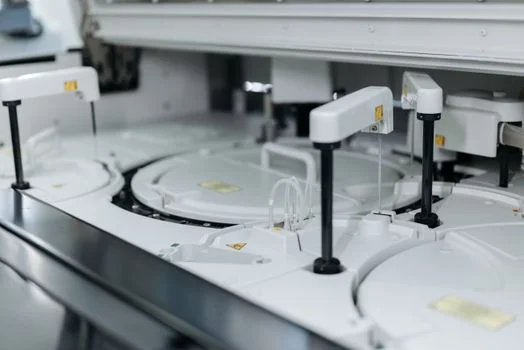
Electricity costs in Amman, currently benchmarked at $0.12/kWh for 2026, represent the largest single variable in a plant’s lifetime operating expenditure, often accounting for 40–60% of total OPEX. In conventional plants, the aeration process is the primary energy consumer. Conversely, modern compact MBR systems for Amman’s high-TDS wastewater utilize high-efficiency membrane scouring techniques that can reduce specific energy consumption to 0.8–1.2 kWh/m³, a 20% improvement over older biological models.
Chemical expenditures are the second most significant OPEX factor, particularly for DAF systems used in industrial pretreatment. Amman’s high TDS levels increase the demand for coagulants and flocculants by 25–35% to achieve effective particle separation. Sludge management also presents a logistical cost challenge; landfill tipping fees in the Amman governorate range from $80 to $120 per ton. Utilizing sludge dewatering equipment to cut disposal costs in Amman is essential, as these systems can reduce sludge volume by up to 80%, effectively halving the annual disposal budget.
| OPEX Component | Unit Cost (Amman 2026) | Impact on Total OPEX (%) | Cost-Saving Strategy |
|---|---|---|---|
| Electricity | $0.12 / kWh | 45% – 55% | VFDs on blowers; Solar PV integration |
| Coagulants/Flocculants | $1.20 – $4.00 / kg | 15% – 25% | Automated dosing based on real-time turbidity |
| Sludge Disposal | $80 – $120 / ton | 10% – 20% | High-pressure plate-and-frame dewatering |
| Skilled Labor | $15 – $25 / hour | 5% – 15% | PLC-controlled automation & remote monitoring |
| Maintenance/Parts | 2% – 5% of CAPEX/yr | 5% | Preventative maintenance schedules |
For a typical 500 m³/day facility, the total OPEX generally falls between $0.35/m³ and $0.60/m³. MBR systems tend to sit at the lower end of this range ($0.35–$0.50/m³) due to their high degree of automation and lower sludge yield, despite the periodic cost of membrane replacement every 5 to 8 years. DAF systems, while energy-efficient, often reach $0.55/m³ when treating high-FOG industrial streams due to intensive chemical use.
MBR vs. DAF vs. Conventional: Which Technology Fits Your Amman Project?
Membrane Bioreactor (MBR) technology achieves a footprint reduction of 60% compared to conventional activated sludge, making it the primary choice for Amman’s land-constrained industrial zones. When evaluating wastewater treatment plant cost benchmarks in another water-scarce region, it becomes clear that MBR’s ability to produce high-quality effluent suitable for immediate cooling tower or irrigation reuse is the most effective way to hedge against rising water prices. For petrochemical or food processing facilities, DAF systems for industrial pretreatment in Amman are superior for removing oils that would otherwise foul membranes or inhibit biological activity.
The decision framework for Amman buyers should prioritize three factors: influent TDS, available space, and the 2025 reuse mandate. Conventional systems are often only viable for large-scale municipal projects where land is abundant and the goal is basic discharge rather than high-efficiency reuse. For industrial facilities, the hybrid approach—using DAF for pretreatment followed by MBR for polishing—is becoming the standard for achieving zero-liquid discharge (ZLD) or high-percent reuse, similar to how neighboring countries handle industrial wastewater compliance.
| Selection Criteria | MBR (Integrated) | DAF (Dissolved Air) | Conventional Activated Sludge |
|---|---|---|---|
| Effluent Quality (TSS) | < 5 mg/L (Excellent) | 30 – 50 mg/L (Good) | 20 – 30 mg/L (Moderate) |
| Footprint Requirement | Minimal (60% smaller) | Moderate (30% smaller) | Large (Baseline) |
| TDS Tolerance | High (up to 2,000 mg/L) | Moderate | Low (sensitive to shocks) |
| Reuse Suitability | Direct Reuse (95%+) | Pretreatment Only | Needs Tertiary Treatment |
| Sludge Production | 0.2 – 0.3 kg/m³ | 0.1 – 0.2 kg/m³ | 0.3 – 0.4 kg/m³ |
Industrial buyers should use MBR for reuse-driven projects where high effluent quality is non-negotiable. DAF is best suited as a primary stage for high-loading industrial streams, while conventional systems should be reserved for municipal applications exceeding 100,000 m³/day where economy of scale offsets the lower technology efficiency.
ROI Calculator: How Jordan’s 2025 Reuse Mandate Accelerates Payback
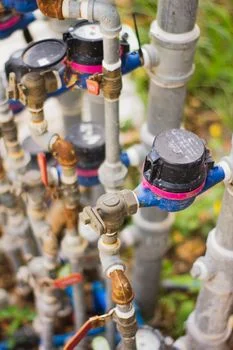
Jordan’s Green Growth National Action Plan provides a 20% CAPEX subsidy for wastewater facilities that achieve a reuse rate exceeding 90%. This subsidy, combined with the avoidance of municipal water costs and non-compliance fines, dramatically shortens the payback period for modern WWTPs. To calculate ROI, Amman buyers should use the following model: Payback Period (years) = (Total CAPEX - Subsidies) / (Annual Water Savings + Penalty Avoidance - Annual OPEX).
Consider a 500 m³/day MBR plant. The freshwater cost for such a facility at $1.50/m³ totals approximately $273,750 per year. By treating and reusing 95% of that water, the facility generates "revenue" in the form of saved water costs. When you factor in the avoidance of a potential $25,000 annual fine for exceeding discharge limits and the 20% government subsidy on the initial $1.75M investment, the financial justification becomes clear. The payback period in this scenario is roughly 6.4 years, compared to over 10 years in regions without such aggressive water pricing and regulatory incentives.
| Financial Metric | No Reuse (Baseline) | 70% Reuse (Mandate) | 95% Reuse (MBR + Subsidy) |
|---|---|---|---|
| Annual Water Cost | $273,750 | $82,125 | $13,687 |
| Annual Penalty Risk | $50,000 | $0 | $0 |
| Effective CAPEX | $0 | $1,500,000 | $1,400,000 (after 20% subsidy) |
| Annual OPEX | $0 | $91,250 | $73,000 |
| Net Annual Savings | $0 | $150,375 | $237,063 |
| Payback Period | N/A | 9.9 Years | 5.9 Years |
This ROI model demonstrates that the highest-tech solution (MBR) often provides the fastest return on investment in Amman’s 2026 economic landscape. By maximizing reuse, companies not only comply with Jordan’s environmental laws but also insulate themselves from future water tariff hikes and scarcity-driven supply interruptions.
Frequently Asked Questions
What is the average cost per m³ for a wastewater treatment plant in Amman?
In 2026, CAPEX ranges from $2,200 to $5,000 per m³/day of capacity, depending on the technology. OPEX typically averages between $0.35 and $0.60 per m³ of treated water, heavily influenced by Amman’s $0.12/kWh electricity rate.
How does Amman’s high TDS affect wastewater treatment costs?
High TDS (1,200–1,800 mg/L) increases chemical consumption in DAF systems by approximately 25–35%. It also requires higher-grade materials for pumps and membranes to prevent corrosion and scaling, adding roughly 15% to the initial equipment CAPEX.
What are the penalties for non-compliance with Jordan’s 2025 wastewater reuse mandate?
Industrial facilities failing to meet the 70% reuse target face fines up to $50,000 per year. Repeated violations can lead to mandatory facility shutdowns and the revocation of environmental permits under Jordanian Environmental Law No. 52/2006.
Can I get funding for a wastewater treatment plant in Amman?
Yes. Jordan’s Green Growth Plan offers 20% CAPEX subsidies for plants achieving >90% reuse. Additionally, international agencies like the EBRD and various EU grants provide low-interest financing or up to 50% equipment coverage for SMEs in the industrial sector.
What’s the best wastewater treatment technology for a hotel in Amman?
MBR systems are the preferred choice for Amman’s hospitality sector. Their small footprint allows for basement or underground installation, and the high effluent quality is perfect for landscape irrigation and toilet flushing, which are critical for meeting hotel sustainability targets and reducing water bills.