Why TFT-LCD Wastewater Resource Recovery is a Regulatory and Financial Imperative
TFT-LCD manufacturing wastewater contains high concentrations of organic compounds (COD 500–2,000 mg/L), heavy metals (copper 10–100 mg/L), and suspended solids (TSS 200–800 mg/L), making direct discharge illegal under EPA and EU Industrial Emissions Directive 2010/75/EU. Hybrid MBR-RO-electrowinning systems recover 99.5% of copper, achieve 95%+ water reuse, and reduce hazardous waste disposal costs by up to 70%, with a typical ROI of 3–5 years for a $2.8M–$12M CAPEX system.
The regulatory landscape for the electronics industry has tightened significantly. EPA 40 CFR Part 469 (Electronics Manufacturing Point Source Category) and the EU Industrial Emissions Directive 2010/75/EU mandate strict discharge limits for COD, TSS, and specifically copper and phosphorus. Exceeding these limits results in heavy fines or forced operational shutdowns. As of 2026, the cost of off-site hazardous wastewater disposal has surged to $0.80–$1.50/gallon in the United States and €1.20–€2.50/m³ in the European Union. These escalating costs transform wastewater from a disposal problem into a significant financial liability if not managed via on-site resource recovery.
Beyond compliance, the economic incentive for TFT-LCD wastewater resource recovery is driven by the intrinsic value of the waste stream. Copper recovery via electrowinning can offset 30–50% of total system OPEX by generating high-purity copper cathodes saleable at LME market rates. Achieving Zero Liquid Discharge (ZLD) is no longer optional for new facilities in major manufacturing hubs. Taiwan, South Korea, and China now frequently require ZLD as a prerequisite for environmental permitting of new TFT-LCD plants to protect local water tables and reduce industrial strain on municipal infrastructure.
Hybrid MBR-RO-Electrowinning: The 2026 Gold Standard for TFT-LCD Wastewater Resource Recovery
The hybrid architecture that integrates biological treatment, membrane separation, and electrochemical recovery is specifically engineered to handle the fluctuating organic loads and high metal concentrations typical of panel manufacturing. The first stage utilizes a MBR system for TFT-LCD wastewater treatment, employing an anoxic/aerobic bioreactor coupled with an immersed Ultrafiltration (UF) membrane. This stage targets organic removal (COD/TOC) and provides a physical barrier to suspended solids.
A bridge to the next section: The effectiveness of this three-stage process is evident in its widespread adoption. The second stage involves RO systems for TFT-LCD water reuse. Because the MBR’s UF membrane (pore size 0.04–0.1 μm) ensures a Silt Density Index (SDI) of less than 3 for the RO feed, membrane fouling is reduced by 40% compared to conventional sand filtration or DAF-based pretreatment. The final stage is the electrowinning circuit, which processes the metal-rich concentrate from the RO or specific stripping streams to recover copper at high purity.
| Parameter | Influent Concentration | MBR Effluent | RO Permeate | Overall Removal Rate |
|---|---|---|---|---|
| COD (mg/L) | 500 – 2,000 | < 30 | < 5 | > 98.5% |
| TOC (mg/L) | 150 – 600 | < 15 | < 2 | > 97.4% |
| Copper (mg/L) | 10 – 100 | < 0.5 | < 0.05 | > 99.5% |
| TSS (mg/L) | 200 – 800 | 0 | 0 | 100% |
| Conductivity (μS/cm) | 2,500 – 5,000 | 2,200 – 4,500 | < 50 | > 98% |
For the electrowinning process, operational efficiency is maximized at a current density of 200–400 A/m². This allows for the production of copper with >99.9% purity. Based on 2026 LME price projections, the revenue potential from recovered metal ranges from $120 to $200 per ton of copper processed, significantly lowering the net cost of the wastewater treatment operation. This configuration is highly compatible with semiconductor wastewater treatment and metal recovery strategies used in high-end wafer fabrication.
Ferrous Phosphate Recovery: Turning Phosphorus from Liability to Byproduct
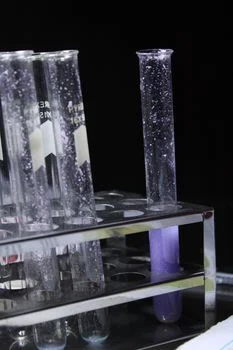
Phosphorus removal is a critical challenge in TFT-LCD wastewater due to the use of phosphoric acid in etching processes. Traditional chemical precipitation using lime or alum creates massive quantities of hazardous sludge. Fluidized Bed Crystallization (FBC) offers a superior alternative by recovering phosphorus as ferrous phosphate (vivianite), a marketable byproduct.
The FBC reactor utilizes a porous diffuser with a 100 μm aperture at the base of a vertical column to maintain a fluidized bed of seed crystals. Ferrous salts are added via an chemical dosing system and reagent delivery. The phosphorus reacts at the crystal surface, growing into dense pellets of vivianite (Fe₃(PO₄)₂·8H₂O). This system achieves an 85% phosphorus removal rate with a crystal purity of approximately 90%. Compared to traditional dissolved air flotation (DAF) or chemical precipitation, FBC reduces chemical consumption by 30% and sludge production by 50%.
The recovered vivianite has significant market value. It is increasingly sought after as a precursor for lithium-iron phosphate (LFP) battery cathode production, a soil conditioner in alkaline agricultural environments, or as a secondary coagulant for municipal wastewater treatment. By transitioning phosphorus from a waste product to a resource, manufacturers can further improve the ROI of their ZLD systems.
Process Comparison: MBR-RO vs. DAF-RO vs. Electro-Fenton for TFT-LCD Wastewater
TFT-LCD wastewater treatment processes vary in efficiency and cost.Selecting the optimal treatment train requires evaluating several competing technologies. While MBR-RO is the current benchmark for water reuse, other methods like DAF-RO and Electro-Fenton are deployed in specific scenarios where organic loads are exceptionally high or where footprint is less of a concern. The following table compares these three primary configurations based on field data from Taiwanese and South Korean installations.
| Parameter | MBR-RO-Electrowinning | DAF-RO-Crystallization | Electro-Fenton + UF/RO |
|---|---|---|---|
| COD Removal | 98.5% | 85% | 92% |
| TOC Removal | 97.4% | 80% | 90% |
| Copper Recovery | 99.5% (High Purity) | 90% (Sludge Form) | 85% (Sludge Form) |
| Water Reuse Rate | 95%+ | 80% | 75% |
| Energy Consumption | Moderate (1.2-1.8 kWh/m³) | Low (0.8-1.2 kWh/m³) | High (2.5-4.0 kWh/m³) |
| System Footprint | Compact (100%) | Large (160%) | Moderate (120%) |
| CAPEX | High | Moderate | High |
| OPEX | Low (due to recovery) | Moderate | High |
MBR-RO’s primary strength lies in its ability to produce high-quality permeate suitable for cooling tower makeup or even process-grade water, reducing the facility's raw water demand. A case study of a major Taiwanese TFT-LCD plant revealed that switching to an MBR-RO-electrowinning hybrid system allowed them to achieve 92% water reuse and generate $1.2M per year in copper revenue, effectively paying for the system's maintenance and energy costs. For broader context on similar high-purity requirements, readers may also examine wafer fab wastewater resource recovery systems.
CAPEX and OPEX Breakdown: How Much Does a TFT-LCD Resource Recovery System Cost?
Budgeting for a resource recovery system requires a granular understanding of both the initial investment and the long-term operational costs. For a standard 2026-specification hybrid system, CAPEX is primarily driven by the membrane modules and the electrowinning cells. The following breakdown provides a cost model for systems of varying capacities.
| System Capacity | Estimated CAPEX | Annual OPEX (Gross) | Annual Recovery Revenue |
|---|---|---|---|
| Small (50 m³/h) | $2.8M – $3.5M | $350,000 | $180,000 |
| Medium (200 m³/h) | $6.5M – $8.0M | $1.2M | $720,000 |
| Large (500 m³/h) | $12M – $15M | $2.8M | $1.8M |
The CAPEX is typically distributed as follows: MBR modules (35%), RO system (25%), electrowinning units (20%), automation and control systems (10%), and civil/MEP works (10%). OPEX ranges from $0.80 to $1.50 per cubic meter treated, covering energy consumption, chemical reagents, labor, and periodic membrane replacement (typically every 3–5 years for MBR and 2–3 years for RO). The ROI calculation is the most critical metric for procurement teams. By factoring in the copper revenue ($120–$200/ton), water savings ($0.50–$1.00/m³), and the avoidance of hazardous waste disposal costs ($0.80–$1.50/gallon), most plants achieve a full return on investment within 3 to 5 years. In regions with high water scarcity or aggressive environmental taxes, the ROI can drop to under 30 months.
How to Select the Right Resource Recovery System for Your TFT-LCD Plant
A structured decision framework is essential to ensure the selected system meets