Industrial operators in Alberta face effluent limits of 25 mg/L TSS and 20 mg/L BOD, with fines reaching $120K per violation. A hybrid DAF MBR RO wastewater system delivers 95–99% removal of FOG, TSS, and nutrients, with CAPEX spanning $85K–$450K+.
Those numbers frame the 2026 buying decision for oil and gas sites, food processors, and remote camps across the province. The pages on how Alberta's regulations compare to EU standards for industrial wastewater trace the same nutrient-removal trend from the other direction. This guide stays on Alberta ground: the rules, the trains that meet them, and what they cost.
How Does a Hybrid DAF MBR RO Wastewater System Meet Alberta Limits?
DAF clarification removes 95% of FOG and 90% of TSS, the MBR cuts COD by 97% through 0.1 μm PVDF membranes, and RO polishing returns permeate below 50 mg/L TDS at 95% recovery. Packaged plants start near $85K for 10 m³/day MBBR units; custom trains above 100 m³/day reach $450K–$2M+.
Each barrier covers a class of contaminant the previous stage cannot touch. DAF floats emulsified oils and coarse solids; the MBR biologically oxidizes BOD and filters pathogens physically; RO strips dissolved salts and metals for reuse-grade water. Single-stage plants forced to hit all three targets at once either overdose chemicals or fail inspections. Hybridization is what keeps each stage inside its efficient operating window through Alberta's variable industrial loads.
Alberta Regulations: AOWMA, EPEA Approvals, and the 2015-to-2021 Standard Shift
Alberta's onsite rules rest on two documents: the Alberta Private Sewage Systems Standard of Practice and site-specific Environmental Protection and Enhancement Act (EPEA) approvals for oil sands and mining operations. Typical surface-release limits in sensitive watersheds require TSS below 25 mg/L and BOD below 20 mg/L. Many jurisdictions in the Athabasca River basin now push further, demanding Total Nitrogen (TN) and Total Phosphorus (TP) reductions, with future 2027 guidelines expected to cap TN at 10 mg/L.
The Standard of Practice itself has moved. Designs cited against the 2015 edition, declared in force on January 1, 2016, should be re-checked. According to Alberta.ca, "the Private Sewage Disposal Systems Regulation 229/97 adopts the 2021 Alberta Private Sewage Systems Standard of Practice," which sets design standards, installation standards and material requirements for on-site private sewage systems. Permit packages built on the superseded 2015 text get bounced back during review.
Contractors must have a current certificate of competency to obtain permits for private sewer system design and installations in Alberta, per the same provincial page. The Alberta Onsite Wastewater Management Association (AOWMA), serving Alberta since 1998, is the provincial not-for-profit organization established to educate, train and certify industry professionals. Its guidance document on temporary onsite wastewater treatment systems at work camps details acceptable site and soil evaluation criteria — the exact reference remote projects need before committing to a treatment pad. Cross-border operators should also review wastewater treatment solutions for Alberta's neighboring provinces, where Saskatchewan Water Security Agency (WSA) requirements can overlap AOWMA standards. Managers tracking the international direction can compare timelines in EU Urban Wastewater Treatment Directive: Compliance, Deadlines & Tech.
Enforcement risk is concrete, not theoretical. One remote oil sands camp was fined $120,000 for repeated TSS violations with effluent above 45 mg/L, traced to a failing septic field in heavy clay soil. Alberta's Glacial Till and Lacustrine deposits carry extremely low hydraulic conductivity, producing surface ponding, hydraulic overload, and odor complaints. Freezing in distribution lines makes it worse each winter, forcing emergency pump-outs upwards of $15,000 per year per unit.
Engineering Specs: DAF, MBR, and RO Stages for Alberta Industry
Hybrid trains combining Dissolved Air Flotation (DAF), Membrane Bioreactors (MBR), and Reverse Osmosis (RO) are becoming the engineering standard for high-strength effluent in Alberta's oil and gas and food processing sectors. A high-efficiency DAF system for FOG and TSS removal in Alberta's industrial wastewater is the essential primary stage, protecting downstream membranes from fouling by fats, oils, and greases. Skip it and the MBR pays the bill instead.
The DAF stage generates micro-bubbles of 40–60 μm diameter, tuned for buoyancy-driven separation of emulsified oils and suspended solids. Removal runs 95–99% for FOG and 85–92% for TSS. In food processing plants where influent BOD spikes to 3,000 mg/L, the DAF also acts as the load-leveling buffer that keeps biology stable downstream.
Following clarification, a compact MBR system for remote camps and high-strength industrial effluent in Alberta runs PVDF flat-sheet membranes at 0.1 μm pore size. The membranes hold Mixed Liquor Suspended Solids (MLSS) at 8,000–12,000 mg/L, a physical barrier to bacteria and solids that shrinks footprint dramatically versus conventional activated sludge. Where reuse or Zero Liquid Discharge (ZLD) applies, the final RO stage (JY Series) delivers 95% recovery with permeate TDS below 50 mg/L — boiler-feed or cooling-tower quality. Energy benchmarks per EPA 2024 data run 0.1–0.3 kWh/m³ for DAF, 0.4–0.8 kWh/m³ for MBR, and 1.5–3 kWh/m³ for RO, a real line item under Alberta's carbon levies.
| System Component | Primary Target Contaminants | Removal Efficiency (%) | Energy Use (kWh/m³) | Key Engineering Spec |
|---|---|---|---|---|
| DAF | FOG, Oil, Coarse TSS | 95% (FOG), 90% (TSS) | 0.1 – 0.3 | 40–60 μm bubble diameter |
| MBR (DF Series) | BOD, COD, Pathogens | 97% (COD), Log 4-6 (Pathogens) | 0.4 – 0.8 | 0.1 μm PVDF membranes |
| RO (JY Series) | TDS, Heavy Metals, Salts | 99% (Salts), 95% (Recovery) | 1.5 – 3.0 | Permeate TDS <50 mg/L |
Cold-climate engineering is not optional here. All external tanks need R-20 minimum insulation, and all process piping needs self-regulating heat tracing. Containerized units add antifreeze dosing (glycol-based) and heated enclosures so biology never sees freezing temperatures in the bioreactor.
MBR System for Remote Alberta Industrial Sites: Biology That Survives -40°C
An MBR system for remote Alberta industrial sites survives -40°C by keeping the biology warm, insulated, and monitored. Containerized units carry built-in HVAC holding an internal +10°C so the MBR stays biologically active year-round. Underground installations exploit earth temperature instead of fighting it. Sites far from grid power pair the MBR with generator backup sized for continuous aeration, because even a day of frozen mixed liquor means a full restart.
Soil conditions decide everything upstream of the plant. AOWMA's work-camp guidance — Temporary Onsite Wastewater Treatment Systems at Work Camps — sets the acceptable site and soil evaluation criteria for exactly these installations, recognizing winter installation and short-term use challenges. Running that evaluation before ordering equipment prevents the clay-soil failure mode behind most $120K fines. Most camps we spec for end up on raised, insulated pads after the first soil report.
Alberta Oil Sands Camp Wastewater Treatment Cost: Septic vs Containerized MBR
Alberta oil sands camp wastewater treatment cost pivots on hauling: septic pump-outs average $300/week per 10 m³ of waste, about $300 per week at that same volume. That is roughly $15,600 per year in hauling fees alone, before environmental fines or leach-field replacement in clay terrain. Every hauled cubic meter is water the camp already paid to deliver. Remote camps replacing septic systems typically see 5–10-year ROI from avoided pump-outs and compliance penalties alone.
The counterfactual is a 50 m³/day camp installing a containerized MBR at $250,000 CAPEX. Annual OPEX — energy, chemicals, quarterly maintenance — runs about $20,000. Eliminating the $75,000+ annual pump-out requirement and trimming municipal surcharges of up to $0.50/m³ for high-strength waste yields a 7-year payback period (HydropureWater field data, 2025). Strong ESG performance also speeds permitting for facility expansions, since watershed impact is demonstrably lower than septic or lagoon alternatives. For many operators, compliance certainty — avoiding $120K fines and the reputational damage of a TSS violation — is the primary driver.
Choosing a Plant Type: Packaged, Containerized, or Custom-Engineered
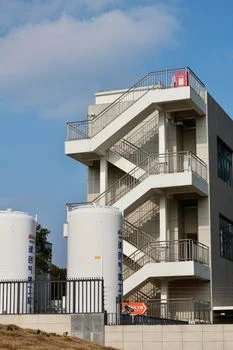
Selection among packaged, containerized, and custom-engineered plants follows flow rate, influent strength, and the regulatory deadline. For subdivisions and small industrial parks, a CAN/CSA-B66 certified packaged plant for Alberta's residential and industrial subdivisions balances cost and compliance. WSZ Series plants cover 1–80 m³/day and install underground, using the earth's insulation against frost.
Containerized Wastewater Treatment Alberta Mining Camps: Two-Week Deployment
Containerized wastewater treatment at Alberta mining camps wins on schedule. Units ship pre-commissioned in 20-foot or 40-foot ISO containers and install in under two weeks, with integrated climate control for harsh environments. CAPEX of $120K–$250K runs above basic packaged plants, but total cost of ownership beats them where mobilization is expensive. The full engineering picture is in our guide to containerized wastewater treatment systems for Alberta's remote industrial sites.
Custom-engineered plants remain the only viable answer above 100 m³/h or for complex influent — chemical processing, large-scale meat packing — where CAPEX exceeds $2M and lead times run 6–12 months. Start those procurements at permit application, not after approval.
| System Type | Flow Capacity (m³/day) | CAPEX Range (CAD) | Installation Time | Best Use Case |
|---|---|---|---|---|
| Packaged (WSZ) | 1 – 80 | $85K – $300K | 4 – 6 Weeks | Subdivisions, Small Industrial |
| Containerized | 1 – 50 | $120K – $250K | < 2 Weeks | Remote Camps, Mining Sites |
| Custom-Engineered | > 100 | $450K – $2M+ | 6 – 12 Months | Oil Sands, Food Processing |
The decision framework for Alberta engineers weighs four drivers: influent COD/TSS levels, available footprint, municipal sewer access fees, and the AOWMA approval timeline. Approvals typically take 3–6 months, and pre-certified packaged systems shorten engineering review by handing regulators standardized performance data.
One more layer applies at scale. Under the federal Wastewater Systems Effluent Regulations, a system "designed to collect an average daily volume of 100 m3 or more of influent" faces federal caps. The SOR/2012-139 text specifies that "the average concentration of suspended solids in the effluent did not exceed 25 mg/L," with average CBOD capped at 25 mg/L as well. Size the biology to the strictest of the applicable numbers, not just the provincial ones.
Next Step: Match the Plant to the Permit Deadline
Alberta projects sort cleanly once the soil report, composite assay, and approval timeline sit on one page. Camps under 50 m³/day with hauling bills above $60K per year are containerized-plant candidates today; large processors should start custom engineering before the EPEA application is filed. Send the flow profile and target limits, and we will size the DAF-MBR-RO train with winterization priced in on our request-a-quote page.
Frequently Asked Questions
What are Alberta's effluent limits for oil sands wastewater?
Alberta's AOWMA standards and site-specific EPEA approvals generally require effluent below 25 mg/L TSS, below 20 mg/L BOD, and below 10 mg/L Total Nitrogen for discharge into sensitive basins like the Athabasca, per 2024 guidelines. Municipal bylaws can add stricter FOG and heavy-metal limits for sewer discharge. Pull the actual EPEA schedule for your site before designing, since numbers are approval-specific.
How do wastewater treatment systems handle Alberta's -40°C temperatures?
Winterization packages handle it: R-20 insulated tanks, electric heat tracing on all external piping, and antifreeze dosing such as propylene glycol for non-operational periods. Containerized units add built-in HVAC holding an internal +10°C so MBR biology stays active year-round. Underground installation adds free geothermal protection. Budget winterization as a core system cost, not an option.
How long does AOWMA approval take for a new wastewater treatment plant?
AOWMA approval typically takes 3 to 6 months, driven by site complexity and soil-analysis quality. The process covers site inspections, effluent testing, and engineering review. Pre-approved CAN/CSA-B66 certified packaged systems can cut that to 4–8 weeks by streamlining technical validation. Submit the soil report early — it is the usual bottleneck.
Can industrial wastewater be reused for irrigation or process water in Alberta?
Yes, provided the water meets Class A reclaimed-water standards, which typically require MBR plus RO treatment reaching below 5 mg/L BOD and below 2 NTU turbidity. Food processing and oil and gas sites in Alberta use this route to cut freshwater intake and procurement costs. Reuse also shrinks the discharge-permit surface you must defend. Confirm reuse clauses in your EPEA approval first.
What is the typical lifespan of an MBR membrane in an industrial setting?
PVDF membranes in Alberta industrial service typically last 5 to 8 years. The controlling factors are primary-treatment effectiveness (a DAF ahead of the MBR matters most) and Clean-In-Place frequency. Poor FOG removal upstream is the single biggest membrane killer we see. Track trans-membrane pressure trends to schedule replacement on data rather than calendar.
Do federal wastewater rules apply on top of Alberta approvals?
Yes, at scale. A wastewater system designed to collect an average daily volume of 100 m³ or more of influent falls under the federal Wastewater Systems Effluent Regulations (SOR/2012-139). The regulation caps average suspended solids and CBOD at 25 mg/L each, per Justice Canada. Most Alberta industrial sites also carry stricter site-specific EPEA limits, so the federal numbers act as a floor. Design to the strictest applicable limit.