Japan industrial wastewater treatment specifications for 2026 rest on the Water Pollution Control Law: effluent limits 10× stricter than EQS, hybrid DAF-MBR-RO trains for COD above 5,000 mg/L, and PFAS caps of 50 ng/L on the horizon. Below is the engineering and compliance map.
Japan Industrial Wastewater Treatment Specifications 2026: The Baseline
Japan's Water Pollution Control Law sets effluent standards at 10× the Environmental Quality Standards: total mercury at ≤0.005 mg/L where EQS demands ≤0.0005 mg/L. Hybrid DAF-MBR-RO systems remove 95–99% of COD from streams above 5,000 mg/L in a 60% smaller footprint. Anaerobic digestion, adopted by 40% of food plants, cuts energy 30–50%.
Japan Water Pollution Control Law Effluent Standards Explained
Japan's Ministry of the Environment (MOE) maintains two tiers of water quality oversight: Environmental Quality Standards (EQS), the target quality for public water bodies, and Effluent Standards, the legally enforceable limits for industrial discharge. The WEPA database summarizes the law's scope as factory effluent control, notification of factory establishment, monitoring orders, and continuous monitoring. Prefectural governments may add stricter ordinances on top of the national floor.
Japan's EQS framework splits into Health Items and Living Environment Items. Health items cover 27 substances — cadmium ≤0.01 mg/L, lead ≤0.01 mg/L, and trichloroethylene ≤0.01 mg/L among them — uniform nationwide. Living Environment Items such as BOD (≤1–10 mg/L) and SS (≤25–100 mg/L) vary with the receiving water body's classification, Class A through Class E.
Specified Facility status decides the paperwork. The designation covers six high-risk categories: chemical manufacturing, medical goods production, steel and nonferrous metals, food processing, laundry services, and hospitals. These facilities face mandatory quarterly testing for health items and monthly testing for living-environment parameters.
| Parameter | EQS (Health Item) | National Effluent Standard | Monitoring Frequency |
|---|---|---|---|
| Total Mercury | ≤0.0005 mg/L | ≤0.005 mg/L | Quarterly |
| Cadmium | ≤0.01 mg/L | ≤0.1 mg/L | Quarterly |
| Arsenic | ≤0.01 mg/L | ≤0.1 mg/L | Quarterly |
| BOD (Rivers) | ≤1–10 mg/L | ≤160 mg/L (daily mean 120) | Monthly |
| Suspended Solids (SS) | ≤25–100 mg/L | ≤200 mg/L (daily mean 150) | Monthly |
For specialized sectors, hospital wastewater treatment specs for Japan's EQS compliance often require even more stringent local ordinances (Uwanose Kijun) that exceed national standards. Failure to meet these standards results in immediate administrative orders under Article 13 of the Water Pollution Control Law.
DAF-MBR-RO Hybrid System Compliance in Japan
Hybrid DAF-MBR-RO trains deliver 95–99% COD removal for high-strength industrial streams, which is why Japan's 2026 EQS update cycle favors them for COD loads above 5,000 mg/L. The integration of MBR systems for compact, high-efficiency treatment meeting Japan's BOD ≤10 mg/L EQS lets facilities run mixed liquor suspended solids (MLSS) at 8,000–12,000 mg/L, cutting bioreactor footprint by 60%. For high-purity reuse or ultra-low PFAS targets, RO systems for tertiary polishing add a final barrier taking TDS and micropollutants below detection limits.
Anaerobic technology has reached 40% adoption in Japan's food and beverage sector, generating biogas while cutting energy consumption 30–50% against aerobic-only plants. Anaerobic biomass is sensitive to toxic heavy metals, so arsenic must stay below 0.01 mg/L through pre-precipitation. Emerging data from the Ministry of Environment (2025) also highlights electrocoagulation for heavy metal removal, achieving cadmium at ≤0.005 mg/L — well under the national effluent standard.
Conventional industrial wastewater treatment methods — activated sludge, coagulation, chemical precipitation — still win on first cost for medium loads. Activated sludge removes 85–95% of COD at 0.6–1.0 kWh/m³ but demands the largest footprint. Most plants we size for Japanese food clients now start hybrid and only fall back to conventional trains when COD sits below 2,000 mg/L and land is cheap.
| Technology | COD Removal | Footprint | Energy Use (kWh/m³) | Sludge Yield |
|---|---|---|---|---|
| DAF-MBR-RO (Hybrid) | 95–99% | Ultra-Compact | 1.2 – 2.5 | Low (0.1–0.2 kg/kg COD) |
| Anaerobic Digestion | 70–85% | Medium | 0.2 – 0.5 (Net Gain) | Very Low |
| Activated Sludge | 85–95% | Large | 0.6 – 1.0 | High (0.4–0.6 kg/kg COD) |
| Electrocoagulation | N/A (Metal Focus) | Compact | 1.5 – 3.0 | Moderate |
Industry-Specific Designs for Japan's EQS Compliance
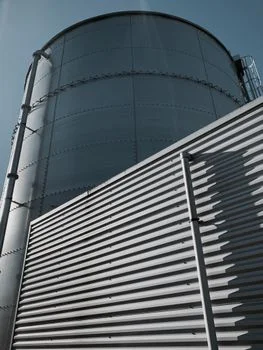
Food processing streams from dairy and tofu production typically present COD of 3,000–10,000 mg/L and FOG up to 2,000 mg/L, so DAF leads the train and biology follows. Space-constrained food plants often bury the whole works with an Underground Package Sewage Treatment Plant (WSZ Series), trading a deeper civil scope for freed surface area. Digesters fit these organics well at 70–85% COD removal with net energy gain.
Pharmaceutical manufacturing fights refractory organics and antibiotics. Japan's 2026 EQS guidelines specifically target pharmaceutical residues like diclofenac at ≤0.1 µg/L. Designs for this sector lean on advanced oxidation — a chlorine dioxide generator for disinfection and oxidation or UV/ozone systems — to break molecular chains that biology leaves behind.
Semiconductor facilities in Kumamoto and Osaka handle fluoride at 100–500 mg/L and TDS of 2,000–10,000 mg/L. Compliance there requires multi-stage lime precipitation driving fluoride below 15 mg/L, followed by DAF to pull out the calcium fluoride sludge that precipitation generates.
Japan Industrial Wastewater CAPEX and OPEX 2026
A 100 m³/h industrial wastewater plant in Japan budgets ¥60M–¥200M in CAPEX depending on train depth, with OPEX dominated by energy (40%) and chemicals (30%). The Japan Green Fund softens the entry: grants cover up to 50% of CAPEX for facilities demonstrating a 20% or greater energy reduction against conventional aerobic systems. Anaerobic and hybrid projects are the natural applicants.
| Cost Category | Hybrid DAF-MBR-RO | Anaerobic Digester | Conventional Aerobic |
|---|---|---|---|
| Estimated CAPEX | ¥150M – ¥200M | ¥80M – ¥120M | ¥60M – ¥90M |
| OPEX (per m³) | ¥25 – ¥35 | ¥15 – ¥20 | ¥20 – ¥25 |
| Energy Focus | High (Membrane Air) | Low (Energy Producer) | Moderate (Aeration) |
| ROI Period | 4 – 6 Years | 3 – 5 Years | 7+ Years |
Teams running multi-region programs can pair this guide with our briefing on the EU Urban Wastewater Treatment Directive: Compliance, Deadlin when boards ask how Japan's regime compares overseas.
Specified Facility EQS Compliance Checklist for Japan
Specified Facility status sets the compliance checklist, and the sequence below carries a plant from categorization to reporting. Work it in order; skipping the standard calculation step is the most common audit finding we see.
- Step 1: Facility Categorization: Confirm if your installation qualifies as a Specified Facility.
- Step 2: Effluent Standard Calculation: Apply the 10x multiplier to the current EQS for your specific water body.
- Step 3: Permit Application and Registration: Submit Form 1 (Facility Registration) and Form 2 (Effluent Monitoring Plan) to the prefectural governor or mayor of the designated city.
- Step 4: Monitoring and Reporting: Install continuous monitoring for pH, COD, and SS.
Who This Is For / Next Step
Process engineers, EPC contractors, and procurement managers building or retrofitting plants in Japan are the audience for this guide. Plants without Specified Facility status or with purely domestic sewage loads need lighter scopes than described here. To size a train against these limits, send your flow rate and effluent analysis for a stage-by-stage proposal.
Frequently Asked Questions
What are the penalties for EQS non-compliance in Japan?
Under Article 31 of the Water Pollution Control Law, willful violations or failure to comply with improvement orders can result in fines up to ¥20M ($140K) and imprisonment for up to one year. Administrative orders under Article 13 typically land first, halting discharge until limits are met. Quarterly health-item and monthly living-environment testing keeps the paper trail inspectors ask for first.
Can anaerobic digesters handle high-TDS wastewater (e.g., semiconductor effluent)?
Generally, no. Anaerobic digesters thrive on food and beverage organics — 40% adoption in Japan — but semiconductor effluent at 2,000–10,000 mg/L TDS inhibits biomass and carries fluoride better handled by lime precipitation plus DAF. Only dilute, organics-rich side streams should ever reach a digester. Keep digestion for dairy, tofu, and brewery flows, and treat etch waste chemically upstream.
How do I select a wastewater treatment vendor in Japan?
Selection should be based on three criteria: a proven track record with Japan's EQS compliance, the availability of a local service network for 24/7 maintenance, and transparency in OPEX modeling. Ask for reference plants under the same Specified Facility category, and insist on OPEX models split by energy (40%) and chemicals (30%). Vendors quoting CAPEX only rarely survive Japan's permitting reviews.
What are the emerging EQS updates for 2026?
The Ministry of the Environment is set to introduce formal limits for PFAS (PFOA/PFOS) at a combined level of ≤0.00005 mg/L (50 ng/L). Electrocoagulation data from 2025 also points to tighter heavy-metal expectations, with cadmium achievable at ≤0.005 mg/L. Specified Facilities should add PFAS sampling now so the first compliance test is not a surprise.
What are the PFAS wastewater limits in Japan's 2026 EQS?
Japan's 2026 EQS updates cap PFOS and PFOA combined at ≤0.00005 mg/L (50 ng/L) in water. The Ministry of the Environment is set to introduce the formal limits after years of provisional guidance at the same value. Treatment chains pair RO polishing with activated carbon or ion exchange to reach 50 ng/L, so plants discharging to Class A rivers should budget for the strictest enforcement timing.