Top MBR effluent quality manufacturers deliver consistent effluent with <1 NTU turbidity, 0.1 μm filtration, and COD removal >95% — critical for reuse and regulatory compliance. HydropureWater’s DF Series flat sheet PVDF membranes achieve this with 10–20× lower energy than cross-flow systems and individually replaceable elements for sustained performance.
What Defines High-Quality MBR Effluent?
High-quality MBR effluent is defined by a consistent turbidity of less than 1 NTU and Total Suspended Solids (TSS) below 5 mg/L, meeting the most stringent global standards for non-potable reuse.
According to the EPA Water Reuse Guidelines 2023, superior effluent quality is characterized not only by the removal of organic matter but also by a significant reduction in pathogens, typically achieving a log reduction value (LRV) of 4 to 6 for bacteria and protozoa. For industrial process engineers, these benchmarks are the baseline for ensuring that treated water can be safely recycled for cooling towers, boiler feed, or irrigation without risking equipment scaling or biological fouling.
The technical superiority of a membrane bioreactor performance profile stems from its physical-biological synergy. Unlike conventional activated sludge (CAS) systems that rely on secondary clarifiers and gravity sedimentation, MBRs utilize submerged membranes with pore sizes typically ranging from 0.1 to 0.4 μm. This absolute physical barrier ensures that all biomass remains within the bioreactor, allowing for a much higher Mixed Liquor Suspended Solids (MLSS) concentration. The primary rejection mechanism is size exclusion, but it is augmented by the formation of a controlled "dynamic membrane" or cake layer on the membrane surface, which further enhances the filtration of finer colloidal particles.
The high sludge age (Solids Retention Time or SRT) maintained in these systems facilitates the growth of slow-growing nitrifying bacteria and the biodegradation of complex organic compounds that are often bypassed in shorter SRT systems. This results in Chemical Oxygen Demand (COD) removal rates exceeding 95% and near-complete nitrification, even under fluctuating influent loads. For a procurement lead, identifying an mbr effluent quality manufacturer requires validating these specific metrics against independent lab data and pilot study results.
How Flat Sheet Membranes Outperform Hollow Fiber in Effluent Consistency
Flat sheet PVDF membranes maintain a more uniform flux distribution than hollow fiber alternatives, which significantly reduces the risk of localized fouling and particulate breakthrough during peak flow events.
In industrial applications where influent chemistry can vary wildly, the mechanical stability of the membrane geometry is paramount. The IWA Membrane Technology Report 2022 highlights that hollow fiber membranes are susceptible to "sludging" (clogging of the fiber bundle) and mechanical breakage due to the constant oscillation during aeration. When a single fiber breaks, it creates a bypass path for solids and bacteria, immediately degrading effluent quality.
In contrast, the high-efficiency flat sheet MBR membrane module with 0.1 μm filtration utilizes a rigid support plate that prevents the membrane from over-flexing. This design ensures that the entire surface area participates equally in the filtration process. If an issue does occur, flat sheet modules allow for individual element replacement. This is a critical advantage over hollow fiber systems, which often require the replacement of an entire multi-thousand-fiber bundle if the breakage rate exceeds a specific threshold, leading to higher long-term OpEx and potential compliance lapses.
| Performance Metric | HydropureWater DF Flat Sheet | Standard Hollow Fiber |
|---|---|---|
| Pore Size Uniformity | High (Rigid Support) | Variable (Fiber Stretching) |
| Particulate Bypass Risk | Minimal (No breakage) | Moderate (Fiber snapping) |
| Resistance to Sludging | Superior (Wide channels) | Low (Tight bundles) |
| Maintenance Profile | Individual element swap | Full bundle replacement |
| Effluent Turbidity | < 0.5 NTU (Consistent) | 0.5 - 2.0 NTU (Variable) |
The use of a pvdf flat sheet membrane also provides superior chemical resistance during Cleaning-In-Place (CIP) cycles. The flat geometry allows for more effective air scouring, as the air bubbles can move unimpeded across the surface, stripping away the cake layer more efficiently than in the congested interior of a hollow fiber bundle. This results in a more stable Transmembrane Pressure (TMP) and a consistent effluent quality over a 5-to-10-year membrane lifespan.
Key Performance Parameters of Industrial MBR Systems

Industrial MBR systems must be engineered to handle high organic loading rates while maintaining strict effluent guarantees, typically requiring an MLSS concentration between 8,000 and 12,000 mg/L. The high-efficiency flat sheet MBR membrane module with 0.1 μm filtration is designed to operate within these high-solids environments without the rapid fouling seen in secondary-quality membranes. For a system processing 100 m³/day, the membrane area must be carefully balanced against the design flux, which for industrial wastewater typically ranges from 15 to 25 Liters per Square Meter per Hour (LMH).
Operating an integrated MBR system delivering near-reuse-quality effluent requires precise control over the Food-to-Microorganism (F/M) ratio and the aeration intensity. HydropureWater DF Series modules utilize integrated aeration scouring at the base of the module, maintaining a TMP below 0.05 bar. This low-pressure operation is a key indicator of a low fouling mbr, as it prevents the compaction of the cake layer into the membrane pores. When the TMP is kept low, the frequency of intensive chemical cleanings is reduced, extending the membrane life and ensuring that the effluent turbidity remains consistently below 1 NTU over 6-month operating cycles.
| System Parameter | Industrial Design Value | Effluent Impact |
|---|---|---|
| MLSS Concentration | 8,000 - 15,000 mg/L | Maximizes COD/BOD removal capacity |
| Sludge Retention Time (SRT) | 20 - 40 Days | Ensures stable nitrification and low sludge yield |
| Air-to-Water Ratio | 15:1 to 25:1 | Prevents membrane surface fouling |
| COD Loading Rate | 1.5 - 3.0 kg/m³·d | Maintains biological stability |
| Cleaning Resistance | 5,000 mg/L NaOCl | Allows for recovery from severe upset conditions |
For engineers, the selection of PVDF as the membrane material is non-negotiable for industrial applications. PVDF offers a high tolerance to oxidants (up to 5,000 mg/L of sodium hypochlorite) and maintains its hydrophilicity longer than PES or PP membranes. This chemical robustness ensures that even after multiple mbr cip cleaning cycles, the membrane's ability to reject fine particles and pathogens does not degrade, which is essential for long-term wastewater reuse quality.
MBR Effluent Quality vs Regulatory Standards
The following are typical effluent standards.Meeting international regulatory standards for wastewater discharge and reuse requires a treatment technology that can reliably exceed the minimum thresholds for BOD, COD, and nutrients. In the European Union, the Urban Wastewater Directive 91/271/EEC (with 2025 updates) mandates strict limits for sensitive areas, requiring BOD < 25 mg/L and COD < 125 mg/L. MBR systems routinely outperform these requirements, typically delivering BOD < 5 mg/L and COD < 30 mg/L, providing a significant safety margin for industrial operators. Detailed compliance strategies can be found in our guide on wastewater treatment regulations EU 2025 new UWWTD rules compliance.
In the United States, the US EPA 2024 Water Reuse Guidelines categorize MBR as an "advanced treatment" technology. For non-potable applications such as landscape irrigation or industrial cooling, the EPA suggests a turbidity limit of < 2 NTU and fecal coliform levels < 2.2 MPN/100mL. HydropureWater MBR systems achieve these targets through 0.1 μm pore size filtration, which acts as a physical barrier to bacteria and larger viruses. Similarly, China’s GB 18918-2002 Class A standard, which requires NH3-N < 5 mg/L, is easily met through the high-SRT nitrification synergy inherent in the MBR process. For North American projects, refer to the wastewater treatment regulations USA 2025 EPA standards compliance guide for specific state-level nuances.
The ability to meet these standards consistently is what defines a top-tier mbr effluent quality manufacturer. By integrating submerged mbr membrane technology with advanced biological controls, industrial facilities can transition from simple discharge to a "Zero Liquid Discharge" (ZLD) or high-recovery model. This not only reduces environmental impact but also mitigates the risk of regulatory fines and production halts due to non-compliant discharge.
Comparison: Leading MBR Membrane Technologies for Effluent Quality
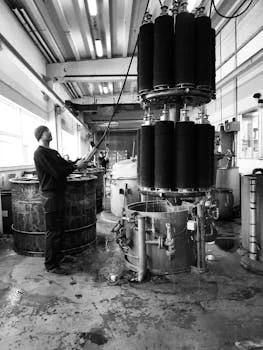
When comparing different MBR technologies, procurement teams must look beyond initial capital expenditure (CAPEX) and evaluate the Total Cost of Ownership (TCO) driven by effluent reliability and energy use.
A submerged mbr membrane system using flat sheet technology typically requires 10–20× lower energy for the filtration drive compared to external cross-flow MBRs, which rely on high-velocity pumps to prevent fouling. When compared to hollow fiber systems, the HydropureWater DF Series flat sheet modules offer a more stable LRV, which is a critical metric for wastewater reuse quality.
Data from NSF P231 testing indicates that flat sheet membranes can maintain an LRV of 6 for E. coli, whereas hollow fiber systems may drop to LRV 4 or lower if fiber integrity is compromised. This difference is vital for food processing or pharmaceutical plants where water reuse is integrated into the production cycle. flat sheet systems demonstrate superior resilience to shock loads—sudden increases in influent COD or TSS—because the open-channel design between the sheets prevents the "clogging" that can paralyze hollow fiber modules during industrial upsets.
| Feature | HydropureWater DF Flat Sheet | Leading Hollow Fiber | External Cross-Flow |
|---|---|---|---|
| Energy Consumption | 0.3 - 0.5 kWh/m³ | 0.4 - 0.7 kWh/m³ | 2.0 - 4.0 kWh/m³ |
| Cleaning Frequency | Every 3-6 Months | Monthly | Weekly/Bi-weekly |
| Turbidity Stability |