In Al Khor, wastewater treatment plant costs for 2025 range from QAR 3.5M for a 50 m³/day MBR system to QAR 25M for a 500 m³/day conventional activated sludge plant with tertiary treatment. CAPEX is driven by capacity (QAR 7,000–QAR 15,000/m³/day), treatment level (secondary vs. tertiary), and local compliance requirements (e.g., Qatar’s KAHRAMAA discharge limits for TSS <30 mg/L). OPEX averages QAR 0.80–QAR 2.50/m³, with energy (40% of OPEX) and sludge disposal (25%) as the largest contributors. For industrial buyers, selecting the right technology (e.g., DAF for high FOG loads, MBR for reuse) can reduce lifecycle costs by 30–50%.
For a facility manager in Al Khor’s industrial zone, the challenge of budgeting for a new wastewater treatment plant (WWTP) often begins with a lack of localized data. Global benchmarks frequently fail to account for Qatar’s specific regulatory landscape, extreme climatic conditions, and labor market dynamics. A project that might cost $1 million in a temperate, low-regulation environment can easily double when adjusted for the Ministry of Municipality’s 2025 standards and the logistical costs of operating in Al Khor. This guide provides the granular data necessary to bridge that gap, offering a technical and financial framework for 2025–2026 project planning.
Why Wastewater Treatment Plant Costs in Al Khor Are Higher Than Global Averages
Local labor costs in Qatar are 2.3x higher than Southeast Asian benchmarks, with skilled technicians commanding QAR 80–QAR 120 per hour compared to QAR 35–QAR 50 in regions like Vietnam or Thailand. According to 2024 Qatar Chamber of Commerce data, this labor premium adds approximately 15–20% to the installation CAPEX of industrial WWTPs. For procurement managers, this necessitates a shift toward prefabricated WWTPs to reduce Al Khor’s high labor costs, as modular systems minimize on-site civil works and high-cost technical hours.
Material logistics further inflate the budget. Imported specialized components, such as high-flux membranes or duplex stainless steel tanks, face a 5% customs duty and an additional 10–15% shipping premium due to Al Khor’s distance from major logistics hubs like Hamad Port. While local sourcing of concrete and basic piping can reduce civil CAPEX by 8–12%, the core technology remains an import-heavy investment. KAHRAMAA connection fees for industrial WWTPs in Al Khor are substantial, ranging from QAR 500,000 to QAR 2M depending on the peak discharge capacity. Annual discharge permit fees, revised for 2025, now range from QAR 20,000 to QAR 100,000.
Climate-specific engineering is a non-negotiable cost driver in Northern Qatar. Extreme summer temperatures exceeding 45°C require industrial-grade HVAC systems for control rooms to protect sensitive PLCs and VFDs. Additionally, high salinity in the coastal air necessitates advanced corrosion-resistant coatings (C5-M standard) and insulated piping to prevent thermal degradation of biological processes. These climate-hardening measures typically add 5–10% to the base equipment cost compared to standard international specifications.
CAPEX Breakdown: How Much Does a Wastewater Treatment Plant Cost in Al Khor?
Capital expenditure (CAPEX) for a WWTP in Al Khor is primarily determined by the biological treatment technology and the required effluent quality. For 2025 projects, the following table outlines the expected investment ranges based on current market data and local labor adjustments (HydropureWater field data, 2025).
| Technology Type | 50 m³/day (QAR) | 200 m³/day (QAR) | 500 m³/day (QAR) | Unit Cost (QAR/m³) |
|---|---|---|---|---|
| Membrane Bioreactor (MBR) | 3.5M – 4.2M | 9.5M – 12.0M | 18.0M – 22.0M | 7,200 – 8,500 |
| Dissolved Air Flotation (DAF) | 1.8M – 2.5M | 4.5M – 6.0M | 9.0M – 11.5M | 4,500 – 5,500 |
| Conventional Activated Sludge (CAS) | 2.8M – 3.4M | 8.0M – 10.5M | 15.0M – 19.5M | 6,000 – 7,500 |
Civil works, including excavation, reinforced concrete tanks, and underground piping, account for 30–40% of the total CAPEX in Al Khor. This high percentage is a direct result of local concrete prices and the specialized labor required for water-tight construction in sandy or rocky Al Khor soils. Utilizing MBR systems for Al Khor’s reuse and compliance needs in a containerized format can reduce civil work requirements to just 15–20% of the budget, as the primary treatment happens within steel or FRP modules rather than large-scale concrete basins.
Electrical and automation systems, including PLCs, SCADA integration, and variable frequency drives (VFDs), typically add 10–15% to the initial CAPEX. While this increases the upfront cost, these systems are essential for achieving the 20–30% OPEX savings required to justify the investment over a 10-year horizon. tertiary treatment—including UV disinfection and advanced nutrient removal—is no longer optional. Under the Ministry of Municipality Decree No. 144/2023, these systems add a 25–40% premium to the base plant cost but are mandatory for any industrial discharge within the municipality.
OPEX Deep Dive: The Hidden Costs of Running a WWTP in Al Khor
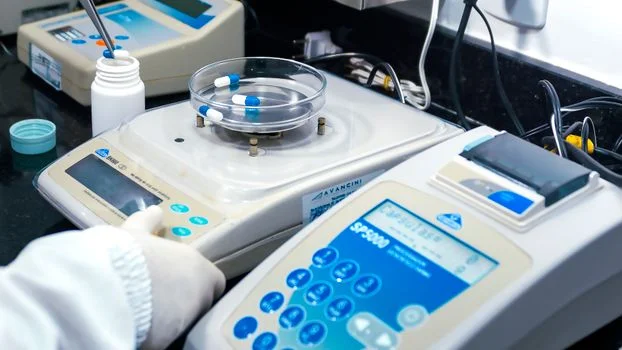
Operational expenditure (OPEX) in Al Khor is heavily influenced by high energy tariffs for industrial users and the logistical complexity of sludge management. While water is scarce, the cost of treating it remains high due to the energy-intensive nature of advanced filtration and aeration. The following table breaks down the expected OPEX per cubic meter of treated water.
| Cost Category | MBR (QAR/m³) | DAF (QAR/m³) | CAS (QAR/m³) |
|---|---|---|---|
| Energy (QAR 0.28/kWh) | 0.80 – 1.10 | 0.30 – 0.50 | 0.50 – 0.75 |
| Chemicals (Coagulants/CIP) | 0.15 – 0.25 | 0.40 – 0.70 | 0.10 – 0.20 |
| Sludge Disposal (QAR 1,200/ton) | 0.20 – 0.35 | 0.50 – 0.80 | 0.40 – 0.60 |
| Labor & Maintenance | 0.30 – 0.50 | 0.25 – 0.40 | 0.40 – 0.65 |
| Total OPEX/m³ | 1.45 – 2.20 | 1.45 – 2.40 | 1.40 – 2.20 |
Energy costs in Al Khor are approximately 30% higher than global industrial averages, currently sitting at QAR 0.28/kWh. This is largely due to the high cost of power generation and the reliance on desalinated water for industrial cooling processes. Optimizing aeration—the single largest energy consumer—is critical. Implementing fine-bubble diffusers and dissolved oxygen (DO) sensors can reduce energy OPEX by 25%. For plants dealing with fats, oils, and grease, DAF systems for high-FOG wastewater in food processing and petrochemicals are effective, though they require higher chemical dosing of coagulants (100–200 mg/L) compared to MBR systems.
Sludge disposal remains a significant financial burden. In Qatar, landfill fees combined with specialized transport costs range from QAR 800 to QAR 1,500 per ton. A 500 m³/day plant can generate between 1 and 3 tons of dewatered sludge daily. To mitigate this, industrial facility planners must invest in sludge dewatering to cut disposal costs in Al Khor. By increasing sludge cake dryness from 15% to 30%, a facility can effectively halve its disposal budget, saving hundreds of thousands of QAR annually.
MBR vs. DAF vs. Conventional: Which Tech Is Right for Your Al Khor Project?
Selecting the appropriate technology requires a balance between influent characteristics, available footprint, and the intended use of the treated effluent. In Al Khor’s industrial sectors—ranging from food processing to oil and gas services—the choice of technology dictates the long-term ROI.
| Criteria | MBR | DAF | Conventional (CAS) |
|---|---|---|---|
| Effluent Quality | Superior (TSS <1 mg/L) | Moderate (FOG removal focus) | Standard (Requires Tertiary) |
| Footprint | Compact (Smallest) | Medium | Large (Requires Clarifiers) |
| CAPEX/m³ | High | Medium | Low-Medium |
| OPEX/m³ | Medium-High | Medium-High | Medium |
| Reuse Potential | High (Irrigation/Cooling) | Low (Pre-treatment only) | Moderate |
| Sludge Volume | Low | High (Chemical Sludge) | High (Biological Sludge) |
| Compliance Ease | Very Easy | Requires Bio-Step | Difficult without Tertiary |
| Energy Use | High | Low-Medium | Medium |
MBR technology is the gold standard for projects aiming for water reuse. With effluent Biological Oxygen Demand (BOD) <5 mg/L and Total Suspended Solids (TSS) <1 mg/L, MBR permeate is suitable for landscaping irrigation and cooling tower make-up water without further treatment. However, it requires a disciplined maintenance schedule, including Clean-in-Place (CIP) protocols every 3–6 months to prevent membrane fouling.
Conversely, DAF is the preferred solution for high-FOG (Fats, Oils, and Grease) wastewater common in Al Khor’s food production facilities. While DAF can remove over 95% of FOG and insoluble solids, it struggles with dissolved organics, often achieving only 60–70% BOD removal. In complex industrial scenarios, a hybrid approach—using DAF for primary solids/FOG removal followed by MBR for biological polishing—provides the most robust compliance path for pharmaceutical or petrochemical wastewater. For those comparing disinfection options as part of these systems, disinfection cost comparisons for Qatar’s compliance needs reveal that UV is often more cost-effective for MBR permeate due to its low turbidity.
Compliance Costs: Navigating Qatar’s Wastewater Regulations in 2025
Compliance in Al Khor is governed by the Ministry of Municipality and KAHRAMAA, with Decree No. 144/2023 setting the current benchmark for industrial discharges. The decree mandates strict limits: BOD <25 mg/L, TSS <30 mg/L, Total Nitrogen (TN) <10 mg/L, and Total Phosphorus (TP) <1 mg/L. Meeting these standards typically requires the integration of tertiary treatment stages, which, as noted, increases CAPEX by up to 40%.
Beyond the treatment technology itself, KAHRAMAA now requires all industrial WWTPs to install continuous online monitoring systems. These systems must track pH, TSS, and COD in real-time, with data transmitted directly to regulatory bodies. The cost for such a monitoring suite, including flow meters and automated sampling stations, ranges from QAR 200,000 to QAR 500,000 for a 500 m³/day facility. Failure to maintain these systems or exceeding discharge limits can result in fines starting at QAR 100,000 for minor TSS violations and escalating to QAR 500,000 for major untreated discharges.
To prevent these financial risks, many operators are turning to automated dosing systems to meet Qatar’s compliance limits. These systems use real-time sensor feedback to adjust chemical flow, ensuring that even during peak loading events, the effluent remains within legal limits. This automation not only protects against fines but also optimizes chemical consumption, reducing OPEX by 15–20% compared to manual dosing. As Qatar’s 2030 Vision pushes for total water circularity, facilities that invest in MBR or RO systems capable of producing TDS <1,000 mg/L effluent will find themselves better positioned for future regulatory incentives.
Zero-Risk Selection Checklist: How to Choose a WWTP for Your Al Khor Project
Selecting a vendor and a technical design in Al Khor requires a rigorous evaluation process to avoid "white elephant" projects that fail to meet compliance or exceed OPEX budgets. Use the following checklist during the procurement phase:
- Technical Validation: Can the vendor provide a 3-year OPEX breakdown specifically using Al Khor’s energy (QAR 0.28/kWh) and chemical costs?
- Compliance Guarantee: Does the system meet Decree 144/2023 limits (BOD <25, TSS <30) without requiring additional tertiary upgrades?
- Climate Hardening: Are all control panels housed in IP65-rated, HVAC-cooled enclosures? Are tanks coated for C5-M coastal corrosion resistance?
- Local Support: Does the vendor maintain a spare parts inventory in Doha or Al Khor? Is there a 24/7 service contract available with a 4-hour response time?
- Automation: Does the SCADA system allow for remote monitoring and automated reporting to KAHRAMAA/Ministry systems?
- Sludge Management: Is a filter press or centrifuge included to achieve at least 25% dry solids content?
- Reference Sites: Can you visit an operational site in Qatar with a similar influent profile (e.g., high FOG or high salinity)?
- Footprint: If space is constrained, has the vendor proposed an MBR solution to minimize civil footprint?
- Future Proofing: Is the system modular? Can capacity be increased by 20% if facility production expands in 2026?
- Energy Efficiency: Are all motors IE3/IE4 rated and equipped with VFDs?
While local support and high-end automation can add 5–10% to the initial CAPEX, they significantly reduce the risk of unplanned downtime. In the industrial sector, 48 hours of WWTP failure can lead to a complete production halt, costing millions in lost revenue—far outweighing the initial savings of a lower-tier vendor.
ROI Calculator: How to Justify Your Wastewater Treatment Plant Investment
Justifying a WWTP investment in Al Khor requires looking beyond the initial price tag to the "Total Cost of Ownership" (TCO). By factoring in water reuse savings and the avoidance of compliance fines, the ROI of an advanced system like MBR often outperforms cheaper, less efficient alternatives.
| Parameter | Input Value (Example) | Annual Impact (QAR) |
|---|---|---|
| System Capacity | 200 m³/day | - |
| CAPEX (MBR) | QAR 12,000,000 | (Amortized over 10 yrs) |
| OPEX (QAR 1.80/m³) | 73,000 m³/year | (131,400) |
| Water Reuse Savings (QAR 5/m³) | 50% Reuse (36,500 m³) | + 182,500 |
| Fines Avoided (Avg. 2/yr) | QAR 150,000/fine | + 300,000 |
| Net Annual Benefit | - | QAR 351,100 |
In this scenario, a 200 m³/day MBR system achieves a 5-year ROI with an Internal Rate of Return (IRR) of approximately 15%. The primary drivers of this ROI are the high cost of industrial water in Qatar (which can reach QAR 5–8/m³ when sourced via tankers or KAHRAMAA) and the high cost of non-compliance. For more detailed benchmarks on how these costs compare to other regional hubs, see our guide on Jubail’s industrial WWTP cost benchmarks for Qatar buyers.
Frequently Asked Questions
How much does a 100 m³/day wastewater treatment plant cost in Al Khor?
A 100 m³/day MBR system in Al Khor currently costs between QAR 7M and QAR 9M for 2025 delivery. This includes full automation and tertiary treatment required for Qatar’s compliance limits. A conventional activated sludge plant for the same capacity would cost QAR 5M–QAR 7M but would require a footprint three times larger and additional tertiary upgrades to meet discharge standards.
What are the OPEX costs for a wastewater treatment plant in Qatar?
OPEX for industrial WWTPs in Qatar averages QAR 1.20 to QAR 2.50 per m³. The largest cost drivers are energy (40%), due to the QAR 0.28/kWh industrial tariff, and sludge disposal (25%), which costs up to QAR 1,500/ton. MBR systems typically have higher energy costs but lower sludge disposal and chemical costs compared to DAF or CAS.
Do I need tertiary treatment for my industrial WWTP in Al Khor?
Yes. Under Ministry of Municipality Decree No. 144/2023, all industrial discharges must meet stringent tertiary standards, including BOD <25 mg/L and TSS <30 mg/L. This necessitates technologies like UV disinfection, ultrafiltration, or advanced nutrient removal. Non-compliance fines for Al Khor industries start at QAR 100,000 per violation.
Can I reuse treated wastewater in Al Khor?
Yes, and it is highly encouraged under Qatar’s 2030 Vision. MBR effluent (TSS <1 mg/L) is ideal for non-potable uses like irrigation and dust suppression. For high-purity industrial applications or cooling towers, adding a Reverse Osmosis (RO) stage to achieve TDS <100 mg/L is recommended, which can save a facility QAR 5–QAR 8 per cubic meter in water procurement costs.
How long does it take to build a wastewater treatment plant in Al Khor?
The total timeline typically ranges from 18 to 30 months. Design and permitting (including KAHRAMAA and Ministry approvals) take 6–12 months. Construction, installation, and commissioning for a 200–500 m³/day plant require another 12–18 months. Prefabricated, containerized systems can reduce this total timeline by 30–40% by overlapping civil works with equipment manufacturing.