Dicing wastewater treatment systems remove sub-0.5 µm silicon particles and dissolved ions from semiconductor saw and backgrind effluent. Hybrid ultrafiltration-reverse osmosis (UF-RO) trains commonly deliver about 99.5% TSS removal and around 90% deionized (DI) water recovery under typical fab duty. Capital cost usually spans $100K for compact recycling skids to $2M for centralized near-zero-discharge plants. Core UF settings used on these streams include 0.1 µm pores, 50–100 LMH flux, and chemical cleans at ≤0.15% to limit fouling.
What Specs Define Dicing Wastewater Treatment Performance?
Saw-and-grind reclaim trains capture 0.1–0.5 µm silicon fines and hold about 99.5% TSS removal on UF before optional RO polishing to DI quality. Typical UF duty uses 0.1 µm PVDF or PES at 50–100 LMH with cleans at ≤0.15%. CAPEX spans about $100K for compact UF to $1M–$2M for MBR-RO trains above 99% recovery.
Science-park recycling targets above 85% push fabs toward closed-loop reclaim rather than once-through DI use. Most plants we size for saw and grind bays run at the lower end of that flux band to keep TMP stable.
Why Dicing Effluent Is a High-Cost Stream for Semiconductor Fabs
Semiconductor fabs often use 2–4 million gallons of ultrapure water per day, and dicing plus backgrinding can contribute 30–40% of total wastewater volume (Pall Corporation data). UPW make-up cost and discharge limits turn that share into a direct OPEX and compliance risk. Mandates such as >85% process-water recycling in Taiwan Science Parks force closed-loop designs or capacity constraints. One reported 300 mm fab case in Taiwan cut about $561,000 per year by reclaiming this effluent (ScienceDirect 2019). Poor solids control leaves silicon sludge disposal costs and wasted DI inventory on the books. Industry estimates put potential sector savings from advanced reclaim above $100 million annually in avoided capital and operating spend.
Particle Sizes, Contaminants, and Treatment Challenges
Saw and grind effluent carries dense loads of sub-micron silicon, typically 0.1–0.5 µm (DISCO Technical Review), so membrane UF or MF is the practical solids barrier. Dissolved carry-over from DI coolants and cleans can include trace copper from upstream CMP, coating organics, and bacteria that seed biofilm. Abrasive fines foul membranes fast if flux or backwash timing is aggressive. The skid also needs chemical compatibility with surfactants and biocides, plus a footprint that fits near cleanroom tools. Versus CMP or general grind water, these streams usually show higher particle load and lower COD, which shifts pretreatment toward solids control before ion removal. Dissolved copper strategies often mirror those used in heavy metal wastewater treatment, while removing organic residues from DI water recycling loops protects conductivity and TOC setpoints.
| Parameter | Typical Range in Dicing Wastewater | Significance for Treatment |
|---|---|---|
| Silicon Particle Size | 0.1 – 0.5 µm | Requires ultrafiltration (UF) or microfiltration (MF) for removal. |
| Total Suspended Solids (TSS) | 50 – 500 mg/L | High load dictates robust pretreatment and membrane design. |
| Dissolved Copper | Trace – 1 mg/L | May require ion exchange or RO post-treatment. |
| Organic Residues (TOC) | 5 – 50 mg/L | Can cause membrane fouling, may require UV sterilization. |
| pH | 6.0 – 8.0 | Generally neutral, but pH excursions impact membrane stability. |
| Bacteria Count | Variable | Requires UV sterilization or biocides to prevent biofilm formation. |
UF Membrane Specs for Dicing Effluent: Pore Size, Flux, and Cleaning
UF membranes for silicon solids control commonly use a 0.1 µm pore size to capture about 99.5% of particles and other TSS before RO or IX (ScienceDirect). Flux between 50 and 100 LMH balances throughput against cake buildup on abrasive feeds. PVDF or PES is preferred for resistance to DI additives such as surfactants and biocides. Backwash within about 1–2 hours of service, plus chemical cleans at ≤0.15%, recovers permeability without stripping the polymer (ScienceDirect). Pushing flux higher raises pump power and can enlarge the rack footprint. HydropureWater offers PVDF flat sheet membranes suitable for saw-effluent UF where durable sheet modules fit the duty.
| Parameter | Recommended Specification for Dicing Effluent | Impact/Reasoning |
|---|---|---|
| Pore Size | 0.1 µm | Captures >99.5% of sub-0.5 µm silicon particles, minimizing fouling downstream. |
| Flux Rate | 50 – 100 LMH | Balances high throughput with resistance to fouling and extended membrane life. |
| Membrane Material | PVDF or PES | Ensures chemical compatibility with DI water additives (surfactants, biocides). |
| Operating Pressure | 0.5 – 2 bar | Low pressure operation minimizes energy consumption and membrane stress. |
| Backwash Frequency | Every 1-2 hours | Prevents severe fouling and maintains consistent flux. |
| Chemical Cleaning Conc. | ≤0.15% (e.g., NaOH, citric acid) | Effective cleaning without degrading membrane material. |
Hybrid System Designs: UF vs. UF-RO vs. MBR for High Recovery

UF-only skids are the lowest CAPEX path, typically $100K–$300K, with about 90% water recovery; dissolved ions remain, so IX is often needed for DI reuse. A UF-RO hybrid usually sits at $500K–$1M CAPEX and can reach about 95% recovery while cutting dissolved ions enough for many DI loops. Near-total reclaim trains pair MBR or UF with RO and polishing IX; MBR systems for near-zero-discharge dicing reclaim often land at $1M–$2M CAPEX with >99% recovery, larger footprints, and higher energy use. RO systems for DI water recycling in dicing wastewater need solid UF pretreatment or silicon fines will plug the spiral elements. A Singapore fab UF-RO case reported 95% recovery from saw effluent under field operation (HydropureWater field data, 2024).
| System Type | Key Stages | Typical CAPEX Range | Water Recovery Rate | Permeate Quality | Footprint | Maintenance Complexity |
|---|---|---|---|---|---|---|
| UF-Only | UF, Media Filtration | $100K – $300K | ~90% | Removes TSS; dissolved ions remain (needs IX for DI) | Compact | Moderate |
| UF-RO Hybrid | UF, RO | $500K – $1M | ~95% | Meets DI water standards (low dissolved ions) | Medium | Moderate to High |
| MBR (followed by RO/IX) | MBR, UF, RO, IX | $1M – $2M | >99% | Ultrapure water (near zero-discharge) | Large | High |
What Is the CAPEX and OPEX Breakdown for Dicing Systems?
CAPEX for dicing reclaim spans $100K–$2M as capacity, recovery target, and automation rise. Compact UF recycling units typically cost $100K–$300K. UF-RO hybrids for DI-quality permeate generally need $500K–$1M. Near-zero-discharge MBR-plus-RO plants often require $1M–$2M installed.
How do annual OPEX drivers compare across system sizes?
Annual OPEX is dominated by membrane replacement at $5K–$20K per year, energy at about $0.50–$2 per m³ treated, and chemical cleaning at $1K–$5K per year. Labor and routine maintenance commonly add $5K–$15K annually. Using the $561K/year savings cited for a comparable reclaim case (ScienceDirect), UF-RO payback often falls in a 1–3 year window. Capacity from about 5 to 50 m³/h, PLC automation, and skid versus stick-built install each move both CAPEX and staffing needs.
| Cost Category | Component/Driver | Estimated Range (Annualized/Total) | Notes |
|---|---|---|---|
| CAPEX (Total) | Compact Recycling Unit (UF-only) | $100K – $300K | For localized, basic recycling. |
| UF-RO Hybrid System | $500K – $1M | For high DI water recovery, centralized. | |
| Zero-Discharge MBR System | $1M – $2M | For ultimate water reclamation, largest footprint. | |
| OPEX (Annual) | Membrane Replacement | $5K – $20K | Depends on membrane type, size, and fouling rate. |
| Energy Consumption | $0.50 – $2/m³ | Pumps, controls; varies with system complexity and local electricity rates. | |
| Chemical Cleaning | $1K – $5K | Acids, bases, biocides for periodic membrane maintenance. | |
| Labor & Maintenance | $5K – $15K | Routine checks, filter changes, troubleshooting. | |
| ROI Timeline | UF-RO Systems | 1 – 3 Years | Based on water savings and reduced discharge costs. |
How to Select a Dicing Reclaim System: A 5-Step Framework
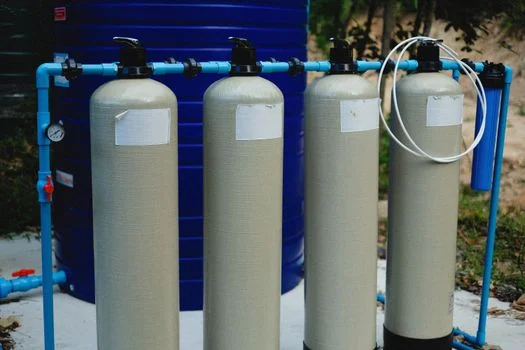
Procurement teams get better bids when effluent data, reuse targets, and space limits are fixed before vendor talks. Use the steps below as a gate checklist.
- Step 1: Test Effluent Characteristics Thoroughly. Begin by conducting comprehensive analytical tests on your dicing wastewater effluent. This includes determining the particle size distribution using laser diffraction, measuring Total Suspended Solids (TSS), and quantifying dissolved ions (e.g., copper, silica, TOC). Accurate characterization is fundamental to matching the right technology to your specific waste stream.
- Step 2: Define Clear Water Quality and Recovery Goals. Establish precise objectives for the treated water. Are you aiming for partial reuse in non-critical applications, full DI water recycling for dicing saws, or striving for zero-discharge compliance? Your water quality goals will dictate the required treatment train (e.g., UF-only, UF-RO, or MBR with polishing).
- Step 3: Match System to Available Space and Infrastructure. Evaluate the physical constraints of your facility. Do you have sufficient space for a centralized plant, or do you require compact, skid-mounted recycling units that can be integrated directly adjacent to dicing equipment within a cleanroom? Space limitations heavily influence system architecture and overall CAPEX.
- Step 4: Evaluate Vendors on Technical Expertise and Support. Beyond initial cost, assess vendors based on their experience in semiconductor wastewater treatment, membrane warranty periods (ideally 3–5 years), service response times, and demonstrable local compliance expertise. A reliable vendor partner is crucial for long-term operational success.
- Step 5: Conduct a Pilot Test for Performance Validation. For complex or high-stakes applications, particularly with UF-RO hybrids, a 1–3 month pilot test is critical. This trial validates system performance with your actual effluent, confirms water quality targets, and helps identify potential operational challenges like membrane fouling before full-scale deployment.
Common selection misses include underestimating silicon fouling, ignoring additive compatibility, and skipping automation for remote TMP and flux alarms. Integrating chemical dosing systems for UF membrane cleaning reduces manual CIP variability on multi-shift lines.
Compliance Checklist: Semiconductor Rules and Local Permits
Reclaim designs must match both park recycling targets and discharge permits. Taiwan Science Park programs commonly require >85% process-water recycling for new fabs, which effectively mandates closed-loop UF-RO or higher. Silicon sludge handling still falls under local landfill and waste codes; the EU Industrial Emissions Directive 2010/75/EU is often cited where dewatering and authorized disposal routes are required. In the United States, earlier summaries sometimes list silicon and copper limits under EPA 40 CFR Part 469. According to the current Semiconductor Subcategory, BAT limits focus on TTO at 1.37 mg/L daily maximum and fluoride at 32.0 mg/L daily maximum (17.4 mg/L as a 30-day average). BPT/BCT keep pH within 6.0–9.0 (eCFR, 40 CFR Part 469 Subpart A). Copper and solids limits more often appear in site NPDES or pretreatment permits rather than Part 469 itself. Keep TSS, metals, recycling-rate logs, and sludge manifests ready for audits.
| Regulatory Body/Mandate | Key Requirement for Dicing Wastewater | Compliance Action |
|---|---|---|
| Taiwan Science Park | >85% water recycling rate (mandatory for new fabs) | Implement closed-loop UF-RO or MBR systems; track daily recycling volumes. |
| EU Industrial Emissions Directive 2010/75/EU | Limits on silicon sludge disposal (landfill restrictions) | Dewater sludge; ensure proper classification and authorized disposal routes. |
| EPA 40 CFR Part 469 (USA) | Semiconductor manufacturing effluent guidelines (limits on silicon, copper, pH) | Regular effluent monitoring for TSS, metals (e.g., copper), and pH; maintain treatment system efficacy. |
| Local Environmental Agencies | Discharge permits, specific pollutant limits (BOD, COD, N, P) | Obtain and adhere to local discharge permits; conduct routine analytical testing. |
| ISO 14001 Certification | Environmental management system for continuous improvement | Implement and maintain an EMS; document environmental aspects and impacts. |
Who this is for: fab facilities, EPC firms, and procurement teams sizing saw/grind reclaim between about 5 and 50 m³/h. Who should look elsewhere: sites that only need once-through solids removal without DI reuse can stay on compact UF and skip RO energy cost. Next step: if you need a duty-specific CAPEX band or membrane list, send effluent data for a reclaim system quote with TSS, particle-size, and recovery targets attached.
Frequently Asked Questions
What is the hardest part of treating saw and grind effluent?
The main challenge is removing abrasive 0.1–0.5 µm silicon particles without rapid UF fouling while still reclaiming DI-quality water. Those fines demand controlled flux, frequent backwash, and compatible cleaning chemistry. If solids break through, RO and IX stages foul next and recovery falls. Design around measured particle-size distribution, not TSS alone, before freezing membrane area.
How does UF-RO achieve high DI water recovery on dicing lines?
UF-RO recovers DI-grade water by staging solids removal ahead of dissolved-ion rejection. UF first strips silicon particles and colloids so RO feed stays clear. RO then removes salts and much of the TOC, producing permeate suitable for many dicing DI loops. With sound pretreatment, hybrid recovery commonly lands near 90–95% on fab effluent.
What are the main OPEX costs for these reclaim systems?
Main OPEX items are membrane replacement at roughly $5K–$20K per year, pumping energy at about $0.50–$2 per m³ treated, and cleaning chemicals at $1K–$5K annually. Labor, cartridge changes, and concentrate or sludge disposal add further cost. Fouling rate and local power price move the total more than nameplate capacity alone.
Can this effluent reach near-zero liquid discharge?
Yes, near-zero liquid discharge is achievable with UF or MBR plus RO and final polishing such as ion exchange or crystallization. Those trains can exceed 99% water recovery and shrink the brine volume that must leave the site. Expect higher CAPEX, larger footprint, and tighter brine management than a standard UF-RO reclaim skid.
What payback is typical for UF-RO reclaim on dicing tools?
UF-RO reclaim projects often show a 1–3 year payback when UPW make-up, discharge fees, and sludge hauling are counted together. One 300 mm fab case reported about $561,000 in annual savings from reclaiming this stream (ScienceDirect 2019). Actual ROI still tracks local water tariffs, energy cost, and achieved recovery, so pilot data should anchor the model.