Bangkok’s industrial and municipal projects require sewage treatment equipment that meets Thailand’s Pollution Control Department (PCD) 2023 standards: ≤120 mg/L COD, ≤20 mg/L BOD, and ≤30 mg/L TSS. Suppliers like Premier Products and Venus Environmental offer systems ranging from compact WSZ package plants (1–80 m³/h) to large-scale MBR systems (up to 2,000 m³/day), but selecting the right partner demands a data-driven framework—this guide provides engineering specs, compliance benchmarks, and a zero-risk selection checklist for Bangkok buyers.
Why Bangkok’s Wastewater Regulations Demand Precision Equipment Selection
Thailand’s Pollution Control Department (PCD) 2023 updated standards mandate a maximum permissible limit of 120 mg/L for Chemical Oxygen Demand (COD), 20 mg/L for Biochemical Oxygen Demand (BOD), and 30 mg/L for Total Suspended Solids (TSS) for all industrial and municipal discharges into public water bodies. These are not merely guidelines but strict operational thresholds enforced through unannounced audits and digital monitoring systems. Failure to meet these parameters often stems from equipment that was sized based on average flow rather than peak hydraulic loads or influent spikes.
In addition to PCD 2023, industrial facilities must adhere to TIS 2562-2558 standards, which impose specific limits on heavy metals—such as Chromium (≤0.5 mg/L) and Nickel (≤1.0 mg/L)—and require a stable pH range between 6.0 and 9.0. A real-world example of the risks involved occurred at a Bangkok textile factory in the Bang Bon district, which was fined 2.5 million THB after a PCD audit revealed effluent COD levels exceeding 400 mg/L. The root cause was an undersized aeration tank and a lack of secondary clarifier capacity, which could not handle the high-surfactant influent during production peaks. This case underscores that how hospital wastewater treatment compares to Bangkok’s industrial standards often comes down to the system's ability to handle specific chemical loads rather than just volume.
Common compliance pitfalls in the Bangkok Metropolitan Region include:
- Overlooking FOG pre-treatment: Bangkok’s massive food processing sector frequently ignores the impact of Fats, Oils, and Grease (FOG) on downstream biological processes, leading to membrane fouling or biomass death.
- Ignoring sludge disposal logistics: The PCD 2023 regulations strictly ban the landfilling of untreated sludge. With Bangkok’s limited land availability, sludge must be dewatered and stabilized on-site, yet many basic equipment packages lack integrated sludge management.
- Influent vs. Design Flow Mismatch: Many systems are sold as "50 m³/h" but fail when influent COD concentrations exceed the design capacity of the biological reactors.
Engineering Specs: How Bangkok’s Top 3 Equipment Types Compare
Membrane Bioreactor (MBR) systems utilized in Bangkok’s high-density industrial zones typically feature PVDF membranes with a 0.1 μm pore size, achieving effluent COD levels below 50 mg/L and a footprint approximately 60% smaller than conventional activated sludge systems. For projects where space is at a premium, such as high-rise commercial developments or compact urban factories, MBR systems for Bangkok’s high-efficiency wastewater treatment needs provide the highest level of filtration, effectively eliminating the need for secondary clarifiers.Dissolved Air Flotation (DAF) systems remain the industry standard for Bangkok’s food processing and textile sectors due to their ability to remove suspended solids and emulsified oils. Modern DAF units generate micro-bubbles in the 30–50 μm range, achieving TSS removal rates of 92–97% even when influent concentrations range from 50 to 500 mg/L (per EPA 2024 benchmarks). For facilities dealing with high organic loads, DAF systems for Bangkok’s food processing and textile wastewater serve as a critical pre-treatment stage to protect biological reactors. Additionally, for smaller-scale applications, WSZ package plants for Bangkok’s residential and commercial projects offer an A/O biological contact oxidation process that can be fully buried, saving valuable surface real estate.
| Parameter | MBR (Membrane Bioreactor) | DAF (Dissolved Air Flotation) | WSZ (Package Plant) |
|---|---|---|---|
| Flow Rate Range | 10 – 2,000 m³/day | 5 – 500 m³/h | 1 – 80 m³/h |
| Footprint | Ultra-Compact (40% of CAS) | Moderate (Requires Tankage) | Minimal (Underground) |
| COD Removal Rate | 90 – 98% | 40 – 60% (Pre-treatment) | 80 – 85% |
| TSS Removal Rate | >99% | 92 – 97% | 85 – 90% |
| CAPEX | High | Medium | Low to Medium |
| Ideal Use Case | Urban reuse, High-spec industrial | Food processing, Textiles, Oil/Gas | Hospitals, Hotels, Small Factories |
For a more granular look at pre-treatment, reviewing detailed DAF specs for Bangkok’s food processing sector reveals how specific bubble density and recycle ratios directly influence the removal of animal fats and vegetable oils common in local manufacturing.
Bangkok-Specific Supplier Vetting: A Zero-Risk Checklist
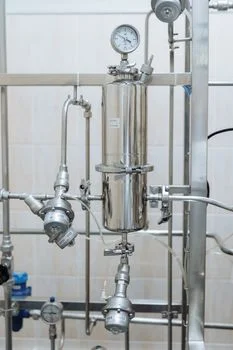
Step 1: Verify PCD/TIS Compliance Documentation Request verified test reports from independent Thai laboratories for existing installations. These reports should specifically show the system’s ability to maintain COD ≤120 mg/L and BOD ≤20 mg/L under variable load conditions. Ensure the equipment carries Thai Industrial Standards (TIS) certification where applicable.
Step 2: Technical Site Audit of the Supplier Visit a reference site in the Bangkok Metropolitan Region. Observe the system in operation and speak with the facility's operator about:
- Frequency of membrane cleaning (for MBR).
- Chemical consumption rates versus the original quote.
- The ease of sourcing replacement parts like air diffusers or dosing pumps locally in Bangkok.
Step 3: Evaluate Warranty and Service Terms Standard warranties in the Thai market are often too short for high-CAPEX equipment. Negotiate for:
- A minimum 3-year warranty on MBR membranes (PVDF).
- A 5-year structural warranty on DAF and WSZ tanks (especially if carbon steel with anti-corrosion coating).
- A guaranteed 4-hour on-site response time for facilities within 50km of central Bangkok.
Red Flags to Avoid:
- No On-Site Pilot Testing: If a supplier refuses to run a bench-scale or pilot test with your actual wastewater, they are likely guessing on the chemical dosing and flux rates.
- Vague OPEX Estimates: If the supplier cannot provide a per-cubic-meter cost for electricity and chemicals, expect your actual operational costs to be 30-50% higher than anticipated.
- Lack of Sludge Partnerships: A reputable supplier should have connections with licensed sludge disposal contractors in Samut Prakan or Pathum Thani to ensure your waste stream is PCD-compliant from cradle to grave.
Cost Breakdown: CAPEX and OPEX for a 50 m³/h Plant in Bangkok
A 50 m³/h wastewater treatment plant in Bangkok carries a total cost of ownership (TCO) influenced by local energy tariffs, high humidity-induced corrosion, and the rising cost of industrial land. In 2025, CAPEX for a turnkey system varies significantly by technology: an MBR system typically ranges from $250,000 to $400,000, while a DAF system for pre-treatment costs between $120,000 and $200,000, and a WSZ package plant ranges from $80,000 to $150,000.Operational expenditures (OPEX) in Bangkok are driven by three primary factors. First, energy consumption for MBR systems averages 0.8–1.2 kWh/m³, which, at current Thai industrial electricity rates, represents a significant portion of the monthly budget. Second, chemical costs for coagulants and flocculants in DAF systems range from $0.10 to $0.30 per m³ of treated water. Third, sludge disposal in the Bangkok area is increasingly expensive, with PCD-compliant disposal costing between $50 and $100 per ton depending on the moisture content and toxicity levels. Bangkok's high humidity necessitates high-performance epoxy coatings or stainless steel (SS304/SS316) construction, which adds approximately 10–15% to the initial CAPEX but prevents structural failure within the first five years of operation.
| Cost Component | MBR (50 m³/h) | DAF (50 m³/h) | WSZ (50 m³/h) |
|---|---|---|---|
| Initial CAPEX (USD) | $250K – $400K | $120K – $200K | $80K – $150K |
| Annual Energy Cost | $35,000 – $45,000 | $12,000 – $18,000 | $8,000 – $12,000 |
| Annual Chemical Cost | $5,000 – $8,000 | $15,000 – $25,000 | $3,000 – $6,000 |
| Sludge Disposal (Est.) | Low (Aerobic digestion) | High (Chemical sludge) | Medium |
| Land Value Savings | High (Compact) | Low (Large footprint) | High (Underground) |
| 5-Year TCO | $450K – $650K | $300K – $450K | $150K – $250K |
Frequently Asked Questions
Q: What are the PCD 2023 penalties for non-compliance in Bangkok?
A: Under the Enhancement and Conservation of National Environmental Quality Act, non-compliance can result in fines up to 5,000,000 THB. For repeat violations, the PCD has the authority to order a temporary or permanent shutdown of the facility. Daily fines of up to 50,000 THB may also be applied until the effluent meets the required standards.
Q: Can I use a DAF system for Bangkok’s high-FOG wastewater?
A: Yes, DAF is highly effective for FOG removal. However, a properly sized grease trap is required as pre-treatment. If FOG levels exceed 100