TFT-LCD Wastewater Treatment Equipment: 2025 Engineering Specs, Cost Models & Zero-Risk Compliance Guide
TFT-LCD wastewater treatment equipment must achieve 99%+ removal of DMSO (560 mg/L influent), MEA (1030 mg/L), and TMAH (145 mg/L) to meet global discharge limits. A/O SBR systems deliver stable performance at 14 mg DMSO/g VSS-hr (anaerobic) and 26.5 mg MEA/g VSS-hr (aerobic), while UASB reactors excel at TMAH degradation (19.2 mg/g VSS-hr). MBR systems reduce footprint by 60% and produce effluent COD ≤50 mg/L, eliminating secondary clarifiers. Equipment selection depends on influent variability, space constraints, and compliance requirements like Taiwan EPA's 2024 standards.
Why TFT-LCD Wastewater Treatment Fails: The DMSO/MEA/TMAH Challenge
Organic solvents utilized in thin-film transistor liquid crystal display manufacturing typically account for over 33% of the total wastewater volume, creating a high-strength chemical stream that inhibits standard biological processes. Major manufacturing hubs like Taiwan generate over 200,000 cubic meters per day (CMD) of wastewater from the optoelectronic sector, according to 2024 Taiwan EPA data. The primary challenge for TFT-LCD wastewater treatment equipment lies in the specific chemical properties of the stripper and developer waste streams, which contain Dimethyl Sulfoxide (DMSO), Monoethanolamine (MEA), and Tetra-Methyl Ammonium Hydroxide (TMAH) at concentrations often exceeding 500 mg/L, 1000 mg/L, and 150 mg/L, respectively.
Conventional activated sludge systems frequently fail in these environments because they lack the specialized microbial consortia and staged hydraulic retention times required for complete mineralization. DMSO requires strictly anaerobic conditions for efficient degradation (14 mg/g VSS-hr), whereas MEA is best degraded aerobically (26.5 mg/g VSS-hr). TMAH is particularly recalcitrant; without a dedicated methanogenic environment, it remains in the effluent, leading to regulatory breaches. The presence of chelating agents used in the etching process can sequester essential micronutrients, further suppressing the metabolic activity of the biomass.
The financial stakes for inadequate system selection are substantial. A 2023 case in Taiwan resulted in a $1.2 million fine for persistent TMAH discharge violations. The facility had attempted to treat developer waste using a standard aerobic process lacking the necessary methanogenic consortia to break down the quaternary ammonium structure of TMAH. This failure underscores the necessity of integrating wastewater treatment strategies for semiconductor fabs that utilize multi-stage biological reactors specifically calibrated for these refractory compounds.
DMSO, MEA, and TMAH Degradation Pathways: What the Data Shows
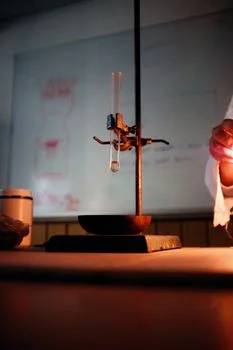
For DMSO, research from ScienceDirect indicates that specific degradation rates under aerobic and anoxic conditions are negligible, often lower than 4 mg DMSO/g VSS-hr. However, under anaerobic conditions, the rate increases significantly to 14 mg DMSO/g VSS-hr. In cases where influent DMSO exceeds 600 mg/L, or where rapid turnaround is required, UV/H&sub2;O&sub2; pretreatment is often integrated into the equipment chain to partially oxidize the sulfur compounds, though this adds approximately $0.85/m³ to the operational cost.
MEA degradation follows a different kinetic path. While it can be degraded under anaerobic conditions (5.6 mg/g VSS-hr), its optimal removal occurs in aerobic environments at a rate of 26.5 mg/g VSS-hr. Maintaining a pH range of 7.2–7.8 is critical for MEA; deviations outside this range can lead to the accumulation of intermediate metabolites that are toxic to nitrifying bacteria. Many modern systems utilize MBR systems for TFT-LCD wastewater with 0.1 μm PVDF membranes to maintain a high Mixed Liquor Suspended Solids (MLSS) concentration, providing the buffering capacity needed to handle MEA spikes.
TMAH removal is the most specialized aspect of the treatment train. High-rate methanogenic UASB reactors can achieve degradation rates of 19.2 mg/g VSS-hr, provided that the sludge is enriched with specific methanogens such as Methanosarcina mazei and Methanomethylovorans hollandica. These organisms are sensitive to oxygen and high ammonia concentrations, making the hydraulic configuration of the reactor a primary engineering concern.
| Contaminant | Aerobic Rate (mg/g VSS-hr) | Anoxic Rate (mg/g VSS-hr) | Anaerobic Rate (mg/g VSS-hr) | Optimal pH Range |
|---|---|---|---|---|
| DMSO | < 4.0 | < 4.0 | 14.0 | 6.8 – 7.5 |
| MEA | 26.5 | 12.2 | 5.6 | 7.2 – 7.8 |
| TMAH | 17.3 | 2.1 | 19.2 (Methanogenic) | 7.0 – 8.0 |
A/O SBR vs MBR vs UASB: Side-by-Side Comparison for TFT-LCD Wastewater
Selecting the right TFT-LCD wastewater treatment equipment requires balancing removal efficiency, land area, and operational complexity.The Anoxic/Oxic Sequencing Batch Reactor (A/O SBR) is a traditional choice, offering 99% removal for DMSO and MEA by cycling the biomass through different redox states in a single tank. However, SBRs require large footprints and are susceptible to sludge bulking when faced with high organic loads typical of stripper waste.
Membrane Bioreactor (MBR) technology has become the standard for new fab builds and retrofits where space is limited. By replacing secondary clarifiers with MBR systems for TFT-LCD wastewater with 0.1 μm PVDF membranes, fabs can reduce their equipment footprint by up to 60%. MBRs maintain higher biomass concentrations (8,000–12,000 mg/L MLSS), allowing for shorter hydraulic retention times (HRT) and superior effluent quality, often reaching COD levels ≤50 mg/L and TSS ≤5 mg/L. This high-quality effluent is ideal for downstream RO systems for TFT-LCD water reuse with 95% recovery rates.
Up-flow Anaerobic Sludge Blanket (UASB) reactors are indispensable for treating high-concentration TMAH developer waste. UASB is an anaerobic process with lower energy consumption (0.3 kWh/m³) and less waste sludge (0.1 kg TSS/kg COD) compared to aerobic systems. However, UASB reactors are sensitive to temperature fluctuations and require sophisticated gas management systems to handle the methane byproduct.
| Parameter | A/O SBR | MBR System | UASB Reactor |
|---|---|---|---|
| Removal Efficiency (DMSO/MEA/TMAH) | 99% / 99% / 90% | 99.5% / 99.5% / 95% | 95% / 85% / 98% |
| Footprint | High (100%) | Low (40%) | Medium (Vertical) |
| Energy Use (kWh/m³) | 0.8 | 1.2 | 0.3 |
| Sludge Production | 0.3 kg TSS/kg COD | 0.25 kg TSS/kg COD | 0.1 kg TSS/kg COD |
| Effluent COD | ≤ 80 mg/L | ≤ 50 mg/L | ≤ 150 mg/L (Requires Aerobic Post-treatment) |
| CAPEX (Relative) | Standard | Premium (+40%) | Moderate |
| Compliance Suitability | Moderate | High (Reuse potential) | High (TMAH focus) |
2025 Cost Models: CAPEX, OPEX, and ROI for TFT-LCD Wastewater Equipment
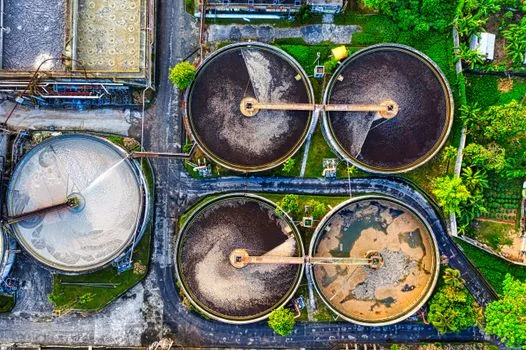
For a typical 200 m³/h facility, the CAPEX for a basic A/O SBR system starts at approximately $800,000. In contrast, an MBR system with integrated automation and high-flux membranes requires an investment of roughly $1.5 million. This higher initial cost is often justified in regions like Taiwan or Singapore, where water scarcity drives the need for high-recovery reuse systems.
OPEX is primarily influenced by energy costs (averaging $0.12/kWh) and the requirement for PLC-controlled chemical dosing for pH adjustment and nutrient balancing. For MBR systems, membrane replacement represents a significant recurring cost, typically ranging from $15 to $25 per square meter per year. The ROI for MBR systems is accelerated by water reuse; with a 50% recovery rate, many fabs achieve a 3-year payback period compared to 5 years for traditional systems. Additionally, the reduced sludge handling costs of UASB and MBR systems provide long-term savings in disposal fees, which can exceed $200/ton in strictly regulated industrial zones.
| System Type | CAPEX (200 m³/h) | Annual OPEX (Est.) | Payback Period (Years) |
|---|---|---|---|
| A/O SBR | $800,000 | $120,000 | 5.0 |
| MBR (with Reuse) | $1,500,000 | $180,000 | 3.0 |
| UASB + Aerobic | $1,200,000 | $95,000 | 4.2 |
Compliance Checklist: Meeting Global Discharge Standards for TFT-LCD Wastewater
Environmental Health and Safety (EHS) managers must navigate a complex web of regional regulations that are becoming increasingly stringent regarding nitrogen and specific organic solvents.The Taiwan EPA 2024 standards are currently the most rigorous, setting a TMAH limit of ≤1 mg/L and a DMSO limit of ≤5 mg/L. Compliance with these limits requires not only robust biological treatment but also advanced monitoring. Online COD and TSS sensors, costing approximately $25,000 per unit, are now standard requirements for real-time reporting to local authorities.
In the European Union, the Industrial Emissions Directive