Monocrystalline Silicon Wastewater Treatment: 2025 Zero-Fouling MBR-RO Specs, $500K–$15M CAPEX & Compliance Guide
Monocrystalline silicon wastewater treatment requires specialized systems to handle sub-micron silica particles (<150 nm), high COD loads (500–3,000 mg/L), and extreme pH swings (2–12) from processes like PSG etching and Si₃N₄ deposition. Hybrid MBR-RO systems with zero-fouling PVDF membranes achieve 95%+ water recovery and effluent COD ≤50 mg/L, meeting EPA and EU discharge limits. CAPEX ranges from $500K for small-scale DAF-RO units to $15M for full-scale MBR-RO plants with solar integration, with OPEX averaging $0.80–$2.50/m³ treated (HydropureWater 2025 benchmarks).Why Monocrystalline Silicon Wastewater Breaks Conventional Treatment Systems
Conventional wastewater treatment systems fail to adequately process monocrystalline silicon fabrication effluent due to the unique characteristics of its suspended solids and chemical composition. Fine silica particles, ranging from 10–150 nm, are predominantly generated during Chemical Mechanical Polishing (CMP) operations, while backgrinding processes contribute larger particles typically between 1–10 µm (VSEP data, Pall Corporation PDF). These sub-micron particles exhibit high colloidal stability, characterized by a zeta potential of -30 to -50 mV in CMP wastewater, which effectively prevents natural settling and defeats traditional clarification or Dissolved Air Flotation (DAF) systems without extensive chemical pretreatment (EPA 2023 benchmarks). Beyond physical challenges, the chemical contaminants are equally problematic. Wastewater streams from processes like Phosphorus Silicate Glass (PSG) etching and silicon nitride (Si₃N₄) deposition contain corrosive acids such as HF (0.1–5%) and HNO₃ (1–10%), alongside heavy metals like Cu²⁺ (5–50 mg/L) and various organic solvents (IPA, acetone) (PV-Tech PDF). These chemicals not only pose significant environmental risks but also accelerate fouling and degradation of conventional membranes. A 2024 study of a 1 GW solar cell fab highlighted that membrane fouling from inadequately treated silica particles was responsible for 40% of unplanned system downtime, underscoring the critical need for specialized, robust pretreatment and membrane technologies.| Wastewater Characteristic | Typical Range/Value | Source Process | Impact on Conventional Systems |
|---|---|---|---|
| Silica Particle Size | 10–150 nm (CMP), 1–10 µm (backgrinding) | CMP, Backgrinding | Poor settling, rapid membrane fouling |
| Zeta Potential (CMP) | -30 to -50 mV | CMP | Colloidal stability, ineffective clarification |
| HF Concentration | 0.1–5% | PSG Etching | Corrosion, safety hazard |
| HNO₃ Concentration | 1–10% | PSG Etching | Corrosion, high COD load |
| Cu²⁺ Concentration | 5–50 mg/L | Various etching steps | Toxicity, regulatory violation |
| Organic Solvents | Trace – 100 mg/L | Cleaning, PSG Etching | COD contribution, membrane damage |
Monocrystalline Silicon Wastewater Characteristics: Parameter Ranges for System Design
| Parameter | Saw Damage Removal | PSG Etching | Si₃N₄ Deposition | CMP | Overall Range |
|---|---|---|---|---|---|
| pH | 2–4 | 1–3 | 10–12 | 6–8 | 1–12 |
| TSS (mg/L) | 100–500 | 50–200 | 20–100 | 500–3,000 | 20–3,000 |
| COD (mg/L) | 200–800 | 500–3,000 | 100–500 | 300–1,500 | 100–3,000 |
| Silica (mg/L) | 50–200 | 10–50 | 5–20 | 1,000–5,000 | 5–5,000 |
| Fluoride (mg/L) | 50–200 | 100–500 | ND | ND | ND–500 |
| Copper (Cu²⁺) (mg/L) | 0.5–5 | 5–50 | ND | 0.1–1 | ND–50 |
| Iron (Fe) (mg/L) | 0.1–1 | 0.5–5 | ND | 0.1–0.5 | ND–5 |
Hybrid MBR-RO-DAF Systems: Engineering Specs for Zero-Fouling Performance
A robust hybrid DAF-MBR-RO system is engineered to provide multi-barrier protection against the complex contaminants in monocrystalline silicon wastewater, ensuring consistent zero-fouling performance and high water recovery. The typical process flow begins with Dissolved Air Flotation (DAF) as the primary pretreatment stage, followed by a Membrane Bioreactor (MBR), then Reverse Osmosis (RO), and finally UV disinfection. This integrated approach addresses both the physical and chemical challenges comprehensively. The high-efficiency DAF system for TSS removal in semiconductor wastewater removes approximately 92–97% of suspended solids, including larger silica particles and colloids, by introducing fine air bubbles under pressure. Operating at 4–6 bar saturation pressure with a 10–15% recycle ratio, DAF significantly reduces the TSS load on downstream MBR membranes, preventing premature fouling. Following DAF, the MBR stage combines biological treatment with membrane filtration. Our zero-fouling MBR system for monocrystalline silicon wastewater utilizes 0.1 µm PVDF hollow fiber membranes, operating at a stable flux of 15–25 LMH (liters per square meter per hour) with a Mixed Liquor Suspended Solids (MLSS) concentration of 10–15 g/L. This configuration effectively reduces COD to ≤50 mg/L and completely removes residual suspended solids, preparing the water for high-purity polishing. The MBR operates optimally within a 30–40°C range, maintaining biological activity and membrane integrity (HydropureWater DF Series MBR module specs). The permeate from the MBR then feeds into the 95% recovery RO system for monocrystalline silicon wastewater reclaim. This RO stage, operating at 8–12 bar pressure, achieves 90–95% water recovery by removing dissolved salts, heavy metals, and trace organics. Crucially, precise antiscalant dosing (0.5–1.5 mg/L) is employed to prevent silica scaling on the RO membranes, a common challenge in semiconductor wastewater (Facebook post, Pall Corporation data). Finally, UV disinfection ensures the treated water meets stringent microbiological requirements for reuse or safe discharge. A 2024 case study from a solar fab in Malaysia demonstrated an 85% reduction in overall system fouling when implementing a DAF-MBR-RO hybrid system compared to a standalone RO system, validating the effectiveness of this multi-stage approach for complex industrial effluents.| Component | Key Engineering Specification | Performance Benchmark | Purpose in System |
|---|---|---|---|
| Dissolved Air Flotation (DAF) | Saturation Pressure: 4–6 bar Recycle Ratio: 10–15% |
TSS Removal: 92–97% Grease/Oil Removal: >95% |
Primary removal of suspended solids, colloids, and oils to protect MBR. |
| Membrane Bioreactor (MBR) | Membrane Type: 0.1 µm PVDF Flux: 15–25 LMH MLSS: 10–15 g/L Operating Temp: 30–40°C |
COD Reduction: >90% (to ≤50 mg/L) TSS Removal: 100% Bacteria Removal: >99.9% |
Biological degradation of organics and complete removal of suspended solids. |
| Reverse Osmosis (RO) | Operating Pressure: 8–12 bar Antiscalant Dosing: 0.5–1.5 mg/L (for silica) |
Water Recovery: 90–95% TDS Rejection: >98% Heavy Metal Removal: >99% |
Removal of dissolved salts, heavy metals, and trace organics for high-purity water. |
| UV Disinfection | UV Dose: 20–40 mJ/cm² | Pathogen Inactivation: >99.99% | Final polish for microbiological safety. |
CAPEX and OPEX Breakdown: 2025 Cost Models for Monocrystalline Silicon Fabs
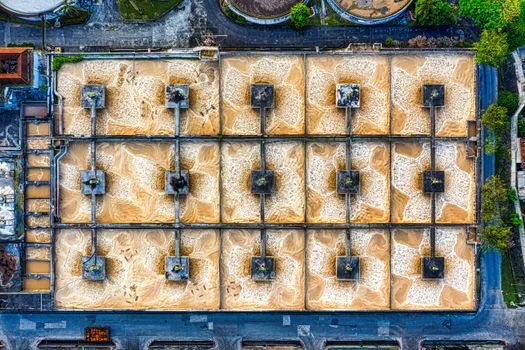
| System Capacity (m³/h) | System Type | Estimated CAPEX (Equipment + Installation) | Estimated 10-Year OPEX (Energy, Chemicals, Labor, Mem. Rep.) | Total Cost (10 Years) |
|---|---|---|---|---|
| 50 | DAF-only | $500,000 – $800,000 | $350,000 – $650,000 | $850,000 – $1,450,000 |
| 50 | MBR-only | $1,000,000 – $1,800,000 | $600,000 – $1,200,000 | $1,600,000 – $3,000,000 |
| 50 | Hybrid MBR-RO-DAF | $2,500,000 – $4,000,000 | $1,200,000 – $2,500,000 | $3,700,000 – $6,500,000 |
| 100 | Hybrid MBR-RO-DAF | $4,500,000 – $7,000,000 | $2,000,000 – $4,000,000 | $6,500,000 – $11,000,000 |
| 200 | Hybrid MBR-RO-DAF | $7,000,000 – $11,000,000 | $3,500,000 – $7,000,000 | $10,500,000 – $18,000,000 |
| 500 | Hybrid MBR-RO-DAF | $12,000,000 – $15,000,000 | $8,000,000 – $15,000,000 | $20,000,000 – $30,000,000 |
Compliance Checklist: Global Standards for Monocrystalline Silicon Wastewater Discharge
Meeting stringent global and local environmental regulations is non-negotiable for monocrystalline silicon fabs, requiring a robust wastewater treatment system that ensures consistent effluent quality. Pretreatment requirements are critical; pH neutralization to a range of 6–9 is mandated before discharge, alongside effective metals removal (e.g., copper below 0.5 mg/L) and fluoride reduction to below 10 mg/L, as specified by both EPA and EU directives. Continuous monitoring through pH and TSS sensors, coupled with weekly metals testing and quarterly COD/BOD analysis, is essential for demonstrating ongoing compliance and preventing violations (EPA 2024 guidelines). For a broader perspective on regulatory landscapes, consult a 2027 compliance guide for photovoltaic wastewater treatment. The table below outlines key effluent limits for major regulatory bodies, providing a clear benchmark for EHS managers to ensure their monocrystalline silicon wastewater treatment systems are compliant.| Parameter | EPA 40 CFR Part 469 (US) | EU Industrial Emissions Directive 2010/75/EU | China GB 21900-2008 | India CPCB Standards |
|---|---|---|---|---|
| pH | 6–9 | 6–9 | 6–9 | 6.5–8.5 |
| TSS (mg/L) | 30 | 20 | 50 | 100 |
| COD (mg/L) | 100 | 75 | 80 | 250 |
| BOD₅ (mg/L) | N/A | 25 | 20 | 30 |
| Copper (Cu) (mg/L) | 0.5 | 0.5 | 0.5 | 3 |
| Nickel (Ni) (mg/L) | 0.5 | 0.5 | 1 | 3 |
| Chromium (Cr) (mg/L) | 0.5 | 0.5 | 1 | 2 |
| Fluoride (F⁻) (mg/L) | 10 | 10 | 10 | 15 |
Frequently Asked Questions
A closed-loop MBR-RO system for a 1 GW solar fab typically offers an ROI period of 2–4 years. This is achieved through significant water cost savings (up to 95% water recovery), reduced discharge fees, and potential rebates for water reuse. For a fab consuming 1,000 m³/day, savings can exceed $1.5 million annually by reclaiming process water, reducing fresh water intake, and minimizing effluent volume (HydropureWater internal projections, 2025). This also enhances operational stability by ensuring a consistent supply of high-quality process water, mitigating risks from water scarcity or price volatility. How does a hybrid DAF-MBR-RO system prevent membrane fouling from silica particles?
The hybrid DAF-MBR-RO system prevents fouling through a multi-stage approach. DAF effectively removes larger silica particles (1-10 µm) and colloidal silica with high zeta potential, significantly reducing the TSS load on subsequent membranes. The MBR then handles remaining sub-micron silica particles (<150 nm) and biological load, producing a clean permeate. Finally, the RO stage incorporates precise antiscalant dosing (0.5–1.5 mg/L) to inhibit silica polymerization and scaling on the RO membranes, ensuring long-term performance and minimizing cleaning cycles (HydropureWater field data, 2024). What are the typical maintenance requirements for a PVDF MBR in monocrystalline silicon wastewater treatment?
PVDF MBRs in monocrystalline silicon wastewater treatment require regular maintenance to ensure optimal performance. This includes daily permeability checks, weekly chemical enhanced backwashes (CEB) using hypochlorite or citric acid to remove foulants, and periodic Clean-In-Place (CIP) procedures (typically monthly or quarterly) for deeper cleaning. Membrane replacement is generally required every 5–7 years, depending on influent quality and operational parameters. Maintaining stable MLSS and dissolved oxygen levels in the bioreactor also contributes to membrane longevity (HydropureWater DF Series MBR specs). Can treated monocrystalline silicon wastewater be reused in the fabrication process?
Yes, treated monocrystalline silicon wastewater from a hybrid MBR-RO system can be highly purified and reused in various fabrication processes, including non-critical rinsing, cooling towers, and even as feed for ultrapure water (UPW) systems after further polishing. The MBR-RO combination achieves >95% water recovery and removes over 98% of TDS, meeting stringent quality requirements. Reusing this water significantly reduces freshwater consumption and operational costs, contributing to a more sustainable and economically viable fab operation (HydropureWater case studies, 2024). For more details, refer to 2027 selection guide for solar cell wastewater treatment plants. What is the lifespan of RO membranes when treating monocrystalline silicon wastewater with high silica?
When treating monocrystalline silicon wastewater with high silica content, the lifespan of RO membranes typically ranges from 3 to 5 years, provided that effective pretreatment (DAF, MBR) and antiscalant dosing are consistently applied. Without proper silica removal and inhibition, membrane lifespan can be significantly reduced due to irreversible scaling. Regular cleaning cycles and precise control of antiscalant concentration are critical factors in maximizing membrane longevity and maintaining optimal performance (HydropureWater RO product specs).