Why PCB Manufacturers Need Zero-Discharge Wastewater Treatment in 2025
A 2025 PCB wastewater treatment system must achieve zero-discharge compliance while recovering 99.8% of copper and nickel from plating rinse waters and chemical etching effluents. Hybrid DAF-RO-MBR systems now dominate the market, combining dissolved air flotation (TSS removal >95%), reverse osmosis (salt rejection >98%), and membrane bioreactors (COD removal >92%) into a single skid-mounted unit. For a 50 m³/h facility, CAPEX ranges from $2.5M–$5M, with OPEX of $0.80–$1.50/m³ treated, depending on membrane lifespan and chemical costs. Key specs: RO flux 15–20 LMH, MBR MLSS 8,000–12,000 mg/L, and DAF loading rate 5–8 m/h.
The regulatory landscape for the printed circuit board (PCB) industry has shifted from "containment" to "elimination." In the United States, the EPA’s 2024 update to 40 CFR Part 469 (Docket No. EPA-HQ-OW-2023-0219) has effectively lowered permissible copper and nickel limits to 0.1 mg/L for many facilities, a drastic reduction from the 1.3 mg/L threshold common in 2020. This shift is mirrored globally; the EU Directive 2010/75/EU now mandates zero-liquid discharge (ZLD) for PCB facilities operating in water-stressed regions like Spain and Italy, with administrative fines reaching up to €1M for persistent non-compliance.
In China, the Ministry of Industry and Information Technology (MIIT) 2024 report indicates that 60% of domestic plants must upgrade to meet GB 31573-2015 standards by 2026. These standards require PCB effluent to meet Class IV surface water quality, effectively demanding COD levels ≤30 mg/L and NH3-N ≤1.5 mg/L. The financial risk of ignoring these trends is exemplified by a 2023 violation at a Texas-based PCB plant (EPA Enforcement Case 2023-0452), where copper exceedances led to a $1.2M fine and a mandatory six-month production halt to install compliant detailed engineering specs for hybrid DAF-RO-MBR systems.
Beyond compliance, the economic incentive for zero-discharge lies in resource recovery. With London Metal Exchange (LME) 2025 forecasts placing copper at $9,500/ton, advanced recovery systems can offset 15–25% of total raw material procurement costs. Facilities implementing ZLD not only avoid the "water tax" associated with high-volume discharge but also stabilize their supply chain against metal price volatility.
| Regulatory Standard | Copper (Cu) Limit | Nickel (Ni) Limit | COD Limit | Enforcement Status |
|---|---|---|---|---|
| EPA 40 CFR Part 469 (USA) | 0.1 mg/L | 0.2 mg/L | N/A (Process Dependent) | Active / 2024 Update |
| EU Directive 2010/75/EU | 0.1 mg/L | 0.1 mg/L | 50 mg/L | Mandatory for ZLD Zones |
| China GB 31573-2015 | 0.5 mg/L (0.3 for Class IV) | 1.0 mg/L | 30 mg/L | Full Compliance by 2026 |
| Typical 2020 Baseline | 1.3 mg/L | 1.0 mg/L | 100-200 mg/L | Legacy Standard |
Hybrid DAF-RO-MBR Systems: Engineering Specs for PCB Wastewater
The complexity of PCB wastewater—containing heavy metal chelates, photoresist strippers, and high dissolved solids—requires a multi-stage hybrid approach. Modern engineering favors the integration of Dissolved Air Flotation (DAF), Reverse Osmosis (RO), and Membrane Bioreactors (MBR) to ensure that every contaminant class is addressed at its optimal removal stage.
The process begins with chemical pre-treatment. Sodium hydroxide is dosed to achieve a pH of 8.5–9.2, precipitating heavy metals as hydroxides. Polyaluminum chloride (PAC) is added at dosages of 50–100 mg/L to facilitate flocculation. The wastewater then enters DAF systems for TSS and FOG removal in PCB wastewater. By introducing micro-bubbles (20–50 μm), the DAF stage removes 95–98% of total suspended solids (TSS) and up to 90% of fats, oils, and grease (FOG) at loading rates of 5–8 m/h. This stage is critical for protecting downstream membranes from premature fouling.
The secondary stage utilizes DF series MBR modules for COD and nitrogen removal in PCB wastewater. Unlike traditional activated sludge, the MBR maintains a high Mixed Liquor Suspended Solids (MLSS) concentration of 8,000–12,000 mg/L. Using PVDF flat-sheet membranes with a 0.1 μm pore size, the system achieves COD reduction from 2,000 mg/L to less than 50 mg/L. This biological oxidation is essential for removing organic complexes that would otherwise interfere with the final desalination stage.
The tertiary stage employs RO systems for salt and heavy metal removal in PCB wastewater. To maintain a flux rate of 15–20 LMH, the feed water must be conditioned to a Silt Density Index (SDI) <3. These RO units achieve 98–99% salt rejection and remove residual heavy metals to levels below 0.05 mg/L. To prevent calcium sulfate and silica scaling, antiscalants are continuously dosed, and the operating temperature is maintained between 20–30°C to ensure optimal membrane permeability (HydropureWater field data, 2025).
| System Component | Key Engineering Parameter | Performance Metric | Design Specification |
|---|---|---|---|
| DAF | Hydraulic Loading Rate | TSS Removal | 5–8 m/h / >95% |
| MBR (DF Series) | MLSS Concentration | COD Removal | 8,000–12,000 mg/L / >92% |
| RO System | Design Flux Rate | Salt Rejection | 15–20 LMH / 98.5% |
| Pre-Treatment | PAC Dosing Ratio | Floc Diameter | 50–100 mg/L / 1.5–2.5 mm |
Zero-Discharge vs. Partial-Reuse: Decision Framework for PCB Facilities
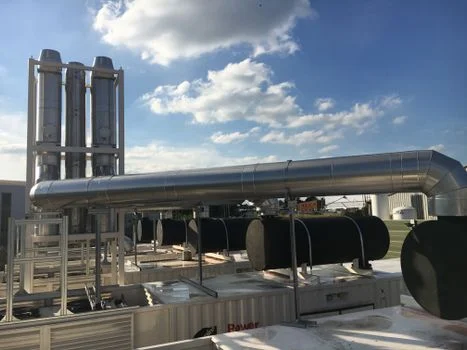
Selecting the appropriate treatment philosophy depends on three variables: local regulatory stringency, water scarcity index, and the facility’s long-term CAPEX/OPEX threshold. While zero-liquid discharge (ZLD) is the gold standard for sustainability, partial-reuse systems remain a viable bridge for facilities in water-rich regions with less restrictive discharge permits.
Zero-discharge systems are typically mandated for facilities in water-stressed regions such as California or Northern China. These systems utilize an additional evaporation or crystallizer stage after the RO process to eliminate all liquid waste. While the CAPEX is significantly higher—ranging from $5M to $10M for a 100 m³/h plant—the system future-proofs the facility against the EU’s 2027 planned ban on PCB wastewater discharge in sensitive ecological zones. The OPEX for ZLD is approximately $1.20–$2.00/m³, driven primarily by the energy intensity of thermal evaporation.
Partial-reuse systems focus on recovering 60–80% of process water for non-critical rinse stages. This approach is suitable for facilities where copper limits remain near 1.0 mg/L. The CAPEX for a 100 m³/h partial-reuse system is lower ($3M–$6M), and OPEX stays within $0.80–$1.50/m³. However, these facilities face higher regulatory risk; if local limits tighten (as seen in the 2024 EPA update), the system may require expensive retrofitting. during drought-induced water restrictions, partial-reuse plants may be forced to curtail production, whereas ZLD plants operate independently of municipal water supply fluctuations.
| Feature | Zero-Liquid Discharge (ZLD) | Partial-Reuse System |
|---|---|---|
| Water Recovery Rate | 98% – 99.5% | 60% – 80% |
| CAPEX (100 m³/h) | $5M – $10M | $3M – $6M |
| OPEX (per m³) | $1.20 – $2.00 | $0.80 – $1.50 |
| Compliance Risk | Negligible (Future-Proofed) | Moderate to High |
| Facility Footprint | Large (Requires Evaporators) | Moderate |
CAPEX and OPEX Breakdown for PCB Wastewater Treatment Plants
Understanding the total cost of ownership is vital for procurement teams evaluating cost breakdowns and copper recovery strategies for PCB wastewater. For a standard 100 m³/h ZLD facility, the investment is segmented into equipment procurement, site integration, and ongoing operational overhead.
The CAPEX is dominated by the RO and MBR stages. A DAF system represents a $300K–$500K investment, providing the necessary primary clarification. The RO system, often the most expensive component, accounts for 60–80% of the equipment cost, ranging from $1.2M to $2M depending on the number of stages and automation level. The MBR system (DF series) adds another $800K–$1.5M. Crucially, piping, electrical controls, and civil installation typically add 30–40% to the base equipment price, bringing the total installed cost to the $7M–$9M range for high-spec systems.
Annual OPEX is a function of four primary drivers. Membrane replacement is the most significant variable; RO membranes typically last 3–5 years, while MBR flat-sheets can last 5–7 years, resulting in an annualized cost of $120K–$200K. Chemical consumption (coagulants, caustic soda, antiscalants) averages $80K–$150K. Energy consumption for a hybrid system is approximately 0.8–1.2 kWh/m³, totaling $100K–$180K annually at industrial rates. Finally, labor costs for one full-time equivalent (FTE) engineer to manage SCADA monitoring and routine maintenance add $60K–$100K to the budget.
| Cost Category | Estimated Annual Cost (100 m³/h) | % of Total OPEX |
|---|---|---|
| Membrane Replacement | $120,000 – $200,000 | 35% |
| Chemical Dosing | $80,000 – $150,000 | 25% |
| Energy Consumption | $100,000 – $180,000 | 30% |
| Maintenance & Labor | $60,000 – $100,000 | 10% |
Compliance Checklist: Meeting EPA, EU, and Chinese PCB Wastewater Limits
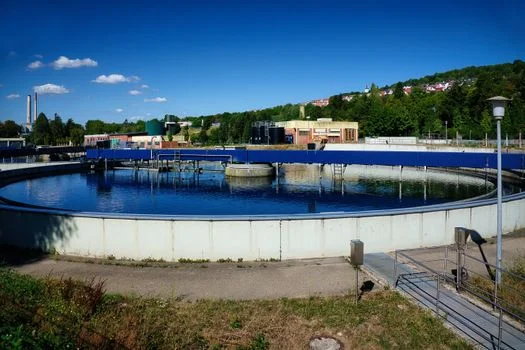
Achieving compliance requires more than just high-quality hardware; it demands a rigorous monitoring and documentation framework. Engineers must ensure that the treatment system provides real-time data for all regulated parameters to satisfy both local environmental bureaus and ISO 14001 auditors.
The core of the compliance strategy is continuous monitoring. Systems must be equipped with digital pH probes, TSS meters, and electromagnetic flow meters. For heavy metals, while continuous online analyzers exist, most regulators (including the EPA under Method 200.8) require weekly third-party laboratory verification using Inductively Coupled Plasma Mass Spectrometry (ICP-MS). Documentation must include discharge logs, membrane integrity test results, and chemical consumption records to demonstrate "consistent performance" during unannounced inspections.
| Parameter | EPA (USA) | EU Directive | China (Class IV) | Monitoring Frequency |
|---|---|---|---|---|
| Copper (Cu) | ≤0.1 mg/L | ≤0.1 mg/L | ≤0.3 mg/L | Weekly (Lab) |
| Nickel (Ni) | ≤0.2 mg/L | ≤0.1 mg/L | ≤1.0 mg/L | Weekly (Lab) |
| COD | N/A | ≤50 mg/L | ≤30 mg/L | Daily (Online) |
| pH Range | 6.0 – 9.0 | 6.5 – 9.5 | 6.0 – 9.0 | Continuous |
| TSS | ≤20 mg/L | ≤30 mg/L | ≤20 mg/L | Continuous |
Frequently Asked Questions
Q: What is the typical payback period for a PCB wastewater treatment system?
A: For zero-discharge systems, the payback period is typically 3–5 years. This is driven by three factors: the recovery of copper (valued at $9,500/ton), the elimination of municipal discharge fees, and the avoidance of regulatory fines which can exceed $1M. Partial-reuse systems have a shorter payback of 2–3 years but carry higher risk regarding future regulatory tightening.
Q: How do I prevent membrane fouling in RO systems for PCB wastewater?
A: Effective fouling prevention requires a three-tier strategy: maintain a feed SDI <3 through DAF and MBR pre-treatment, dose phosphonate-based antiscalants at 2–5 mg/L, and perform Clean-in-Place (CIP) cycles every 3–6 months. Use citric acid (pH 2–3) for inorganic scaling and sodium hydroxide (pH 10–11) for organic biofilm removal.
Q: Can I reuse treated PCB wastewater in my manufacturing process?
A: Yes, but the level of reuse depends on the treatment quality. RO-permeate typically meets ASTM D1193 Type III standards (conductivity <0.5 μS/cm), making it suitable for primary and secondary plating rinse waters. However, reuse in photoresist development or high-precision inner-layer cleaning is discouraged due to the risk of trace organic residues affecting adhesion.
Q: What are the most common compliance violations for PCB wastewater?
A: According to 2023 EPA enforcement data, 60% of violations are related to copper and nickel exceedances, usually caused by chelating agents bypassing standard precipitation steps. Another 20% involve pH fluctuations due to sensor failure, and 15% are related to TSS exceedances following MBR membrane breaches or DAF pump failures.