MBR wastewater treatment for Canberra industry costs $2M–$50M in CapEx, holds effluent at COD ≤ 50 mg/L and TSS ≤ 10 mg/L, and cuts plant footprint by 60%. Icon Water's LMWQCC, treating over 90 ML/day, is moving to membrane bioreactors too.
Why Canberra's Wastewater Treatment Upgrades Matter for Industrial Facilities
The Lower Molonglo Water Quality Control Centre (LMWQCC) treats over 90 million litres per day and is being renewed with membrane bioreactor capacity of 97 ML/day. Canberra's industrial dischargers in Hume, Mitchell, and Fyshwick face Icon Water trade waste agreements that enforce pre-treatment. MBR systems meet those limits in roughly 40% of the footprint.
Contract awards reported through 2026 value the renewal, built on Memcor MBR technology, at roughly AUD 385 million (VINCI Construction project reporting, 2026). For engineers in food processing and pharmaceuticals, the plant's move to membranes signals how Icon Water will manage trade waste agreements and discharge compliance. Our broader guide to industrial wastewater treatment tracks the same shift across jurisdictions.
Canberra's infrastructure history explains the current regulatory pressure. Following the 2003 bushfires, which exposed environmental risks of chemical storage and effluent mismanagement, the ACT Environmental Protection Act 1997 was strengthened. This legislation requires industrial facilities to mitigate the risk of high-strength pollutants entering the Murrumbidgee and Molonglo river systems. For facilities in Hume, where land utilization rates often exceed 50%, the need for high-efficiency treatment is compounded by space constraints. Traditional sedimentation tanks are increasingly unfeasible, making the 60% smaller footprint of MBR systems a technical necessity.
Icon Water's trade waste agreements now strictly enforce pre-treatment requirements for high-strength effluents. Facilities producing wastewater with Chemical Oxygen Demand (COD) exceeding 500 mg/L or Total Suspended Solids (TSS) over 200 mg/L face significant surcharges. By integrating Canberra-compliant MBR systems for industrial wastewater, manufacturers can treat effluent to a standard that either permits safe environmental discharge or significantly reduces municipal trade waste fees. Alignment with LMWQCC's 2025 standards keeps industrial operations resilient against future tightening of ACT EPA regulations.
The LMWQCC upgrade to advanced MBR technology also sets a practical precedent: the same membrane physics that work at 90 ML/day scale down cleanly to a 100 m³/day factory package. That is why municipal renewals matter even to plants that will never connect to the sewer at that scale.
MBR Wastewater Treatment for Canberra Industry: 2025 Upgrade Specs vs Conventional Plants
The 2025 LMWQCC upgrade utilizes 0.1 μm PVDF membranes and a flux rate of 15–25 LMH to achieve effluent quality that exceeds conventional activated sludge standards. For industrial engineers, understanding these engineering specs and compliance requirements for industrial wastewater is vital for system design. Unlike conventional systems that rely on gravity-based secondary clarifiers, MBR technology uses a physical membrane barrier, allowing much higher Mixed Liquor Suspended Solids (MLSS) concentrations — typically 8,000 to 12,000 mg/L compared to 3,000 mg/L in conventional plants.
Technical performance data from the 2025 upgrade indicates that MBR systems achieve 99% pathogen removal and consistently produce effluent with TSS below 10 mg/L. This is particularly critical for Canberra's manufacturing sector, where high-purity water may be required for process reuse. Energy consumption for these modern systems has been optimized to 0.6–0.8 kWh/m³, a range that balances high-quality filtration with operational cost-efficiency (HydropureWater field data, 2025).
| Parameter | Conventional Activated Sludge (CAS) | 2025 MBR Upgrade Specs (LMWQCC) |
|---|---|---|
| Effluent COD | ≤ 120 mg/L | ≤ 50 mg/L |
| Effluent TSS | ≤ 30 mg/L | ≤ 10 mg/L |
| Footprint Requirement | Baseline (1.00×) | 40% (60% reduction) |
| Membrane Pore Size | N/A | 0.1 μm (PVDF) |
| Pathogen Removal | 85–90% | > 99% |
| Energy Consumption | 0.3–0.5 kWh/m³ | 0.6–0.8 kWh/m³ |
Membrane Bioreactor Footprint Reduction Food Processing Cases
Membrane bioreactor footprint reduction food processing sites can bank runs near 60%, because the membrane barrier replaces secondary clarifiers and their settlement depth. For a Hume food plant on a fully developed block, that difference decides whether a capacity upgrade fits inside the existing fence line. It also frees the old clarifier footprint for equalization, which smooths the COD swings that food production schedules create.
The process flow for an industrial MBR system in Canberra typically follows a structured sequence: primary pre-treatment (fine screening and grit removal) → biological reactor (anoxic and aerobic zones) → membrane filtration (submerged or side-stream) → final disinfection. This sequence ensures that the downstream membranes are protected from "ragging" or fouling, a common failure point in older designs. Protecting these assets requires precise engineering specs and cost benchmarks for industrial wastewater treatment to ensure long-term membrane integrity.
Icon Water Trade Waste Discharge Limits and Pre-Treatment Requirements

Icon Water enforces strict discharge limits for industrial wastewater in Canberra, requiring facilities to maintain specific pollutant parameters. The utility publishes waste-specific Trade Waste Guide Notes — TW-GN-112, issued June 2025, covers liquid trade waste from laboratories — under its Liquid Trade Waste Acceptance Policy (Icon Water, 2025). Approvals are required for every non-domestic discharge to the ACT sewer network.
Icon Water trade waste agreements mandate that industrial dischargers in Canberra maintain chemical oxygen demand (COD) levels below 500 mg/L and total suspended solids (TSS) below 300 mg/L. For high-strength industrial sectors, such as dairy processing or pharmaceutical manufacturing, meeting these limits is impossible without dedicated on-site pre-treatment. The ACT Environmental Protection Act 1997 empowers regulators to issue fines up to $1 million for severe non-compliance, making robust equipment selection a primary risk-mitigation strategy.
DAF Pre-Treatment for High-Strength Wastewater
Effective pre-treatment often involves a combination of physical and chemical processes. DAF pre-treatment for Canberra’s high-strength industrial effluents is the industry standard for removing Fats, Oils, and Grease (FOG) which can otherwise blind MBR membranes. Additionally, pH adjustment and chemical dosing for Canberra’s industrial wastewater compliance ensure that the influent pH remains between 6 and 10, protecting the biological health of the bioreactor microorganisms. Skipping either step shifts the failure point onto the membranes, which is the most expensive place to learn.
| Pollutant Parameter | Icon Water Trade Waste Limit | Typical Industrial Influent (Un-treated) | Required Pre-Treatment Tech |
|---|---|---|---|
| COD | ≤ 500 mg/L | 1,200–2,500 mg/L | DAF + MBR |
| TSS | ≤ 300 mg/L | 500–1,000 mg/L | Fine Screening + MBR |
| pH | 6.0 – 10.0 | 3.0 – 11.0 | Auto-Dosing System |
| Temperature | ≤ 40°C | Up to 60°C | Heat Exchangers/Cooling |
| FOG | ≤ 100 mg/L | 300–600 mg/L | DAF System |
Consider a hypothetical food processing plant in Fyshwick struggling with COD levels of 1,200 mg/L. By implementing a Dissolved Air Flotation (DAF) unit followed by a modular MBR, the facility can reduce COD to 450 mg/L before it enters the municipal sewer. This technical intervention not only avoids non-compliance penalties but can save an estimated $200,000 per year in trade waste surcharges, providing a clear economic pathway for equipment ROI.
Industrial MBR System Cost Australia: CapEx and OpEx for Canberra Facilities
Capital expenditure (CapEx) for industrial MBR systems in the ACT ranges from $2 million for small-scale 100 m³/day facilities to $50 million for high-capacity 2,000 m³/day plants. These figures encompass the full scope of equipment, including membrane modules, stainless steel bioreactors, PLC-based automation systems, and installation. While the initial investment is higher than conventional systems, the total cost of ownership is often lower due to reduced sludge disposal volumes and lower chemical requirements.
Operational expenditure (OpEx) is driven primarily by energy, membrane replacement, and labor. Modern MBRs in Canberra utilize automated cleaning-in-place (CIP) cycles to extend membrane life to 5–8 years. Energy costs are optimized through variable frequency drives (VFDs) on blowers, which maintain dissolved oxygen levels at peak efficiency. According to 2025 cost benchmarks, energy accounts for approximately 40% of OpEx, while membrane replacement reserves account for 20%. Most plants we audit find the VFD retrofit pays back inside two years of the blower schedule alone.
| Cost Component | Estimated Cost / Unit | Notes for Canberra Operators |
|---|---|---|
| CapEx (100 m³/day) | $2M – $4M | Includes modular MBR and pre-treatment |
| CapEx (2,000 m³/day) | $35M – $50M | Full-scale plant with advanced automation |
| Energy (OpEx) | $0.15 – $0.25 / m³ | Based on 0.6–0.8 kWh/m³ at ACT rates |
| Membrane Replacement | $50 – $100 / m² | Required every 5–8 years |
| Sludge Disposal | $150 – $300 / tonne | MBR reduces sludge volume by ~30% |
To assist with these costs, the ACT Government's Sustainable Business Program offers grants of up to $200,000 for wastewater treatment upgrades that demonstrate significant water savings or environmental protection. For a typical Canberra facility, the payback period for an MBR system ranges from 5 to 7 years when factoring in reduced trade waste fees, lower sludge handling costs (30% reduction vs. CAS), and potential water reuse for non-potable applications like cooling towers or irrigation.
Selecting Wastewater Treatment Equipment for Canberra's Industrial Needs: A Compliance-Ready Framework
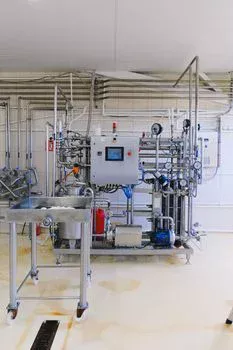
Selecting a wastewater treatment vendor in Canberra requires a technical audit of contracted membrane flux rates (15–25 LMH) and energy efficiency ratings (0.6–0.8 kWh/m³) to ensure alignment with LMWQCC's 2025 performance benchmarks. Procurement managers must prioritize vendors who offer modularity. A modular Canberra-compliant MBR system for industrial wastewater allows a facility to scale capacity as production increases without requiring a total overhaul of the civil works.
Engineers should evaluate vendors based on three primary pillars: membrane durability, automation sophistication, and local support. A critical red flag is a vendor unable to provide Australian-specific references or one that specifies high chemical consumption for membrane maintenance. High-quality MBR membrane modules should come with a minimum 5-year warranty and documented reference installations on similar effluent.
Where surface land is the binding constraint — common in Hume, where site coverage often exceeds 50% — an Underground Package Sewage Treatment Plant (WSZ Series) buries the bioreactor below grade and frees the surface for production or parking. Underground placement also insulates the biology from Canberra's winter temperature swings, which steadies nitrification through the colder months.
Who This Is For and Next Step
ACT food processors, dairies, pharmaceutical plants, and laboratories sizing treatment between 100 and 2,000 m³/day are the fit here, especially where Icon Water surcharges or footprint limits drive the decision. Remote mining camps and domestic-only flows should look at simpler packaged options. To convert these bands into a firm quotation, send your daily flow, influent COD/TSS/FOG, and target trade waste limits, then request a CapEx and OpEx estimate sized to your site.
Frequently Asked Questions
What are the Icon Water trade waste discharge limits for COD and TSS?
Icon Water trade waste agreements in the ACT require industrial dischargers to keep chemical oxygen demand below 500 mg/L and total suspended solids below 300 mg/L, with pH between 6 and 10 and FOG at or below 100 mg/L. High-strength sectors such as dairy and pharmaceuticals need on-site pre-treatment, typically DAF plus MBR, to stay inside those numbers and avoid surcharges. Severe non-compliance can draw fines up to $1 million under the ACT Environmental Protection Act 1997.
How much does an industrial MBR system cost in Australia?
An industrial MBR system in Australia costs $2M–$4M at 100 m³/day and $35M–$50M at 2,000 m³/day, with energy near $0.15–$0.25 per m³ at 0.6–0.8 kWh/m³. Membrane replacement reserves run $50–$100 per m² every 5–8 years. Energy accounts for roughly 40% of OpEx, so VFD-controlled blowers recover their cost quickly on continuous-duty plants.
Why does DAF pre-treatment matter for high-strength wastewater?
DAF pre-treatment strips FOG and suspended solids before they reach the membranes, protecting the MBR from blinding and flux loss. Influent at 1,200–2,500 mg/L COD and 300–600 mg/L FOG typically needs a DAF stage ahead of the bioreactor. A Fyshwick food processor pairing DAF with a modular MBR cut COD from 1,200 to 450 mg/L and saved an estimated $200,000 per year in trade waste surcharges.
How does MBR footprint reduction benefit food processing plants?
Membrane bioreactor footprint reduction lets food processing plants treat effluent on fully developed blocks where clarifiers will not fit. MBR systems occupy about 40% of the space of conventional activated sludge, because membranes replace secondary settling and allow MLSS at 8,000–12,000 mg/L. In Hume, where site coverage often exceeds 50%, that difference decides whether expansion happens on site or on new land.
Is the WSZ underground package plant suitable for Canberra industrial sites?
Yes, for small-to-mid flows where surface space is the binding constraint. The Underground Package Sewage Treatment Plant (WSZ Series) places the bioreactor below grade, leaving the surface for parking or storage, and its modular design scales with production. Facilities with high-strength effluent or larger flows should still size a dedicated DAF-plus-MBR train instead.