Solar powered wastewater treatment plant CAPEX cost runs from $2.15M at 0.5 MGD to $16.1M at 5 MGD for a hybrid DAF-RO-MBR train with on-site PV. The array cuts grid demand while the process train meets EPA and EU discharge limits. A 5 MGD plant with a 1 MW PV system, roughly 4,000 panels at 250 W each, typically offsets about 40% of annual energy use and saves $200K–$500K per year.
Effluent quality holds at 92–97% COD removal at the DAF stage and 99% TSS reduction at the MBR stage. PV panels retain 80% or more of nameplate output over a 15–20 year service life. Those two numbers frame the buying decision: energy offset drives payback, and effluent quality drives permit compliance. Every section below maps to one of those outcomes.
How Photovoltaic Wastewater Treatment Plants Work
A photovoltaic wastewater treatment plant combines DAF, MBR, and RO stages with on-site solar generation, cutting plant energy use by 30–50% while keeping effluent compliant. PV power feeds the load directly through inverters; grid-tie sites export surplus under net metering. Off-grid sites rely on lithium-ion banks sized for diurnal swings, with 10–15% diesel backup during low-irradiance stretches.
The Dissolved Air Flotation (DAF) stage strips suspended solids and FOG from influent at 50–500 mg/L TSS, hitting 92–97% removal. A unit such as the DAF system for PV-WWTP pre-treatment draws roughly 0.2 kWh/m³ for pumping and the recycle compressor. Wastewater then enters the Membrane Bioreactor (MBR), where MLSS held at 8,000–12,000 mg/L drives BOD reduction while 0.1 µm membranes polish TSS to non-detect levels. Aeration blowers account for about 0.5 kWh/m³.
Reverse Osmosis (RO) follows when dissolved solids or micropollutants must come down; high-pressure pumps use around 0.8 kWh/m³ with 95% salt rejection. UV or chlorination disinfection closes the train at 0.1 kWh/m³. Surplus PV output charges battery storage, and an RO system for PV-WWTP dissolved solids removal sized to plant flow handles the most energy-intensive step. Array sizing therefore follows the RO stage first.
Off-grid designs must oversize inverters by about 1.2× to ride through pump and blower inrush. Grid-tie arrays skip that margin, which is one reason they install cheaper. Table 1 summarizes stage loads against effluent targets.
| Process Stage | Primary Function | Key Performance Metric | Typical Energy Demand (kWh/m³) |
|---|---|---|---|
| Dissolved Air Flotation (DAF) | TSS, FOG, and particulate removal | 92–97% removal efficiency (50–500 mg/L influent) | 0.2 |
| Membrane Bioreactor (MBR) | Biological treatment, solids separation | MLSS 8,000–12,000 mg/L, 99% TSS reduction | 0.5 |
| Reverse Osmosis (RO) | Dissolved solids and micropollutant removal | 95% dissolved solids rejection rate | 0.8 |
| Disinfection | Pathogen inactivation | Log reduction (e.g., 4-log for pathogens) | 0.1 |
| PV Array + Battery Storage | Renewable energy generation & supply | Offsets 30–50% of total energy demand | N/A (Energy Source) |
PV System Sizing for Wastewater Treatment Plants
PV capacity for a wastewater treatment plant scales with flow: roughly 250 kW of PV per 1 MGD covers the 1.6 kWh/m³ hybrid train, with about 125 kWh of lithium-ion storage per MGD for daily autonomy. A 1 MGD plant drawing 6,050 kWh/day needs around 1,000 panels at 250 W. A 5 MGD plant scales to 4,800 panels and 600 kWh of storage on about 5 acres.
Local irradiance shifts those numbers sharply. Arizona at about 6.5 kWh/m²/day needs roughly 30% less panel area than Germany at 3.5 kWh/m²/day for the same energy offset. Grid-tie inverters above 95% efficiency handle export, while off-grid inverters at about 90% efficiency carry the 1.2× oversizing margin. Berkeley Lab's Utility-Scale Solar Data Update, which holds project-level data on 1,760 solar projects installed through 2024, is a practical sanity check for US array-yield assumptions.
| WWTP Flow Rate (MGD) | Daily Energy Demand (kWh) | PV Capacity (kW) | Panel Count (250W/panel) | Battery Storage (kWh) | Land Area (acres) |
|---|---|---|---|---|---|
| 0.5 | 3,025 | 125 | 500 | 60 | 0.5 |
| 1 | 6,050 | 250 | 1,000 | 125 | 1.0 |
| 2.5 | 15,125 | 600 | 2,400 | 300 | 2.5 |
| 5 | 30,250 | 1,200 | 4,800 | 600 | 5.0 |
Off-Grid PV WWTP Battery Sizing Guide
Off-grid PV WWTP battery sizing starts from the night-time load, not from panel count. The design basis in Table 2 is about 125 kWh of lithium-ion storage per MGD for daily autonomy, so a 5 MGD plant carries 600 kWh. Plants facing monsoon seasons or high-latitude winters scale that bank upward and keep the 10–15% diesel backup for prolonged cloud cover.
Chemistry choice moves both CAPEX and replacement cycles. Lithium-ion banks often last 10–15 years against 5–7 years for lead-acid, and they tolerate deeper daily cycling. Hold the battery room near 20°C with forced ventilation, since capacity fades quickly outside that band.
Hybrid DAF-RO-MBR Performance Specs
Hybrid DAF-RO-MBR systems deliver 92–97% COD removal and 99% TSS reduction against typical municipal and industrial discharge targets. According to 40 CFR 133.102, EPA secondary treatment holds BOD5 and TSS at 30 mg/L as a 30-day average, with pH between 6.0 and 9.0. The same section caps the 7-day average at 45 mg/L and requires at least 85 percent 30-day removal for both parameters. The regulation itself sets no COD limit.
Earlier guidance often listed COD below 50 mg/L beside EPA secondary; the rule covers BOD5, SS, and pH only. EU urban wastewater thresholds in the draft table remain COD below 125 mg/L, BOD below 25 mg/L, and TSS below 35 mg/L. In the US, discharge permits issued under the NPDES program, which regulates point-source pollutants, control what each plant must actually meet.
DAF drops COD from a typical 500 mg/L feed to about 200 mg/L; the MBR stage, often fitted with PVDF flat-sheet MBR modules for solar-powered WWTPs, cuts COD to ≤50 mg/L and NH₄-N to ≤1 mg/L. RO with 8-inch spiral-wound elements at 99% salt rejection (e.g., Dow Filmtec BW30-400) pushes COD below 10 mg/L for reuse. Stage loads are DAF 0.2 kWh/m³, MBR 0.5 kWh/m³, RO 0.8 kWh/m³, and disinfection 0.1 kWh/m³. Most plants we size for industrial reuse run at the lower end of those values once influent variability is smoothed upstream.
Maintenance is routine but easy to skip under production pressure. DAF skimmers need adjustment so the stage does not drift off-target; MBR membranes require annual replacement; RO membranes require quarterly Clean-In-Place (CIP) with citric acid to hold flux. Skipping two CIP cycles usually shows up as rising transmembrane pressure long before permeate quality moves.
| Parameter | Influent (mg/L) | DAF Effluent (mg/L) | MBR Effluent (mg/L) | RO Effluent (mg/L) | EPA/EU Limits (mg/L) |
|---|---|---|---|---|---|
| COD | 500–1000 | 200–400 | ≤50 | <10 | <125 (EU), <50 (EPA secondary) |
| BOD | 250–500 | 80–150 | ≤10 | <5 | <25 (EU), <30 (EPA secondary) |
| TSS | 150–300 | 20–50 | Non-detectable | Non-detectable | <35 (EU), <30 (EPA secondary) |
| NH₄-N | 20–50 | 15–40 | ≤1 | <0.5 | <10 (EU), <2 (EPA tertiary) |
| pH | 6.0–9.0 | 6.5–8.5 | 6.5–8.5 | 6.0–8.0 | 6.0–9.0 |
Solar Powered Wastewater Treatment Plant CAPEX and Cost Models
A 1 MGD photovoltaic wastewater treatment plant runs about $3.2–3.9M in total CAPEX, with the PV array and battery storage typically claiming 35–45% of the equipment budget. A 5 MGD plant lands near $12.5–16.1M with materially better cost per MGD. Annual OPEX for a 1 MGD plant is about $150K–$200K.
According to the U.S. Department of Energy, the Federal ITC is 30% for PV systems installed from 2022 through 2032. State rebates such as California's SGIP and MACRS accelerated depreciation each compress payback by 1–3 years. Incentive timing matters as much as amount, since a 2032 commissioning deadline shapes procurement for multi-year EPC builds.
| Flow Rate (MGD) | PV System ($) | DAF ($) | RO ($) | MBR ($) | Battery Storage ($) | Installation ($) | Total CAPEX ($) | Annual OPEX ($) |
|---|---|---|---|---|---|---|---|---|
| 0.5 | $600,000 | $300,000 | $450,000 | $400,000 | $100,000 | $300,000 | $2,150,000 | $90,000 |
| 1 | $1,200,000 | $500,000 | $800,000 | $700,000 | $200,000 | $500,000 | $3,900,000 | $180,000 |
| 2.5 | $2,800,000 | $1,100,000 | $1,800,000 | $1,500,000 | $450,000 | $1,100,000 | $8,750,000 | $420,000 |
| 5 | $5,000,000 | $2,000,000 | $3,500,000 | $2,800,000 | $800,000 | $2,000,000 | $16,100,000 | $750,000 |
Hybrid DAF MBR RO Cost per MGD Benchmarks
Hybrid DAF MBR RO cost per MGD falls as flow rises, because DAF tanks, RO racks, and MBR cassettes each gain economies before civil works do. The 0.5 MGD build in Table 4 spends $2,150,000 on half a MGD, while the 5 MGD build spreads $16,100,000 across five times the flow. Installation adds another 15–20% on top of equipment for civil works and commissioning.
Energy is the lever that pays for the array. According to the US EPA, energy costs often make up 25 to 30 percent of a utility's total operation and maintenance costs. The same EPA guidance notes that drinking water and wastewater plants are often the largest energy consumers in a municipality, at 30 to 40 percent of total energy consumed. The 30–50% grid offset in a PV-WWTP therefore flows almost straight to the bottom line, and EPA adds that municipalities can save 15 to 30 percent through efficiency measures.
Payback arithmetic stays simple: Payback Period = (Total CAPEX − Incentives) / (Annual Energy Savings + Incentives). Payback runs 7–12 years for grid-tie and 10–15 years off-grid. For projects in regulated industrial corridors where state pollution control boards set the bar, reviewing the OPCB compliance standards for solar-powered WWTPs early in the design phase prevents costly retrofits later.
For a forward view of where these numbers move next, the Photovoltaic Wastewater Treatment Plant: 2027 Engineering Specs, 0.12 kWh LCOE Benchmark analysis extends this cost model to next-cycle LCOE targets. Reading it beside Table 4 shows which line items are still falling.
Grid-Tie Solar Wastewater Plant CAPEX vs Off-Grid Autonomy
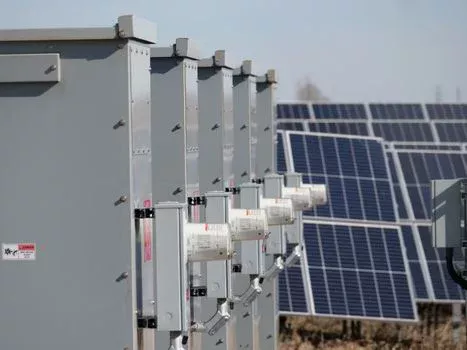
Grid-tie PV-WWTPs win on CAPEX and uptime, while off-grid systems win on energy autonomy at remote sites without utility access. Grid-tie reaches 99.9% uptime because the utility covers solar shortfalls. Off-grid typically lands at 95% uptime when battery sizing and generator runtime are planned correctly.
For a 1 MGD site, grid-tie CAPEX sits near $2.8M (no batteries) versus $3.5M for an off-grid build that needs batteries plus diesel. Off-grid is the only realistic option where trenching a feeder line costs more than the extra battery and generator capacity. It must still comply with local air-quality rules on diesel emissions. Sonoma Water's nearly 2 MW AC grid-tie array shows the model at municipal scale; for a deeper look at the next design cycle, see 2027 PV-WWTP equipment specs and cost models.
Off-grid plants still plan diesel runtime for prolonged cloud cover, since generator emissions fall under local air-quality permits. The table below lines up the two architectures factor by factor.
| Factor | Grid-Tie PV-WWTPs | Off-Grid PV-WWTPs |
|---|---|---|
| CAPEX (1 MGD) | Lower ($2.8M) | Higher ($3.5M) |
| OPEX | Lower energy costs (net metering) | Higher fuel costs (diesel backup) |
| Reliability | Very High (99.9% uptime with grid backup) | High (95% uptime with battery/diesel backup) |
| Scalability | Easier PV expansion | More complex (requires larger battery/generator) |
| Compliance | IEEE 1547 interconnection standards | Local air quality rules for diesel generators |
| Energy Independence | Limited (relies on grid) | High (self-sufficient) |
Pitfalls and Troubleshooting Checklist
Most PV-WWTP downtime traces back to shading, undersized inverters, poor battery ventilation, and skipped membrane CIPs. Clearing those items recovers up to 30% of lost runtime. PV panel shading from vegetation or dust alone can drop output 10–20% before operators notice the trend on the SCADA log. A 6–7 item field checklist covers the recurring issues without bloating the SOP:
- PV panel shading or dust buildup — trim vegetation and schedule monthly cleaning.
- Inverter undersizing (off-grid) — oversize by 1.2× and stagger heavy-load starts.
- Battery overheating — hold battery room near 20°C with forced ventilation.
- DAF skimmer clogging — weekly inspection, especially on high-FOG streams.
- RO fouling — quarterly CIP with citric acid; watch transmembrane pressure.
- MBR permeate drift — raise backflush intensity and check for membrane damage.
- Generator emissions — track runtime hours against local air-quality permits.
| Symptom | Likely Cause | Recommended Fix |
|---|---|---|
| Low PV energy yield | PV panel shading or dust buildup | Trim surrounding vegetation; implement regular panel cleaning schedule. |
| Frequent inverter tripping | Inverter undersizing (especially off-grid) or high peak loads | Ensure 1.2× oversizing for off-grid; reduce simultaneous high-draw equipment use. |
| Battery overheating / reduced lifespan | Inadequate ventilation or incorrect ambient temperature | Install proper ventilation; maintain battery room temperature at ~20°C. |
| High DAF effluent TSS / poor clarification | DAF skimmer clogging or improper adjustment | Perform weekly skimmer inspection and adjustment; clean nozzles as needed. |
| High RO pressure / low permeate flow | RO membrane fouling | Increase CIP frequency (quarterly); consider membrane replacement if irreversible. |
| MBR permeate quality degradation | MBR membrane fouling or integrity issue | Increase backflush frequency/intensity; perform chemical cleaning; check for membrane damage. |
Who This Is For and Next Step
This guide fits EPC contractors and municipal or industrial owners sizing plants from 0.5 to 5 MGD with daily demand from 3,025 to 30,250 kWh/day. It targets sites with daily irradiance above 4.5 kWh/m²/day and a hybrid DAF-RO-MBR train. It is less useful for greenfield plants under 0.25 MGD, where a packaged MBR alone usually wins. High-temperature sites where panel derating above 25°C pushes array sizing beyond the budget should also look elsewhere.
To move from concept to a sized quotation, send your daily flow, influent COD and TSS, target effluent limits, and the site's average irradiance. Our engineering team maps those inputs to a full CAPEX and OPEX model. You can request a sizing and CAPEX/OPEX estimate at any stage of the design.
Frequently Asked Questions
What is the minimum solar irradiance needed for a photovoltaic wastewater treatment plant?
A minimum average daily solar irradiance of 4.5 kWh/m²/day is generally recommended for economically viable PV-WWTP operation, typical of regions like Spain or California. Below this threshold, off-grid systems may require significantly oversized PV arrays (e.g., 1.5× capacity) to compensate for lower sunlight availability, increasing initial CAPEX.
Can a photovoltaic wastewater treatment plant handle industrial wastewater with high TDS?
Yes, PV-WWTPs can treat industrial wastewater with high Total Dissolved Solids (TDS) when the RO stage uses high-rejection membranes (e.g., Dow Filmtec BW30-400 at 99% salt rejection). DAF pre-treatment is critical when influent TSS exceeds 500 mg/L, protecting downstream membranes from fouling and flux loss.
What is a realistic PV wastewater plant payback period in 2026?
Expect 7–12 years for grid-tie plants and 10–15 years for off-grid builds, before the 30% Federal ITC and state incentives compress the timeline. A 1 MGD plant saving $200K–$500K per year on energy carries the arithmetic. Sites with irradiance above 4.5 kWh/m²/day and net metering sit at the fast end of those ranges.
What is the lifespan of a photovoltaic wastewater treatment plant?
Major PV-WWTP components age on different clocks. PV panels typically last 25–30 years with gradual output loss, while inverters usually need replacement every 10–15 years. RO and MBR membrane elements last about 3–5 years, depending on influent quality and CIP discipline. Lithium-ion battery banks often last 10–15 years; lead-acid banks typically last 5–7 years.
Are there financing options for photovoltaic wastewater treatment plants?
Yes, several financing paths support PV-WWTP builds. Property Assessed Clean Energy (PACE) loans repay through property taxes over long terms. Green bonds fund environmentally beneficial capital projects. Leasing programs and power purchase agreements (PPAs) can cut upfront cost for municipalities and industrial owners.
How does climate change affect photovoltaic wastewater treatment plant design?
Climate change drives two sizing adjustments on PV-WWTPs. Higher rainfall intensity may need larger DAF hydraulic capacity (e.g., 20% oversizing) for peak flows and TSS spikes. Higher ambient temperature cuts PV panel efficiency by about 0.5% per °C above 25°C, so warmer sites need slight array oversizing to hold target energy output.