Baltimore’s Back River and Patapsco WWTPs process over 250 million gallons of wastewater daily, with biosolids volumes requiring EPA-compliant equipment to meet Chesapeake Bay TMDL limits, such as less than 3 mg/L total nitrogen. Top suppliers like RDP Technologies offer precision truck loading systems for biosolids, while local industrial buyers increasingly adopt MBR systems, which achieve 92–97% TSS removal, or DAF units, which have a 4–300 m³/h capacity, to avoid fines. This guide compares 2025 equipment specs, costs, ranging from $50,000 to $5 million CAPEX, and compliance trade-offs for Baltimore’s unique regulatory landscape.
Why Baltimore’s Sewage Treatment Needs Are Unique: TMDL Compliance and Biosolids Challenges
Baltimore’s municipal wastewater infrastructure is governed by the EPA’s Chesapeake Bay Total Maximum Daily Load, which mandates a nitrogen discharge limit of less than 3 mg/L and phosphorus limits of less than 0.3 mg/L. These standards, updated in the EPA 2024 Chesapeake Bay Program guidelines, are among the most stringent in the United States. For plant engineers at the Back River WWTP, this necessitates equipment capable of managing massive biosolids volumes—approximately 1,200 wet tons per day—while maintaining precise nutrient removal. Generic equipment often fails to account for the specific chemical-biological balance required to meet these thresholds under varying influent loads.
Operational challenges in the Mid-Atlantic region are further complicated by seasonal temperature fluctuations. Baltimore experiences temperature swings ranging from 30°F in winter to 90°F in summer, which directly impacts the viscosity and handling characteristics of sludge. In conventional steep-walled hoppers, these temperature shifts often lead to "sludge bridging" or "rat-holing," where 20–30% moisture content sludge becomes stuck, halting the load-out process. Automated storage and loading systems with moving floor technology are increasingly required to ensure consistent flow to land application sites.
Industrial dischargers within Baltimore County face a different but equally rigorous set of constraints. Facilities must adhere to EPA pretreatment standards, typically requiring effluent to stay below 200 mg/L BOD and 250 mg/L TSS to avoid heavy municipal surcharges. For food processors and textile manufacturers, this means high-efficiency pretreatment is not an option but a financial necessity. Failure to meet these local standards can result in daily fines exceeding $10,000, making the selection of a reliable sewage treatment equipment supplier in baltimore a critical procurement decision for 2025.
Sewage Treatment Equipment Options for Baltimore: Process Comparisons and Use Cases
Industrial wastewater equipment selection in Baltimore is dictated by the influent’s chemical oxygen demand and total suspended solids concentrations, which often exceed 2,000 mg/L in food processing applications. To address these high-load environments, DAF systems for Baltimore’s high-FOG industrial wastewater are the primary choice for removing fats, oils, and grease, achieving 92–97% TSS removal through micro-bubble flotation. These units operate with a capacity of 4–300 m³/h, which is essential for how Baltimore’s meat processors can meet EPA FOG limits with DAF systems.
For facilities with restricted footprints, such as those in urban Baltimore or the Inner Harbor industrial corridor, MBR systems for Baltimore’s space-constrained urban WWTPs provide a 60% smaller footprint compared to conventional activated sludge. The WSZ series MBR produces high-quality effluent with TSS levels below 1 mg/L, making it the gold standard for meeting the Chesapeake Bay TMDL nitrogen limits. While the CAPEX is higher, the elimination of secondary clarifiers and the high degree of automation provide long-term operational stability.
| Equipment Type | Removal Efficiency (TSS) | Footprint Requirement | Energy Use (kWh/m³) | Primary Baltimore Use Case |
|---|---|---|---|---|
| DAF | 92–97% | Medium | 0.2–0.5 | FOG removal for food processing & textiles |
| MBR (WSZ Series) | >99% | Low (Compact) | 0.8–1.5 | TMDL compliance for nitrogen & phosphorus |
| Conventional Activated Sludge | 85–90% | High | 0.4–0.7 | Large-scale municipal secondary treatment |
| Biosolids Moving Floors | N/A | Medium | 0.1–0.3 | High-volume sludge handling (Back River/Patapsco) |
Biosolids handling remains a major bottleneck for Baltimore’s municipal operators. Moving floor storage systems are superior to conventional hoppers for managing 50–200 m³/h flow rates of dewatered cake. These systems prevent the "bridging" common in the Mid-Atlantic climate, ensuring that trucks are loaded in minutes rather than hours. This level of efficiency is mirrored in global case studies: how Cape Town’s WWTPs handle biosolids volumes like Baltimore’s, where automated load-out systems have reduced operational downtime by 35%.
2025 Cost Benchmarks for Baltimore Sewage Treatment Equipment: CAPEX, OPEX, and ROI Calculations
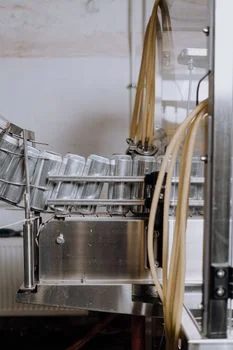
The 2025 capital expenditure for sewage treatment equipment in the Baltimore region ranges from $80,000 for modular pretreatment units to over $5 million for integrated membrane bioreactor systems. These figures are influenced by the complexity of Baltimore’s influent—particularly high-strength industrial waste—and the necessity for PLC-controlled chemical dosing for Baltimore’s TMDL compliance. Automated dosing systems, while adding $20,000 to $60,000 in upfront costs, typically reduce chemical waste by 25%, significantly lowering annual OPEX.
Operational expenditure in Baltimore is heavily weighted toward energy consumption, which accounts for 40–60% of total costs. With local industrial electricity rates averaging between $0.12 and $0.15/kWh, energy-efficient blowers and high-flux membranes are essential. Chemical costs for phosphorus precipitation and pH adjustment contribute another 20–30% of OPEX. For a typical 100 m³/day industrial facility, the ROI on a high-efficiency DAF unit is often realized within 18–24 months simply through the avoidance of municipal BOD surcharges and FOG-related fines.
| Equipment System | Estimated CAPEX Range | Annual OPEX (Est.) | Hidden Costs (Permits/Install) | ROI Driver |
|---|---|---|---|---|
| DAF (Pretreatment) | $80,000 – $500,000 | $15,000 – $40,000 | $25,000 – $75,000 | 90% reduction in FOG surcharges |
| MBR (Full Treatment) | $1.2M – $5.0M | $60,000 – $150,000 | $100,000 – $250,000 | 60% land savings; TMDL compliance |
| CAS (Traditional) | $500,000 – $2.0M | $40,000 – $90,000 | $80,000 – $180,000 | Lower initial tech investment |
| Biosolids Load-out | $250,000 – $1.5M | $10,000 – $30,000 | $50,000 – $120,000 | Reduced labor & hauling downtime |
Beyond CAPEX and OPEX, Baltimore buyers must account for hidden costs such as MDE permitting and specialized installation required for heavy industrial zones. Training and commissioning typically add an additional $5,000–$20,000. However, when compared to EPA enforcement data from 2023, which shows Baltimore facilities facing six-figure penalties for non-compliance, the "compliance ROI" of advanced MBR or DAF systems becomes the primary justification for budget approval.
Top 5 Sewage Treatment Equipment Suppliers in Baltimore: 2025 Comparison Matrix
Evaluating a sewage treatment equipment supplier in Baltimore requires a comparison of localized service capabilities, compliance documentation for Maryland Department of the Environment standards, and equipment lead times. The following matrix provides a data-driven comparison of the leading suppliers serving the Baltimore metropolitan area, focusing on their ability to meet TMDL and industrial pretreatment requirements.
| Supplier | Specialization | TMDL Compliance Support | Lead Time (Weeks) | Baltimore Presence |
|---|---|---|---|---|
| RDP Technologies | Biosolids & Lime Slaking | Excellent (Nutrient Focus) | 16–24 | Local HQ / 45+ Years |
| HydropureWater | MBR & DAF Systems | High (Automated Dosing) | 12–18 | Global / Direct Support |
| Chardon Labs | Chemical Treatment | Moderate (Cooling Focus) | 2–4 | Local Service / 60 Years |
| Baltimore Aircoil | Filtration & Bleed Control | Moderate (Mechanical) | 8–12 | Local HQ / Global |
| National Water Service | Small-Scale Modular | Low (Pretreatment) | 4–8 | Regional Distributor |
RDP Technologies remains the standard for large-scale biosolids handling at municipal plants like Patapsco, offering specialized truck loading systems that mitigate the risks of Baltimore’s seasonal sludge bridging. HydropureWater serves the growing industrial sector, providing MBR and DAF systems that integrate automated dosing to ensure consistent compliance with less than 3 mg/L nitrogen limits. Chardon Labs and Baltimore Aircoil are the preferred partners for cooling tower and boiler-specific water care, while National Water Service provides rapid-response solutions for smaller commercial applications.
How to Select the Right Equipment for Your Baltimore Facility: A Step-by-Step Decision Framework
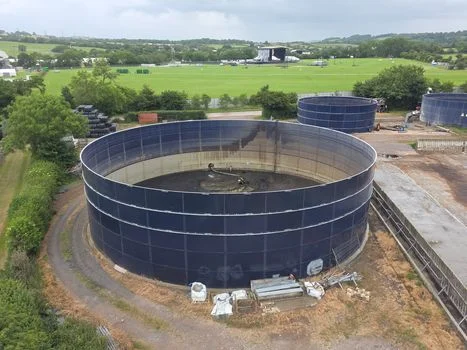
Selecting sewage treatment equipment for a Baltimore facility involves a five-step engineering audit that aligns influent characteristics with the stringent discharge permits of the Back River and Patapsco sewersheds. This framework ensures that procurement managers do not over-specify for simple pretreatment or under-specify for complex TMDL compliance.
- Step 1: Characterize Influent: Conduct a 24-hour composite sampling to determine COD, T