Why Cape Town's Sewage Treatment Equipment Market Needs a Data-Driven Guide
City of Cape Town still regulates industrial sewer discharges under the Wastewater and Industrial Effluent By-law, 2013, which keeps compliance pressure high on facility managers and municipal engineers. A Cape Town food processing plant was fined more than $150,000 for repeatedly discharging wastewater with chemical oxygen demand (COD) above the stipulated limit, which shows the cost of non-compliance. The local market has more than 25 sewage treatment equipment suppliers in Cape Town, ranging from small biological-plant builders such as Maskam Water to industrial DAF system specialists such as LWT, making direct comparison difficult. Top-ranking supplier lists do not include the engineering specifications, cost models, or compliance frameworks procurement managers ask for. This guide fills that gap with 2026 data: the DWAF General Limit of 75 mg/L COD, CAPEX ranges of $500K–$5M for municipal plants, and a five-step selection framework that maps technology to use case.
Key Engineering Parameters for Cape Town Sewage Treatment Equipment
The DWAF General Limit of 75 mg/L COD is the main effluent benchmark that drives equipment selection for discharge to a water resource. According to GN 665 of 2013 Table 2.1, General Limits also set TSS at 25 mg/L and ammonia as nitrogen at 6 mg/L; earlier summaries often cited 3 mg/L NH₃-N, which matches the irrigation table in the same notice, not the discharge table. Schedule 1 of the City of Cape Town bylaw sets municipal sewer acceptance COD at 5 000 mg/l, while food-processing tenders and reuse targets often use much tighter COD figures such as below 50 mg/L. Biological systems in Cape Town must also handle influent temperatures of 12–25°C without losing removal efficiency. Hydraulic retention time (HRT) sets tank size: conventional activated sludge needs 6–12 h, while membrane bioreactor (MBR) systems such as HydropureWater's WSZ Series run at 4–8 h and still meet or beat those effluent numbers. Energy use is a major OPEX driver; conventional plants draw 0.4–0.6 kWh/m³, while MBR systems draw 0.6–0.8 kWh/m³ for higher-quality effluent (Veolia's 2025 whitepaper on energy efficiency). Footprint matters in dense Cape Town sites: an MBR plant at 500 m³/day typically needs about 200 m² versus roughly 500 m² for a conventional activated sludge plant of the same capacity.
| Parameter | DWAF General Limit | City of Cape Town Industrial Limit (Example: Food Processing) | Conventional Activated Sludge Performance (Typical) | MBR System Performance (Typical) |
|---|---|---|---|---|
| Chemical Oxygen Demand (COD) | 75 mg/L | <50 mg/L | <75 mg/L | <30 mg/L |
| Total Suspended Solids (TSS) | 25 mg/L | <20 mg/L | <25 mg/L | <5 mg/L |
| Ammonia Nitrogen (NH₃-N) | 3 mg/L | <2 mg/L | <5 mg/L | <1 mg/L |
| Hydraulic Retention Time (HRT) | N/A | N/A | 6–12 hours | 4–8 hours (e.g., HydropureWater WSZ Series) |
| Energy Consumption | N/A | N/A | 0.4–0.6 kWh/m³ | 0.6–0.8 kWh/m³ |
| Footprint (for 500 m³/day) | N/A | N/A | ~500 m² | ~200 m² |
Supplier vs. Technology Matrix: Matching Equipment to Your Use Case
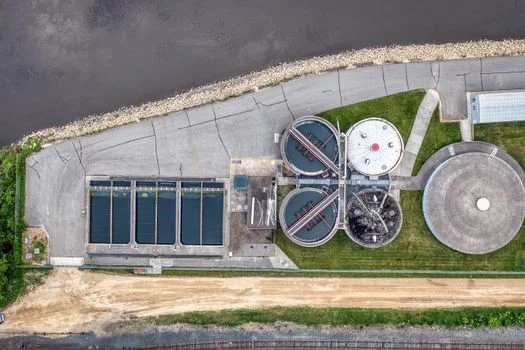
Cape Town equipment suppliers each tend to specialize in one flow range, and matching the supplier to your flow range is the fastest way to avoid over- or under-specifying the plant. For 1–100 m³/day (rural communities, isolated developments), biological package plants such as the underground package sewage treatment plant for small-scale projects are the standard pick; Maskam Water and FLOWLINE Technology focus on this segment. For 100–2,000 m³/day industrial sites with fats, oils, and grease (FOG), especially food processing, a Dissolved Air Flotation (DAF) unit such as the high-efficiency DAF system for industrial wastewater pretreatment handles primary treatment and FOG removal at moderate CAPEX. Where the site must meet a stricter City of Cape Town permit condition or produce reuse water, an MBR integrated wastewater treatment system delivers TSS below 5 mg/L and COD below 30 mg/L at a higher CAPEX. For 500–5,000 m³/day municipal projects, conventional activated sludge is the cost-effective default and MBR is the choice when effluent quality or footprint is the binding constraint; Veolia and LWT are recognized for large municipal and industrial work in this band.
| Use Case Category | Recommended Technology | Key Suppliers (Examples of Specialization) | Compliance Fit |
|---|---|---|---|
| Municipal (500–5,000 m³/day) | Conventional Activated Sludge, MBR Systems | Veolia, LWT, HydropureWater | DWAF General Limit (Activated Sludge), Stricter City Bylaws/Reuse (MBR) |
| Industrial (100–2,000 m³/day) | DAF (Pretreatment), MBR Systems, SBR | HydropureWater, Veolia, LWT | City of Cape Town Industrial Limits, FOG Removal (DAF), Water Reuse (MBR) |
| Small-scale (1–100 m³/day) | Biological Package Plants (e.g., SBR, Fixed-Film) | Maskam Water, FLOWLINE Technology | DWAF General Limit for communities/rural areas |
2026 Cost Models: CAPEX, OPEX, and ROI for Cape Town Projects
Cost ranges in 2026 scale steeply with flow: a small biological package plant starts near $50K, while a large municipal MBR plant can run up to $7M. Small-scale projects at 1–100 m³/day land at $50,000–$500,000 CAPEX. Municipal projects at 500–5,000 m³/day using conventional activated sludge run $2.5M–$5M CAPEX, while MBR systems at the same flow run $3.5M–$7M because of membrane cost and the controls they need. Industrial projects at 100–2,000 m³/day with DAF or MBR typically see $1M–$4M CAPEX. OPEX breaks down as energy 40–50%, chemicals 20–30%, labor 10–20%, and maintenance 10–15%. MBR cuts labor about 30% through automation but raises energy about 20% versus conventional activated sludge. ROI is driven first by avoiding fines, since monthly penalties can hit $10,000, then by water reuse at $0.50–$1.50/m³ for industrial users, and finally by finance and incentive options that GreenCape and Western Cape partners flag for water-efficient upgrades. A Cape Town textile plant that upgraded from activated sludge to MBR cut OPEX by 25% and paid back the higher CAPEX in 4.2 years through lower fines and reuse credits.
| Project Scale / Technology | Typical CAPEX Range (2026) | Typical OPEX Breakdown (Key Components) | Key ROI Drivers |
|---|---|---|---|
| Small-scale (1–100 m³/day) Biological Plants | $50K–$500K | Energy (45%), Labor (25%), Maintenance (15%), Chemicals (15%) | Compliance avoidance, basic effluent discharge |
| Municipal (500–5,000 m³/day) Conventional Activated Sludge | $2.5M–$5M | Energy (40%), Labor (20%), Chemicals (25%), Maintenance (15%) | DWAF compliance, community health |
| Municipal (500–5,000 m³/day) MBR Systems | $3.5M–$7M | Energy (50%), Labor (15%), Chemicals (20%), Maintenance (15%) | High effluent quality, smaller footprint, potential for reuse |
| Industrial (100–2,000 m³/day) DAF/MBR | $1M–$4M | Energy (45%), Chemicals (30%), Labor (10%), Maintenance (15%) | City bylaw compliance, FOG removal, water reuse, fine avoidance |
Zero-Risk Selection Framework: 5 Steps to Avoid Costly Mistakes
A structured five-step framework reduces procurement risk by forcing the buyer to lock down compliance, validate technology on real wastewater, and price the deal over a 10-year horizon before signing. Most plants we size for Cape Town clients run at the lower end of the CAPEX band when influent is steady and the city permit matches DWAF General Limits; the framework below is what gets you there without surprises. This methodical approach makes sure the chosen sewage treatment equipment supplier in Cape Town delivers a solution sized for long-term compliance and operational efficiency.
- Step 1: Define Effluent Requirements. Precisely identify all applicable effluent standards, including DWAF General Limits, specific City of Cape Town bylaws for industrial dischargers, and any internal targets for water reuse. For example, a food processing plant might require COD below 50 mg/L, tighter than the DWAF general limit of 75 mg/L, even though Schedule 1 sewer acceptance COD sits at 5 000 mg/l.
- Step 2: Pilot Test Shortlisted Technologies. Conduct pilot trials (e.g., a 3-month trial for MBR vs. DAF systems) using actual influent samples. This step provides real-world performance data on removal rates, energy consumption, and sludge production, validating theoretical claims and minimizing post-installation surprises.
- Step 3: Verify Supplier Credentials. Confirm that shortlisted suppliers possess necessary certifications (e.g., ISO 9001), DWAF registration, and a proven track record with relevant case studies in similar industries and geographical contexts. Request references and inspect existing installations.
- Step 4: Compare Total Cost of Ownership (TCO). Beyond initial CAPEX, evaluate the total cost of ownership over a 10-year operational period. This includes factoring in OPEX components like energy, chemicals, labor, and maintenance, using the cost models outlined in the previous section to make an economically sound decision.
- Step 5: Negotiate Performance Guarantees. Secure contractual performance guarantees from the chosen supplier. These should include specific effluent quality parameters (e.g., 'effluent COD <50 mg/L') and outline penalties or corrective actions if these standards are not consistently met, such as the supplier covering compliance fines.
Who This Guide Is For, and How to Move Forward
This guide is written for plant engineers, EPC contractors, and procurement managers evaluating sewage treatment equipment for Cape Town municipal or industrial sites between 1 and 5,000 m³/day. It is less useful for very large utility-scale plants above 50,000 m³/day or for potable-water-only projects; those follow a different design and procurement path. Before approaching suppliers, lock in your target effluent figures, your influent characterization, and your 10-year TCO envelope. For a side-by-side spec sheet on the WSZ underground package plant, see the Underground Package Sewage Treatment Plant (WSZ Series) product page; for high-FOG streams, the high-efficiency DAF system for industrial wastewater pretreatment is the matching reference design. When you are ready to size a specific flow rate, send your influent data and target effluent limits through the request-quote form and we will return a sized equipment list with CAPEX and OPEX bands.
Frequently Asked Questions
What are the primary effluent standards for industrial discharge in Cape Town?
Industrial dischargers in Cape Town must meet national DWAF General Limits for discharge to a water resource (COD 75 mg/L, TSS 25 mg/L, ammonia as nitrogen 6 mg/L under GN 665 Table 2.1) and the City's 2013 Wastewater and Industrial Effluent By-law for sewer acceptance. Schedule 1 of that bylaw sets municipal sewer COD acceptance at 5 000 mg/l; site permits and reuse goals often impose much lower COD targets, sometimes below 50 mg/L for food processing.
How does MBR technology compare to conventional activated sludge in terms of footprint and effluent quality?
MBR technology typically achieves TSS below 5 mg/L and COD below 30 mg/L, making the effluent suitable for water reuse. It also requires up to 60% less physical footprint than conventional activated sludge systems at the same capacity, which matters in space-constrained Cape Town sites.
What are the typical CAPEX and OPEX costs for a 500 m³/day municipal sewage treatment plant in Cape Town?
A 500 m³/day municipal conventional activated sludge plant runs $2.5M–$5M CAPEX, with OPEX driven by energy (40%) and chemicals (25%). An MBR system at the same capacity runs $3.5M–$7M CAPEX, with energy at 50% but labor reduced to 15% through automation.
What is the importance of pilot testing in selecting a sewage treatment system?
Pilot testing validates equipment performance against real influent before full-scale build-out. It confirms effluent quality, optimizes operational parameters, and predicts energy and chemical consumption, cutting procurement risk and supporting compliance with local effluent quality standards.
Are there any government incentives for water efficiency or wastewater treatment upgrades in Cape Town?
Yes. GreenCape, with Western Cape partners, periodically publishes finance and incentive options for water-efficient upgrades and runs business help desks on water resilience. These programmes encourage sustainable water management, including upgrades for water reuse, and can materially improve the ROI of a new Cape Town wastewater project. For buyers comparing suppliers across the wider African market, the engineering specs and cost models for industrial wastewater treatment equipment in South Africa offer a useful regional benchmark when validating Cape Town quotations.
Related Equipment
The following HydropureWater products are engineered for the wastewater challenges discussed above:
- MBR flat sheet membrane modules for municipal and industrial reuse — view specifications, capacity range, and technical data
Need a customized solution? Request a free quote with your specific flow rate and pollutant parameters.