Wastewater Treatment Plant Cost in Indiana 2025: Engineering Breakdown with Local Data & ROI Calculator
Wastewater treatment plant costs in Indiana range from $14 million to $40 million for municipal projects, depending on capacity and technology. For example, Whitestown’s 2024 expansion to 2.3 MGD cost $14 million, while Cumberland’s upcoming $37 million upgrade includes decommissioning an aging plant. Costs break down into three categories: 60% civil/structural, 30% equipment (e.g., MBR membranes, DAF systems), and 10% permitting/compliance. Indiana’s IDEM regulations and local financing mechanisms, such as capacity funds and sewer revenue bonds, further influence project budgets. The ROI calculator below can help estimate your facility’s costs based on flow rate and treatment method.
Why Indiana Wastewater Treatment Costs Are Rising in 2025
Indiana’s wastewater infrastructure has an average age exceeding 30 years, according to the Indiana Finance Authority (IFA) 2023 report, leaving 40% of the state’s plants at or beyond their intended useful life. This systemic aging is a primary driver of the escalating repair costs seen in municipalities like Cumberland, where maintaining obsolete facilities has become more expensive than total replacement. The Indiana Department of Environmental Management (IDEM) has established 2025 compliance deadlines for nutrient removal, specifically targeting Total Nitrogen (TN) levels below 3 mg/L and Total Phosphorus (TP) below 0.3 mg/L. Meeting these standards typically requires tertiary filters or chemical dosing systems, which add 15% to 25% to the total project cost.
Inflationary pressures have further strained utility budgets. The cost of constructing wastewater facilities in the Midwest has increased by approximately 28% since 2017, matching the rate adjustment contexts recently seen in local municipal planning. According to the ENR Construction Cost Index, construction material costs alone have risen 35% since 2020. These external economic factors are forcing towns like Speedway to initiate $15 million to $18 million expansion projects funded via sewer revenue bonds, resulting in rate increases of up to 20% over a three-year period to service the debt. Understanding how Indiana’s costs compare to Tennessee’s wastewater treatment benchmarks can help local directors contextually justify these necessary expenditures to their boards.
Indiana Wastewater Treatment Plant Cost Breakdown: What Drives the $14M–$40M Price Tag?
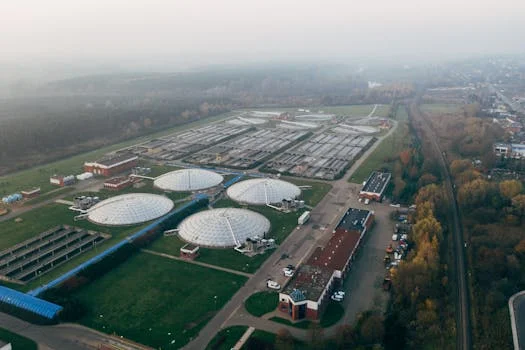
Civil and structural engineering costs typically represent 60% of the total investment for Indiana wastewater projects, translating to an $8 million to $24 million expenditure for plants in the $14 million to $40 million range. These costs include site excavation, concrete tank construction, and the decommissioning of existing infrastructure, such as Cumberland’s plan to decommission its GEM plant. Equipment costs account for roughly 30% of the budget ($4 million to $12 million), though this varies significantly by the chosen technology. Conventional activated sludge (CAS) systems for 1–5 MGD capacities generally fall between $2 million and $5 million, while high-efficiency MBR systems for Indiana’s nutrient removal compliance range from $3 million to $8 million due to their smaller footprint and advanced membrane requirements.
Permitting and compliance represent the final 10% of the budget, often costing between $1 million and $4 million. This includes IDEM fees, environmental impact assessments, and mandatory public hearings. Regional geography also plays a role; for instance, the Karst topography found in Southern Indiana can add 10% to 15% to foundation costs due to specialized stabilization requirements. In Northern Indiana, union labor rates can be 20% higher than the national average, further inflating civil costs. Land acquisition is another variable, with costs ranging from $5,000 per acre in rural areas like Orleans to over $50,000 per acre in high-growth corridors like Whitestown.
| Cost Category | Percentage of Total | Estimated Cost Range (Indiana) | Key Drivers |
|---|---|---|---|
| Civil & Structural | 60% | $8M – $24M | Concrete, excavation, labor, site prep |
| Equipment & Technology | 30% | $4M – $12M | Membranes, pumps, aeration, DAF units |
| Permitting & Compliance | 10% | $1M – $4M | IDEM fees, legal, environmental studies |
Cost per MGD: How Indiana’s Capacity Needs Shape Your Budget
Municipal wastewater treatment costs in Indiana currently benchmark between $3 million and $6 million per million gallons per day (MGD) of capacity, though this figure fluctuates based on effluent quality requirements. Small-scale projects under 1 MGD, often serving trailer parks or small townships, typically cost between $5 million and $10 million due to the lack of economies of scale. Mid-sized municipal plants (1–5 MGD) see costs between $10 million and $30 million. For example, Whitestown’s $14 million investment for a 2.3 MGD expansion reflects a highly efficient cost-per-MGD ratio, whereas Cumberland’s $37 million for 3 MGD includes significant decommissioning and site-specific civil work. Large-scale facilities (5–10 MGD) can reach $60 million, following national EPA cost curves adjusted for Indiana’s specific labor and material indices.
Industrial facilities face different cost structures. Food processing plants, which deal with high BOD (Biochemical Oxygen Demand) and TSS (Total Suspended Solids), often require DAF pre-treatment for Indiana’s industrial wastewater, pushing costs to $8 million–$15 million per MGD. Pharmaceutical facilities requiring MBR for micro-pollutant removal or advanced oxidation may see costs as high as $20 million per MGD. For rural Indiana towns looking for cost-effective alternatives, small-scale package plants for rural Indiana towns often provide a more manageable capital entry point.
| Plant Type & Capacity | Cost per MGD (Low) | Cost per MGD (High) | Example Total Budget |
|---|---|---|---|
| Municipal (< 1 MGD) | $5M | $10M | $7.5M (0.75 MGD) |
| Municipal (1-5 MGD) | $3M | $6M | $14M (2.3 MGD) |
| Industrial (Food/BOD Heavy) | $8M | $15M | $12M (1 MGD) |
| Industrial (Pharma/Chemical) | $12M | $20M | $16M (1 MGD) |
Treatment Technology Showdown: MBR vs. Conventional vs. DAF Costs in Indiana

Conventional activated sludge (CAS) systems remain the baseline for Indiana capital expenditures at $2 million to $5 million for 1–5 MGD capacities, though Membrane Bioreactor (MBR) systems are increasingly favored for meeting stringent 2025 nutrient limits. While CAS has the lowest upfront capital cost, it requires a significantly larger footprint—often 0.5 to 1 acre per MGD—and results in higher sludge disposal costs, which currently range from $150 to $300 per ton in Indiana landfills. MBR systems, while more expensive at $3 million to $8 million for similar capacities, offer a 60% smaller footprint and produce near-reuse-quality effluent (TSS < 1 mg/L), making them ideal for areas with limited land or strict IDEM discharge permits.
For industrial applications, Dissolved Air Flotation (DAF) is the primary choice for pre-treatment, costing between $1 million and $3 million for 0.5–3 MGD systems. DAF is exceptionally efficient at removing over 90% of TSS and fats, oils, and grease (FOG), which is critical for food processing facilities like Tyson Foods’ Logansport plant. However, DAF is not a standalone biological solution and must be paired with CAS or MBR for full treatment. Hybrid systems, such as MBR combined with Reverse Osmosis (RO), are becoming more common for high-tech manufacturing seeking water reuse, with costs ranging from $5 million to $12 million. Engineering teams should also consider global MBR cost benchmarks for Indiana’s nutrient compliance projects to evaluate long-term technology viability.
| Technology | CapEx (1-5 MGD) | Footprint | Indiana OpEx Factors |
|---|---|---|---|
| Conventional (CAS) | $2M – $5M | Large | High sludge disposal costs |
| MBR | $3M – $8M | Compact | Higher energy consumption ($0.80/kWh) |
| DAF (Pre-treatment) | $1M – $3M | Minimal | Chemical polymer costs |
Indiana-Specific Financing: How Municipalities and Industries Fund $10M+ Projects
Indiana municipalities primarily utilize sewer revenue bonds and capacity funds to finance capital projects exceeding $10 million, with the Indiana Finance Authority (IFA) providing subsidized 1.5% interest rates through the State Revolving Fund (SRF). Speedway’s $15–18 million project is a classic example of bond financing, where the debt is repaid through phased rate increases. In contrast, Whitestown utilized its capacity fund—built from over $14 million in connection charges from new developments—to fund its expansion without increasing rates for existing residents. This "growth pays for growth" model is highly effective for fast-growing communities but is less viable for established towns with stagnant populations.
Industrial facilities often leverage Private Activity Bonds (PABs), which are tax-exempt bonds issued by the Indiana Economic Development Corporation for manufacturing-related environmental upgrades. These bonds typically cover projects in the $10 million to $50 million range. Performance contracts are another emerging option, where Energy Savings Companies (ESCOs) fund the equipment upgrades, and the facility pays them back using the guaranteed utility savings over a 10-to-15-year period. Additionally, IDEM offers specific grants for nutrient removal upgrades, providing up to $500,000 for projects that significantly reduce nitrogen and phosphorus discharge into Indiana waterways.
ROI Calculator: Estimate Your Indiana Wastewater Treatment Plant Costs
A comprehensive ROI analysis for Indiana wastewater plants must account for a 28% inflationary increase in operational costs since 2017 and IDEM non-compliance penalties that range from $10,000 to $50,000 per violation. To estimate your ROI, first determine your capital expenditure based on MGD and technology, then factor in Indiana-specific operating expenses. Energy rates in Indiana generally range from $0.50 to $1.00 per kWh, with MBR systems consuming the higher end of that spectrum. Labor costs for certified operators average $80,000 to $120,000 per year for mid-sized plants, though compact underground wastewater treatment systems for Indiana municipalities can significantly reduce onsite labor requirements through automation.
The payback period is calculated by dividing the total project cost by the annual savings (from reduced maintenance and avoided fines) plus new revenue (from capacity charges). For example, a $10 million project that saves $1 million annually in hauling and energy costs achieves payback in 10 years. For