What Makes Micro Bubble Flotation Effective for Industrial Wastewater?
Micro bubble flotation separates fine solids and emulsified oils by releasing 10–80 μm bubbles into pretreated wastewater. At industrial loads of 50–500 mg/L TSS, systems reach 92–97% TSS removal and 90%+ FOG removal in food streams. Saturator pressure usually sits at 4–6 bar, and many package units need 20–30% less floor area than conventional dissolved-air flotation at the same flow.
For a 100 m³/h food processing plant, a Dissolved Air Flotation (DAF) System pressurized at 4–6 bar can cut effluent turbidity from about 450 NTU to <30 NTU while using roughly 30% less space than a conventional clarifier. Installed CAPEX commonly spans $50K for small skids to $2M for high-flow petrochemical trains. Most plants we size for FOG-heavy wash water still run chemical pretreatment ahead of the flotator; without that step, bubble attachment falls off quickly.
Why Plants Switch from Clarifiers and Conventional DAF
Industrial plants adopt finer-bubble flotation when discharge limits and FOG load outrun conventional clarifiers or coarse-bubble DAF. A meat processing plant in Texas treating 200 m³/h faced a $1.2 million fine after effluent turbidity stayed near 450 NTU against a 30 NTU permit target. Its existing conventional DAF struggled with low-density fats, oils, and greases typical of slaughterhouse wash water. After a microbubble retrofit, TSS fell to <25 NTU and FOG to <10 mg/L within 30 days, which ended the fine exposure and cut chemical use by about 25%.
Five-year total cost of ownership often favors microbubble units even when CAPEX is higher. For a similar 200 m³/h food plant, the table below compares CAPEX, 5-year TCO, and TSS removal ranges used in food-processing sizing studies.
| Treatment System | Approx. CAPEX | Typical 5-Year TCO | TSS Removal Efficiency (Food Processing) |
|---|---|---|---|
| Micro Bubble Flotation | $850,000 | $1,500,000 | 92–97% |
| Conventional DAF | $600,000 | $1,830,000 | 70–85% |
| Sedimentation Clarifier | $400,000 | $2,200,000 | 60–80% |
That TCO frame shows microbubble units about 18% cheaper over five years than conventional DAF when chemical dose, sludge haulage, and avoided penalties are counted. Highest adoption remains in food processing for FOG, pulp and paper for fiber recovery, petrochemicals for oily water, and textiles for dye solids. Sedimentation still wins only when solids are dense, settleable, and FOG is negligible.
Operators also switch when sludge volume or polymer spend keeps climbing on an aging DAF. Finer bubbles usually produce a dryer float and a clearer subnatant at the same coagulant dose, which shrinks both haulage tickets and polishing-filter backwash frequency downstream.
What Is Micro Bubble Dissolved Air Flotation (MBDAF)?

Micro bubble dissolved air flotation (MBDAF) is a DAF variant that targets a 10–80 μm bubble band instead of the 80–300 μm band common in conventional DAF. That finer cloud raises surface-area-to-volume by about 4–10× versus a coarse-bubble baseline (HydropureWater field data, 2025). Attachment probability rises for fine TSS and emulsified oil, which is why MBDAF is specified when conventional DAF leaves residual turbidity or free oil.
TSS removal of 92–97% at 50–500 mg/L influent is the usual design band for microbubble trains, versus about 70–85% for coarser DAF under similar loads. Food-plant FOG removal often exceeds 90% with microbubbles, against roughly 60–75% for conventional DAF. According to a U.S.
Microbubble saturators usually run at 4–6 bar, versus about 3–5 bar for many conventional DAF packages. Earlier EPA demonstration work commonly held recycle saturators near 40–60 psig (~2.8–4.1 bar), with 50 psig (~3.4 bar) preferred in laboratory flotation tests (EPA, 1973). Keep the original plant design points of 4–6 bar for microbubble packages and 3–5 bar for conventional DAF when comparing vendor bids; treat the EPA pressures as historical context, not a replacement spec.
Energy for a DAF package for industrial wastewater often lands between 0.8 and 1.5 kWh per cubic meter treated, depending on solids load and target effluent. Footprint is typically 20–30% smaller than conventional DAF at equal flow; a 50 m³/h microflotation skid may occupy only 15–20 m². Recycle ratio, air-to-solids ratio, and release-valve design still decide whether those bubbles stay in the useful band or coalesce into coarse foam.
| Parameter | Micro Bubble Flotation | Conventional DAF |
|---|---|---|
| Bubble Size Range | 10–80 μm | 80–300 μm |
| Surface Area-to-Volume Ratio | 4–10x higher | Baseline |
| TSS Removal Efficiency (50-500 mg/L influent) | 92–97% | 70–85% |
| FOG Removal Efficiency (Food Processing) | 90%+ | 60–75% |
| Typical Pressurization | 4–6 bar | 3–5 bar |
| Footprint (for equivalent flow) | 20–30% less space | Baseline |
When comparing bids, hold hydraulic loading, recycle ratio, and chemical dose constant before you credit a smaller footprint or a lower polymer bill. A unit that looks cheap at a light surface rate may fail at your real peak hour. Ask vendors for float solids percent and subnatant TSS at your FOG and TSS envelope, not only at a synthetic kaolin test.
How Bubble Size Changes Removal for FOG, Fiber, and Colloids
Bubble-size distribution controls adhesion and rise rate for each contaminant class. Most plants we size for food FOG run toward the upper microbubble band, while fiber and metal-hydroxide streams need the finer end.
- 10–30 μm: Best for fine particles such as pulp fibers, algae, and metal hydroxides. Higher surface energy aids attachment to near-neutral buoyancy solids.
- 30–50 μm: Suited to colloids and finely dispersed solids. This band balances adhesion area with enough buoyancy to lift flocs.
- 50–80 μm: Preferred for oils, grease, and fats. Extra buoyancy lifts low-specific-gravity FOG droplets for reliable skimming.
Stokes’ law still governs rise once the bubble–particle aggregate forms. Bubbles under 30 μm need higher saturator pressure and tighter nozzles to stay stable, yet they bind hydrophilic fines better. Bubbles near 80 μm carry less surface energy per volume but lift oil droplets that would otherwise linger. One large pulp mill moved from an ~80 μm conventional DAF cloud to a ~20 μm microbubble set and recorded about 12% higher fiber recovery plus roughly $80,000 per year lower sludge disposal cost.
Mixed wastes rarely sit in one band. A poultry plant with both protein colloids and free fat may need a dual set-point or staged release so daytime high-FOG shifts and nighttime CIP rinse get different mean bubble diameters. Pilot data beat theory here; measure droplet and particle size before you freeze nozzle geometry.
What Does Dissolved Air Flotation Cost?
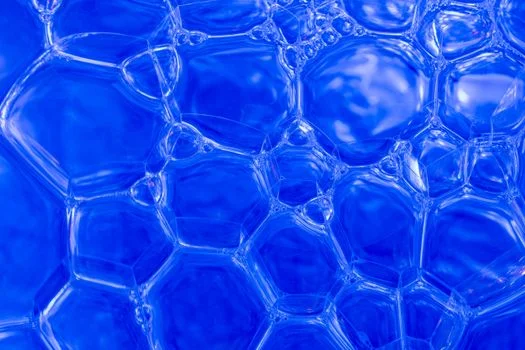
Dissolved air flotation cost for microbubble packages typically runs from $50,000 at about 10 m³/h in food plants to $2 million near 300 m³/h in petrochemical service. Tank metallurgy, automation, and corrosion or temperature options move a quote inside those bands. Modular DAF-class units let plants add capacity without rebuilding the whole flotation train.
OPEX drivers stay consistent across industries:
- Energy: Some plant budgets use 4–6 kWh per cubic meter when saturator, compressor, and auxiliaries are rolled together; flotation-skid metering on DAF-class units more often shows 0.8–1.5 kWh/m³ for the pressurization train alone.
- Chemicals: Coagulants such as polyaluminum chloride and flocculants such as anionic polyacrylamide set dose cost. An automated chemical dosing system keeps feed proportional to load.
- Maintenance: Skimmer blades, nozzle cleaning, and pump service dominate planned downtime.
- Sludge disposal: Floated sludge haulage commonly costs $50–$200 per ton, depending on local rules and cake quality.
Indicative OPEX averages are about $0.80/m³ for food processing, $0.60/m³ for pulp and paper when fiber credit applies, and $1.10/m³ for petrochemical oily water. A 100 m³/h food plant with roughly $650,000 CAPEX and $0.80/m³ OPEX often shows payback near three years when fines, chemical cuts up to 25%, and lower sludge volumes are included.
| Application/Flow Rate | Approx. CAPEX Range | Estimated OPEX/m³ | Typical ROI Payback Period |
|---|---|---|---|
| Food Processing (10 m³/h) | $50,000 - $150,000 | $0.75 - $0.90 | 1.5 - 2.5 years |
| Food Processing (100 m³/h) | $400,000 - $700,000 | $0.70 - $0.85 | 2.5 - 3.5 years |
| Pulp & Paper (150 m³/h) | $700,000 - $1,200,000 | $0.55 - $0.70 | 2 - 3 years (with fiber recovery) |
| Petrochemical (300 m³/h) | $1,500,000 - $2,000,000 | $1.00 - $1.20 | 3 - 4 years |
Bid packages should separate tank, saturator, skimmer, and controls so you can see where stainless upgrades or hazardous-area electrics inflate CAPEX. Ask for kWh/m³ at your design recycle ratio, not at an empty-tank factory test, or the energy line in OPEX will miss the field truth. Spare-parts lead time belongs on the same scorecard: nozzles, level probes, and scraper flights fail on a predictable cycle in oily service.
If reuse is part of the business case, place flotation ahead of the biological or membrane stage so FOG and fines do not blind downstream media. Many food plants recover warm water for crate washing after microbubble pretreatment and a simple sand or cloth filter, which shortens payback beyond the compliance savings alone.
Selection Checklist for Industrial Microbubble DAF
Choosing flotation hardware is a matching problem: influent profile, bubble band, pressure, automation, and pilot proof. Skip any step and you usually pay later in chemicals or noncompliance.
- Define influent and limits. Record average and peak flow (m³/h), TSS, FOG, COD, pH, and temperature, then lock the permit or sewer limits that apply.
- Match bubble size to contaminants. Use 10–30 μm for fines and fiber, 30–50 μm for colloids, and 50–80 μm for FOG-dominated food streams.
- Compare pressurization and energy. Score 4–6 bar microbubble designs against 3–5 bar conventional DAF and prefer VFD-driven recycle pumps when flow swings daily.
- Require automation that holds effluent. Auto skimming, pH trim, and continuous turbidity loops reduce operator lag. Pair that with optimizing flocculant dosing for microflotation efficiency when floc demand varies shift to shift.
- Pilot before you buy. A 30-day on-site trial under real influent is still the cheapest insurance for complex or oily wastes.
| Supplier Evaluation Criteria | Description |
|---|---|
| Certifications | ISO 9001 (Quality Management), CE (European Conformity), and other relevant industry standards. |
| Warranty | Minimum 2-year warranty on major components; longer warranties indicate higher confidence in product durability. |
| Local Support & Service | Availability of local technicians, spare parts, and emergency support to minimize downtime. |
| Industry Case Studies | Proven track record and successful installations in facilities with similar wastewater challenges. |
| Pilot Testing Program | Ability to conduct on-site pilot trials with performance guarantees. |
Where influent solids are high, lamella clarifiers as a pre-treatment option for microflotation can shrink flotation area and stabilize float solids before the DAF stage. Add equalization if pH or FOG spikes more than about 2× within a shift; flotators hate sudden load swings more than steady high averages.
A practical field checklist before award also includes inlet screening mesh, oil-skimming on equalization, and a plan for float dewatering. Ignoring those three items is how plants buy a good flotator and still miss the permit on day thirty.
Who This Is For / Next Step
This guide is for plant engineers, EPC teams, and procurement leads sizing FOG- or fines-heavy pretreatment. Look elsewhere if your load is mostly dissolved BOD with almost no floatable solids—biological treatment then carries the work. For a duty-matched quote on flow, bubble band, and materials, send your influent sheet through our request-quote form.
Frequently Asked Questions
What is the main advantage of microbubble flotation over conventional DAF?
Microbubble flotation targets 10–80 μm bubbles instead of the 80–300 μm band typical of conventional DAF. The finer cloud raises surface-area-to-volume by about 4–10×, which improves attachment to fine TSS and emulsified oils. Design bands of 92–97% TSS removal and 90%+ FOG removal are common, with footprints often 20–30% smaller at equal flow.
How should bubble size be matched to FOG versus fine particles?
Use 10–30 μm bubbles for fine particles such as fibers or metal hydroxides because surface energy aids attachment. Hold 30–50 μm for colloids and dispersed solids. Select 50–80 μm when FOG dominates, since buoyancy must lift low-density oil and grease to the skimmer.
What CAPEX and OPEX should a buyer budget?
CAPEX usually spans $50,000 at about 10 m³/h food duty to $2 million near 300 m³/h petrochemical flow. Budget OPEX around $0.80/m³ for food, $0.60/m³ for pulp and paper with fiber credit, and $1.10/m³ for petrochemical oily water, including energy, chemicals, maintenance, and sludge disposal.
How do plants keep flotation effluent inside discharge limits?
Characterize influent TSS, FOG, COD, pH, and temperature, then size removal efficiency above the permit. Continuous turbidity and pH monitoring plus automated skimming and dosing hold the set point. A 30-day pilot under site conditions remains the practical way to confirm compliance before full purchase.
Is pilot testing required before selecting a system?
Pilot testing is strongly recommended for variable or oily industrial wastewater. A 30-day on-site trial measures removal, chemical use, and sludge yield on your real influent rather than brochure averages. That dataset supports performance guarantees and reduces the chance of costly redesign after installation.