Abuja municipal sewage treatment at the Wupa plant runs at 85–90% hydraulic capacity, with typical effluent COD 50–100 mg/L, TSS 30–50 mg/L and BOD 20–40 mg/L. A 2025 Springer Nature assessment found Vibrio cholerae in 62.5% of isolates from the Abuja WWTP, and 80% of those isolates carried the toxin co-regulated pilus gene. Closing the gap to FCTA 2026 limits (COD ≤50 mg/L, TSS ≤30 mg/L, BOD ≤20 mg/L, fecal coliform ≤1,000 CFU/100 mL) usually needs stronger solids capture plus reliable disinfection.
Abuja Municipal Wupa Plant: Capacity, Effluent and Vibrio Risk
The Wupa sewage treatment plant operates at 85–90% of hydraulic design capacity and currently misses several FCTA 2026 discharge targets, while peer-reviewed sampling shows toxigenic Vibrio cholerae in plant-related isolates. Peak wet-season flows raise bypass risk into the Wupa River. Typical treated effluent sits at COD 50–100 mg/L, TSS 30–50 mg/L and BOD 20–40 mg/L under dry-weather operation.
FCTA’s 2026 discharge targets call for COD ≤50 mg/L, TSS ≤30 mg/L, BOD ≤20 mg/L and fecal coliform ≤1,000 CFU/100 mL. That is a clear step tighter than today’s average Wupa numbers on organics and solids. FCTA’s 2024 operational review also flagged insufficient sterilization even where mechanical trains remained online.
Public-health risk is not theoretical. Among confirmed Vibrio isolates from the Abuja WWTP study, V. cholerae made up 62.5%, and 80% of those isolates carried the toxin co-regulated pilus gene (Springer Nature 2025). Downstream communities that use the Wupa River for domestic or agricultural water sit in the exposure path if disinfection stays weak. Cholera toxin genes were also reported in a substantial share of isolates, so inactivation—not dilution—has to be the design objective.
Most plants we size for similar tropical municipal loads run clarifiers at the lower end of their loading band before wet-season peaks arrive. Mechanical uptime alone does not equal pathogen control. Sterilization capacity has to be designed for the same peak days that stress the hydraulics, or the plant will pass solids checks while still releasing infectious load.
Engineering Specs: What Abuja’s Municipal WWTPs Must Achieve by 2026
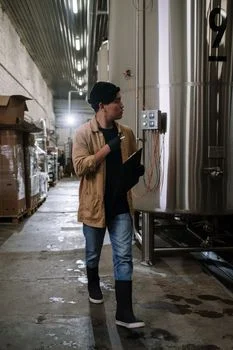
Abuja’s city-scale WWTPs must meet FCTA 2026 effluent limits of COD ≤50 mg/L, BOD ≤20 mg/L, TSS ≤30 mg/L and fecal coliform ≤1,000 CFU/100 mL before discharge. Those pathogen and solids targets sit close to WHO irrigation guidance of ≤1,000 fecal coliforms/100 mL.
Wupa clarifiers currently see hydraulic loading rates of about 1.2–1.5 m³/m²/h. Stable sedimentation toward TSS ≤30 mg/L usually needs a design target nearer ≤1.0 m³/m²/h on primary and secondary settlers. Lower surface loading cuts solids washout when rainy-season peaks hit and protects any downstream filter or membrane step.
Sludge handling is part of the same compliance package. The plant generates an estimated 12–15 tons/day of dry solids. Dewatering trains should deliver 15–20% cake solids at 3–5 bar, the normal band for plate-frame filter presses used on municipal sludge. Without that cake quality, haulage cost and odor complaints climb even if liquid effluent improves.
Pathogen control for Vibrio cholerae needs a defined dose and contact time, not a residual afterthought. Chlorine dioxide can deliver 99.99% (4-log) inactivation of Vibrio species at 1.5–2.0 mg/L with 20–30 minutes contact. A post-contact residual of 0.2–0.5 mg/L ClO₂ supports sustained control without the trihalomethane profile typical of free chlorine. HydropureWater supplies chlorine dioxide disinfection for Vibrio cholerae elimination sized to that dose band.
| Parameter | Current Wupa Effluent (Average) | FCTA 2026 Standard | WHO Guidelines (Irrigation) | EU UWWTD (Sensitive Areas) |
|---|---|---|---|---|
| COD | 50–100 mg/L | ≤50 mg/L | N/A (focus on BOD) | N/A (focus on BOD) |
| BOD | 20–40 mg/L | ≤20 mg/L | ≤10 mg/L | ≤25 mg/L (70–90% reduction) |
| TSS | 30–50 mg/L | ≤30 mg/L | ≤10 mg/L | ≤35 mg/L (90% reduction) |
| Fecal Coliform | >105 CFU/100mL (estimated) | ≤1,000 CFU/100mL | ≤1,000 CFU/100mL | N/A (focus on E. coli) |
| Vibrio cholerae | 62.5% prevalence (Springer Nature 2025) | Zero-risk (inactivated) | Absent | Absent |
What Upgrade Path Fits Wupa’s 2026 Discharge Gap?
Membrane bioreactor (MBR) trains can reach COD removal of 95–98% and effluent TSS ≤5 mg/L when membranes and pre-treatment stay in control. That performance band covers FCTA’s COD and TSS limits with margin for wet-weather variability. An MBR footprint is often up to 60% smaller than a conventional A/O activated-sludge layout at the same design flow. Fouling control through screening, DAF or equivalent pre-treatment, plus scheduled chemical cleans, decides whether those numbers hold after year one. HydropureWater provides MBR systems for Abuja’s municipal sewage treatment where tertiary quality or reuse is the design driver.
Dissolved air flotation (DAF) is the usual first lever when TSS and FOG overload the biology. DAF routinely removes 90–95% of TSS at hydraulic loading rates of 4–6 m³/h/m², cutting organic load before aeration. Installing DAF pre-treatment for TSS removal in Abuja WWTPs often shrinks the aeration volume needed downstream and steadies sludge age in the secondary train.
Chlorine dioxide remains the disinfection step matched to toxigenic Vibrio. At Wupa’s average flow near 50,000 m³/day, generators in the 50–100 kg/day ClO₂ range are the planning band for 1.5–2.0 mg/L dose plus contact time. ClO₂ avoids the THM formation pathway of chlorine gas while still delivering a measurable residual that operators can trend daily.
Lamella clarifiers raise surface overflow rates into the 20–40 m/h band and can push TSS toward ≤10 mg/L when sludge withdrawal keeps up. Compact high-efficiency sedimentation tank modules fit constrained Abuja sites better than expanding conventional clarifier diameters. Recirculation of settled solids can also support nutrient-removal zones if the plant later adds anoxic capacity.
| Technology | Key Benefit | COD Removal Efficiency | TSS Removal Efficiency | Footprint Reduction (vs. Conventional A/O) | Typical Application for Abuja WWTPs |
|---|---|---|---|---|---|
| MBR Systems | Superior effluent quality, pathogen barrier | 95–98% | ≤5 mg/L | Up to 60% | Tertiary treatment, direct discharge, water reuse |
| DAF Pre-treatment | Efficient solids/FOG removal, reduces downstream load | 20–40% (primary) | 90–95% | N/A | Primary treatment enhancement, industrial wastewater pre-treatment |
| Chlorine Dioxide Disinfection | Zero-risk pathogen kill, no THM formation | N/A | N/A | Minimal | Final effluent disinfection, critical for Vibrio control |
| Lamella Clarifiers | Enhanced solids separation, compact design | 10–20% (primary) | 80–90% | Up to 80% | Primary/secondary clarification, sludge thickening |
How Much Do Abuja WWTP Upgrades Cost to Own?
Full MBR retrofits for city plants in the 10,000–50,000 m³/day band typically carry CAPEX of ₦50–80 million. Monthly OPEX of ₦1.2–2.5 million is driven by aeration energy, membrane scouring and membrane replacement every 5–10 years. The higher capital cost buys effluent quality and footprint that conventional A/O rarely matches on tight FCTA limits.
DAF pre-treatment for 4–20 m³/h flows usually sits at ₦12–20 million CAPEX. Monthly OPEX of ₦300,000–₦800,000 covers coagulants, polymer and routine maintenance. That spend is often the cheapest way to protect downstream biology from TSS spikes during market and wet-season peaks.
Chlorine dioxide generators from about 50 g/h to 5,000 g/h land near ₦18–25 million CAPEX. OPEX of ₦500,000–₦1.2 million per month is mainly sodium chlorite precursor and power. For Vibrio control in sewage effluent, that OPEX buys dose control without chlorine-gas handling risk on a crowded municipal site.
Lamella clarifiers for 100–1,000 m³/h typically need ₦8–15 million CAPEX. Monthly OPEX of ₦200,000–₦600,000 is mostly sludge haulage and small pump power. Payback for DAF and lamella packages often falls in 3–5 years; MBR packages more often need 5–7 years when avoided FCTA fines (up to ₦50 million per year for non-compliance) and public-health costs are counted. A wider cost matrix is in the detailed CAPEX breakdown for Abuja WWTP upgrades.
| Technology | Estimated CAPEX Range (₦ Million) | Estimated OPEX Range (₦ Million/month) | Estimated Payback Period (Years) | Primary Cost Drivers |
|---|---|---|---|---|
| MBR Retrofit | 50–80 | 1.2–2.5 | 5–7 | Membranes, energy, civil works |
| DAF Pre-treatment | 12–20 | 0.3–0.8 | 3–5 | Chemicals, maintenance |
| Chlorine Dioxide Disinfection | 18–25 | 0.5–1.2 | 4–6 | Precursor chemicals (salt), power |
| Lamella Clarifier | 8–15 | 0.2–0.6 | 3–5 | Sludge disposal, minimal power |
Compliance Checklist for FCTA 2026 WWTP Upgrades
FCTA 2026 compliance work starts with a measured baseline, not a catalogue selection. Weekly influent and effluent samples for COD, BOD, TSS, fecal coliform and Vibrio over 3–6 months capture seasonal swings before design freezes. Skipping that baseline is how plants buy the wrong membrane area or undersize contact tanks. Keep signed sampling logs with the tender package from day one.
- Pre-upgrade audit: Sample influent and effluent at least twice weekly for 3–6 months. Include COD, BOD, TSS, fecal coliforms and Vibrio cholerae prevalence so the design load is real, not assumed.
- Technology match: Map each unit process to a numeric FCTA limit. Use MBR when COD/TSS margin and reuse matter; use DAF when primary TSS dominates; use ClO₂ when pathogen kill is the binding constraint.
- Pilot testing: Run 3–6 month pilots under Abuja temperature and wet-season hydraulics before full-scale civil works. Scale only from local flux, dose and sludge data.
- Permitting: File upgrade plans with the FCTA Environmental Protection Board at least 6 months before construction. Include process flow diagrams, mass balances and projected effluent quality against the 2026 standards.
- Post-upgrade monitoring: Keep continuous effluent testing for at least 12 months after commissioning. Use that record for compliance reporting and for tuning dose, sludge age and membrane cleans.
Main cost drivers to hold in the tender: membrane replacement cycle, ClO₂ precursor logistics, sludge cake haulage distance, and standby power for wet-season peak pumping. Those four line items move OPEX more than brochure “efficiency” claims.
Who This Is For / Next Step
This brief is for FCTA engineers, EPC contractors and procurement teams sizing Wupa or satellite city upgrades against 2026 discharge limits and documented Vibrio risk. Look elsewhere if you need a greenfield sewer network plan or an industrial arsenic precipitation package—that is a different process envelope. For a scoped CAPEX/OPEX package matched to your flow and pathogen targets, request a technical quote for your Abuja WWTP upgrade.
Frequently Asked Questions
What are the biggest risks of not upgrading Abuja’s WWTPs by 2026?
The main risks are cholera exposure from toxigenic effluent, FCTA fines that can reach ₦50 million per year, and lasting damage to the Wupa River corridor. Springer Nature 2025 sampling already showed V. cholerae dominance among Vibrio isolates at the Abuja WWTP. Delayed sterilization upgrades leave downstream users on that exposure path while hydraulic peaks keep rising.
How does MBR compare to conventional A/O in Abuja’s climate?
MBR usually holds effluent quality more steadily through Abuja temperature swings because mixed liquor concentrations stay higher and membranes set a hard solids barrier. Energy use is higher for aeration and scouring than a simple A/O train. Conventional A/O costs less to run per cubic metre but needs more land and shows larger TSS spikes during wet-season peaks.
What disinfection method works best for Vibrio cholerae in Abuja effluent?
Chlorine dioxide at 1.5–2.0 mg/L with 20–30 minutes contact is the practical choice for Vibrio cholerae in turbid municipal effluent. Unlike UV, ClO₂ performance does not collapse when TSS rises. Unlike free chlorine, it avoids the usual THM formation pathway while still leaving a 0.2–0.5 mg/L residual for distribution control.
Can the existing Wupa plant be retrofitted, or is a new build required?
Most DAF, lamella and chlorine dioxide packages retrofit onto existing Wupa hydraulics with limited new tanks. A full MBR retrofit is still possible but often needs new membrane tanks or major civil changes for cassette access and scour air. Choice depends on available footprint beside the current secondary train, not on a blanket new-build rule.
What funding options exist for FCTA WWTP upgrades?
Common routes include the World Bank Nigeria Sustainable Urban Water Supply and Sanitation Project, African Development Bank lending, and public-private partnership structures that bring private capital into O&M. Early engagement matters because appraisal cycles often exceed the civil design schedule. Pair funding talks with a 3–6 month baseline sampling package so lenders see a bankable load profile.