Why Wastewater Treatment Plant Costs in Victoria Are Rising in 2026
EPA Victoria’s 2026 discharge limits necessitate significant upgrades for many industrial and municipal wastewater treatment plants (WWTPs, also referred to as sewage treatment plants) across the state. These stricter regulations, particularly for total suspended solids (TSS) and biochemical oxygen demand (BOD) at <10 mg/L, often require tertiary treatment, adding an estimated 20–30% to capital expenditure (CAPEX) for compliance (per CRD’s 2020 mandate in Canada, reflecting similar global trends for advanced treatment). This shift from basic primary or secondary treatment is a primary driver of rising Melbourne WWTP cost benchmarks for Victoria buyers and broader Victoria wastewater infrastructure cost increases.
Victoria’s population growth, projected at 1.8% annually through 2040, further strains existing WWTPs, forcing costly upgrades or the construction of new facilities. Large-scale projects, such as McLoughlin Point WWTP, were designed with 2040 capacity projections in mind to minimize future capital outlays, highlighting the proactive investment needed. For industrial facilities, the financial pressure is compounded by rising industrial discharge fees in Victoria, which increased by 12% in 2025 (per EPA Victoria’s 2025 fee schedule). This makes on-site wastewater treatment an increasingly cost-effective alternative to escalating municipal surcharges and potential non-compliance penalties.
Consider a Victoria food processing plant that faced AUD 280,000 per year in municipal discharge fees due to high BOD and TSS concentrations. To mitigate these recurring costs and ensure future compliance, the plant invested AUD 2.1 million in a 200 m³/day MBR system. This strategic CAPEX investment yielded an estimated 3-year return on investment (ROI) by eliminating discharge fees and avoiding potential EPA fines, demonstrating a clear economic incentive for on-site treatment in Victoria.
Wastewater Treatment Plant Cost Framework: CAPEX vs. OPEX Breakdown
Understanding the distinction between capital expenditure (CAPEX) and operational expenditure (OPEX) is fundamental for budgeting a wastewater treatment plant investment in Victoria. CAPEX represents the one-time costs associated with designing, procuring, and constructing the plant, while OPEX covers the recurring expenses of running and maintaining it. For a typical WWTP, CAPEX is generally allocated across several key components: design and engineering (5–10%), equipment procurement (40–50%), civil works and construction (20–30%), and commissioning and startup (5–10%). The McLoughlin Point WWTP’s $273 million budget, for example, allocated approximately 45% to equipment and 30% to civil works (per Graham Construction data), providing a benchmark for large-scale projects.
OPEX for wastewater treatment in Victoria typically averages AUD 0.50–1.20 per cubic meter (m³), influenced heavily by treatment technology, effluent quality targets, and local resource costs. The primary drivers of OPEX include energy consumption (approximately 40%), sludge disposal (around 30%), and labor costs (about 15%) (based on general municipal OPEX data, e.g., Victoria, TX). Energy costs are particularly sensitive to aeration requirements for biological processes and pumping needs.
Economies of scale significantly impact CAPEX per m³. Doubling a plant's capacity can reduce the CAPEX per m³ by approximately 30%. For instance, a 100 m³/day secondary treatment plant might have a CAPEX of AUD 3,000/m³, while a 1,000 m³/day plant of similar technology could see CAPEX drop to AUD 2,100/m³. compliance costs, especially for achieving tertiary treatment standards (e.g., UV disinfection, dissolved air flotation (DAF)), initially add 15–25% to CAPEX. However, this upfront investment can lead to a 10–20% reduction in OPEX over the plant's lifecycle by significantly lowering or eliminating municipal discharge fees and avoiding non-compliance penalties, making tertiary treatment CAPEX a strategic investment for long-term savings.
| CAPEX Component | Typical Percentage of Total CAPEX |
|---|---|
| Design & Engineering | 5% - 10% |
| Equipment Procurement | 40% - 50% |
| Civil Works & Construction | 20% - 30% |
| Commissioning & Startup | 5% - 10% |
| Contingency & Project Management | 5% - 15% |
Technology-Specific Costs: MBR vs. Activated Sludge vs. DAF vs. Tertiary Systems
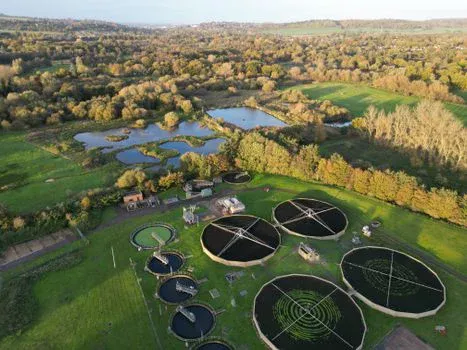
Selecting the appropriate wastewater treatment technology in Victoria significantly impacts both initial capital outlay and ongoing operational costs, as well as the plant's footprint and effluent quality. For Victoria WWTPs in 2026, typical CAPEX per m³ for various technologies are:
- Membrane Bioreactor (MBR) systems: AUD 3,000–3,500/m³
- Activated Sludge plants: AUD 2,300–2,800/m³
- Dissolved Air Flotation (DAF) systems (often used for primary or pre-treatment): AUD 1,800–2,200/m³
- Tertiary treatment systems (e.g., advanced filtration, UV disinfection): AUD 2,500–3,200/m³ (as an add-on to secondary treatment)
Operational expenditure (OPEX) per m³ also varies considerably by technology. MBR systems, while having higher CAPEX, often offer lower OPEX due to superior effluent quality and reduced sludge volume, typically ranging from AUD 0.60–0.90/m³. Activated sludge systems, a common secondary treatment plant cost Victoria option, generally incur higher OPEX at AUD 0.80–1.20/m³ due to higher energy consumption for aeration and more significant sludge handling. DAF systems, excellent for high-efficiency solids removal, typically have OPEX of AUD 0.50–0.80/m³, while standalone tertiary systems add AUD 0.70–1.10/m³ to the total OPEX.
Footprint is another critical factor for industrial facilities in Victoria with limited space. MBR systems require approximately 60% less space than conventional activated sludge plants (e.g., 100 m² vs. 250 m² for a 500 m³/day plant), making them ideal for urban or compact sites. In terms of effluent quality, MBR technology consistently achieves <5 mg/L TSS/BOD, producing reuse-grade water suitable for non-potable applications. Conventional activated sludge, while meeting EPA Victoria’s secondary treatment limits (e.g., 10 mg/L TSS/BOD), typically requires secondary clarifiers and may need additional polishing for stricter Western Australia’s WWTP cost and compliance trends or reuse standards. For industrial buyers seeking to meet stringent discharge limits, HydropureWater offers advanced MBR systems for Victoria’s tertiary treatment requirements. For high-efficiency solids removal, DAF systems for high-efficiency solids removal in Victoria WWTPs provide a cost-effective solution.
A Victoria winery, for instance, chose a combination of DAF for primary treatment followed by an activated sludge system, reducing their initial CAPEX by 25% compared to an MBR-only solution. This decision traded a slightly higher long-term OPEX for a lower upfront investment, demonstrating the strategic trade-offs available when selecting an industrial WWTP cost per m³ solution.
| Technology | Typical CAPEX per m³/day (AUD) | Typical OPEX per m³ (AUD) | Footprint (relative to Activated Sludge) | Typical Effluent Quality (TSS/BOD) |
|---|---|---|---|---|
| Activated Sludge (Secondary) | 2,300 – 2,800 | 0.80 – 1.20 | 100% (Baseline) | 10-20 mg/L |
| MBR (Tertiary) | 3,000 – 3,500 | 0.60 – 0.90 | 40% – 50% | <5 mg/L (Reuse Grade) |
| DAF (Primary/Pre-treatment) | 1,800 – 2,200 | 0.50 – 0.80 | 60% – 70% | Effective solids removal (pre-treatment) |
| Tertiary (Add-on, e.g., UV/Filtration) | 2,500 – 3,200 (add-on) | 0.70 – 1.10 (add-on) | Varies by component | <10 mg/L (Advanced) |
EPA Victoria Compliance Costs: What Buyers Must Budget for in 2026
Meeting EPA Victoria’s stringent discharge limits is non-negotiable for industrial and municipal wastewater treatment plants, and non-compliance carries substantial financial penalties. The EPA Victoria 2026 guidelines mandate specific discharge limits, including <10 mg/L TSS, <10 mg/L BOD, <1 mg/L Total Phosphorus (TP), and <10 mg/L Total Nitrogen (TN) for many industrial and municipal discharges. Achieving these levels often requires advanced tertiary treatment CAPEX Victoria, significantly impacting overall project costs.
Beyond treatment technology, buyers must budget for annual permit costs, which typically range from AUD 5,000 to AUD 50,000 per year for industrial WWTPs, depending on their capacity, discharge volume, and risk classification (per EPA Victoria’s fee schedule). Continuous monitoring requirements are also increasing; plants discharging over 500 m³/day are often mandated to implement continuous pH, flow, and turbidity monitoring systems. This adds an estimated AUD 30,000–100,000 to the initial CAPEX for instrumentation and integration.
Sludge disposal represents a significant and ongoing operational cost, averaging AUD 150–300 per tonne for dewatered sludge in Victoria (per CRD’s 2025 sludge management plan, reflecting regional disposal costs). This expense is directly proportional to the volume and dry solids content of the sludge generated, emphasizing the importance of efficient sludge dewatering solutions like sludge dewatering to cut Victoria WWTP disposal costs. The most severe financial implication of non-compliance is the risk of fines, which can reach up to AUD 1.1 million for corporations under EPA Victoria’s 2025 penalty framework, underscoring the critical need for robust treatment and monitoring systems.
How to Reduce Wastewater Treatment Plant Costs in Victoria: 5 Proven Strategies
Industrial buyers in Victoria can implement several proven strategies to significantly reduce both the CAPEX and OPEX of wastewater treatment plants. Firstly, opting for modular, pre-engineered systems, such as HydropureWater’s WSZ series, can reduce CAPEX by 20–30% and cut installation time by up to 50%. For example, a 500 m³/day modular WWTP solutions for Victoria’s industrial buyers might cost AUD 1.8 million, compared to AUD 2.5 million for a custom-built, site-specific solution. These systems also offer flexibility for future expansion, mitigating risks associated with uncertain growth projections.
Secondly, prioritizing energy efficiency in design and operation is crucial for reducing OPEX. Installing variable-frequency drives (VFDs) on blowers and pumps can lead to 20–30% savings on energy consumption, which often accounts for 40% or more of a WWTP’s total operational budget (per EPA Victoria’s energy efficiency guidelines). High-efficiency motors, optimized aeration systems, and smart controls further enhance energy savings.
Thirdly, effective sludge reduction and dewatering technologies can drastically cut disposal costs. Implementing anaerobic digestion or utilizing high-performance plate-and-frame filter presses to cut Victoria WWTP disposal costs can reduce sludge volume by up to 40%, translating to substantial savings, potentially AUD 120 per tonne for a 1,000 m³/day plant. This directly addresses one of the largest recurring OPEX components.
Fourthly, sourcing equipment and components from local Australian manufacturers, like HydropureWater, can help avoid import duties (typically 10% GST plus potential 5% tariffs) and reduce shipping costs and lead times. This not only lowers initial CAPEX but also simplifies logistics and provides easier access to spare parts and service.
Finally, adopting a phased upgrade approach can help spread out CAPEX over time. Industrial facilities can initially invest in robust secondary treatment (e.g., activated sludge) to meet immediate compliance needs and then add tertiary treatment components (such as UV disinfection or advanced filtration) later as regulations tighten or budget allows. The McLoughlin Point WWTP, for instance, incorporated provisions for future UV treatment expansion, demonstrating a strategic phased design.
Case Study: McLoughlin Point WWTP’s $273M Cost Structure and Lessons for Industrial Buyers
The McLoughlin Point Wastewater Treatment Plant, a significant infrastructure project for the Capital Regional District (CRD) in Canada, provides valuable cost benchmarks and strategic lessons for industrial buyers in Victoria. With a total budget of $273 million (approximately AUD 400 million at current exchange rates) for a 108 ML/day (megaliters per day) facility, its CAPEX breakdown offers granular insights. Approximately $123 million (45%) was allocated to advanced equipment, including Biological Aerated Filters (BAF), Moving Bed Biofilm Reactors (MBBR), and DAF systems. Civil works accounted for around $82 million (30%), while the marine outfall and associated infrastructure cost $35 million (13%) (per Graham Construction data).
The overall cost per cubic meter for McLoughlin Point stood at roughly $2,528 (AUD 3,700) for its 108 ML/day capacity. While this figure represents a large-scale municipal project with unique challenges (e.g., marine outfall, urban site), industrial buyers in Victoria can achieve significantly lower costs per cubic meter, often in the range of AUD 1,500–2,000/m³ for modular, pre-engineered solutions tailored to industrial flows.
Several key lessons emerge from the McLoughlin Point project for industrial buyers: (1) Designing for full buildout capacity based on 2040 projections added approximately 15% to the initial CAPEX but strategically avoided more expensive future retrofits and disruptions. (2) Incorporating resilience measures, such as a tsunami-resistant design, added about 5% to civil costs, highlighting the importance of considering site-specific risks. (3) The contractor's decision to self-perform substantial portions of the construction, including civil earthworks and structural concrete, reportedly saved 10% compared to fully subcontracting these works, offering a lesson in project management efficiency. The estimated OPEX for McLoughlin Point is AUD 0.75/m³ (per CRD’s 2025 budget), with energy (45%) and labor (20%) being the primary ongoing cost components.
| McLoughlin Point WWTP CAPEX Breakdown | Cost (USD) | Percentage of Total |
|---|---|---|
| Equipment (BAF, MBBR, DAF, etc.) | $123M | 45% |
| Civil Works & Construction | $82M | 30% |
| Marine Outfall | $35M | 13% |
| Other (Design, PM, Contingency) | $33M | 12% |
| Total CAPEX | $273M | 100% |
Frequently Asked Questions
Here are answers to common questions industrial buyers and municipal planners in Victoria have about wastewater treatment plant costs and compliance.
What is the average cost of a 500 m³/day wastewater treatment plant in Victoria?
A 500 m³/day activated sludge plant typically costs AUD 1.2M–1.8M in CAPEX, while a more advanced MBR system for the same capacity costs AUD 1.5M–2.2M. OPEX for these plants ranges from AUD 0.60–1.20/m³, heavily dependent on energy consumption, chemical usage, and sludge disposal costs.
How much does tertiary treatment add to WWTP costs in Victoria?
Tertiary treatment, which includes processes like UV disinfection, advanced filtration, or DAF systems for high-efficiency solids removal in Victoria WWTPs, adds an estimated 15–30% to the overall CAPEX of a secondary treatment plant. For a 500 m³/day facility, this could mean an additional AUD 300K–600K in upfront costs. However, tertiary treatment typically reduces OPEX by 10–20% by enabling compliance with stricter discharge limits, thereby lowering or eliminating municipal surcharges and potential fines.
What are the EPA Victoria discharge limits for industrial WWTPs?
EPA Victoria’s 2026 discharge limits for industrial WWTPs are generally stringent, often requiring effluent quality of <10 mg/L TSS, <10 mg/L BOD, <1 mg/L Total Phosphorus (TP), and <10 mg/L Total Nitrogen (TN). Failing to meet these standards can result in significant non-compliance fines, reaching up to AUD 1.1 million for corporations.
Can I use a package plant for my Victoria industrial facility?
Yes, package plants, such as HydropureWater’s WSZ series modular WWTP solutions for Victoria’s industrial buyers, are highly suitable for flows ranging from 50 to 1,000 m³/day. Their CAPEX can start as low as AUD 25K for a 50 m³/day unit, with OPEX typically between AUD 0.80–1.50/m³. These pre-engineered, compact systems offer rapid deployment and reduced civil works, making them an excellent choice for smaller industrial facilities or those with limited space.
How do I choose between MBR and activated sludge for my Victoria WWTP?
The choice between MBR and activated sludge depends on specific project requirements. MBR systems typically cost about 30% more upfront but offer significant advantages, including a 50% smaller footprint and often 15% lower OPEX due to higher effluent quality and less sludge production. Choose MBR for sites with limited space, when reuse-grade effluent is required, or where long-term OPEX savings are prioritized. Opt for activated sludge for projects with lower upfront CAPEX budgets and where simpler maintenance and a larger footprint are acceptable.