Why Ammonia Wastewater Treatment Still Misses Class A Limits
Biological ammonia contact oxidation removes 98% of NH3-N from industrial wastewater at 20–24 h HRT when DO stays above 2 mg/L and carriers hold stable nitrifiers at 20–30°C. Effluent commonly meets GB18918-2002 Class A limits below 5 mg/L NH3-N. The biofilm path oxidizes ammonia without forming chloramines or perchlorate under normal aeration control.
Electrochemical trains often claim about 88% removal in 30 minutes, yet they struggle with organic load swings. Contact oxidation uses polypropylene honeycomb media and 20–24 h HRT to drive nitrification, cutting chemical spend by 60–80% and energy use by 40–50% on typical industrial ammonia loads. Plants that miss Class A usually under-size HRT or starve the biofilm of oxygen during peak shifts.
In industrial hubs like Jiangsu, the gap between theoretical efficiency and actual compliance often creates severe operating crises. A textile plant in the region recently failed GB18918-2002 Class A discharge limits, with effluent NH3-N fluctuating at 12 mg/L against a 5 mg/L cap. The failure brought environmental fines and a mandated production halt, costing about $15,000 in daily lost revenue. The root cause was an aging electrochemical oxidation system that could not absorb organic load swings without unsustainable power use.
At current densities of 20 mA/cm², electrochemical units frequently generate chloramines and perchlorate—an EPA-regulated contaminant from chlorine-based indirect oxidation. Those residuals can inhibit downstream biology and harm receiving waters. Most plants we size for textile and light industrial ammonia loads run biological polishing instead, because the biofilm buffers influent shocks better than short-cycle electrodes. Pairing solids capture with a Dissolved Air Flotation (DAF) System ahead of the biofilm tanks further steadies the load entering nitrification.
How Biological Contact Oxidation Removes Ammonia: Mechanism, Biofilm Carriers, and Nitrification Kinetics
Nitrification in biological contact oxidation is a two-step aerobic process. Ammonia is converted to nitrate by ammonia oxidizing bacteria (AOB) and then by nitrite-oxidizing bacteria (NOB). The pathway follows these stoichiometric equations:
Step 1 (Nitrosomonas): NH₄⁺ + 1.5O₂ → NO₂⁻ + 2H⁺ + H₂O (ΔG° = -275 kJ/mol)
Step 2 (Nitrobacter): NO₂⁻ + 0.5O₂ → NO₃⁻ (ΔG° = -74 kJ/mol)
The efficiency of this nitrification process in wastewater treatment depends heavily on the biofilm carrier specifications for ammonia removal. Unlike activated sludge, contact oxidation fixes slow-growing nitrifiers on stationary or moving media so they are not washed out. Polypropylene honeycomb carriers are preferred in industry for a specific surface area of 300–500 m²/m³ and a void ratio above 95%. That geometry limits internal clogging while raising biomass density.
Oxygen demand drives most OPEX in these tanks. Nitrification needs about 4.57 g oxygen per gram of ammonia nitrogen oxidized—well above the 0.5–1.0 mg/L DO band often cited for carbonaceous BOD alone. Engineers must keep DO >2 mg/L so diffusion into the biofilm does not rate-limit the reaction. Fine-bubble diffusers or jet aerators typically deliver that DO at 0.3–0.5 kWh/m³ of treated water.
Nitrifier rates drop by 50% if pH falls below 6.5 or if temperature falls from 25°C to 10°C.
| Parameter | Specification / Range | Impact on Ammonia Removal |
|---|---|---|
| Carrier Material | Polypropylene Honeycomb / PE | Provides stable substrate for AOB/NOB growth |
| Specific Surface Area | 300 – 500 m²/m³ | Determines maximum biomass concentration |
| Dissolved Oxygen (DO) | 2.0 – 4.0 mg/L | Required for stoichiometric oxidation of NH3-N |
| Optimal pH | 7.5 – 8.5 | Maintains enzymatic activity of nitrifiers |
| Temperature | 20°C – 30°C | Kinetic rates halve for every 10°C drop |
To understand how these biological mechanisms scale for complex industrial streams, engineers should evaluate how contact oxidation removes COD and ammonia simultaneously to ensure comprehensive treatment.
Reactor Design for Ammonia Contact Oxidation at 98% NH3-N Removal
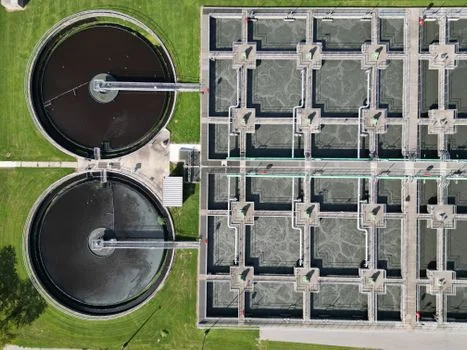
A 98% ammonia removal target needs a hydraulic retention time (HRT) for nitrification of 20–24 hours. That is far longer than the 6–12 hours usually set for standard organic removal. Nitrifying bacteria grow and yield much more slowly than heterotrophs, so short tanks wash them out. Electrochemical systems may claim 88% removal in 30 minutes, yet they rarely polish NH3-N below 5 mg/L in sensitive discharge zones.
Contact oxidation tanks should hold ammonia loading between 0.1 and 0.3 kg NH3-N/m³·d. Higher loads risk free ammonia or nitrous acid toxicity to Nitrobacter, causing nitrite stall. Carrier packing density is usually 50–70% of reactor volume to balance surface area with air scour space. Air scouring 1–2 times per week keeps biofilm carrier specifications for ammonia removal intact and limits anaerobic pockets in the media bed.
| Design Parameter | Industrial Standard Value | Notes for Scaling |
|---|---|---|
| Hydraulic Retention Time (HRT) | 20 – 24 Hours | Critical for 98% NH3-N removal efficiency |
| Ammonia Loading Rate | 0.1 – 0.3 kg NH3-N/m³·d | Prevents nitrite accumulation/toxicity |
| Carrier Packing Density | 50% – 70% | Balance between surface area and scouring |
| Recirculation Ratio | 100% – 200% | Required if denitrification is integrated |
| Air-to-Water Ratio | 15:1 to 25:1 | Ensures DO remains above 2.0 mg/L |
For facilities with space constraints, MBR systems with integrated contact oxidation for ammonia removal offer a compact alternative that combines high biofilm inventory with membrane solids separation.
How Does Tertiary Treatment Remove Ammonia in Industrial Wastewater?
Tertiary treatment for ammonia in industrial wastewater finishes nitrification after primary solids removal and secondary COD reduction. Typical polishing cuts NH3-N from about 50–120 mg/L toward Class A limits below 5 mg/L. Contact oxidation with 20–24 h HRT and 50–70% carrier fill is the common tertiary choice when chloride stays under about 5,000 mg/L.
Upstream clarification matters: oil, fiber, and solids that bypass primary treatment coat carriers and cut oxygen transfer. Many plants we commission place a Dissolved Air Flotation (DAF) System before the biofilm stage so the tertiary reactor sees a steadier soluble ammonia load.
When denitrification is required, recirculation at 100–200% moves nitrate to an anoxic zone ahead of the aerobic carriers. The aerobic HRT still stays in the 20–24 h band needed for 98% NH3-N conversion. Electrochemical polishing can follow biology on niche high-chloride streams. For most textile and municipal-industrial discharges, the tertiary biofilm train alone meets <5 mg/L without chlorinated residuals.
Electrochemical vs. Biological Contact Oxidation: Head-to-Head Comparison
Biological contact oxidation cuts OPEX by about 80% versus electrochemical oxidation because energy use is 0.3–0.5 kWh/m³ rather than 2–4 kWh/m³. Ti/RuO2-Pt anodes can degrade ammonia quickly in small batches, yet the OPEX comparison for ammonia treatment methods shows that a 20 mA/cm² current density dominates cost at scale. Electrochemical systems foul when calcium or magnesium is present, so plants face acid washing and anode replacement every 2–3 years.
From a compliance standpoint, the GB18918-2002 ammonia discharge limits are more reliably met through biological means. Electrochemical processes generate active chlorine that forms trihalomethanes (THMs) and other chlorinated by-products with organic matter. Those residuals are often regulated more tightly than ammonia itself.
Biological contact oxidation yields nitrogen-gas pathways and a small volume of stable sludge when denitrification is included. For engineers sizing package plants, pre-engineered contact oxidation reactors for municipal and industrial ammonia wastewater provide a standardized train that scales with flow.
| Feature | Biological Contact Oxidation | Electrochemical Oxidation |
|---|---|---|
| NH3-N Removal Efficiency | 98% (Effluent <5 mg/L) | 85% – 90% (Effluent 7-15 mg/L) |
| Energy Consumption | 0.3 – 0.5 kWh/m³ | 2.0 – 4.0 kWh/m³ |
| By-Product Profile | Nitrogen gas (Non-toxic) | Chloramines, Perchlorate, THMs |
| CAPEX ($/m³ capacity) | $600 – $900 | $1,200 – $1,800 |
| Maintenance Needs | Low (Carrier life >10 years) | High (Electrode fouling/replacement) |
| Scalability | Excellent (to 5,000+ m³/d) | Limited (best for <100 m³/d) |
What Is the Efficiency of Ammonia Removal by RO Membranes?
RO membranes are not a primary ammonia destruction step for most industrial trains. They separate dissolved ions under pressure rather than oxidize NH3-N on biofilm. Ammonium rejection varies with pH, temperature, and membrane type, so a plant that needs <5 mg/L NH3-N still requires a defined biological or chemical pathway.
In practice, RO follows biological contact oxidation when reuse or salinity control is the goal. Keep biofilm HRT at 20–24 h before RO so the membrane sees a lower ammonia load and less fouling pressure.
Case Study: 98% Ammonia Removal in a Textile Wastewater Plant Using Contact Oxidation
A 1,000 m³/d textile wastewater facility in Zhejiang held ammonia effluent below 5 mg/L with a dual-tank contact oxidation system. Influent NH3-N ranged from 50 to 120 mg/L, with COD between 300 and 600 mg/L. Chemical precipitation and short-cycle aeration had failed local Zhejiang limits that are tighter than national Class A. The upgrade used two 500 m³ tanks in series for a total HRT of 24 hours.
Tanks were packed at 60% density with polypropylene honeycomb carriers at 400 m²/m³ surface area. Fine-bubble aeration held DO at 2.5–3.5 mg/L. Post-commissioning data showed effluent NH3-N <3.5 mg/L (98.2% removal) and COD <45 mg/L.
Switching from a proposed electrochemical upgrade saved $350,000 in CAPEX and cut annual power use by 450,000 kWh. Correct reactor design strategies to prevent fouling in high-ammonia wastewater let the biological train beat the chemical alternative on cost and reliability.
How to Select the Right Ammonia Treatment Method
Choice between biological and electrochemical oxidation hinges on salinity (Cl⁻ > 5 g/L) and ammonia strength (>500 mg/L). Biological systems fit NH3-N <200 mg/L with low-to-moderate salinity. High salt disrupts nitrifier osmotic balance, while electrochemical cells benefit from high chloride for indirect oxidation—useful for leachate or saline brines. For most municipal and textile flows, biological contact oxidation is the stable route because it avoids chlorinated residuals.
Life-cycle cost also favors biology for long-lived infrastructure. Electrochemical skids shrink footprint, yet anode wear and power tariffs raise ownership cost. Procurement teams can use this decision matrix for site screening:
| Requirement | Choose Biological Contact Oxidation If... | Choose Electrochemical If... |
|---|---|---|
| Ammonia Concentration | < 250 mg/L | > 500 mg/L (as pre-treatment) |
| Salinity (Chloride) | < 5,000 mg/L | > 10,000 mg/L (high conductivity) |
| Discharge Limit | Strict (<5 mg/L NH3-N) | Moderate (Pre-treatment to sewer) |
| Space Availability | Standard footprint available | Extremely restricted space |
| Primary Goal | Lowest OPEX and zero toxicity | Rapid removal and small footprint |
Selection checklist for plant and EPC teams:
- Confirm peak NH3-N and chloride, not only average day values.
- Reserve 20–24 h aerobic HRT if the Class A target is <5 mg/L NH3-N.
- Hold ammonia loading near 0.1–0.3 kg NH3-N/m³·d to avoid nitrite stall.
- Specify carriers at 300–500 m²/m³ with 50–70% packing and weekly air scour.
- Budget aeration at 0.3–0.5 kWh/m³ and keep DO between 2.0 and 4.0 mg/L.
- Plan denitrification recirculation at 100–200% when total nitrogen limits apply.
- Compare life-cycle electrode replacement against carrier life beyond 10 years.
For more complex streams, engineers often implement reactor design strategies to prevent fouling in high-ammonia wastewater, ensuring that the biological system remains resilient against industrial solvents or surfactants that might otherwise inhibit nitrification.
Who This Is For / Next Step
This guide is for plant engineers, EPC designers, and procurement managers sizing tertiary ammonia polishing for textile, food, or municipal-industrial flows below about 250 mg/L NH3-N. Look elsewhere if chloride routinely exceeds 10,000 mg/L, or if NH3-N stays above 500 mg/L and you need compact electrochemical pre-treatment. If you already have influent NH3-N, COD, chloride, and the permit limit, share those figures through our request a quote form. We can then check whether a 20–24 h contact oxidation train meets your Class A target.
Frequently Asked Questions
What is the typical removal efficiency of ammonia in a contact oxidation system?
In well-designed industrial reactors, biological contact oxidation achieves 95% to 98% NH3-N removal. Plants can treat influent near 100 mg/L down to less than 5 mg/L and meet GB18918-2002 Class A limits. Efficiency depends on keeping dissolved oxygen above 2 mg/L and holding hydraulic retention time at least 20 hours at warm operating temperatures.
Why is the HRT for ammonia removal longer than for COD removal?
The hydraulic retention time for nitrification is typically 20–24 hours, compared with 6–12 hours for COD removal. Nitrifying bacteria (AOB and NOB) grow much slower than heterotrophic bacteria. If HRT is too short, nitrifiers cannot replace washed-out cells, and ammonia treatment collapses under peak industrial loads.
What are the best biofilm carrier specifications for ammonia removal?
Ideal carriers are polypropylene honeycomb or structured PE media with a specific surface area of 300–500 m²/m³. Void ratios above 95% limit dead-biomass buildup and keep oxygen distribution even. Durable carriers used in HydropureWater systems are designed for service life beyond 10 years under normal aeration scour.
Does electrochemical oxidation produce toxic by-products?
Yes. Electrochemical oxidation often relies on indirect oxidation via chlorine species. The process can form electrochemical oxidation by-products in wastewater such as chloramines, trihalomethanes, and perchlorate. These substances harm aquatic life and draw scrutiny from the EPA and local Chinese bureaus, so biological treatment is the safer direct-discharge path when Class A limits apply.
How does temperature affect the nitrification process in contact oxidation?
Nitrification is highly temperature-sensitive. The optimal range is 25°C to 30°C for peak AOB/NOB activity. For every 10°C drop in temperature, nitrifier metabolic rate is approximately halved. In cold climates, engineers raise HRT, add tank insulation, or increase carrier packing density to hold winter compliance.