Maryland’s 2026 industrial sewage treatment equipment market demands EPA-compliant systems with COD removal ≥95% and TSS ≤30 mg/L to meet MDE’s Chesapeake Bay TMDL Phase III requirements. Suppliers like NEU-ION and Hydro Service offer DAF, MBR, and chemical dosing systems, but industrial buyers face a $50K–$5M CAPEX range and 12–24 month lead times. This guide provides engineering specs, cost benchmarks, and a zero-risk selection framework to match equipment to your wastewater profile and compliance needs.
Maryland’s 2026 Sewage Treatment Regulations: What Industrial Buyers Must Know
Maryland’s 2026 industrial sewage treatment regulations mandate a significant reduction in nutrient discharge to protect the Chesapeake Bay watershed, specifically targeting Total Maximum Daily Load (TMDL) Phase III goals. These standards are not merely suggestions; they are enforceable limits integrated into National Pollutant Discharge Elimination System (NPDES) permits. For industrial facilities, the Maryland Department of the Environment (MDE) has intensified oversight on "high-strength" wastewater, requiring facilities to achieve stringent effluent concentrations for nitrogen, phosphorus, and organic loads. Failure to meet these standards by the December 2026 deadline can result in daily fines exceeding $25,000 per violation.
The regulatory shift focuses on four primary parameters: Chemical Oxygen Demand (COD), Total Suspended Solids (TSS), Ammonia-Nitrogen (NH3-N), and Total Phosphorus (TP). While municipal limits have historically been the focus, the 2026 Phase III requirements apply pressure on industrial pretreatment programs. Facilities discharging into Publicly Owned Treatment Works (POTWs) must also adhere to 40 CFR Part 403, which includes local limits for heavy metals and Fats, Oils, and Grease (FOG). In 2023, a Baltimore County food processor was fined $250,000 for consistent FOG limit exceedances; an investment in a high-efficiency DAF system for FOG and TSS removal could have achieved 95% removal efficiency, preventing the legal and financial fallout.
| Parameter | MDE 2026 Phase III Limit (Industrial) | Typical Untreated Industrial Load | Required Removal Efficiency |
|---|---|---|---|
| COD (Chemical Oxygen Demand) | <50 mg/L | 800 – 3,000 mg/L | >95% |
| TSS (Total Suspended Solids) | <30 mg/L | 300 – 1,500 mg/L | >98% |
| Ammonia (NH3-N) | <1.0 mg/L | 25 – 100 mg/L | >99% |
| Total Phosphorus (TP) | <0.3 mg/L | 5 – 20 mg/L | >98.5% |
The timeline for compliance is critical for procurement teams. Existing facilities are required to complete equipment upgrades and reach steady-state compliance by late 2026. Given the current 12–24 month lead times for custom-engineered systems in the Mid-Atlantic region, the window for engineering design and permitting is rapidly closing. New facilities must meet these standards upon startup, making the selection of modular or "plug-and-play" systems increasingly attractive for rapid deployment.
Sewage Treatment Equipment Types: Engineering Specs for Maryland’s Top 5 Industrial Use Cases
Industrial sewage treatment technologies are categorized by their physical-chemical or biological removal mechanisms, with specific engineering specs determining their suitability for Maryland’s varied industrial sectors. Selecting the wrong technology—such as using a standard activated sludge process for high-FOG food processing waste—leads to chronic membrane fouling or sludge bulking. Engineering teams must evaluate equipment based on hydraulic loading rates, solids flux, and energy intensity (kWh/m³).
For high-solids applications like food processing, pulp and paper, and metalworking, Dissolved Air Flotation (DAF) remains the industry standard. Systems like HydropureWater’s utilize micro-bubbles (20–50 microns) to levitate particles. These systems typically achieve 92–97% TSS removal and 85–90% FOG removal with an energy footprint of only 0.1–0.3 kWh/m³. When high-purity effluent is required for water reuse or direct discharge, a MBR system for near-reuse-quality effluent and 60% smaller footprint is superior. MBRs combine biological treatment with membrane filtration, ensuring 99% pathogen removal and effluent COD levels below 30 mg/L, which comfortably exceeds MDE’s 2026 requirements.
| Equipment Type | Target Industry | Key Engineering Spec | Primary Benefit |
|---|---|---|---|
| DAF | Food/Seafood Processing | 95% FOG Removal; 0.2 kWh/m³ | Rapid solids separation; small footprint |
| MBR (DF Series) | Pharma / Chemical | <0.04 μm pore size; 99% bacteria removal | Reuse-quality effluent; eliminates clarifiers |
| Chemical Dosing | Metal Finishing / Textile | ±1% dosing accuracy; PLC controlled | Precise pH control and metal precipitation |
| Plate & Frame Press | Municipal / Mining | 25-35% Cake Dryness | Reduces sludge volume by up to 60% |
| Modular WSZ | Commercial / Remote Sites | Underground capable; Zero operator required | Low CAPEX; rapid 3-6 month deployment |
Complementary to these primary processes are Chemical Dosing Systems and Sludge Dewatering equipment. An automatic chemical dosing system is essential for pH adjustment and heavy metal precipitation, particularly in Maryland’s aerospace and metal finishing corridors. as sludge disposal costs in the Mid-Atlantic rise, plate-and-frame filter presses are becoming mandatory for OPEX control, achieving 25–35% dry solids content and significantly reducing transportation fees to landfills.
Cost Breakdown: CAPEX and OPEX for Industrial Sewage Treatment Systems in Maryland
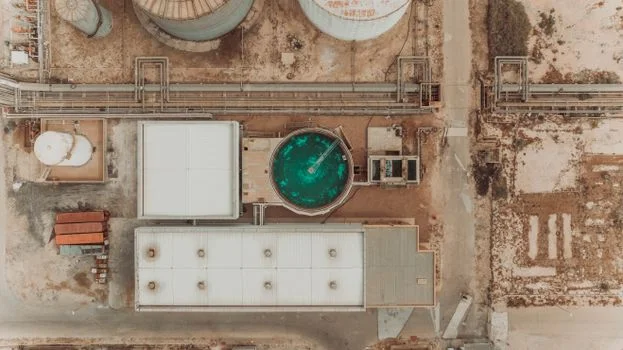
The total cost of ownership for Maryland industrial sewage systems includes a CAPEX range of $50,000 to $5,000,000 and OPEX variables ranging from $0.10 to $0.50 per cubic meter. Capital expenditure is driven primarily by treatment capacity and technology complexity. For instance, a basic DAF system for a small seafood processor (under 50 m³/h) may start at $50,000, while a full-scale MBR plant for a large pharmaceutical facility can exceed $2,000,000. These figures exclude the high cost of Maryland land, which can reach $250,000 per acre in Baltimore County, making compact, modular systems more economically viable than traditional lagoons or clarifiers.
Operating expenditures (OPEX) are dominated by energy consumption, chemical costs (coagulants/flocculants), and sludge disposal. In Maryland, electricity rates and labor costs ($30–$50/hour for certified operators) make automation a critical factor in ROI. A high-efficiency system might have a higher upfront cost but pays for itself through reduced chemical demand and lower energy intensity. For example, replacing an outdated activated sludge system with a modern MBR can reduce the physical footprint by 60%, saving hundreds of thousands in potential land acquisition or building expansion costs.
| System Component | Estimated CAPEX (Maryland) | Annual OPEX Drivers | Expected Lifespan |
|---|---|---|---|
| DAF System (Small/Med) | $50,000 – $200,000 | Chemicals, Power, Sludge Disposal | 15 – 20 Years |
| MBR Plant (10-2000 m³/d) | $200,000 – $2,000,000 | Membrane replacement, Scouring air | 10 – 15 Years (Membranes: 5-8 yrs) |
| Sludge Dewatering | $40,000 – $150,000 | Polymer costs, Filter cloth replacement | 20+ Years |
| Tertiary Treatment | $100,000 – $500,000 | UV lamp replacement, Carbon media | 15 Years |
To calculate ROI, facility managers must factor in the avoidance of MDE fines and the reduction in "surcharges" from municipal sewer authorities. A $1.2M MBR system for a 500 m³/day food processor can save approximately $250,000 annually in disposal fees and surcharge penalties. When coupled with the avoidance of potential $150,000 EPA fines, the payback period for such a system is often less than four years (HydropureWater field data, 2025). This financial model is particularly relevant for those exploring EPA-compliant hospital wastewater treatment solutions or similar high-stakes industrial environments.
How to Select a Sewage Treatment Equipment Supplier in Maryland: A Zero-Risk Framework
Successful procurement of industrial wastewater equipment follows a five-step engineering validation process to ensure compliance with MDE’s 2024 pretreatment calculator. The first and most critical step is defining the wastewater profile. This involves 24-hour composite sampling to determine peak flow rates and maximum concentrations of COD, TSS, and FOG. Using MDE’s local limits calculator ensures that the equipment specified will meet the exact requirements of the receiving POTW or watershed.
Once the profile is established, buyers should shortlist suppliers based on their technical track record within Maryland. It is vital to request engineering specs that include guaranteed removal rates and energy consumption data. A "zero-risk" approach involves a weighted decision matrix that prioritizes compliance and long-term OPEX over the initial sticker price. Many buyers fall into the trap of selecting the lowest CAPEX, only to face 24-month lead times or systems that fail to meet ammonia limits during Maryland’s colder winter months.
| Selection Criteria | Weighting | What to Look For |
|---|---|---|
| Regulatory Compliance | 30% | Guaranteed effluent parameters (MDE 2026) |
| Total CAPEX | 25% | Equipment cost + Installation + Permitting |
| Annual OPEX | 20% | Energy, Chemicals, and Labor requirements |
| Lead Time | 15% | Current manufacturing queue (target <6 months) |
| Local Support/Service | 10% | Availability of parts and technicians in MD |
Before final signing, facility managers should visit reference sites or utilize a modular underground sewage treatment system for tight-footprint sites for pilot testing. Pilot units allow for the fine-tuning of chemical dosages and flux rates on the actual wastewater stream. Red flags to watch for during the selection process include suppliers who refuse to provide performance guarantees, those with no experience in Maryland’s specific regulatory environment, and those offering "one-size-fits-all" solutions for complex industrial waste. For a broader perspective, procurement teams may also consult a national supplier comparison for cross-state benchmarking.
Maryland’s Top 7 Industrial Sewage Treatment Equipment Suppliers: 2026 Comparison
Maryland’s industrial sewage treatment supplier market is stratified by technical expertise, with lead times for major equipment currently ranging from 3 to 24 months. While residential-focused companies dominate the local search results, industrial buyers must distinguish between plumbing services and true wastewater engineering firms. The following comparison highlights the primary players serving the Maryland industrial sector as of 2026.
- NEU-ION: A regional leader specializing in DAF and chemical dosing systems. They have a strong presence in Baltimore’s seafood processing sector, recently installing a 300 m³/h DAF system that achieved 95% FOG removal.
- Hydro Service and Supplies: Known for their diverse portfolio including MBR and sludge dewatering. They have collaborated with MDE on pilot projects for textile wastewater, achieving 92% dye removal.
- Pristine Water Systems: Focuses on high-purity applications, particularly MBR and Reverse Osmosis (RO) for pharmaceutical clients. Lead times are currently 18+ months due to high demand in the I-270 tech corridor.
- HydropureWater: A global manufacturer providing modular, high-efficiency systems like the WSZ and MBR series. Their advantage lies in 3–6 month lead times and a 60% smaller footprint compared to conventional systems.
- Mr. Water Professional Water Treatment: Primarily serves residential and light commercial needs. While excellent for water softening, they generally lack the engineering capacity for industrial-scale (>50 m³/day) sewage treatment.
- Reynolds Culligan: Experts in deionized water and process water purification, though their expertise in complex biological sewage treatment is more limited compared to specialized wastewater firms.
- Liberty Pure Solutions: A trusted local plumbing and residential water specialist, but not a primary supplier for industrial-grade MDE-compliant wastewater plants.
| Supplier | Primary Tech Focus | Typical Lead Time | Maryland Reference Case |
|---|---|---|---|
| NEU-ION | DAF / Chemical Dosing | 12-14 Months | Baltimore Seafood Processor |
| Hydro Service | MBR / Dewatering | 14-18 Months | Mid-Atlantic Textile Pilot |
| HydropureWater | Modular MBR / WSZ | 3-6 Months | Global Industrial Standard |
| Pristine Water | RO / MBR | 18-24 Months | Maryland Pharma Corridor |
Frequently Asked Questions
What are the EPA discharge limits for industrial sewage in Maryland?
Under MDE’s 2024 guidelines and the 2026 TMDL Phase III, limits are generally COD <50 mg/L, TSS <30 mg/L, ammonia <1.0 mg/L, and phosphorus <0.3 mg/L. Local limits for FOG and heavy metals may be stricter depending on the specific POTW.
How much does an industrial sewage treatment system cost in Maryland?
Systems range from $50,000 for basic DAF units to over $5,000,000 for full-scale tertiary treatment plants. Costs are highly dependent on flow volume (m³/day) and the complexity of the contaminants.
What’s the lead time for sewage treatment equipment in Maryland?
Modular systems, such as the HydropureWater WSZ series, can be delivered in 3–6 months. Custom-engineered plants from regional suppliers currently face lead times of 12–24 months due to supply chain constraints.
Can I install a sewage treatment system underground in Maryland?
Yes, provided the system meets MDE’s guidelines for buried structures. Modular systems like the WSZ series are designed for underground installation, which is ideal for facilities with limited surface space.
What’s the best sewage treatment technology for food processing wastewater?
DAF systems are preferred for primary treatment to remove 95% of FOG. For facilities requiring high-quality effluent for discharge or reuse, MBR technology is the gold standard due to its ability to meet 99% pathogen removal and low nutrient limits.
For more large-scale planning, facility managers may also review our municipal-scale equipment selection framework for insights into high-volume system management.