Why Developer Wastewater Requires Advanced Oxidation: The Refractory Organic Challenge
Developer wastewater, a byproduct of semiconductor manufacturing, presents a unique and formidable challenge for conventional wastewater treatment methods due to its high concentration of refractory organic pollutants. These complex molecules, including phenols, amines, and specialized surfactants, exhibit exceptional resistance to biological degradation. Consequently, developer effluents often feature Chemical Oxygen Demand (COD) levels exceeding 500 mg/L, coupled with a low Biochemical Oxygen Demand (BOD) to COD ratio, typically below 0.2. As per EPA 2024 refractory organic benchmarks, such characteristics render standard biological treatment processes, like activated sludge, largely ineffective. In practice, these conventional methods can achieve less than 30% COD removal for developer effluents, falling far short of stringent discharge limits, such as the EPA's 50 mg/L COD or the EU's 125 mg/L. A prominent semiconductor plant in Taiwan, for instance, faced annual fines totaling $250,000 due to non-compliance with discharge regulations. The implementation of catalytic ozonation successfully reduced their COD levels to 45 mg/L, effectively eliminating these penalties and demonstrating the necessity of advanced oxidation for this specific wastewater stream.
How Catalytic Ozonation Works: Mechanism, Radicals, and Reaction Pathways
Catalytic ozonation leverages the powerful oxidative potential of ozone (O₃) by enhancing its decomposition into highly reactive hydroxyl radicals (•OH) through interaction with solid catalyst surfaces. Common heterogeneous catalysts such as titanium dioxide (TiO₂), manganese dioxide (MnO₂), or iron(III) oxide (Fe₂O₃) facilitate this process. These potent radicals then aggressively attack and break down refractory organic pollutants present in developer wastewater via mechanisms like hydrogen abstraction and electron transfer, ultimately converting them into less harmful substances like carbon dioxide (CO₂) and water (H₂O). This process offers a significant advantage over direct ozone oxidation, which is slower and more selective. Catalytic ozonation amplifies the generation of •OH radicals, leading to an indirect oxidation pathway that is 10 to 100 times faster and far less selective, as indicated by EPA 2023 AOP guidelines. While homogeneous catalysts can also be employed, heterogeneous catalysts are generally preferred for industrial applications due to their ease of separation from the treated water, avoiding secondary sludge generation, though they may necessitate periodic regeneration.
| Process | Primary Oxidant | Mechanism | Efficiency for Refractory Organics | Catalyst Type (Example) |
|---|---|---|---|---|
| Direct Ozonation | O₃ | Direct molecular attack, some •OH radical formation | Moderate | N/A (homogeneous) |
| Catalytic Ozonation | O₃, •OH radicals | Catalyst-enhanced •OH radical generation and oxidation | High (up to 95% COD removal) | TiO₂, MnO₂, Fe₂O₃ (heterogeneous) |
| UV/H₂O₂ | •OH radicals | UV photolysis of H₂O₂ generates •OH | High (85-90% COD removal) | N/A (chemical/physical) |
| Fenton's Reagent | •OH radicals | Fe²⁺/Fe³⁺ catalyzed decomposition of H₂O₂ | Moderate to High (70-85% COD removal) | Fe²⁺/Fe³⁺ (homogeneous) |
Packed-Bed Reactor Design: Parameters for Maximum COD Removal
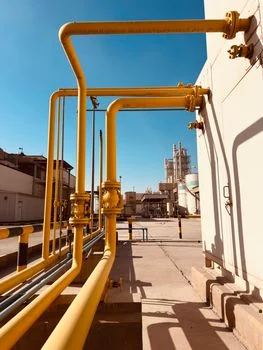
Optimizing the design of a packed-bed reactor is paramount for achieving maximum COD removal in developer wastewater treatment by catalytic ozonation. Based on pilot study data and 2026 engineering benchmarks, a hydraulic retention time (HRT) of 60 minutes has been identified as optimal, consistently yielding up to 95% COD reduction. Shorter HRTs, below 30 minutes, can reduce efficiency by as much as 40% (Springer 2023). The catalyst particle size is another critical factor; a range of 3–7 mm provides an ideal balance between sufficient surface area for mass transfer and acceptable pressure drop across the reactor bed. Particles smaller than 3 mm are prone to clogging, while those larger than 7 mm can reduce the effective surface area available for catalytic activity. the water distribution system at the reactor inlet significantly impacts performance. Even inlet flow, as opposed to single-point injection, can improve COD removal by up to 25% by preventing channeling and ensuring uniform contact between the wastewater, ozone, and catalyst (Top 1 page). For developer wastewater, an ozone dosage of 50–100 mg/L is generally recommended, with doses exceeding 150 mg/L exhibiting diminishing returns, according to EPA 2024 benchmarks. Reactor materials must also withstand the corrosive nature of ozone; stainless steel (316L) or PVC-lined carbon steel are suitable choices, offering corrosion rates typically between 0.1–0.5 mm/year.
| Design Parameter | Optimal Range/Value | Impact | Source/Benchmark |
|---|---|---|---|
| Hydraulic Retention Time (HRT) | 60 minutes | 95% COD removal; <30 min reduces efficiency by 40% | Pilot data; Springer 2023 |
| Catalyst Particle Size | 3–7 mm | Balances mass transfer and pressure drop; <3mm clogs, >7mm reduces surface area | Top 1 page |
| Water Distribution | Even inlet flow (e.g., multi-point injection) | Improves COD removal by 25% vs. single-point | Top 1 page |
| Ozone Dosage | 50–100 mg/L | Effective for developer wastewater; >150 mg/L diminishing returns | EPA 2024 benchmarks |
| Reactor Materials | 316L Stainless Steel or PVC-lined Carbon Steel | Resists ozone corrosion (0.1–0.5 mm/year) | Engineering best practice |
For advanced disinfection post-treatment, consider integrated solutions such as Chlorine dioxide generators for water disinfection.
Catalytic Ozonation vs. Alternative AOPs: Head-to-Head Comparison for Developer Wastewater
When evaluating advanced oxidation processes (AOPs) for developer wastewater, catalytic ozonation demonstrates superior performance and cost-effectiveness compared to alternatives like UV/H₂O₂ and Fenton's reagent. For developer effluents, catalytic ozonation consistently achieves up to 95% COD removal, surpassing UV/H₂O₂ (typically 85%) and Fenton's reagent (around 70%), according to EPA 2024 AOP benchmarks. In terms of capital expenditure (CapEx), catalytic ozonation systems typically range from $150,000 to $500,000, comparable to UV/H₂O₂ systems ($200,000–$600,000), but often lower than complex Fenton setups requiring extensive pre- and post-treatment. Operating expenses (OPEX) for catalytic ozonation are also competitive, falling between $0.80–$2.50/m³, whereas Fenton can incur higher costs ($1.20–$3.00/m³) due to chemical consumption and sludge disposal. A key operational advantage of catalytic ozonation is its lack of sludge generation, a common issue with Fenton processes. While UV/H₂O₂ avoids chemical inputs, its high energy consumption for UV lamps can lead to elevated OPEX. Crucially, catalytic ozonation effectively meets stringent EPA and EU discharge limits for refractory organics without necessitating secondary treatment stages, unlike Fenton processes which may require pH adjustment post-treatment to mitigate residual acidity and metal ions. For high-TDS developer wastewater, pre-treatment with industrial reverse osmosis may be considered to enhance AOP efficiency.
| Metric | Catalytic Ozonation | UV/H₂O₂ | Fenton's Reagent |
|---|---|---|---|
| Typical COD Removal (Developer Wastewater) | Up to 95% | 85% | 70-85% |
| Estimated CapEx (USD) | $150K–$500K | $200K–$600K | $100K–$400K (system dependent) |
| Estimated OPEX ($/m³) | $0.80–$2.50 | $1.00–$3.00 (high energy) | $1.20–$3.00 (chemical & sludge) |
| Sludge Generation | None | None | Significant |
| Key Operational Considerations | Catalyst regeneration, ozone safety | High energy consumption, lamp replacement | Chemical handling, pH adjustment, sludge disposal |
| Secondary Treatment Needs | Generally none | Generally none | Often required (pH adjustment) |
Cost Breakdown and ROI: Catalytic Ozonation for Industrial Developer Wastewater
Investing in catalytic ozonation for industrial developer wastewater treatment offers a compelling return on investment (ROI) driven by its high efficiency, reduced operational costs, and avoidance of significant penalties. The capital expenditure (CapEx) for a typical system in 2026 is estimated to be between $80,000–$150,000 for the ozone generator, $50,000–$100,000 for the packed-bed reactor, $20,000–$50,000 for the catalyst (e.g., TiO₂/MnO₂), and an additional $50,000–$200,000 for installation and ancillary equipment, bringing the total to approximately $200,000–$500,000. Operating expenses (OPEX) are primarily associated with electricity for ozone generation ($0.30–$0.80/m³), catalyst replacement (lifespan of 3–5 years, costing $0.20–$0.50/m³), and general maintenance ($0.10–$0.30/m³). For a system treating 100 m³/h, the payback period typically ranges from 2 to 4 years. This is calculated based on significant savings from avoided fines, which can range from $50,000 to $200,000 annually for non-compliant facilities, and reduced chemical costs compared to less effective treatment methods ($30,000–$100,000 annually). A notable case involved an electronics manufacturer in Shenzhen who transitioned from a Fenton process to catalytic ozonation, achieving annual savings of $1.2 million by reducing OPEX by 60% and ensuring consistent compliance.
| Cost Component | Estimated Range (USD) | Notes |
|---|---|---|
| CapEx | ||
| Ozone Generator | $80,000 – $150,000 | Based on capacity |
| Packed-Bed Reactor | $50,000 – $100,000 | Size and material dependent |
| Catalyst (TiO₂/MnO₂) | $20,000 – $50,000 | Initial fill |
| Installation & Ancillary Equipment | $50,000 – $200,000 | Piping, controls, safety systems |
| Total Estimated CapEx | $200,000 – $500,000 | |
| OPEX | Per cubic meter (m³) | |
| Electricity (Ozone Generation) | $0.30 – $0.80 | Dependent on ozone concentration and generator efficiency |
| Catalyst Replacement | $0.20 – $0.50 | Annualized cost based on 3-5 year lifespan |
| Maintenance & Consumables | $0.10 – $0.30 | Pump seals, filters, etc. |
| Total Estimated OPEX | $0.60 – $1.60 | |
| ROI Factors | ||
| Avoided Fines | $50,000 – $200,000+ / year | Based on non-compliance |
| Reduced Chemical Costs | $30,000 – $100,000+ / year | vs. less effective methods |
| Payback Period (100 m³/h system) | 2 – 4 years |
For detailed industrial applications and ROI analysis, refer to our blueprint on wastewater treatment plant cost models for industrial applications.
Troubleshooting Catalytic Ozonation: Common Issues and Solutions
Effective operation of catalytic ozonation systems for developer wastewater requires proactive troubleshooting of common issues. Catalyst fouling is a primary concern, where organic compounds from developer effluents can adhere to catalyst surfaces, reducing efficiency over time, typically within 6–12 months. Mitigation strategies include regular backwashing of the reactor bed, performed weekly, and periodic thermal regeneration, usually annually. Ozone dosage inefficiency, leading to low COD removal (<50%), can stem from uneven water distribution or catalyst degradation. Diagnosis involves measuring ozone residuals; a residual below 0.1 mg/L often indicates overconsumption or poor contact. Addressing this may require flow distributor adjustments or catalyst assessment. pH drift in developer wastewater, which can range from 8–10, may inhibit •OH radical formation. Automated pH adjustment systems, such as automated pH adjustment systems for catalytic ozonation, can maintain the optimal pH range of 7–8 using dilute H₂SO₄ or NaOH. Lastly, reactor channeling, where water bypasses sections of the catalyst bed, can reduce COD removal by up to 30%. This is typically rectified by improving flow distributors or redesigning the catalyst bed configuration.
Frequently Asked Questions
What is the lifespan of a catalytic ozonation catalyst for developer wastewater?
Heterogeneous catalysts, such as TiO₂, generally exhibit a lifespan of 3–5 years under optimal operating conditions. Regular maintenance, including monthly backwashing and annual thermal regeneration, is crucial to achieving this longevity, as recommended by EPA 2024 guidelines.
Can catalytic ozonation treat developer wastewater with high TDS (>10,000 mg/L)?
Yes, catalytic ozonation can treat high Total Dissolved Solids (TDS) wastewater. However, TDS levels exceeding 5,000 mg/L can reduce •OH radical efficiency by 20–40% due to scavenging effects. For effluents with very high salinity, pre-treatment such as RO treatment for semiconductor wastewater may be necessary to optimize performance.
What are the discharge limits for developer wastewater treated by catalytic ozonation?
Regulatory discharge limits for COD vary by region. As of 2026 standards, the EPA limit is typically below 50 mg/L, the EU limit is below 125 mg/L, and China's standard is below 60 mg/L. Catalytic ozonation is proven to consistently meet these stringent requirements.
How does catalytic ozonation compare to MBR for developer wastewater?
Catalytic ozonation excels in achieving high COD removal rates (up to 95%), particularly for refractory organics in developer wastewater. Membrane Bioreactors (MBRs), while offering a smaller footprint and potentially lower OPEX for lower-strength effluents, typically achieve 85–90% COD removal and may struggle with the recalcitrant compounds found in developer streams. For advanced treatment of complex industrial effluents, catalytic ozonation is often the preferred choice. MBR systems are available via MBR integrated wastewater treatment.
What safety measures are required for catalytic ozonation systems?
Ozone is a strong oxidant and requires careful handling. Safety protocols include installing gas detectors to alert for ozone leaks (exceeding 0.1 ppm), ensuring adequate ventilation in operational areas, and implementing emergency shutdown systems. During catalyst maintenance, inert gas purging may be necessary to prevent potential hazards, adhering to OSHA 2024 safety standards.