Reverse osmosis (RO) treats CMP slurry wastewater by forcing water through a semi-permeable membrane (0.0001–0.001 μm pores) under 40–70 bar pressure, achieving 95%+ water recovery and 99.9% silica removal. Pretreatment (e.g., ultra-filtration or DAF) is critical to prevent membrane fouling from abrasive particles. RO systems reduce sludge disposal costs by up to 70% compared to coagulation but require higher CapEx ($250–$500/m³/day) and energy (0.5–1.5 kWh/m³).
Why CMP Slurry Wastewater Demands Reverse Osmosis: The Engineer’s Challenge
Untreated CMP wastewater disposal costs for semiconductor fabs can exceed $1,200/ton, creating significant financial and compliance burdens. Chemical mechanical planarization (CMP) processes generate complex wastewater containing 1–10% silica abrasives, organic solvents, and heavy metals like copper and tungsten, which necessitates robust, multi-stage treatment to meet stringent discharge limits. For a typical 300 mm fab generating 50 m³/day of CMP wastewater, annual disposal fees alone can reach $1.2 million, not including potential compliance penalties for effluent violations. Reverse osmosis offers a definitive solution by enabling near-zero liquid discharge (NZLD) for CMP wastewater, which significantly reduces freshwater consumption by 50–60% in semiconductor manufacturing operations. The high concentration of suspended solids and dissolved contaminants in CMP slurry wastewater makes conventional treatment methods like coagulation or basic filtration insufficient for achieving the purity levels required for discharge or, crucially, for water reuse within the fab.
How Reverse Osmosis Removes Silica and Contaminants from CMP Wastewater
Reverse osmosis membranes, characterized by their ultra-fine pores (0.0001–0.001 μm), consistently reject 99.9% of silica particles and 99% of dissolved metals such as copper and tungsten from CMP wastewater. This separation occurs under high operating pressures, typically ranging from 40 to 70 bar, which forces water molecules through the semi-permeable membrane while retaining larger dissolved solids and suspended particles. Due to the high fouling potential from abrasive silica and organic components in CMP wastewater, flux rates for HydropureWater’s industrial RO systems for CMP wastewater are carefully managed at 15–25 LMH (liters/m²/hour), which is approximately 30% lower than typical municipal RO applications. Cross-flow filtration is fundamental in preventing membrane fouling, where wastewater flows tangentially across the membrane surface at velocities of 0.5–1.5 m/s, continuously sweeping away accumulated particles and minimizing concentration polarization. Silica scaling is the primary fouling mechanism in CMP wastewater RO systems, making effective pretreatment, such as ultra-filtration or dissolved air flotation (DAF), indispensable for removing 90–95% of abrasive particles before the RO stage to protect membrane integrity and extend operational life.
Key Operational Parameters for CMP Wastewater RO Systems:
| Parameter | Typical Range for CMP Wastewater RO | Impact on System Performance |
|---|---|---|
| Membrane Pore Size | 0.0001–0.001 μm | Determines rejection rate for silica, metals, and dissolved solids. |
| Operating Pressure | 40–70 bar (580–1015 psi) | Drives water flux; higher pressure increases flux but also energy consumption. |
| Flux Rate | 15–25 LMH (liters/m²/hour) | Volume of permeate produced per membrane area; critical for preventing fouling. |
| Silica Removal Efficiency | 99.9% | Achieved for colloidal and dissolved silica, crucial for water reuse. |
| Water Recovery Rate | 95%+ | Maximizes treated water output, minimizing concentrate for disposal. |
| Cross-Flow Velocity | 0.5–1.5 m/s | Reduces concentration polarization and physical fouling on membrane surface. |
Pretreatment Requirements for RO Systems: Avoiding Membrane Fouling in CMP Wastewater
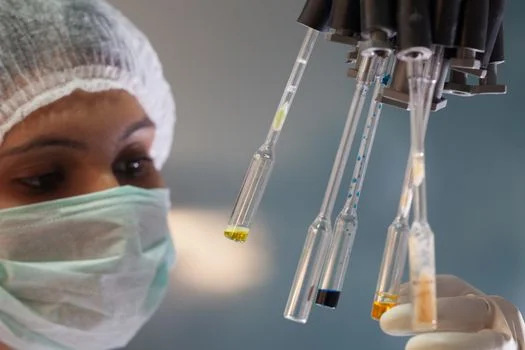
Ultra-filtration (UF) with 0.01–0.1 μm pores effectively removes over 95% of silica particles and suspended solids from CMP wastewater, significantly extending the operational life of downstream RO membranes to 3–5 years. This robust particle removal is essential because the abrasive nature of CMP slurry can rapidly damage RO membranes without adequate upstream protection. DAF pretreatment systems for RO membrane protection are also highly effective, achieving 90–95% TSS (Total Suspended Solids) removal for CMP wastewater, thereby reducing RO fouling by approximately 60%. Beyond physical filtration, precise pH adjustment to a neutral range of 6.5–7.5 is critical to prevent silica polymerization, which can lead to severe membrane scaling. This is typically managed by PLC-controlled chemical dosing for pH adjustment and antiscalants, which precisely inject acids (e.g., sulfuric acid) or bases (e.g., caustic soda) to maintain optimal conditions. While chemical dosing with antiscalants and coagulants can further reduce silica scaling by 40–50%, it also contributes to operational expenditure (OPEX) by an estimated $0.05–$0.10/m³ of treated water, requiring careful cost-benefit analysis in system design.
Critical Pretreatment Parameters for CMP Wastewater RO:
| Pretreatment Stage | Target Contaminant | Removal Efficiency | Key Parameters |
|---|---|---|---|
| Coagulation/Flocculation | Colloidal particles, heavy metals | 70-90% TSS, 50-80% metals | Coagulant dose (e.g., FeCl3 20-50 mg/L), pH (6-8) |
| Dissolved Air Flotation (DAF) | Suspended solids, oil & grease, light particles | 90-95% TSS removal | Air saturation pressure (4-6 bar), recycle rate (10-30%), retention time (20-30 min) |
| Ultra-filtration (UF) | Silica particles, larger colloids, bacteria | 95% silica particles (0.01-0.1 μm) | Pore size (0.01-0.1 μm), transmembrane pressure (0.5-2 bar), backwash frequency |
| pH Adjustment | Silica polymerization, metal solubility | Maintains pH 6.5-7.5 | Acid/base dosing rates, ORP monitoring |
| Antiscalant Dosing | Silica, calcium, magnesium scaling | 40-50% reduction in scaling potential | Dose rate (2-10 mg/L), antiscalant type (phosphonate-based) |
RO vs. Coagulation vs. DAF vs. MBR: Head-to-Head Comparison for CMP Wastewater
Reverse osmosis achieves superior water recovery rates of 95%+ for CMP wastewater, significantly outperforming other conventional treatment methods such as coagulation sedimentation (70–80%), DAF (70–80%), and MBR (85–90%). This high recovery is crucial for semiconductor fabs aiming for water reuse and reduced reliance on freshwater sources. While RO systems typically have a higher Capital Expenditure (CapEx) ranging from $250–$500/m³/day, compared to coagulation sedimentation ($100–$200/m³/day) or DAF ($150–$300/m³/day), their Operational Expenditure (OPEX) of $0.30–$0.80/m³ can be offset by substantial savings in disposal costs and freshwater consumption. MBR systems, with CapEx of $300–$600/m³/day and OPEX of $0.40–$1.00/m³, offer good biological treatment but often require additional polishing for direct reuse. For compliance, RO systems consistently meet stringent EPA discharge limits (TSS < 30 mg/L, silica < 1 mg/L) and SEMI S23-0719 standards for high-purity water reuse, whereas coagulation sedimentation as an alternative to RO for CMP wastewater or DAF alone may necessitate secondary or tertiary treatment to achieve similar effluent quality. the reduced sludge volume from RO processes translates into significantly lower sludge disposal costs, at $150–$300/ton, compared to the higher costs associated with coagulation ($500–$1,200/ton) or DAF ($400–$900/ton), which generate larger volumes of high-solids sludge.
Comparative Analysis of CMP Wastewater Treatment Technologies:
| Feature | Reverse Osmosis (RO) | Coagulation/Sedimentation | Dissolved Air Flotation (DAF) | Membrane Bioreactor (MBR) |
|---|---|---|---|---|
| Water Recovery Rate | 95%+ | 70–80% | 70–80% | 85–90% |
| CapEx ($/m³/day) | $250–$500 | $100–$200 | $150–$300 | $300–$600 |
| OPEX ($/m³) | $0.30–$0.80 | $0.20–$0.50 | $0.25–$0.60 | $0.40–$1.00 |
| Silica Removal Efficiency | 99.9% | 70–90% (colloidal) | 70–90% (colloidal) | Limited direct removal |
| Heavy Metal Removal | 99% | 70–95% | 70–95% | Limited direct removal |
| Compliance (EPA/SEMI) | Meets/Exceeds | Requires secondary treatment | Requires secondary treatment | Good, but often needs polishing |
| Sludge Disposal Cost ($/ton) | $150–$300 (low volume) | $500–$1,200 (high volume) | $400–$900 (moderate volume) | $200–$500 (moderate volume) |
| Water Reuse Potential | High (direct reuse) | Low (requires further treatment) | Low (requires further treatment) | Moderate (requires polishing) |
2026 Cost Breakdown: CapEx, OPEX, and ROI for RO Systems in CMP Wastewater Treatment
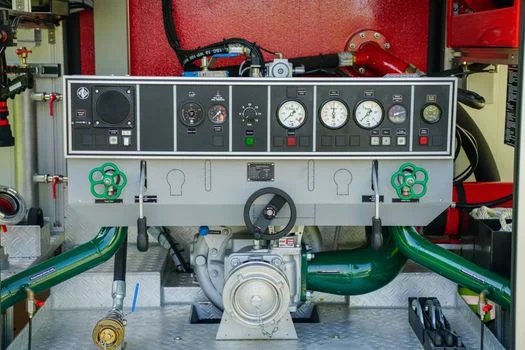
The Capital Expenditure (CapEx) for a 50 m³/day reverse osmosis system designed for CMP wastewater treatment typically ranges from $175,000 to $350,000, encompassing both equipment and installation. This breakdown includes $125,000–$250,000 for the core RO equipment, pretreatment units (like UF or DAF), pumps, controls, and instrumentation, with an additional $50,000–$100,000 allocated for civil works, piping, electrical connections, and commissioning. Operational Expenditure (OPEX) for such a system averages $0.30–$0.80/m³, primarily driven by energy consumption (0.5–1.5 kWh/m³), membrane replacement costs ($0.10–$0.20/m³ based on a 3–5 year lifespan), and chemical dosing ($0.05–$0.10/m³ for antiscalants, pH adjusters, and cleaning chemicals). The Return on Investment (ROI) for a 50 m³/day RO system is typically achieved within 2–4 years. This rapid payback is driven by significant savings: $500–$1,200/ton in sludge disposal costs due to reduced waste volume, and an estimated $0.50–$1.50/m³ in freshwater costs through high-purity water reuse. For instance, a 300 mm fab implementing a 100 m³/day RO system can realize annual savings of $800,000 from reduced disposal fees and an additional $300,000 from decreased freshwater consumption, demonstrating a compelling economic justification for the initial investment.
Detailed Cost Breakdown for a 50 m³/day CMP Wastewater RO System:
| Cost Category | Sub-Category | Estimated Cost Range | Unit |
|---|---|---|---|
| Capital Expenditure (CapEx) | RO Equipment & Pretreatment | $125,000–$250,000 | Total |
| Installation & Commissioning | $50,000–$100,000 | Total | |
| Operational Expenditure (OPEX) | Energy Consumption | $0.15–$0.45 (0.5-1.5 kWh/m³ @ $0.3/kWh) | per m³ |
| Membrane Replacement | $0.10–$0.20 (based on 3-5 year life) | per m³ | |
| Chemical Dosing | $0.05–$0.10 (antiscalants, pH adj.) | per m³ | |
| Maintenance & Labor | $0.05–$0.10 | per m³ | |
| Return on Investment (ROI) Drivers | Sludge Disposal Savings | $500–$1,200 | per ton |
| Freshwater Reuse Value | $0.50–$1.50 | per m³ |
Compliance Checklist: Meeting EPA, SEMI, and Regional Discharge Limits with RO
RO effluent from CMP wastewater treatment systems consistently meets or exceeds the stringent EPA discharge limits specified in 40 CFR Part 469 for the semiconductor manufacturing point source category. These limits typically mandate TSS < 30 mg/L, silica < 1 mg/L, copper < 1.3 mg/L, and a pH range of 6–9. Beyond discharge, RO systems are critical for achieving the high-purity water required by SEMI S23-0719 standards for water reuse in semiconductor fabs, which stipulate conductivity < 10 μS/cm, TOC < 1 mg/L, and bacteria < 1 CFU/mL. HydropureWater’s RO systems typically produce effluent with TSS < 1 mg/L, silica < 0.1 mg/L, and copper < 0.05 mg/L, thereby comfortably complying with both regulatory discharge and internal reuse specifications. To ensure ongoing compliance, a robust monitoring program is essential, including continuous online analyzers for TSS and silica, pH probes for real-time adjustments, and quarterly lab testing for heavy metals and other specific contaminants. This comprehensive approach guarantees that treated water quality remains consistently high and compliant with all relevant environmental and operational standards.
Frequently Asked Questions
What is the typical recovery rate for RO in CMP wastewater?
Well-designed RO systems with proper pretreatment typically achieve 95%+ water recovery rates for CMP wastewater, significantly minimizing concentrate volume and maximizing water reuse.
How often do RO membranes need replacement for CMP wastewater?
With effective pretreatment using ultra-filtration or DAF, RO membranes in CMP wastewater applications generally require replacement every 3–5 years, depending on influent quality and operational conditions.
Can RO treat CMP wastewater with high copper or tungsten levels?
Yes, RO is highly effective at removing copper and tungsten, achieving >99% rejection. However, for extremely high metal concentrations (>50 mg/L), an additional pretreatment stage such as ion exchange for copper and tungsten removal in CMP wastewater may be necessary to protect RO membranes and enhance overall efficiency.
What is the CapEx for a 100 m³/day RO system?
The Capital Expenditure (CapEx) for a 100 m³/day RO system for CMP wastewater, including installation and comprehensive pretreatment, typically ranges from $250,000–$500,000, varying based on specific site requirements and technology choices.
Does RO meet SEMI S23-0719 standards for water reuse?
Yes, RO effluent typically exceeds SEMI S23-0719 requirements for conductivity, TOC, and bacteria, making it suitable for direct reuse in semiconductor fabrication processes.
Related Equipment
- HydropureWater’s industrial RO systems for CMP wastewater — view specifications, capacity range, and technical data
- DAF pretreatment systems for RO membrane protection — view specifications, capacity range, and technical data
- PLC-controlled chemical dosing for pH adjustment and antiscalants — view specifications, capacity range, and technical data
Need a customized solution? Request a free quote with your specific flow rate and pollutant parameters.