Sludge Thickener Troubleshooting: 7 Data-Backed Fixes for 2026
Common problems with esmil gravity thickener sludge scraper (model zsp-35u) units follow the same failure modes as other gravity thickeners: feed below 0.5 WT%, septic gas lift, or cationic polymer outside 3–8 mg/L. Fix pump cycles, hold flocculation at 50–70 rpm, and keep primary solids loading below 20 lbs/ft²/day when underflow %TS collapses.
Why Sludge Thickener Performance Falls Off
Improper polymer conditioning accounts for 73% of sludge thickener failures, according to the Water Environment Federation (2023). Several other operating factors also cut capture and underflow density.
- Low feed concentration: Feed below 0.5 WT% weakens particle-to-particle compaction, especially on dilute mixed liquor from membrane plants. For low-concentration sludge from MBR systems, see our Hollow Fiber MBR troubleshooting guide.
- Septic sludge conditions: Long detention in warm weather drives anaerobic gas (methane, hydrogen sulfide). Bubbles attach to flocs, lift the blanket, and destroy supernatant clarity.
- Hydraulic or solids overload: Gravity thickeners struggle when solids loading exceeds about 30 lbs/ft²/day on primary sludge service. Available settling area per unit solids shrinks, and premature carryover follows.
- Inadequate polymer dosing or mixing: Underdose, overdose, or weak flocculation energy all produce fragile flocs that shear at the weir.
Common Problems with Esmil Gravity Thickener Sludge Scraper (Model ZSP-35U)
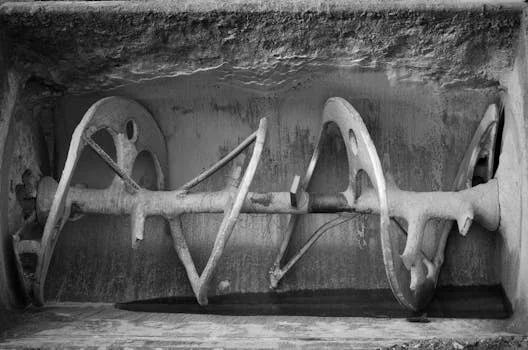
Common problems with esmil gravity thickener sludge scraper (model zsp-35u) units, and similar Z-series scrapers, cluster around drive torque spikes, rake misalignment, and cone bridging after long idle periods. Operators who log amp draw daily catch binding before the bridge trips. Most plants we walk through after a scraper trip find debris on the arms or a blanket deeper than 7 ft in a 15-ft tank, not a failed gearbox as the first cause.
Check tip speed and arm clearance before changing polymer. Tip speeds in the 15–20 ft/min (0.08–0.1 m/s) band are the conventional gravity-thickener range cited in U.S. EPA gravity-thickening guidance (EPA 832-F-03-022). Misalignment over 2 inches leaves unscraped floor zones and grit ridges that later jam the underflow.
What Goes Wrong Inside a Sludge Thickener Tank?
A sludge thickener tank fails first at the blanket interface, the overflow weir, or the underflow cone—not in the motor nameplate. Cloudiness above 50 NTU points to polymer or fines; a clear top with rising islands points to gasification or surge flow.
- Step 1: Observe supernatant clarity. Turbidity above 50 NTU usually means polymer underdose, wrong charge type, or colloidal fines. Clear liquor with rising sludge points to gas or hydraulic surge.
- Step 2: Check sludge blanket depth. In a typical 15-ft deep thickener, target 3–5 ft of blanket. Above 7 ft suggests slow withdrawal or overload; below 2 ft suggests over-pumping or poor settling.
- Step 3: Monitor withdrawal pump cycles. Rare short pulls build a septic blanket. Continuous thin pumping signals low feed solids or undersized area. Frequent clogs often track filamentous, cohesive sludge.
- Step 4: Test for odor. A strong rotten-egg smell marks anaerobic feed lines or tank contents. Gas lift then overrides settling velocity.
- Step 5: Run jar tests. Fresh influent sludge jars set polymer type, dose, and flocculation intensity before you chase mechanical faults.
Upstream debris events also load thickeners hard; pair this checklist with our mechanical bar screen troubleshooting guide when rags reappear in the cone.
7 Most Common Sludge Thickener Problems and Fixes
Sludge thickener problems respond best to one change at a time, with 30–60 minutes of steady state before resampling. The seven patterns below cover most municipal and industrial tickets.
- Problem 1: Low thickened sludge concentration (<2% TS for activated sludge). Confirm feed rate against design solids loading, then slow the rake into the 0.2–0.3 rpm band used for compaction.
- Problem 2: Rising sludge due to gasification. Earlier plant notes in this guide used a sludge-age limit near 6 hours for rising-sludge risk. U.S. EPA gravity-thickening guidance instead cites a reasonable detention time of 24–48 hours for primary solids (EPA 832-F-03-022); keep WAS inventories shorter and increase withdrawal if H2S odor appears.
- Problem 3: Solids in supernatant (cloudy overflow). Match polymer charge to sludge with jar tests or zeta screening, then restore flocculation near 60 rpm.
- Problem 4: Sludge blanket too thin. Cut withdrawal runtime; rake speeds above 0.5 rpm can tear soft flocs.
- Problem 5: Overflow weir carryover. Keep weir loading under 2 gpm/ft of weir length and add baffles if surge persists.
- Problem 6: Poor floc formation. Wrong polymer, short mix time, or interfering oxidants leave pin floc.
- Problem 7: Underflow pump clogs. Extreme %TS, grit, or viscous WAS all bridge the cone; pulse-pump and inspect the scraper path.
| Problem Symptom | Likely Cause | Primary Fix | Optimal Parameter/Range |
|---|---|---|---|
| Cloudy Supernatant (>50 NTU) | Polymer underdosing, wrong polymer type | Optimize polymer dose via jar test | 3–8 mg/L cationic, 60 rpm flocculation |
| Rising Sludge/Gas Bubbles | Septic sludge, long detention time | Increase sludge withdrawal frequency | Sludge age <6 hours |
| Low Underflow %TS (<2%) | Hydraulic overload, poor compaction | Reduce feed rate, decrease rake speed | <20 lbs/ft²/day, 0.2–0.3 rpm rake speed |
| Overflow Weir Carryover | Turbulence at weir, hydraulic surge | Install baffles, equalize influent flow | Flow rate <2 gpm/ft weir length |
Thickener Type Comparison for Problem Resolution
Thickener type selection decides whether dilute WAS ever reaches digester targets. Gravity units favor primary sludge; DAF and centrifuges recover dilute biological solids that gravity alone cannot compact.
- Gravity thickeners: Work well on primary sludge but struggle when activated-sludge feed stays below 0.5% TS. They rely on natural settling velocity and slow floor scraping.
- Dissolved air flotation (DAF) thickeners: Handle 0.3–1.5% feed solids and float light biological flocs with fine bubbles for high capture.
- Centrifuge thickeners: Accept roughly 0.5–2.0% feed and use high G-force for difficult, shear-sensitive mixes.
For mechanical thickening trade-offs beyond gravity tanks, compare options in our belt thickener vs. centrifuge comparison.
| Thickener Type | Optimal Feed Solids (% TS) | Typical Output Solids (% TS) | Solids Capture (%) | Polymer Dose (mg/L cationic) | Best For |
|---|---|---|---|---|---|
| Gravity Thickener | >0.5 (Primary sludge) | 3–6 | 80–90 | 0–5 | Primary, anaerobic digested sludge |
| DAF Thickener | 0.3–1.5 (Activated sludge) | 3–5 | 90–95 | 5–10 | Activated, low-concentration, FOG-rich sludge |
| Centrifuge Thickener | 0.5–2.0 (Mixed sludge) | 4–8 | 90–98 | 8–12 | High-solids, difficult-to-settle sludge |
Industry summaries place gravity thickener solids capture near 80–90% when conditioning is adequate (The MBR Site, gravity thickening overview). That band matches the gravity row above when feed and loading stay inside design.
How Much Can Doubling Solids Concentration Save?
Doubling solids concentration halves sludge volume when dry solids mass is held constant, which cuts hauling trips and digester heating load in proportion to volume.
Cost drivers to model on a simple spreadsheet are polymer as kg/t dry solids, trucking per wet tonne, and downstream press hours. EPA gravity-thickening guidance lists polymer use in the 2.5–6 g/kg (5–12 lb/ton) dry-solids band for chemical conditioning (EPA 832-F-03-022). Earlier mg/L jar ranges in this article (3–8 mg/L cationic on activated sludge) remain useful for day tank control; convert to kg/t when you price annual chemical spend. Pair thickener gains with a Plate and Frame Filter Press for Sludge Dewatering when cake solids, not only volume, set disposal cost.
Why Is DAF Sludge Cake Too Thick?
DAF sludge cake runs too thick when float skimming is slow, polymer dose sits high in the 5–10 mg/L cationic band, or air-solids ratio overshoots and packs the beach.
If the float is watery instead, check recycle pressure and nozzle plugging first. Gravity and DAF trains fail for opposite reasons: gravity hates dilute feed; DAF hates over-conditioned, sticky float that will not transfer cleanly to the hopper.
Preventive Maintenance and Optimization Schedule
Preventive maintenance on thickeners prevents most emergency scraper calls. Use this field checklist and keep it beside the polymer make-down log.
- Weekly: inspect rake arms for alignment beyond 2 inches and clear debris from pickets.
- Monthly: calibrate polymer make-down and lubricate rake gearboxes.
- Quarterly: jar-test fresh sludge for dose and mix sequence drift.
- Annually: drain and inspect the tank floor for grit dunes and cone bridging.
- Continuous: trend underflow %TS, supernatant NTU, blanket depth, and kg polymer per dry tonne.
- After any trip: verify scraper amp draw against the last steady baseline before restarting feed.
- Documented PM steps that push uptime higher are expanded in our sludge thickener maintenance guide.
Who This Is For / Next Step
This guide is for plant engineers and operators chasing cloudy supernatant, thin underflow, or scraper trips on gravity, DAF, or centrifuge thickeners. Teams still selecting a first thickener for dilute WAS should start with the type table above, not with polymer brand trials alone. If you need help matching thickener fixes to downstream dewatering, send operating data through our request a quote form with feed %TS, target underflow, and current polymer dose.
Frequently Asked Questions

What causes sludge to rise in a gravity thickener?
Septic conditions produce methane and hydrogen sulfide that attach to particles and cut settling density. Earlier notes here flagged detention near 6 hours as a rising-sludge risk; EPA gravity-thickening guidance cites 24–48 hours as a reasonable primary-solids detention window (EPA 832-F-03-022). If odor and gas bubbles appear sooner on WAS, increase withdrawal and freshen the feed.
How much polymer should I use for sludge thickening?
Typical cationic polymer for activated sludge jar work is 3–8 mg/L, confirmed on fresh samples at about 60 rpm flocculation. For annual chemical cost, EPA lists roughly 2.5–6 g/kg (5–12 lb/ton) dry solids for gravity-thickener conditioning chemicals (EPA 832-F-03-022). Site sludge always overrides textbook bands after a proper jar series.
Can a DAF system replace a gravity thickener?
Yes for low-concentration activated sludge below about 0.5% TS, where gravity compaction is weak and DAF float capture of 90–95% is realistic at 0.3–1.5% feed. Keep gravity for primary or denser mixed sludge when solids loading and floor area already meet design. Many plants run both in parallel rather than a hard swap.
What causes white spots on an aluminum dome sludge thickener?
White spots on aluminum thickener covers usually track mineral salts, polymer splash residue, or moisture staining on the metal surface rather than a change in blanket %TS. Clean a test patch, check for condensate leaks at seams, and confirm polymer make-down is not misting onto the dome. If spots spread with corrosion pitting, schedule a coatings inspection separate from process troubleshooting.
What solids loading should a gravity thickener target?
Keep primary sludge nearer the article’s <20–30 lbs/ft²/day operating band when underflow %TS falls, and treat activated sludge more gently.Always verify against the nameplate design for your tank diameter.