HydropureWater, an SO2 scrubber system manufacturer, delivers flue gas desulfurization systems with over 99% removal efficiency using lime/limestone wet scrubbing. Our FGD scrubbers achieve compliance with EPA NSPS and EU IED 2010/75/EU, feature no moving parts, and produce reusable gypsum—cutting OPEX by up to 30% versus dry systems.
What Is an SO2 Scrubber System?
SO2 scrubber systems remove sulfur dioxide from flue gases using wet, dry, or semi-dry methods, with wet scrubbing serving as the industrial standard for achieving removal efficiencies greater than 90%. These systems are critical infrastructure for coal-fired power plants, smelting operations, and cement kilns where sulfur-rich fuels generate significant atmospheric pollutants. The primary function of the scrubber is to facilitate a chemical reaction between the acidic SO2 gas and an alkaline reagent, effectively neutralizing the pollutant before it reaches the stack.
In a standard industrial configuration, wet scrubbing involves contacting the flue gas with an alkaline slurry—most commonly lime (CaO) or limestone (CaCO3). This contact occurs within a specialized vessel designed to maximize the gas-liquid interface. As the SO2 dissolves into the liquid phase, it reacts with the calcium-based reagent to form calcium sulfite or calcium sulfate. Technical data from high-performance installations indicates that removal efficiency exceeds 99% in optimized packed bed systems, making them the preferred choice for facilities facing stringent emission caps.
The engineering of these systems is never "one-size-fits-all." A reliable SO2 scrubber system manufacturer must custom-engineer the tower geometry, material selection, and reagent delivery based on specific site parameters. Key variables include the total gas volume (acfm), inlet SO2 concentration (ppmv), flue gas temperature, and the specific regulatory requirements of the jurisdiction. For instance, high-temperature gases require a dedicated quenching stage to prevent thermal damage to internal components and to ensure the gas reaches its adiabatic saturation temperature, which is essential for efficient mass transfer.
How Wet SO2 Scrubbers Work: The FGD Process Explained
The wet flue gas desulfurization (FGD) process begins when hot, untreated flue gas enters the scrubber unit and passes through a quencher section to cool and saturate the stream. Typically, the gas is cooled to a range of 60–70°C. This saturation is a prerequisite for effective absorption, as it prevents the evaporation of the scrubbing slurry and ensures that the SO2 molecules can transition from the gas phase to the liquid phase at the maximum theoretical rate. Without proper quenching, the efficiency of the chemical reaction is severely compromised by localized dry zones and scale buildup.
Once saturated, the gas flows into the absorber tower, where it encounters a counter-current spray of alkaline slurry maintained at a pH between 5.5 and 6.5. This pH range is critical; if the slurry becomes too acidic, SO2 absorption stops, whereas a pH that is too high can lead to the precipitation of solids that clog spray nozzles and packing materials. Inside the tower, the following chemical reaction occurs: SO2 + CaCO3 + ½O2 → CaSO4·2H2O. This reaction results in the formation of synthetic gypsum, a saleable byproduct that can be recovered for use in the construction industry.
Following the absorption stage, the treated gas passes through a series of chevron-style or mesh mist eliminators. These components are designed to remove entrained liquid droplets that carry dissolved solids and unreacted reagents, ensuring that the clean gas exiting the stack contains less than 10 ppmv of SO2. The slurry collected at the bottom of the tower is continuously recirculated. A portion of this slurry is bled off to a dewatering system to extract the gypsum byproduct, while fresh reagent is added to maintain the stoichiometric ratio required for continuous operation. This closed-loop approach minimizes water consumption and reagent waste.
Types of SO2 Scrubber Systems Compared
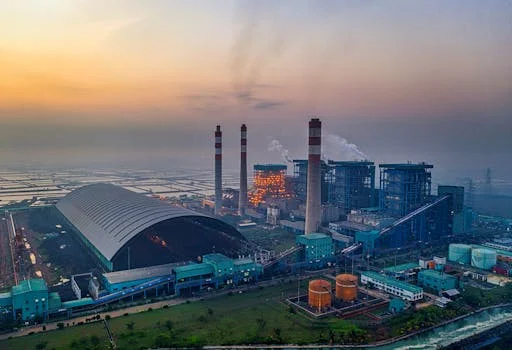
Packed bed scrubbers utilize random or structured dumped packing to maximize the available surface area for gas-liquid contact, making them the most efficient design for gaseous pollutant removal. These systems can achieve removal efficiencies exceeding 99% while maintaining a relatively low pressure drop of 2–6 inches of water column (in H2O). Because the packing provides a tortuous path for the gas, the contact time is significantly increased compared to open spray towers, though they are more susceptible to fouling if the flue gas contains high levels of particulate matter.
Venturi scrubbers employ a different physical principle, using a high-velocity gas stream to atomize the scrubbing liquid into fine droplets. While these systems are excellent for the simultaneous removal of SO2 and fine particulates, they are energy-intensive. A typical venturi scrubber operates with a pressure drop between 12 and 25 inches H2O, which significantly increases the electrical load on the primary induction fans. In contrast, spray towers offer the lowest pressure drop but generally provide lower efficiency (85–95%) unless the tower height is significantly increased, making them suitable for applications with moderate SO2 loads and limited energy budgets.
Fluidized slurry systems and tray scrubbers represent specialized designs for high-sulfur fuels or footprint-constrained sites. Tray scrubbers allow for staged absorption, which provides better control over the reaction kinetics but often comes with a higher initial CAPEX. To help engineers select the appropriate technology, the following table compares the primary scrubber types based on operational data from a high-efficiency FGD scrubber with 99%+ SO2 removal.
| Scrubber Type | SO2 Removal Efficiency | Pressure Drop (in H2O) | Particulate Handling | Primary Industrial Use |
|---|---|---|---|---|
| Packed Bed | 99%+ | 2–6 | Low | Chemical plants, Refineries |
| Venturi | 90–98% | 12–25 | Excellent | Metal smelting, Incinerators |
| Spray Tower | 85–95% | 1–3 | Moderate | Utility power plants |
| Tray Scrubber | 95–98% | 4–8 | Moderate | Pulp and paper mills |
Key Performance Metrics for SO2 Scrubber Systems
Evaluating an SO2 scrubber requires a focus on measurable criteria that directly impact both regulatory compliance and long-term operating costs. Removal efficiency is the most visible metric, with modern lime-based packed bed systems consistently achieving >99% removal. However, engineers must also look at the pressure drop across the system. A system with a low pressure drop (2–6 in H2O) can reduce fan energy consumption by up to 40% compared to high-energy venturi designs, which can represent hundreds of thousands of dollars in annual electricity savings for large-scale plants.
The Liquid-to-Gas (L/G) ratio is another critical design parameter, typically ranging from 15 to 25 gallons per 1,000 actual cubic feet of gas (gpm/1,000 acfm). A lower L/G ratio is generally preferred as it reduces the size of the recirculation pumps and the associated energy costs, provided the removal efficiency is maintained. Byproduct purity is a key metric for facilities looking to offset costs. If the system is designed to produce gypsum with a purity of >90%, the material can be sold to wallboard manufacturers rather than being sent to a landfill at a significant cost.
Finally, the turndown ratio defines the system's ability to handle fluctuations in production. Modern FGD systems are designed to handle a turndown of 40–100% of the design load without a significant loss in efficiency. This flexibility is essential for plants that do not operate at a constant capacity. The following table summarizes the key performance targets for a tier-one SO2 scrubber installation.
| Performance Metric | Target Value | Operational Impact |
|---|---|---|
| Removal Efficiency | >99% | Ensures compliance with EPA/EU standards |
| Pressure Drop | <6 in H2O | Reduces ID fan power consumption |
| L/G Ratio | 15–25 gpm/macfm | Optimizes pump sizing and energy use |
| Byproduct Purity | >90% Gypsum | Enables revenue from byproduct resale |
| Turndown Ratio | 2.5:1 | Maintains efficiency during low-load periods |
Compliance Standards for SO2 Emissions Worldwide
International regulatory frameworks are increasingly stringent, making high-efficiency scrubbing a necessity for industrial permitting. In the United States, the EPA New Source Performance Standards (NSPS) require many new coal-fired industrial units to demonstrate a 90–95% reduction in SO2 emissions. Failure to meet these standards can result in significant fines or the revocation of operating permits. These regulations are designed to reduce the precursors to acid rain and regional haze, placing the burden of proof on the facility to demonstrate continuous monitoring and compliance.
In Europe, the Industrial Emissions Directive 2010/75/EU (IED) sets even tighter benchmarks. For many large combustion plants, the Best Available Techniques (BAT) conclusions mandate SO2 emission limits as low as 200 mg/Nm³. Achieving these levels requires a sophisticated understanding of EU emission compliance for industrial air and water pollution, as the directive also regulates the wastewater discharge from wet scrubbing processes. Similarly, China's GB 13223-2011 standard mandates limits below 100 mg/Nm³ for new units, a threshold that effectively necessitates the use of >99% efficient wet scrubbing technology.
Beyond national laws, the World Bank and International Finance Corporation (IFC) provide guidelines that are often used as the baseline for projects in developing regions. Their recommendation of <400 mg/Nm³ for thermal power projects ensures that even in less regulated markets, global financing requires a commitment to air quality. For EPC contractors, selecting a scrubber manufacturer with a proven track record in meeting these diverse global standards is the most effective way to mitigate project risk and ensure long-term viability.
Total Cost of Ownership: CAPEX vs OPEX Analysis
The total cost of ownership (TCO) for an SO2 scrubber system is a balance between the initial capital expenditure (CAPEX) and the ongoing operational expenses (OPEX). While packed bed systems typically have a CAPEX range of $150 to $250 per kW of equivalent plant capacity, they often prove more economical over a 10-year lifecycle than cheaper, less efficient alternatives. OPEX is dominated by three main factors: electricity for fans and pumps (60%), reagent costs (30%), and routine maintenance (10%).
One of the most effective ways to lower OPEX is through byproduct recovery and reagent optimization. By utilizing high-purity limestone and precise pH control, plants can reduce reagent waste by 20–30%. Low-pressure-drop designs can cut fan energy requirements by up to 40%, which often results in a payback period of less than three years for the efficiency upgrade. Advanced automation via PLC-based control systems also plays a role, reducing manual labor requirements and preventing unplanned downtime through predictive maintenance alerts. For facilities with complex waste streams, integrating integrated wastewater solutions for scrubber blowdown treatment can further reduce the cost of compliance by managing the liquid discharge on-site.
| Cost Component | Typical % of TCO | Optimization Strategy |
|---|---|---|